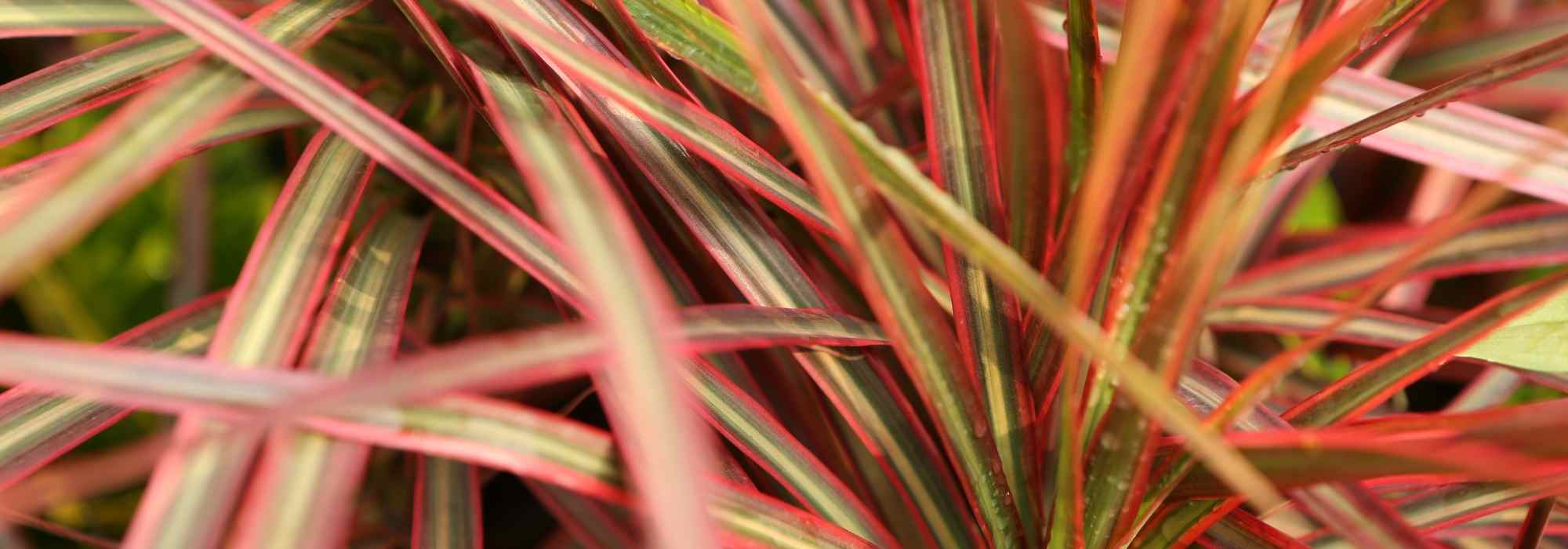
Dracaena indoors: common diseases and pests
Tips and tricks to identify, prevent and treat
Contents
Dracaena, commonly called dragon tree, is a houseplant with an upright, slender habit, unbranched, with arching leaves crowning tall bare stems, which give it an architectural silhouette. Dracaenas also stand out for their colourful foliage: the leaves, often long and lanceolate, are variegated with white, cream and/or red, depending on species and variety. Known for their air-purifying properties, dracaenas are easy to care for. However, when growing conditions are not met, dracaenas can be prone to certain diseases and pests.
Discover how to identify, treat and prevent the most commonly encountered diseases and pests affecting dracaenas.

Best cultivation practices for a healthy Dracaena
Although Dracaena is known for its tolerance and hardiness, it does not escape the golden rule of plant cultivation: prevention is better than cure. A well-established Dracaena in a healthy environment that benefits from good growing conditions will be far more resistant to pathogens and pests. Here are essential practices to implement to drastically reduce risks and keep a Dracaena thriving :
- A suitable growing medium for optimal drainage : like most houseplants, Dracaena hates excess moisture at root level. That is why it should be given a light, well-draining medium, ideally made of a special potting compost for houseplants, mixed with a little sand or perlite. Of course, pot must have drainage holes. Repotting every three to four years renews this medium
- Control of watering : watering that is too frequent and excessive favours development of fungi and bacterium. That is why watering should be regular in spring and summer, at a frequency of once a week, waiting until substrate has dried out on 2 to 3 cm. In autumn and winter, waterings are reduced to every two to three weeks. Use non-calcareous water, ideally rainwater, at room temperature
- A suitable environment : Dracaena appreciates bright light without direct sun. For temperature, keep between 18 and 25 °C, but never below 12 °C. To maintain moderate humidity, it is also recommended to mist the foliage regularly.
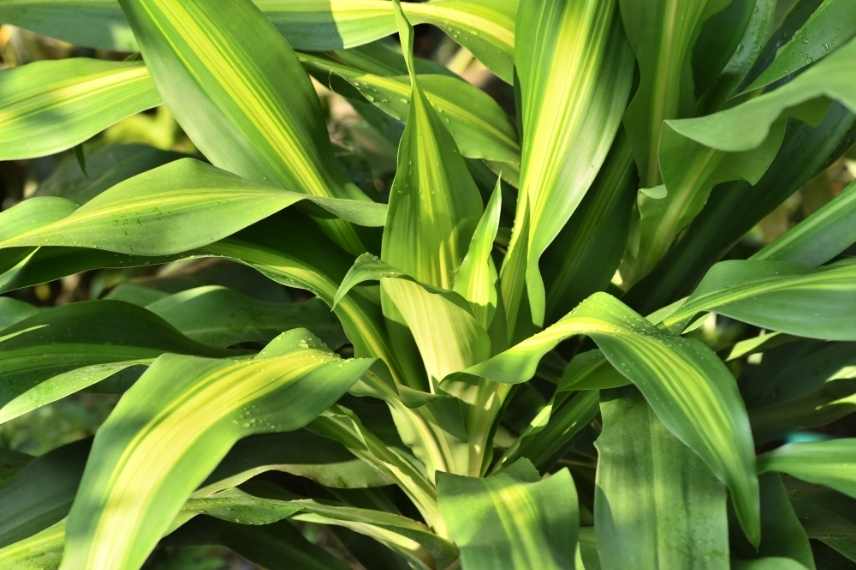
A Dracaena (here fragrans) that benefits from good growing conditions is robust
Pests that attack Dracaena
Dracaena can become the target of several pests commonly found on houseplants. Some attack the sap, others cause mechanical damage or favour secondary infections. Quick identification and an appropriate response are essential to prevent spread.
Mealybugs and armoured scale insects
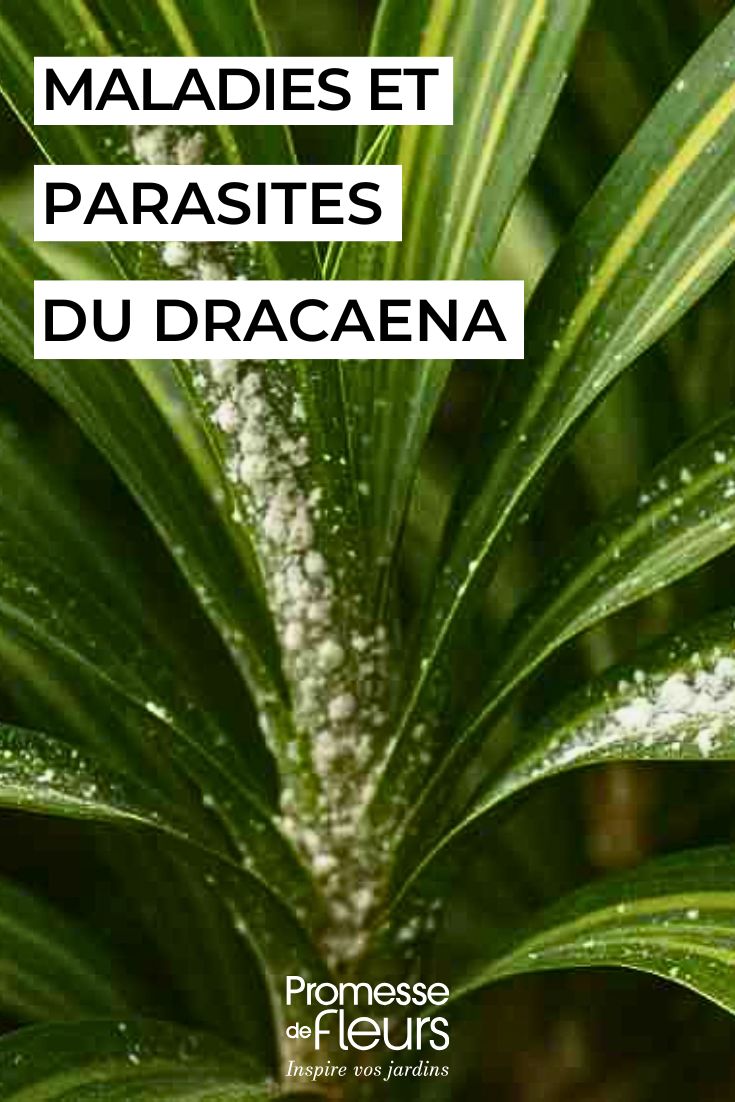
The mealybugs are the pests most frequently observed on Dracaena. They are detected by cottony clusters on the internodes, or sometimes by the brownish shells that protect the females. They produce a sticky honeydew that encourages sooty mould to develop on the leaves. Mealybugs suck the plant’s sap.
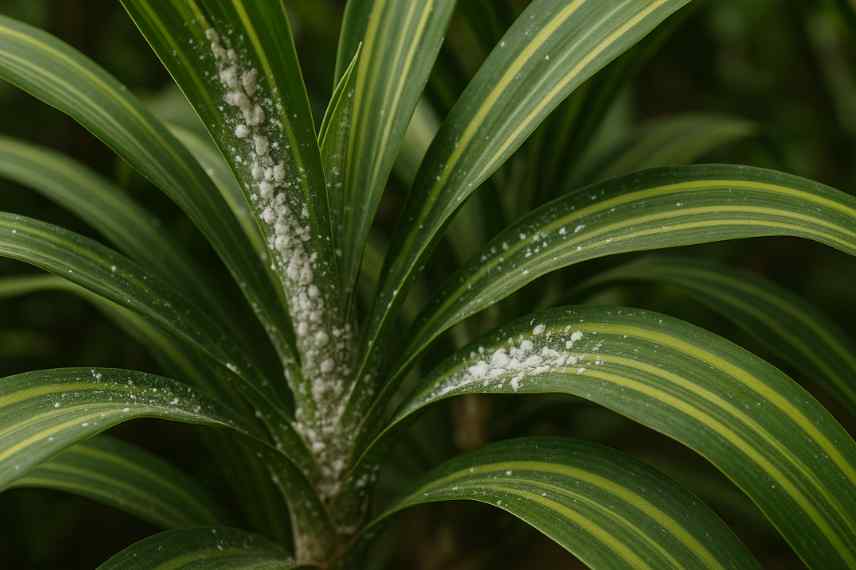
Mealybugs are the pests most frequently observed on Dracaena (image generated by AI)
Consequences
Dracaena weakens and slows its growth, foliage yellows and may drop. Sooty mould develops and covers the leaves with a black, soot-like powder.
What to do?
Start by scraping off mealybugs with a cotton bud soaked in 70% alcohol, then spray a soapy solution made from one litre of water with a teaspoon of each of the following: black soap (liquid), methylated spirits and vegetable oil.
This spray can be repeated weekly.
Red spider mites
Red spider mites are mites (and not arachnids) that develop mainly in dry, warm atmospheres. They reproduce very rapidly.
Consequences
Leaves show white or yellow speckled discoloration and take on a greyed appearance. They eventually dry out. Very fine webs are visible at the base of leaves or between stems. In severe attacks, the plant can die.
What to do?
The simplest measure is to regularly spray the foliage with fresh rainwater, preferably in the evening. The aim is to maintain a slightly humid atmosphere around the plant.
If the infestation is more severe, dilute 20 drops of rosemary essential oil, 4 drops of liquid black soap and 5 ml vegetable oil in one litre of water and spray the foliage. Nettle manure also proves very effective.
Aphids
Less common on Dracaena, aphids can sometimes colonise the foliage, especially in early spring. A simple rinse with water or a treatment with black soap will eliminate them quickly.
Thrips
Discreet but formidable, thrips are hard to spot with the naked eye. They are sap-sucking insects, particularly tenacious, and can be vectors of plant pathogenic viruses.
Consequences
Leaves become silvery or marbled, and are dotted with small black spots that are actually insect droppings. Foliage becomes deformed, drops and plant growth slows.
What to do?
As thrips favour heat and dryness, regularly spraying water on the foliage will keep them away. In more severe attacks, a garlic decoction can be very effective.
Some other pests to watch for
Infestations of whiteflies are always possible, especially if your Dracaena is placed in a very warm, bright environment. These are sap-sucking insects recognised by the white cloud they form when disturbed. They significantly weaken the plant. A soapy water treatment generally gets rid of them.
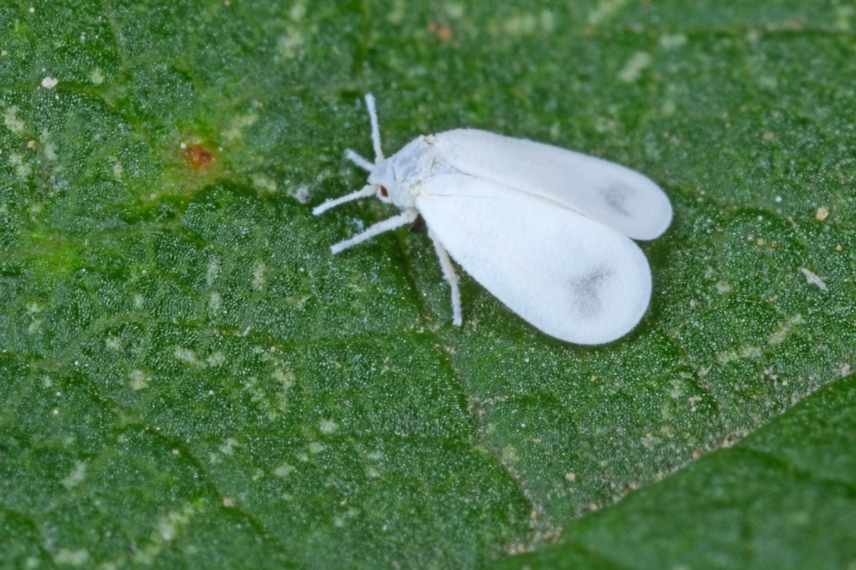
Whiteflies should be watched for on Dracaenas
Fungus gnats, or rather their larvae, live in the potting soil and feed on the plant’s rootlets. Young plants kept in warm, humid environments are most sensitive. To get rid of them, you must repot Dracaena into fresh substrate.
Main diseases of Dracaena
Rather than true diseases, it is the direct consequences of poor care that are common in Dracaena :
- Root rot (Phytophthora) : foliage yellows and wilts, roots become soft or black. To remedy this, repot plant into well-draining compost after removing affected roots. Then control watering to avoid excess moisture
- Leaf spots on foliage : these spots are generally brown or yellow, sometimes edged with red. They are caused by excess moisture or water in the potting mix combined with poor aeration. Remove affected parts and improve growing conditions
- Yellowing foliage may be sign of overwatering, but also lack of light, unsuitable potting mix or temperature shock
- Leaf tips drying out are symptoms of indoor air being too dry. Simply mist foliage with rainwater or non-calcareous water at room temperature.
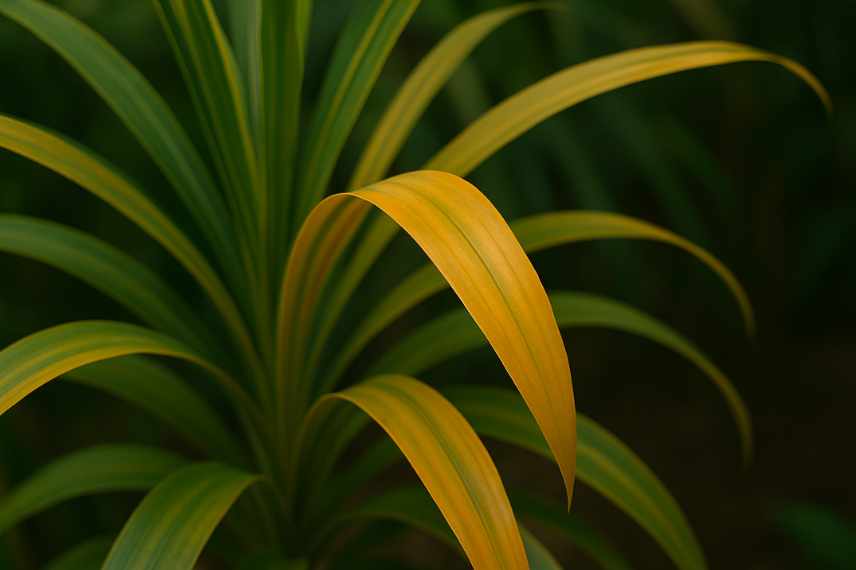
Yellowing foliage is often due to overwatering, lack of light or unsuitable potting mix (image generated by AI)
- Subscribe!
- Contents
This form is protected by reCAPTCHA - the Google Privacy Policy and Terms of Service apply.

































Comments