Forcing rhubarb : why? How?
Technique for more tender rhubarb stalks
Contents
Rhubarb (Rheum) is a vegetable, enjoyed as a fruit, traditionally consumed from April until St John’s Day (24 June). It’s not that the stems become inedible after that date, but their oxalic acid content, which rises in summer, makes them potentially toxic and a source of kidney stones. For rhubarb lovers, the harvest season is therefore very short. However, it is entirely possible to extend this harvest through forcing, a horticultural practice that involves depriving the stems of light. This technique does indeed extend the season for delicious compotes and succulent tarts.
Discover everything you need to know about forcing rhubarb to put this effective botanical technique into practice.

What exactly is forcing?
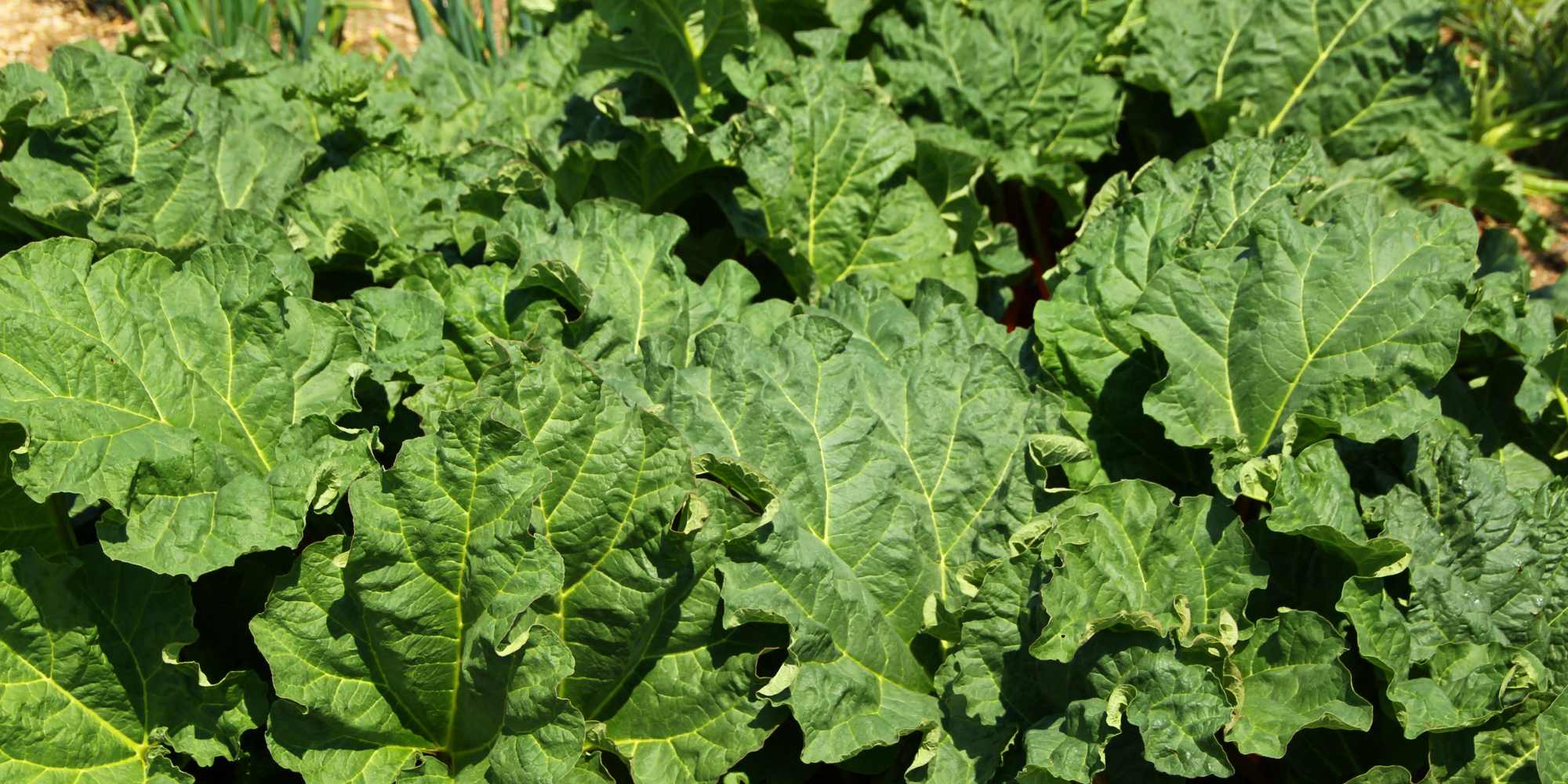
As a reminder, rhubarb (Rheum) is a perennial plant of considerable size, with large wrinkled leaves, an exotic appearance and edible stems, and it can remain in place for 10 to 20 years. It is normally one of the first plants to appear in the vegetable patch or ornamental garden as soon as soils begin to warm. Harvest of the stems generally takes place between April and May depending on the region, and can extend until the end of June. However, forcing allows these stems to be harvested as early as February or March, several weeks before the natural harvest.
Indeed, the secret of forcing lies in etiolation. By depriving the plant of light, photosynthesis is prevented. The plant, desperately seeking light, draws on the energy reserves stored in its rootstock to push its stems upwards as quickly as possible. Not only do the stems grow faster, but they are also better.
Because there is no photosynthesis, the leaves remain small, the stems do not harden because they do not become lignified, and oxalic acid is markedly reduced, which makes the stems milder in flavour and less astringent.
Read also
Rhubarb: planting, growing, harvestWhy force rhubarb?
Why so much effort, you may ask? Because forcing requires patience and a little work. If the aim is to advance ripeness of the stems. Thus, to save time and extend the harvest, forcing also improves the flavour quality of the stems. Forced rhubarb has almost nothing in common with naturally grown rhubarb, eaten up to June. What changes in culinary terms :
- Texture: skin so thin peeling isn’t necessary. Flesh is melt-in-the-mouth, almost creamy after cooking
- Flavour: bitterness and biting acidity disappear in favour of a delicate taste, slightly tart yet sweet, with notes of red berries
- Aesthetics: it keeps its beautiful pink colour when cooked, allowing creation of tarts, compotes or syrups that look as good as they taste
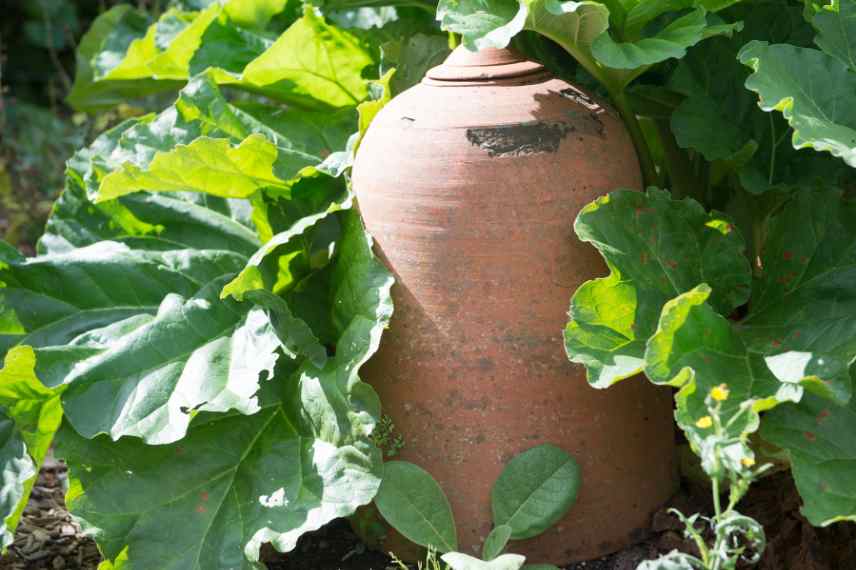
Forcing brings harvest forward and yields more tender stems
When forced, rhubarb is noticeably more tender. This allows it to be cooked differently. For example, cut forced stems into even segments, sprinkle with a little sugar and a touch of vanilla, then roast in the oven for 10 to 15 minutes. The pieces will remain whole while becoming as tender as butter.
When should forcing be applied?
To succeed in forcing, it is not enough to cover just any plant at any time. Like many plants, rhubarb needs cold to break dormancy.
Which young plant of rhubarb should be forced?
Forcing a young plant of rhubarb that has been freshly planted would exhaust it and could even be fatal. Only force young plants that are at least 3 to 4 years old. Early varieties such as ‘Victoria’ are also very suitable for forcing.
Frost exposure necessary
Before starting the forcing process, rhubarb crowns must have experienced a significant period of frost. Generally, wait until the soil has frozen once or twice in early winter. It is this cold that sends the signal to the plant that winter is over and that it can now “burst into growth” as soon as warmth returns.
Read also
How to divide rhubarb?Two methods of forcing
Two main methods exist, one gentler and one more radical, to obtain rhubarb stems that are nicely tender and completely pink.
Forcing under cloche
This method is most respectful of plant’s rhythm. It is carried out directly in soil from late January.
How to do it?
- Clean soil around stump, removing all weeds
- Cover young rhubarb shoot with a large opaque container. There are pretty, traditional terracotta forcing cloches, but you can also use a large terracotta pot (ideal because breathable) — remember to plug drainage hole with a cork stopper — or, at worst, a bucket or a weighted black bin
- To gain a few precious degrees, surround cloche with straw or a mix of dead leaves and manure. Manure decomposition produces gentle heat that stimulates shoot growth. This mulch, as it breaks down, will feed soil and indirectly rhubarb
- Ensure no shaft of light penetrates. Complete darkness is essential to ensure tender stems.
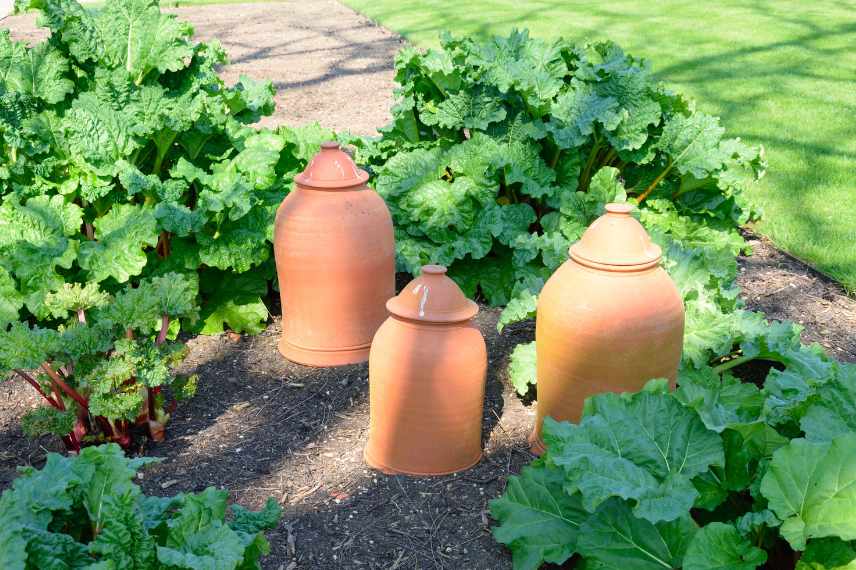
Pretty, traditional terracotta forcing cloches
Forcing in cellar
This technique allows harvest from February, but it puts more strain on plant. It is also more labour-intensive.
How to do it?
- Early in winter, lift an entire rootball of rhubarb with roots that have been exposed to frost
- Place rootball in a wooden crate with moist potting compost, in a dark cellar or garage, ideally between 10°C and 15°C
- Water very lightly to keep compost just moist, but avoid waterlogging heart of plant.
Harvesting forced rhubarb
After 5 to 8 weeks, stalks reach about 30 cm. It’s time to harvest them. To do this, do not cut them; instead grasp them at the base and give a quick, sharp pull with a slight twist. This prevents leaving a stub that could rot and contaminate the rootstock.
However, be aware that forcing is an exhausting technique for the plant. That is why harvesting must stop as soon as the bell is removed. Leave your rhubarb alone and do not harvest any stalks in summer so it can rebuild its reserves.
It is recommended to force the same young plant only every three years. Ideally, have several crowns and rotate them.
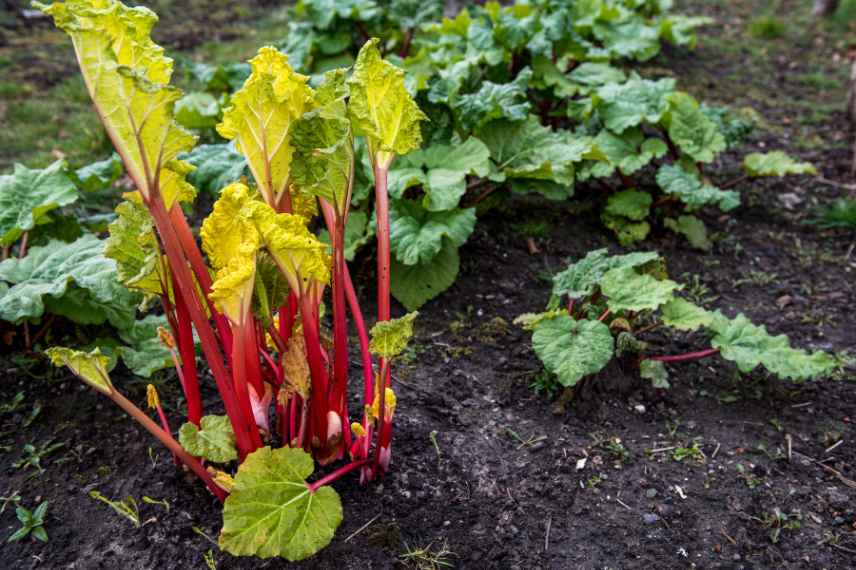
Forced rhubarb
Did you know?
One cannot speak of forcing without mentioning the famous ‘Rhubarb Triangle’ in Yorkshire, England. Since Victorian times, this area has produced the world’s most renowned forced rhubarb in large, dark sheds. Two years old and grown outdoors to undergo a hot summer followed by a period of cold, rhubarb plants are lifted with the utmost care and moved into these dark sheds. Tradition dictates that stems are harvested by candlelight so as not to interrupt growth with bright light. It is even said that, in the complete silence of these sheds, one can hear the rhubarb ‘crack’ as it grows so rapidly!
Although this forced cultivation declined over the years with the arrival on the market of other, more exotic produce, it is now regaining appeal. Forced rhubarb is back in fashion and appears on the menus of the world’s top chefs.
- Subscribe!
- Contents
This form is protected by reCAPTCHA - the Google Privacy Policy and Terms of Service apply.


































Comments