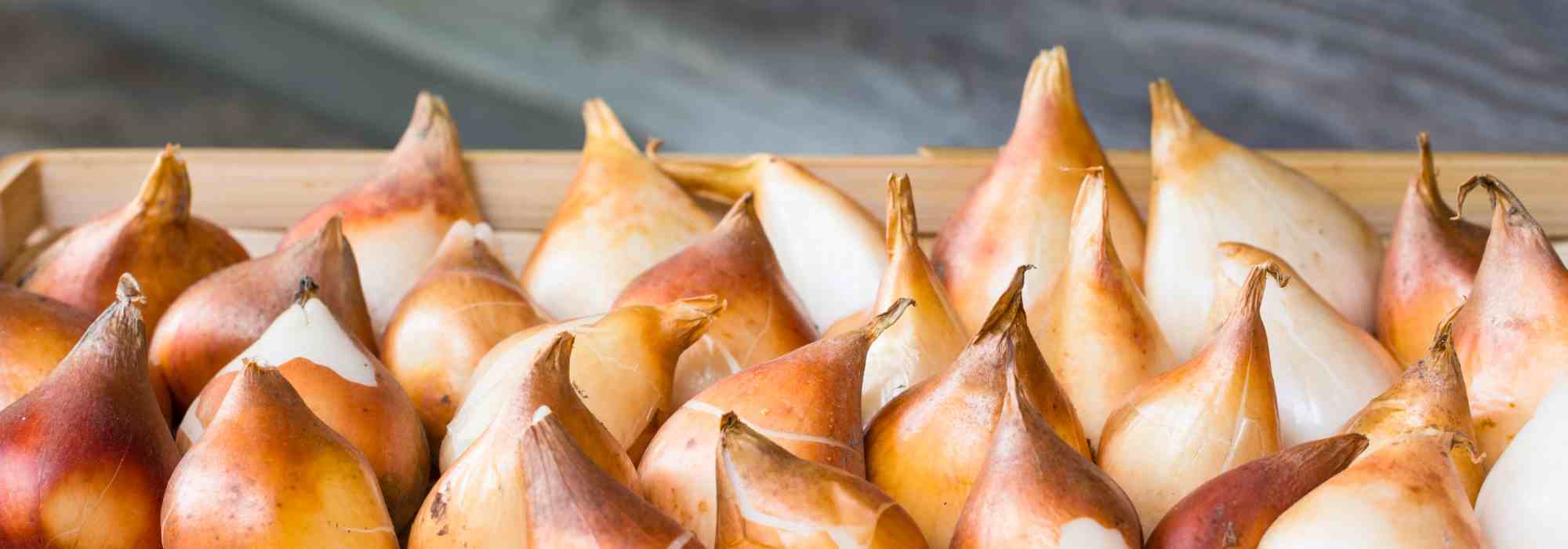
How to store bulbs properly?
Cleaning, drying and storage
Contents
spring bulbs, summer-flowering bulbs or autumn bulbs bring unrivalled colour to borders and containers and perfectly fill bare gaps between flowerings of perennials. Once flowers have faded and foliage yellowed, it’s often best to store them in a dry place until next planting.
How to keep them properly to guarantee future flowering? From which bulbs to leave in the ground to how best to store them, today we explain how to store your bulbs correctly.
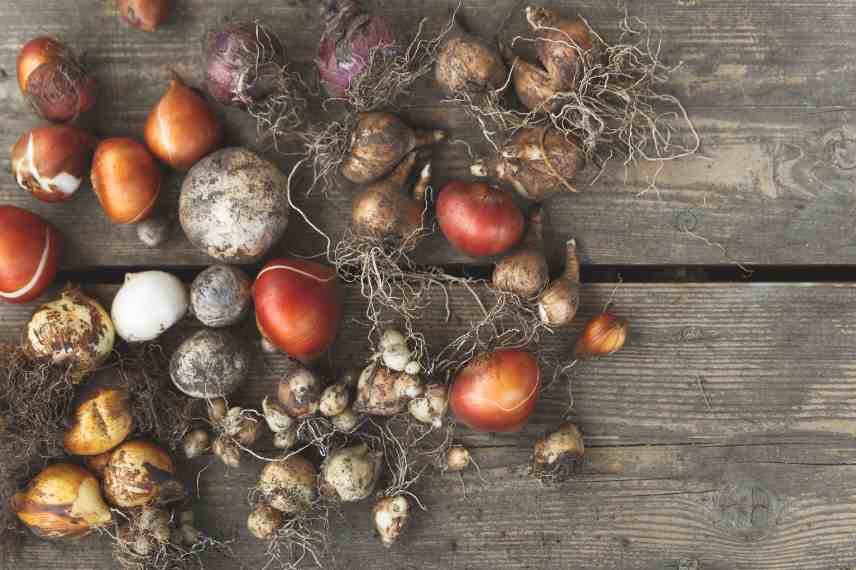

Which bulbs to lift and which to leave in place?
This is a frequently asked question, because you don’t necessarily want to have to replant bulbs every year.
There are two types of bulbs :
- hardy bulbs : they can remain in the ground all year in temperate climates, as they survive winter conditions without problem. These are generally small-size bulbs or corms flowering in spring. The only thing to remember is not to over-water them during summer, their dormancy period.
→ Examples : tulips including the botanical species that naturalise and spread thanks to their bulblets year after year (tulipa turkestanica and Tulipa tarda, etc.), daffodils, lilies, hyacinths, bearded iris, crown imperials, crocuses, muscari, anemones, camassias, etc.
→ Exceptions : some hyacinth species and horticultural tulip varieties degenerate after a few years, reverting to a standard yellow or red colour in tulips. For horticultural tulips, you won’t avoid lifting bulbs if your soil is not sufficiently free-draining. It is recommended to lift them every three years and replant elsewhere. - tender or non-hardy bulbs : these are mainly bulbs, tubers or corms that flower in summer, tender because of their exotic origin. They cannot tolerate frost or winter wet. They therefore need to be lifted before the first frosts in cold regions. Check hardiness data for these summer-flowering bulbs, bearing in mind that, when grown in pots, you should allow for about 2 degrees less hardiness.
→ Examples : cannas, dahlias, gladioli, freesias, Abyssinian gladiolus, tuberoses, arums, tuberous begonias, etc.
Whether to lift bulbs or not therefore depends on their hardiness, but also largely on region and soil type : in clay soil, it’s preferable to lift them, whereas in well-draining soil, no need!
When to store bulbs?
For all bulbs not left in the ground, one rule applies: not only must the flower be cut as soon as the first petals fall, to avoid exhausting the bulb by forming seeds, but above all the foliage must be left in place to yellow and dry out completely. This is the only way bulbous plants can rebuild reserves for the coming months and thus regenerate from year to year.
Depending on flowering time, wait to lift the bulbs from the ground: between May and June for spring bulbs, and before the first frosts for summer bulbs.
Ideally, lift bulbs on a sunny day.
NB: If you do not want to wait for the foliage to turn completely yellow because you plan to plant annuals or perennials in that spot in spring, you can always heel in your bulbs elsewhere: in that case, lift the bulbs with their stems and leaves and place them in a row to heel-in until the leaves have fully yellowed.
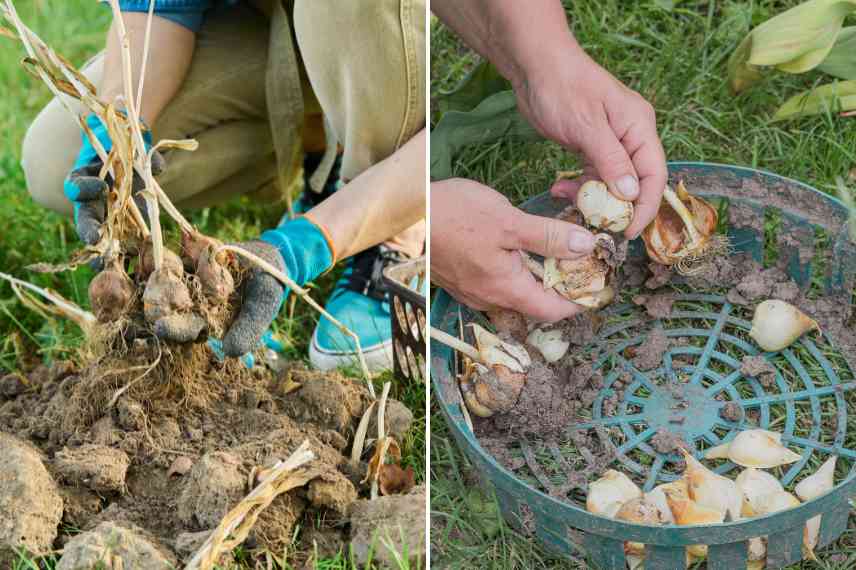
Once stems and leaves are thoroughly dry, bulbs can be lifted for storage
Preparing bulbs for storage: cleaning and drying
Before storing, clean bulbs minimally by removing excess soil from around bulbs and roots, cut stem and, where necessary, roots with a clean, disinfected pruning shear (but do not wash them!). At this stage, discard any bulbs that are rotten or soft.
For good storage, bulbs must be free of any trace of moisture. Therefore, before storing, subject them to a short forced drying by placing them side by side in a large tray and drying them in partial shade or in sun, always outdoors. Allow one to three days depending on weather to ensure complete drying.
Some gardeners sprinkle a little ground cinnamon on dahlia tubers, this spice having antifungal properties. This can be done, using a light hand, on all types of bulbs to be stored.
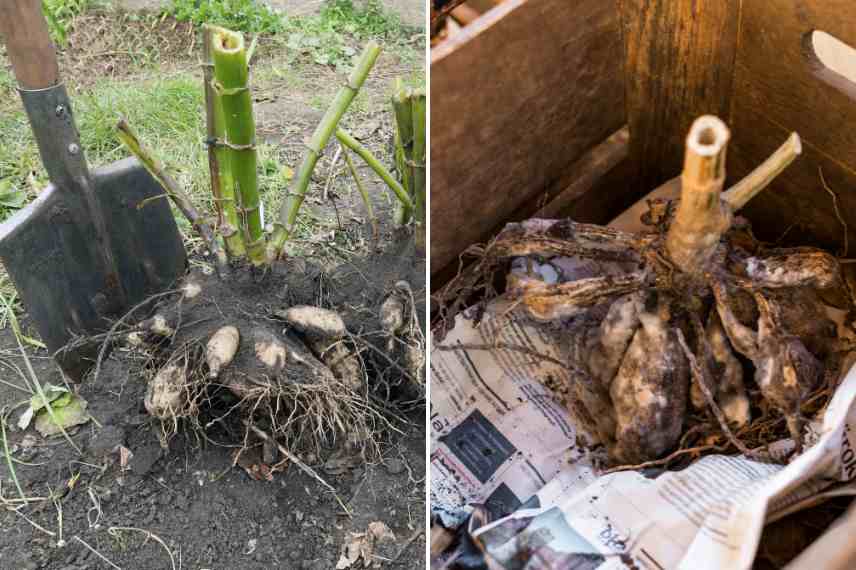
Dahlia tubers
Where and how to store them?
Keep completely dry! Any trace of rot or mould must be avoided, as it would compromise future growth.
It is important that the container has ventilation: poplar-wood market-garden boxes and crates, for example, are ideal. For smaller quantities, a ventilated plastic gardening tray works very well.
To keep bulbs thoroughly dry, line the box with newspaper, or add a layer of wood shavings or wood chips, or a bed of sand and/or turf to ensure good storage. Arrange bulbs side by side.
Remember to label variety on each layer if stacking in a tray, and on each container: nothing resembles a yellow tulip bulb more than a pink tulip bulb!
Store everything in a cool, dark, ventilated place (cellar, attic, garage) and frost-free.
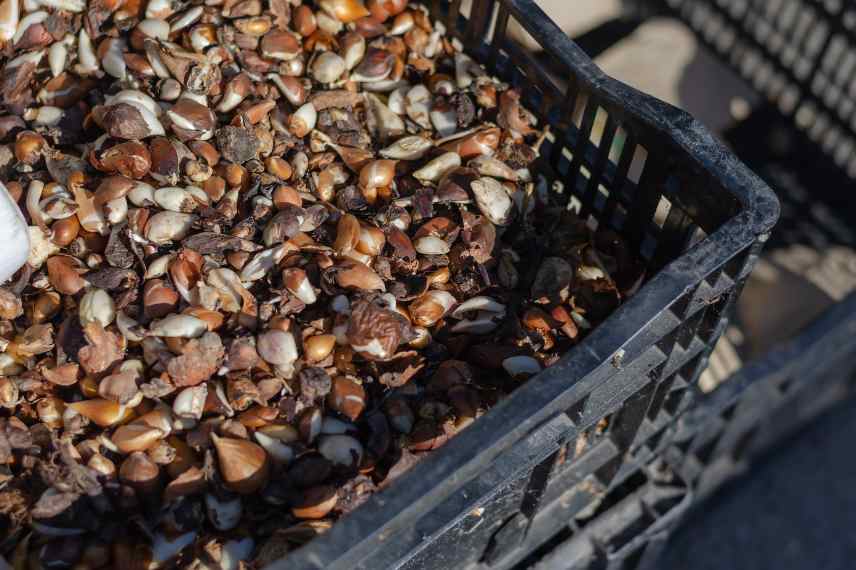
For large quantities of small identical bulbs, use a suitable crate
How long can bulbs be stored?
Sometimes bulbs are forgotten, hidden away in our bulb store. How long bulbs can be kept depends largely on storage conditions.
Let’s say that hardy and non-hardy bulbs can be stored for up to a year, if kept in the optimal conditions we’ve just discussed, with storage temperature between 10°C and 15°C.
If bulbs are still in good condition, you can plant them as soon as possible, even in winter or early spring, as long as the ground isn’t frozen. Bulbs planted late can still flower, but flowering will be delayed or less abundant.
- Subscribe!
- Contents
This form is protected by reCAPTCHA - the Google Privacy Policy and Terms of Service apply.

































Comments