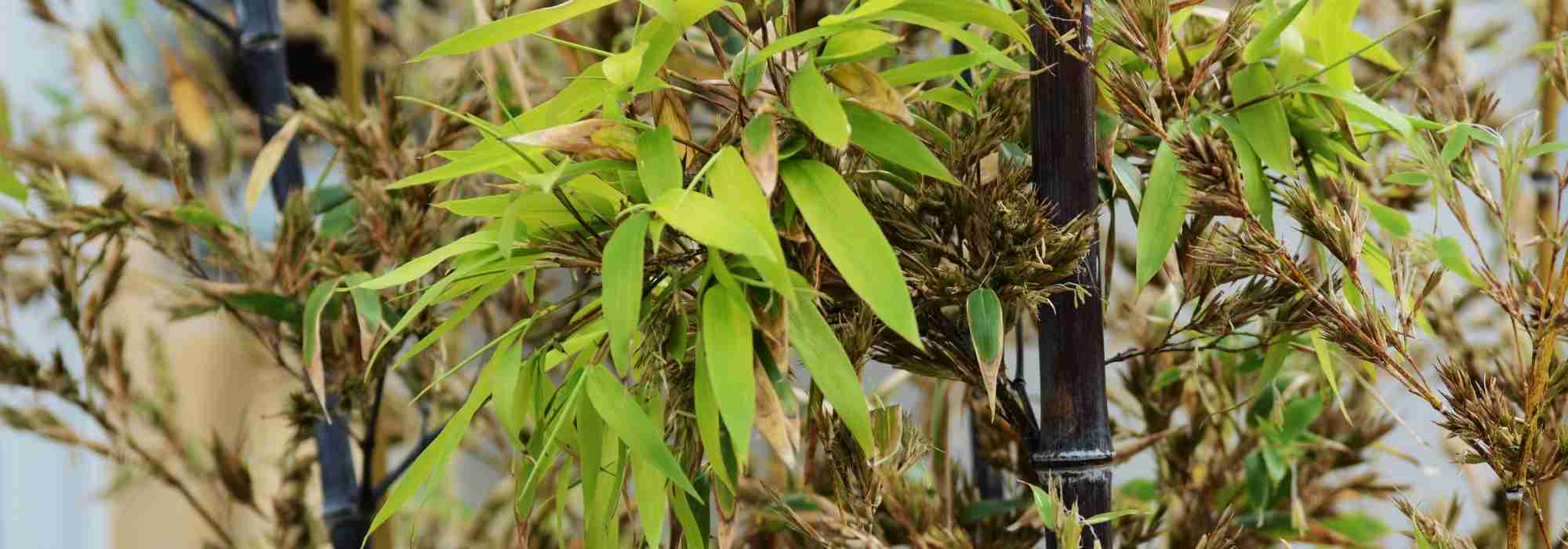
My bamboo is flowering: why? What should I do?
All you need to know about the astonishing flowering of bamboo in gardens
Contents
Flowering of bamboos is a rare but completely bewildering phenomenon, even for most experienced gardeners. When a vigorous stand suddenly begins to produce flowering panicles, it is often the harbinger of inevitable decline. Such flowering can disrupt garden balance and, above all, raises many questions: Why do bamboos flower so rarely, and often simultaneously across the world? Which species are affected? And, most importantly, how to anticipate or respond when the phenomenon appears in a garden?
Discover the botany governing bamboo flowering so you can adopt the right measures in response to this plant upheaval.

Understanding bamboo flowering
Flower spikes that develop at branch tips, in discreet but numerous panicles. This is how flowering occurs in bamboos, which, it should be recalled, are grasses of family Poaceae. However, they follow a vegetative cycle very different from other herbaceous or woody plants of the same family. Among other things, their flowering, depending on species, occurs only once during their lifetime, after several decades, sometimes more than a century. Needless to say, if one of the bamboos in your garden produces flowering panicles, consider it a chance to witness a rare botanical spectacle! Even though such flowering is often fatal…
Semelparous and gregarious flowering of bamboos
Bamboos are semelparous plants, meaning they flower only once in their lives. And this flowering is, in a way, written and programmed in the genes of the species. That is why this flowering is described as “sporadic”, “gregarious” or “synchronous”, which means it occurs at the same time worldwide, in all bamboos deriving from the same genetic lineage, or the same varieties or cultivars originating from the same parent plant. It is a massive physiological flowering, regarded as an internal biological clock, which can extend over several years.
Depending on species, this flowering follows different cycles spaced over several decades, on average every 40 to 120 years. For example, Phyllostachys can have flowering cycles of 13 to 120 years, while those of Arundaria range from 10 to 60 years.
This gregarious flowering concentrates all a bamboo’s energy and usually leads to its death. At least its aerial parts…
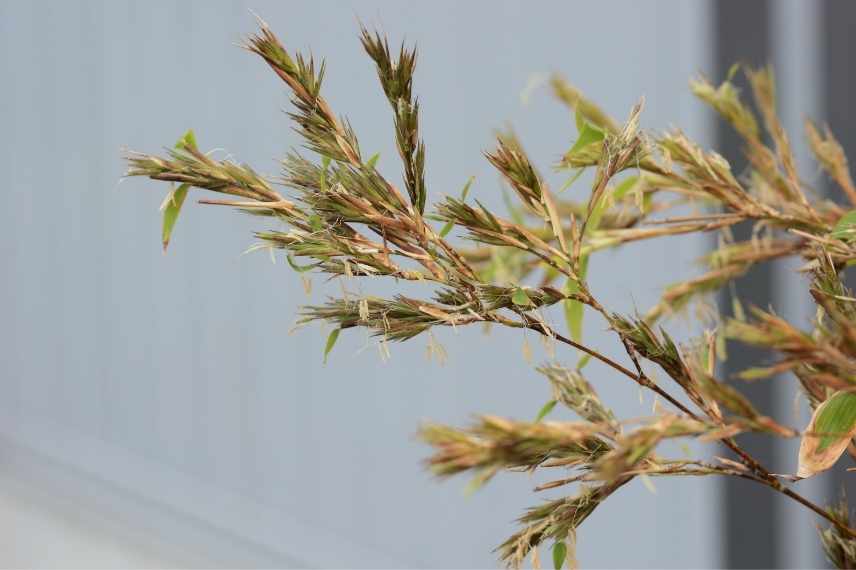
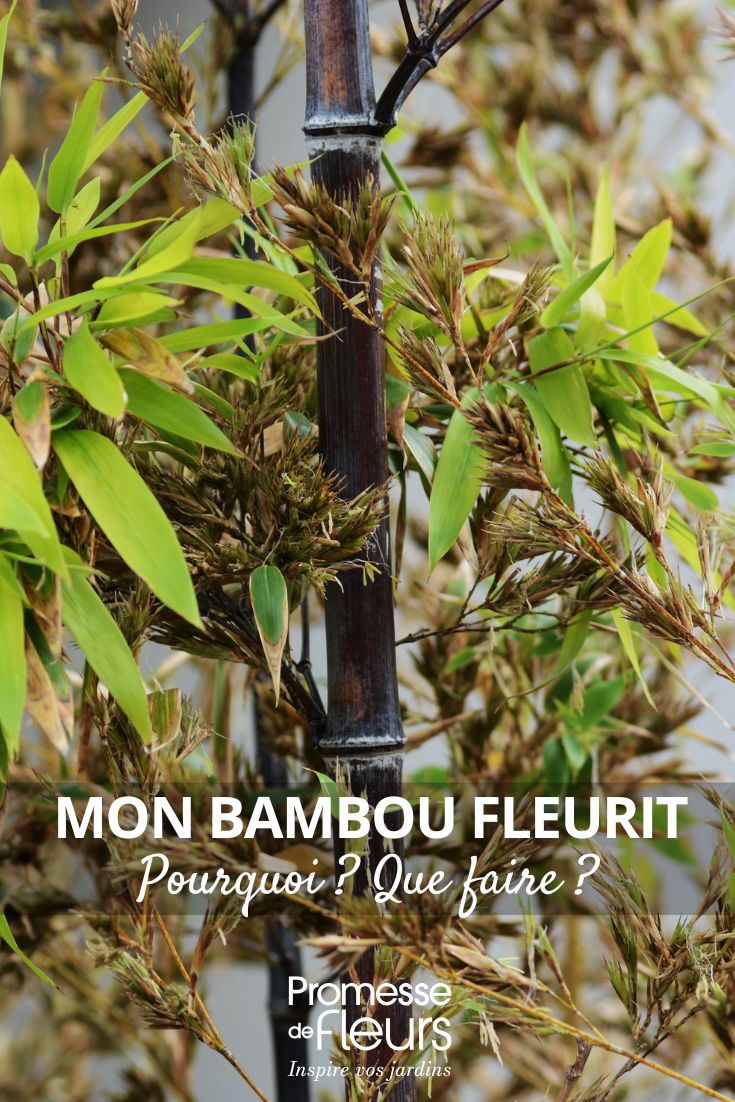
Flower spikes that develop at branch tips, in discreet but numerous panicles — such is flowering in bamboos
Sometimes a more sporadic flowering
Indeed, sometimes botanists, nurserymen and gardeners observe a more sporadic and localised flowering, more spontaneous and isolated, affecting only a few culms or a single plant. It is often a flowering linked to environmental factors or difficult growing conditions. Thus, water stress due to lack of water can trigger this sporadic flowering. It can also be a sudden cold snap, mechanical stress caused by disturbance such as mass uprooting. In such cases, to ensure survival the bamboo will flower to produce seeds. This isolated flowering is not fatal.
However, this sporadic flowering can also herald and trigger gregarious flowering.
Flowering accompanied by seed production?
In some species, flowering is accompanied by production of fertile seeds. However, germination is often unpredictable and requires specific conditions. In others, seeds are sterile, or do not form at all. This gregarious flowering can therefore jeopardise entire stands of bamboo in their native habitat, and thus also those that feed on them, such as the panda.
Read also
Bamboos: planting, pruning, maintainingWhich bamboo species are affected by this flowering?
All bamboo species are potentially affected by this flowering. But not all have the same behaviour or the same cycle. Although the phenomenon remains rare in a garden, some species are programmed to flower at regular intervals. Thus, the Fargesia murielae, much prized for its compact, non-running habit, underwent a massive gregarious flowering, including in Europe, in the 1990s. The next flowering cycle is expected to occur between 2070 and 2100! Another bamboo widely found in gardens, Fargesia nitida, flowered worldwide between 1995 and 2005. Its flowering cycle is estimated at between 80 and 100 years.
Among running bamboos, the Phyllostachys have more erratic flowering cycles. Phyllostachys edulis, which grows very rapidly, has highly variable flowering cycles, from 67 years to over 200 years, perhaps because of environmental conditions. Phyllostachys bambusoides, cultivated for centuries in Japan, is thought to have a cycle of around 120 years. Other genera such as Sasa, Semiarundinaria or Thamnocalamus can also flower, sometimes without a clear cycle being identified. The phenomenon is more erratic there, and flowering often occurs in patches, without necessarily causing immediate disappearance of the entire stand. Thus, Pseudosasa japonica flowered about thirty years ago for seven years.
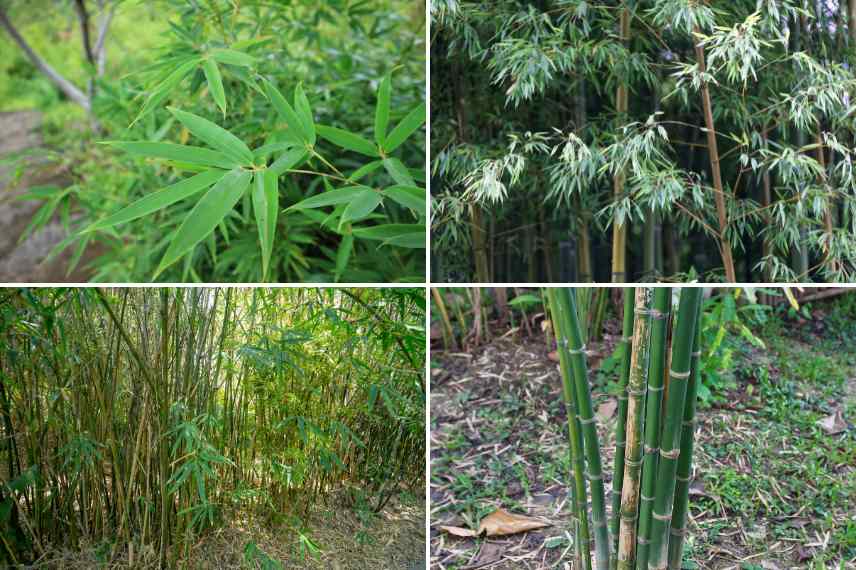
Clockwise, Fargesia murielae, Phyllostachys edulis, Pseudosasa japonica and Bambusa Multiplex
Finally, among tropical species of the genus Bambusa, cultivated in mild climates or in a conservatory, flowering is often poorly documented. Some species show partial or non-lethal flowering there, notably Bambusa multiplex, which can flower again without dying completely. Nevertheless, their behaviour remains unpredictable.
What are the consequences of bamboo flowering?
When flowering begins, bamboo mobilises all its energy to produce seeds. And the consequences are visible in the short or long term: rootstocks stop producing new shoots, culms weaken, foliage yellows… This reproductive activity exhausts bamboo and its overall condition deteriorates. Death is inevitable.
This simultaneous death of several specimens inevitably has a significant landscape impact. Often used in privacy screens or windbreak hedges, bamboos decline rapidly. The rapid loss of such a vegetative structure creates bare areas, re‑exposes undesired views or lays bare unsightly fences. On banks or slopes, loss of the active root system can also lead to a risk of erosion, especially in light soils.
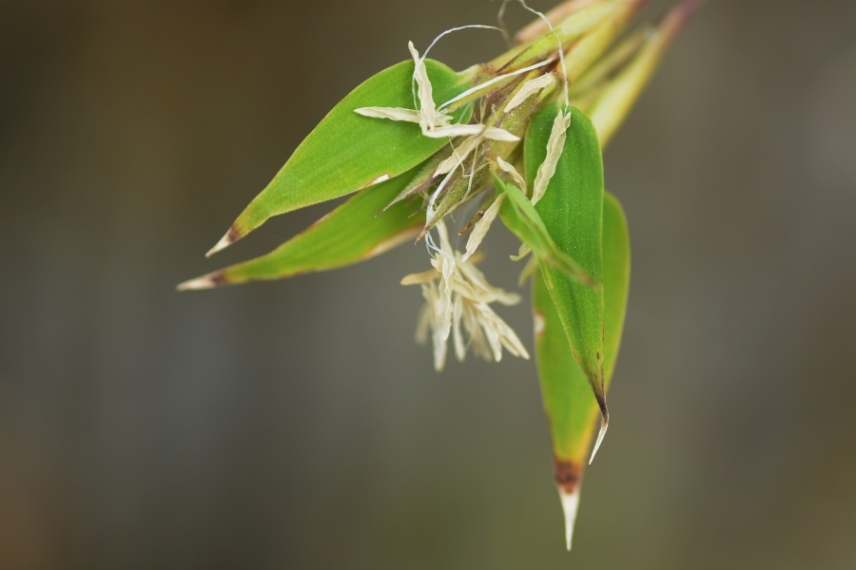
Chez le bambou, la floraison est monocarpique, donc souvent fatale
Some bamboo species retain the ability to regrow from their rootstocks. It is a rarer, and therefore little-known, phenomenon called asexual rejuvenation. Indeed, the rootstocks produce new shoots, and therefore new rootstocks that will develop and form new culms. Pleioblatus amarus thus renews its life cycle.
Finally, flowering can be followed by production of fertile seeds, which open the possibility of spontaneous regeneration, but one that is highly variable and uncertain. Gardeners must contend with spontaneous sowings. However, ornamental bamboos rarely produce such unpredictable shoots, and when they do these do not retain habit, size or cold hardiness…
Read also
Bambusa - Bamboo: planting and growingWhat to do when bamboo is flowering?
Your bamboos are flowering — you realise it’s extraordinary, but sometimes fatal. So what can you do to save them?
Collecting seeds
You can try to germinate those seeds. Success is not guaranteed, but it’s worth a try. Once seeds have been collected, the dried culms can be cut back.
- Soak seeds in warm water for 24 to 48 hours, changing the water every 8 hours
- Place five layers of well‑moistened absorbent paper in a plastic box such as a strawberry punnet
- Arrange bamboo seeds on the paper, well spaced apart
- Close the box, having pierced it with holes for ventilation
- Place the box in a bright room at a temperature between 25 and 30 °C.
The paper must remain constantly moist. Seeds germinate very quickly. As soon as the shoot reaches 1 cm, the seeds are planted into pots filled with special seed compost. Bamboo seedlings are then potted on into large pots.
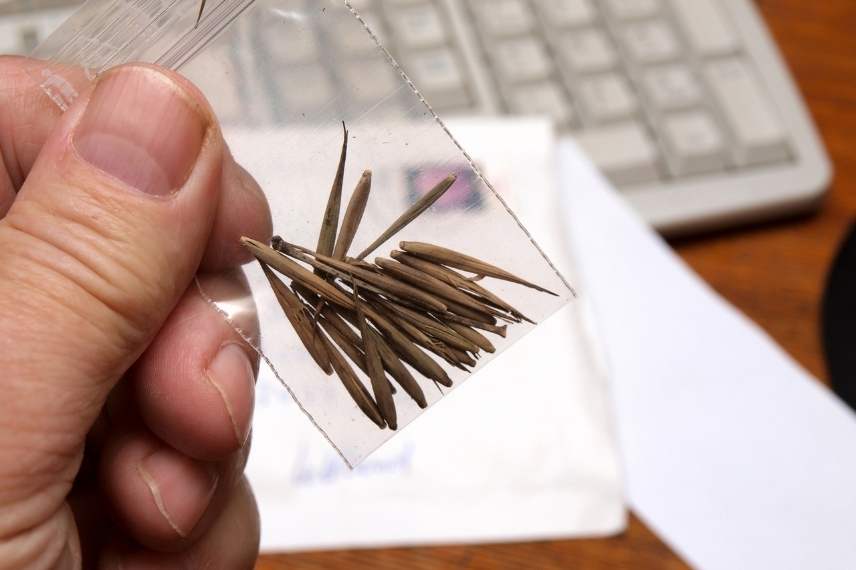
Bamboo seeds can be collected at flowering to try to germinate
Keeping bamboo stumps
Stumps can be left in place for several months, as they sometimes have the ability to produce new shoots by asexual rejuvenation. Careful monitoring over one to two seasons will show whether the stump is still alive. If so, maintain moderate watering in dry periods and apply a balanced organic fertiliser, without excess, to support any potential re‑start.
Removing dead stumps
If the stump is lost, it can be pulled out. This can be hard work for running species! You may then consider replanting with bamboos grown from seed sown after the last gregarious flowering.
Although these flowerings remain rare, it may be wise to diversify plantings to avoid single‑species hedges. You can introduce species such as Miscanthus, Arundo, or evergreen shrubs in association with bamboo (Eleganus ebbingei, Photinia, Viburnum tinus, Cornus alba…).
- Subscribe!
- Contents
This form is protected by reCAPTCHA - the Google Privacy Policy and Terms of Service apply.

































Comments