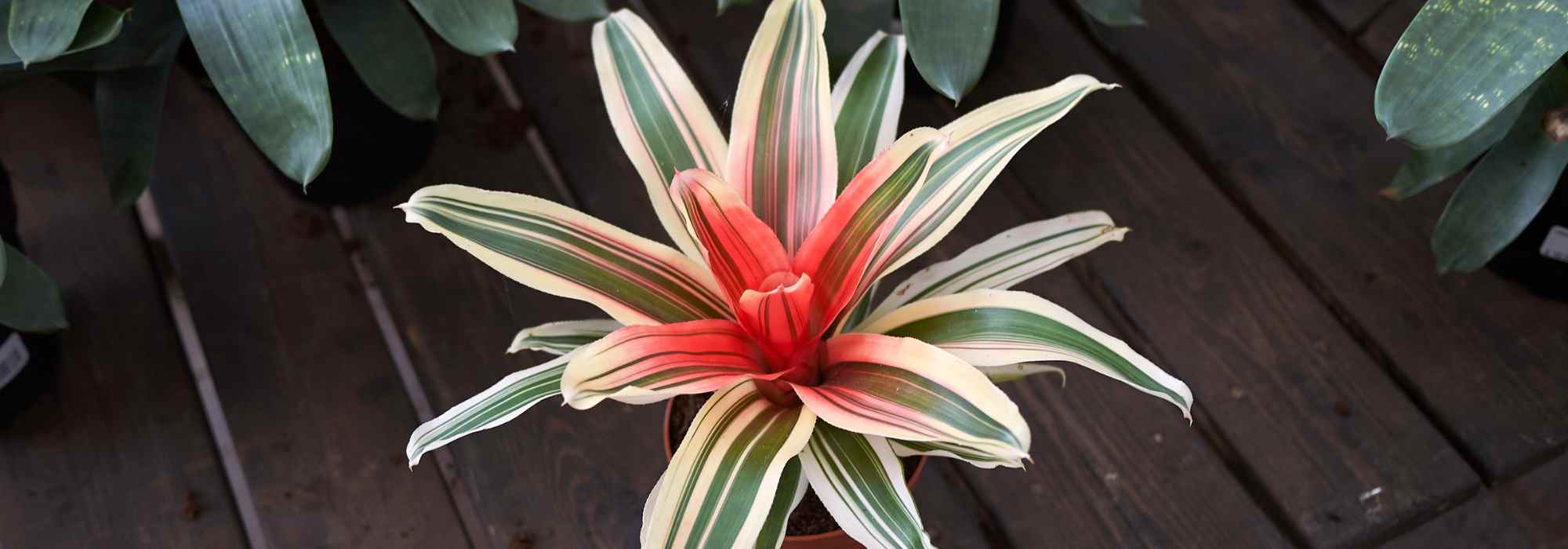
Neoregelia: care through the seasons
Watering, light, pruning, fertilisation and other appropriate care throughout the year
Contents
To bring a touch of exotic colour and brightness to interiors, Neoregelias are perfect candidates. These indoor plants native to Brazil are easy to care for, making them well suited to beginners. But to grow well and stay attractive, Neoregelia will still need some care, varying with season. We therefore explain how to care for a Neoregelia, season by season.
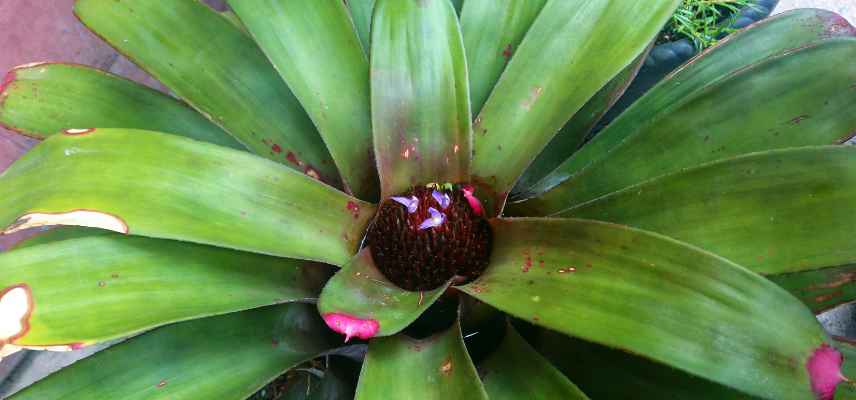

Seasons matter for plants even indoors.
In our homes, the impact of the seasons is felt less intensely. We generally maintain a fairly constant temperature year‑round. Indoor plants are therefore less exposed to weather extremes and are not affected by elements such as wind, rain or frost.
However, growing conditions will still change and will not be the same in summer and winter. Light levels and hygrometry (air humidity level) can in particular vary considerably with the seasons.
Let’s not forget that plants have their own vegetative cycle: Neoregelia has a growth period and also a resting period, during which its needs are very different. That is why maintenance actions (watering, fertilisation, pruning, light…) should be adjusted according to the seasons, even indoors. This is the best way to keep a Neoregelia healthy.
Spring: peak growth season for Neoregelia
In spring, most plants emerge from dormancy and resume growth. Neoregelia is no exception. It follows the gradual return of light and natural rise in temperatures. This is the period when the plant will need most care to develop well.
First, watering frequency will need to be adjusted. It will become more regular, roughly once a week or every 10 days. To know when to water Neoregelia, a handy tip is to feel substrate with fingers. If top few centimetres are dry, that is a sign to water. Due to tropical origins, Neoregelia likes warmth and humidity. It therefore needs soil that stays cool — never completely dry. Also, check leaf rosette: if there is no water in crown, you can also moisten it. However, avoid overwatering, which can encourage development of fungal or cryptogamic diseases (caused by fungi). To prevent this, remember to empty cachepot or saucer about twenty minutes after watering. To avoid forgetting, set an alert on phone. If you tend to overwater, consider bottom-watering. This means placing Neoregelia in a container of water — a sink or bath — so it can drink from below gradually. Plant will hydrate just enough, according to needs. After about twenty minutes, let container drain then return plant to place.
Since spring is season of renewed growth, it is time to take measures so plant develops harmoniously. For this, turn pot every 2–3 weeks. Even as temperatures milden, mornings and evenings remain cool: ensure Neoregelia is not exposed to draughts, especially during daily airing. Minimise large temperature swings.
Water, light… now feed plant. Neoregelia grows slowly and takes most nutrients from water and air. It therefore does not need heavy doses of fertiliser. At this time, you can simply give small boost by applying fertiliser specific for orchids or bromeliads, to encourage foliage development and intensity of colours. Always follow manufacturers’ instructions and consider reducing recommended doses: excess can cause culture problems (burnt roots, plants more susceptible to pests, etc.).
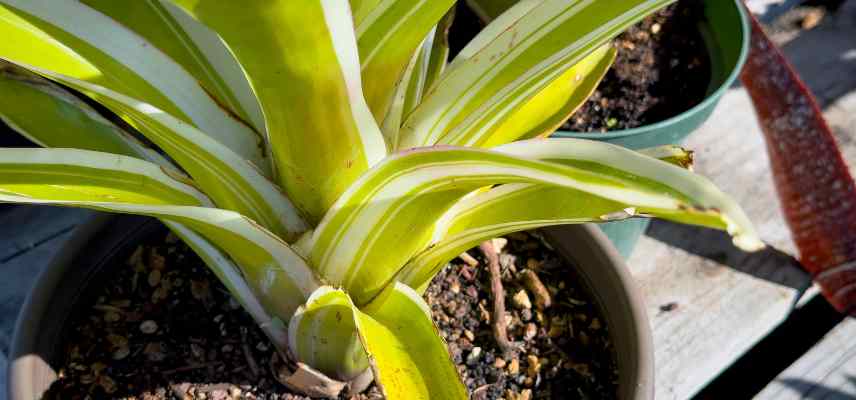
A little fertiliser will enhance colours
Neoregelia are fairly compact plants, remaining modest in size (20 to 50 cm diameter on average). However, if plant seems cramped in container (typically every 2–3 years, when roots protrude from pot), repot into larger container (prefer wider rather than deeper). Choose a pot with a hole in base so excess watering can drain away. As for materials, terracotta helps substrate breathe better, especially if watering is sometimes a little generous. Add layer of drainage at pot base, such as gravel or clay pebbles. Top with light potting mix suitable for epiphytic plants (specialist orchid or bromeliad mix for example) and water lightly.
If needed, prune any yellowed, dried or damaged leaves at base of rosette, using a clean pruning shear previously disinfected with alcohol. It is a simple action that reduces risk of disease transmission between plants. Once mother plant has flowered, after a few years it will gradually wither. Wait until plant is completely yellow before cutting at base. Apart from that, Neoregelia does not require pruning.
Finally, spring is also ideal season for propagation. Neoregelia mainly propagates by offshoots produced by mother plant after flowering. These are small offshoots that can be detached with a clean knife, then potted in a new container to obtain new specimens.
Summer: preventing heatstroke
During summer, Neoregelia continues to grow. At this time, watering and ambient humidity should receive all your attention. The plant must be protected from heat stress and drought.
As for placement, if Neoregelia is positioned behind a very exposed window (south‑facing in particular), consider moving it slightly back or installing a light sheer curtain. If the plant requires bright exposure, it prefers indirect light, which will not burn its foliage. Therefore favour east‑ or west‑facing aspects.
Next, watering will be increased at this time and may take place once to twice a week. But always allow the surface soil and the centre of the rosette to dry between waterings. Also ensure ambient humidity remains high, by adding clay pebbles to the saucer or cachepot. You can also regularly mist the foliage. Ideally use soft water. If you cannot collect rainwater, use filtered water or tap water mixed with an anti-limescale product or a little white vinegar.
No need to add fertiliser.
Finally, check your plant regularly for any signs of pests or disease: thrips, red spider mites, mealybugs, central rot, etc. Remember that plants whose natural needs are met are less prone to such cultivation problems.
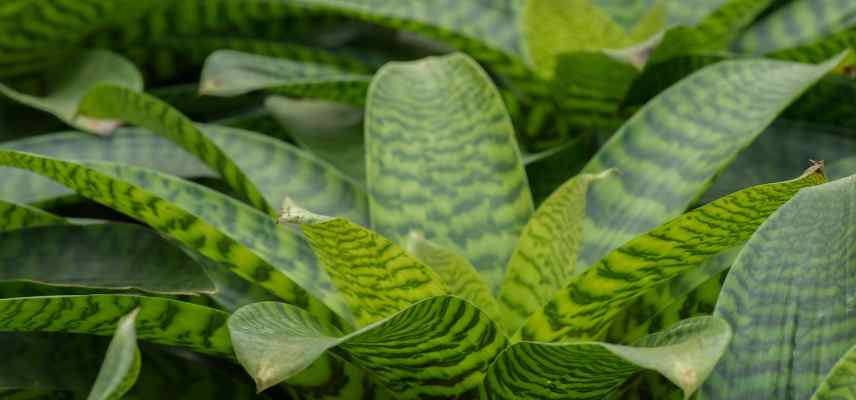
Neoregelia spectabilis
Autumn: transitional period of reduced activity for Neoregelia
In autumn, Neoregelia slows growth and gradually begins to prepare for winter dormancy.
Watering will therefore simply be gradually spaced out.
Winter: dormancy period of Neoregelia
Winter marks the start of Neoregelia’s rest period: it enters dormancy and stops growing. But that does not mean it should be neglected.
First, this can be a tricky time, mainly because of lack of light. Do not hesitate to move your plant so it can still benefit from several hours of light each day. If needed, you can also use artificial lighting suitable for tropical plants.
Also, our homes are often very warm at this time: radiators, fireplaces, stoves, ovens… Keep the plant away from all these heat sources. But do not place Neoregelia in a spot exposed to draughts or large temperature swings either. Ideally it needs an average of 18–27°C. Below 15°C it will start to suffer.
At this time, since interiors are very dry, do not neglect ambient humidity, which the plant still needs. If watering is reduced to a minimum (every 2 to 3 weeks), make sure to maintain regular misting. If stagnant water remains in the centre of the rosette, empty it after about 15 days, to limit the risk of bacteria or fungi developing, which can lead to crown rot.
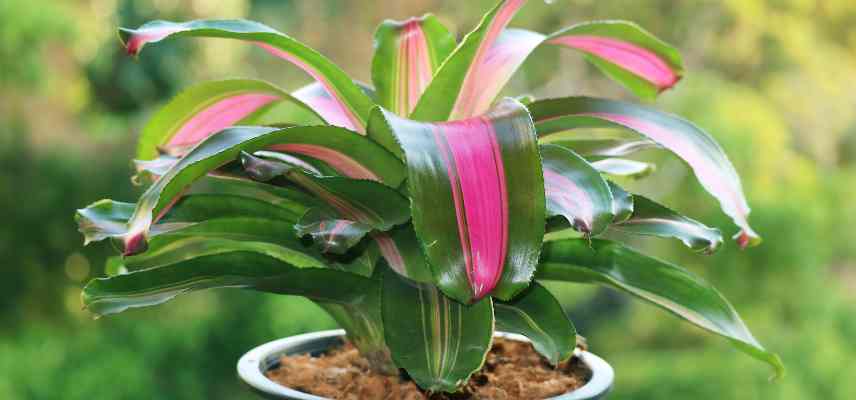
Neoregelia ‘Wolfgang’
- Subscribe!
- Contents
This form is protected by reCAPTCHA - the Google Privacy Policy and Terms of Service apply.

































Comments