
Wintering citrus trees: essential for their survival
Our tips to help your citrus trees get through winter in good condition
Contents
Les citrus trees inevitably evoke sunshine and warm climates, and for good reason: native to Southeast Asia, they are particularly cold-sensitive and can only tolerate brief, mild spells of freezing temperatures. Overwintering these fruit trees of family Rutaceae is therefore not a mere precaution, but a step that determines survival, vigour and future fruiting of the tree. Not to mention the delightfully fragrant blossom that fills gardens. With evergreen, glossy foliage, citrus trees are most often grown in pots — unless you are lucky enough to live and garden in an area with a very mild climate.
Discover all our advice on overwintering citrus trees, whether grown in pots or in open ground.

Understanding the dangers of cold for citrus trees
Clearly, citrus trees are particularly frost-tender. But it is essential to understand consequences of frost for these exotic fruit trees.
Not all the same!
Cold hardiness varies greatly according to species and rootstock.
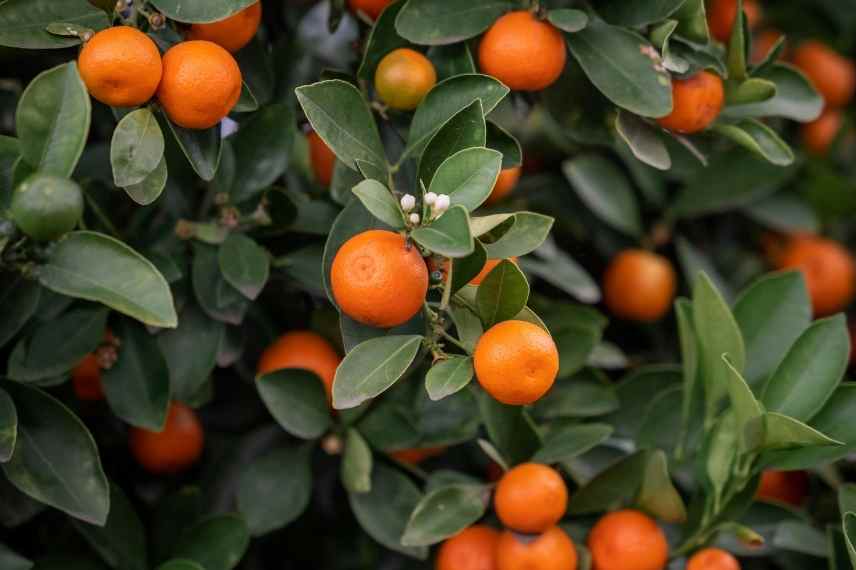
- Most frost-sensitive (lemon trees, lime trees, orange trees, mandarin trees, grapefruit trees…): they generally cannot tolerate temperatures below -2°C to -3°C for prolonged periods. Potted specimens are more vulnerable.
- Hardiest (kumquats,Poncirus trifoliata, yuzu): some, such as yuzu or Poncirus trifoliata, can withstand temperatures down to -8°C to -12°C when well established in the ground, but cultivation in pots remains trickier when facing frost.
The main danger is not only freezing of above-ground parts but especially freezing of the root ball. Roots are the most vulnerable; if damaged by cold, the tree cannot absorb water even when temperatures rise, which leads to death. Excess moisture combined with cold is an aggravating factor.
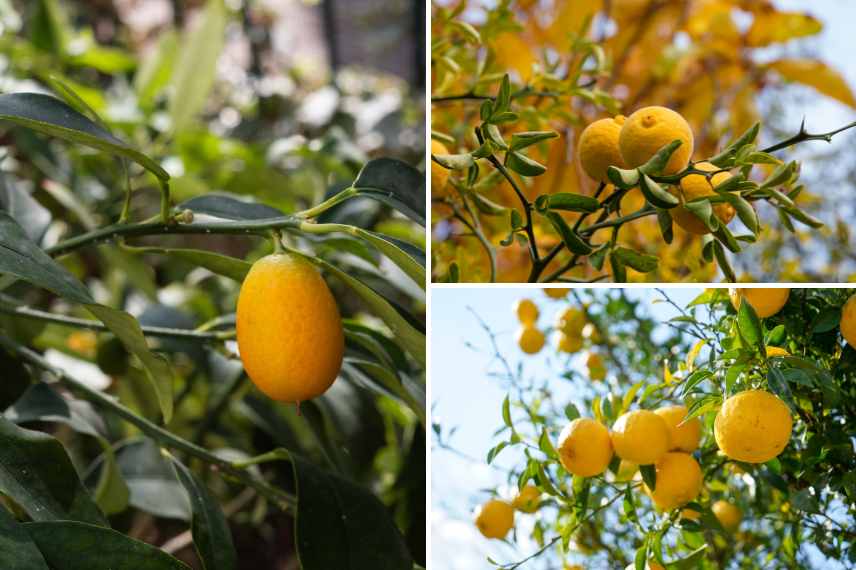
kumquat, Poncirus trifoliata and yuzu show greater cold tolerance than other citrus trees
In partial winter rest
Unlike most fruit trees in our temperate regions that enter full dormancy and lose their leaves, citrus trees, often evergreen, maintain reduced biological activity during winter. They are in a winter rest phase rather than true dormancy.
Their metabolism slows, greatly reducing water and nutrient requirements. Inappropriate watering or feeding during this period is a common mistake that can be fatal because it causes root rot and leaf drop.
Overwintering citrus trees grown in pots
In most temperate regions where frost is common, container growing is preferred to allow citrus trees to be moved to shelter. Citrus trees adapt very well to this, but care is needed when overwintering them indoors.
When to bring citrus trees indoors?
Golden rule is to bring citrus trees indoors before first frosts and, ideally, when night temperatures start to fall below 5 °C. Waiting too long subjects tree to unnecessary stress, but bringing them in too early is also harmful. Let them enjoy last rays of autumn sun and cool nights, which help them to harden off.
Before bringing them in, it is the perfect time to:
- Carefully inspect foliage, upper and lower leaf surfaces and stems for presence of pests such as mealybugs, red spider mites or diseases. It is easier to treat outdoors before overwintering
- Remove dead leaves, damaged fruit, and tidy surface of potting mix.
Where to overwinter citrus trees?
Ideal location must strike a delicate balance between three key factors: light, temperature and humidity. Most common mistake is to overwinter citrus trees in a warm house.
- Ideal temperature is between 5 °C and 10 °C (with a maximum of 12 °C). In a too-warm room (over 15 °C), plant resumes normal vegetative activity, but low winter light prevents sufficient photosynthesis. Plant becomes exhausted, grows etiolated and loses leaves (physiological leaf drop due to imbalance between roots and aerial parts). That is why ideal places are conservatory or unheated greenhouse, winter garden, very bright garage, stairwell lit by natural light…
- Light: citrus trees need maximum light in winter to maintain foliage. Place near a window while avoiding direct contact with cold glass, or better still in a greenhouse. If shelter is dark, use a full-spectrum LED grow light for about 10–12 hours a day to compensate for lack of natural light. Lack of light at high temperature is main cause of leaf drop indoors.

In winter, citrus trees need light, temperatures of 5 to 10 °C, and adequate humidity.
- Humidity: watering must be greatly reduced during overwintering, but it continues. Water only when potting mix is dry several centimetres deep, usually once every 2–3 weeks, using non-calcareous water. Rule is to let rootball dry between waterings to avoid root rot. In a warmer (above 12 °C) or dry room, maintain ambient humidity by regularly misting foliage with non-calcareous water to deter red spider mites and mealybugs. Finally, ventilate shelter regularly, especially on mild days, to renew air, avoid confinement and prevent development of fungal diseases.
Overwintering citrus trees in open ground
Planting in open ground is only feasible in regions with very mild winters, such as Mediterranean coast and some sheltered Atlantic areas. Even then, protection is often necessary during first years after planting or during exceptional frost events.
Insulation of soil and collar
Weak points of citrus trees are collar and roots. Therefore take following precautions:
- Apply a thick layer of organic mulch (straw, dead leaves, bark) of at least 10 to 20 cm at base of tree to insulate soil and maintain stable temperature
- Bank up soil around collar to protect it.
In winter, young citrus trees planted in open ground should be protected with mulch and horticultural fleece
Protecting foliage
When frost is forecast, protect branches and foliage.
- Wrap tree in one or more horticultural fleeces. This fleece lets light and air through while creating an insulating pocket of air.
- Always remove or open fleece on sunny or mild days to allow ventilation and prevent condensation, which would encourage development of fungi or rot.
What maintenance during overwintering?
During overwintering, your citrus tree should receive particular attention.
- Inspect your citrus tree regularly for pests, farinose mealybugs in particular, and for diseases. Early treatment is key.
-
No fertiliser should be applied during winter, even if the tree is bearing fruit. Fertilisation should resume gradually at the start of spring (March), when the plant is returned outdoors or when risk of frost has passed.
How to prepare for the end of winter?
Moving plants outdoors is as delicate a step as bringing them in. Thermal and light shock must be avoided. It is therefore out of the question to put them outdoors or expose them abruptly to cold without careful consideration!
-
Move citrus trees outside gradually when nighttime temperatures no longer fall below 5–8 °C, often late March to early April depending on region.
-
Do not put them out suddenly in full sun after months spent indoors. Ideally, put them out only during the day and bring them in at night for a week or two, or place them in a partly shaded spot to avoid leaf scorch from unfiltered sun, as winter leaves are sensitive. Only after this transition phase should watering be resumed more regularly and fertilisation.
- Subscribe!
- Contents
This form is protected by reCAPTCHA - the Google Privacy Policy and Terms of Service apply.


































Comments