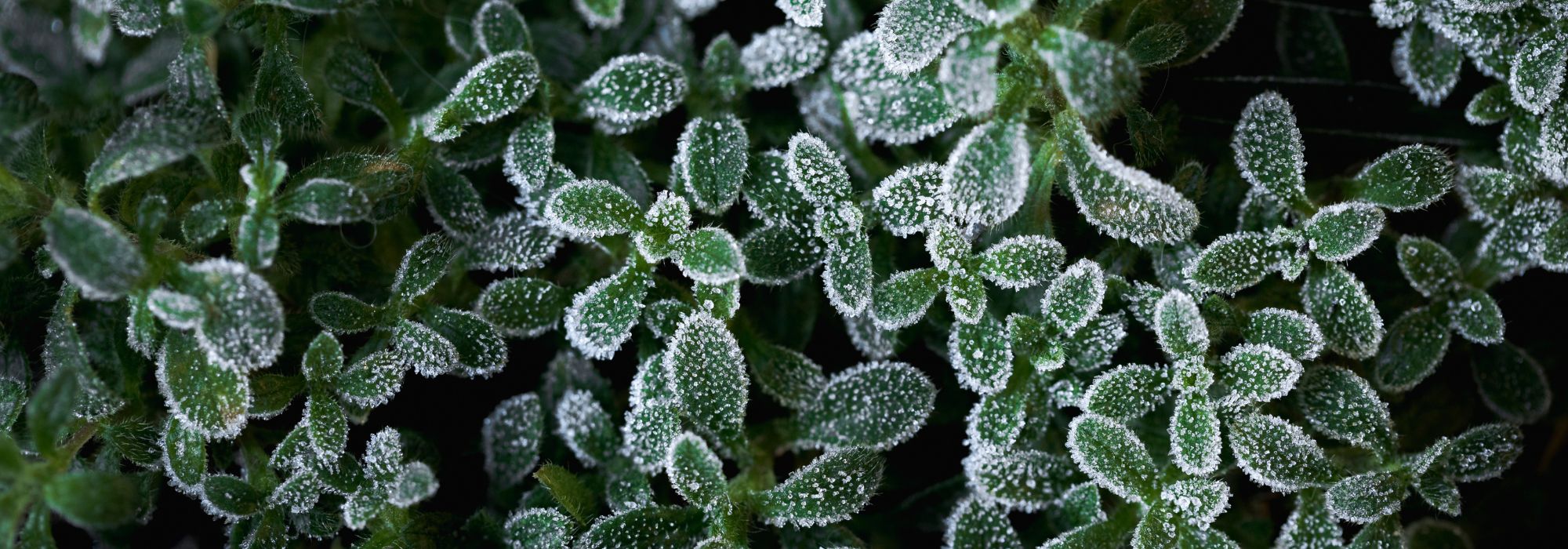
Late spring frosts: guide to frost-resistant plants
Choosing the right plants and crops
Contents
Spring is a paradoxical time for gardeners: while the first warm days and the return of the sun irresistibly draw us outside with our tools to plant, nights remain treacherous traps. A late frost, even brief or light, can wipe out weeks of sowing and attentive care in a single icy dawn. To avoid these weather setbacks, it is essential to learn to outsmart the calendar and to select varieties capable of withstanding drops in temperature without faltering. Here is how to work intelligently with the cold to build a resilient garden able to get through April’s whims and the notorious May frosts unscathed.

Why is spring so treacherous?
To protect your garden well, understand that plant hardiness is not a fixed trait but a biological state that changes with seasons.
Winter’s deep sleep: dormancy
In mid-winter, plant is in full dormancy. To survive frost, it expels much of the water from its cells and concentrates its sugars and mineral salts, thus creating a genuine natural “antifreeze”. It is thanks to this mechanism that a fruit tree can withstand -15°C without flinching in the middle of January: it is dry, compact and inactive.
Spring awakening
As days lengthen and soil warms, sap rises from roots to the tips. Tissues take up water to allow buds to burst and young leaves to unfurl. Plant is no longer protected by its natural antifreeze; it is now tender, supple and full of moisture.
And this is where the danger lies. If temperature falls to -2°C or -3°C in April, water in these young tissues freezes instantly. When it freezes, water expands: cell walls literally burst, like a glass bottle left in the freezer. On thawing, leaves and flowers blacken and wilt because they have been burnt by the cold.
Hardy vegetables
No need to wait for the “Ice Saints” (mid-May) to plant or sow in the vegetable patch. Some vegetables tolerate cool soil very well.
-
Leafy vegetables : lamb’s lettuce, spinach and spring lettuces (such as “Appia”) are not bothered by a light morning frost.
-
Sturdy root vegetables : radishes, carrots and turnips can be sown as soon as soil is workable. If a hard frost is forecast, a simple mesh or fleece will do.
-
The stalwarts : leek, garlic, onion and shallot are almost immune. Cabbages (especially kale) are also very frost-tolerant.
-
Peas and broad beans : unlike beans, which perish at the first cold snap, peas and broad beans will tolerate slightly sub-zero temperatures.
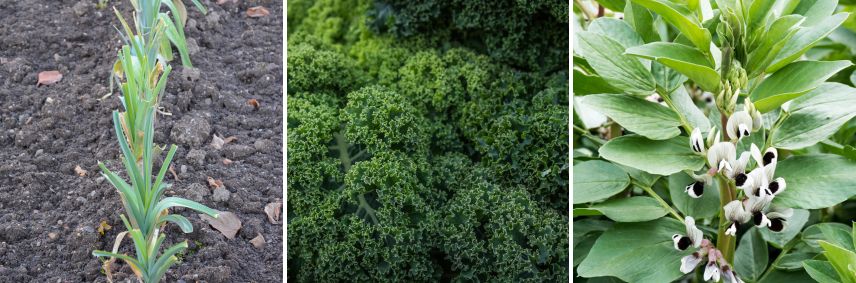
Leeks, kale and broad beans can tolerate a little frost without complaint.
Fruit trees: let's avoid disappointment
This is where risk is greatest, because if flowers freeze, there will be no fruit.
- Opt for late flowering: if your area is prone to April frosts, choose late-flowering varieties of apple (‘Melrose‘, ‘Belle de Boskoop’, ‘Golden Delicious‘…) or pear (‘Conference‘, ‘Doyenné du Comice‘…) varieties called “late-flowering”. They wait until risk has passed before opening their flowers.
- Soft fruit: redcurrants, raspberries and blackcurrants are generally hardier than stone fruit trees (peaches, apricots), which break bud earliest and suffer first.
- Go for overlooked or lesser-known fruit trees: the asiminier (pawpaw), the quince or even the common medlar flower late. The honeyberry, meanwhile, produces very early yellow flowers that can tolerate temperatures down to -7°C without dropping.
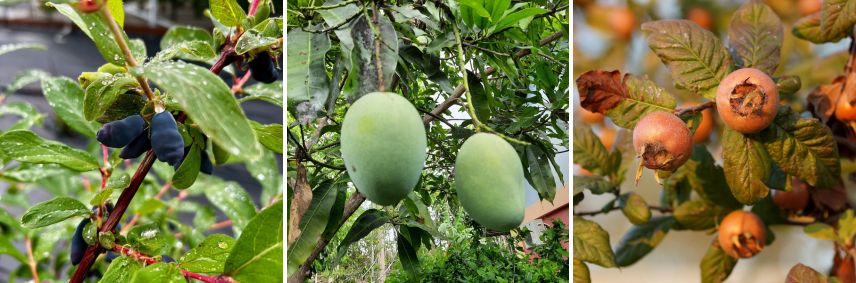
Honeyberry, asiminier (pawpaw) or medlar: how about trying some unusual fruit trees?
Very sturdy flowers
To enjoy a garden in bloom from March without fretting each evening about the weather, rely on these dependable choices:
- Pansies and violets : if they droop during a frost, they right themselves at the first rays of sun.
- Early-flowering primroses : they withstand morning frosts unaided.
- The hellebore (Lenten rose) : its flowers open from late winter and can literally be covered in snow or hoarfrost without suffering any damage.
- Bulbs : tulips, muscari, daffodils and snowdrops are adapted to the cold. Their flexible stems and waxy petals protect the reproductive organs well.
- Early shrubs : forsythia, cornelian cherry or the Japanese quince, to name but a few, flower on bare wood. Even if a flower is frozen, the next buds will take over. Contrary to popular belief, the fleshy flowers of the Japanese camellia tolerate temperatures down to −4°C. If frost is more severe, open flowers brown, but closed buds wait patiently for the thaw to open intact.
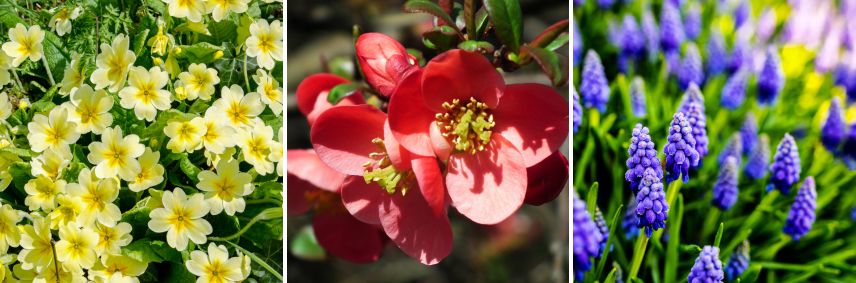
Don’t worry about frost for all spring flowers. Primroses, Japanese quince and muscari blooms cope very well with the cold.
Spring frosts: best practices to minimise damage
Anticipating is more effective than trying to save a plant already frost-damaged.
-
Location : do not plant tender species in low-lying areas of the garden (hollows) where cold air settles. Prefer well-drained spots sheltered from northerly winds.
-
Mulching : a good layer of straw or dead leaves around base of plants protects roots from surface frost.
-
Horticultural fleece : use it as a temporary “cover” at night. Important : remove it during daytime if sun is shining to avoid condensation and allow bees to pollinate flowers.
-
Water tip : this may seem counter-intuitive, but moist soil holds heat better than dry soil. Lightly water your plants at the base (not on the leaves) on eve of a forecast frost and in early afternoon to help gain one or two degrees. This market gardener’s tip is an excellent complement to horticultural fleece, but is not sufficient in case of severe frost below -3°C.
Gardener’s advice : be patient! For tender plants (tomatoes, basil, courgettes, geraniums), do not plant them out permanently before mid-May. Better to plant one week too late than two days too early.
- Subscribe!
- Contents
This form is protected by reCAPTCHA - the Google Privacy Policy and Terms of Service apply.


































Comments