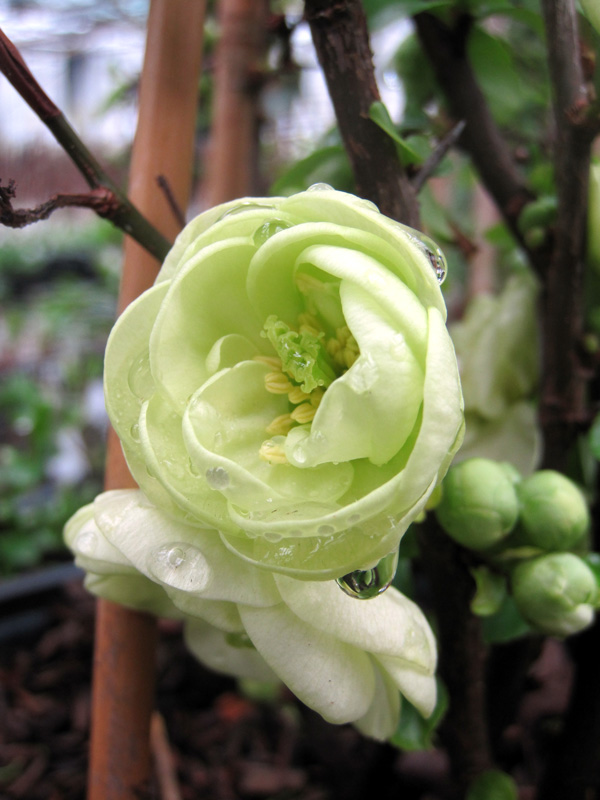
Chaenomeles speciosa Kinshiden: New, very elegant variety with porcelain white‑green flowers.
Chaenomeles or Japanese quince are finally in flower in our greenhouses, 2 to 3 weeks earlier than those in the garden; their abundant flowering marks the start of spring.
What is lovely about Chaenomeles is that they flower before producing leaves, so the flowers stand out perfectly against the twisted outline of the branches — reminiscent of certain Japanese prints showing arched branches studded with small, airy flowers, often red, against a winter landscape.
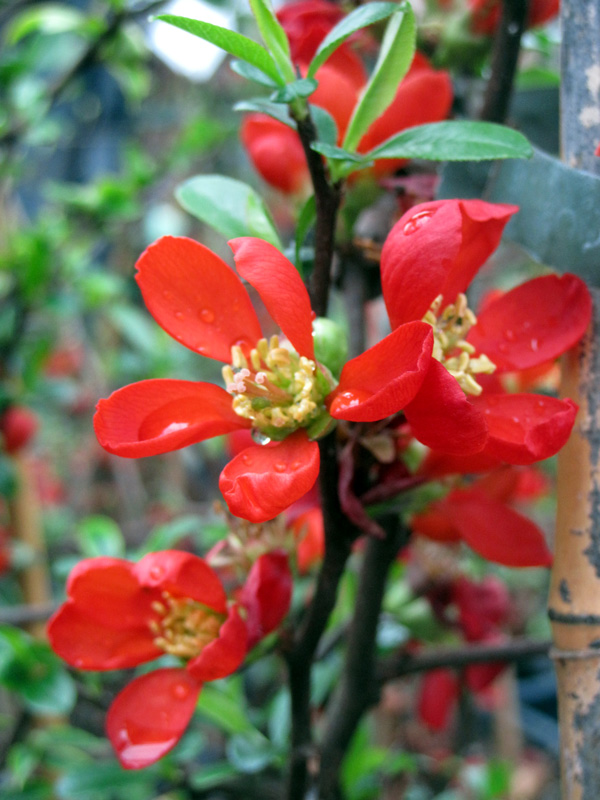
Chaenomeles speciosa Hot Fire: This intense red colour is often depicted in Japanese prints.
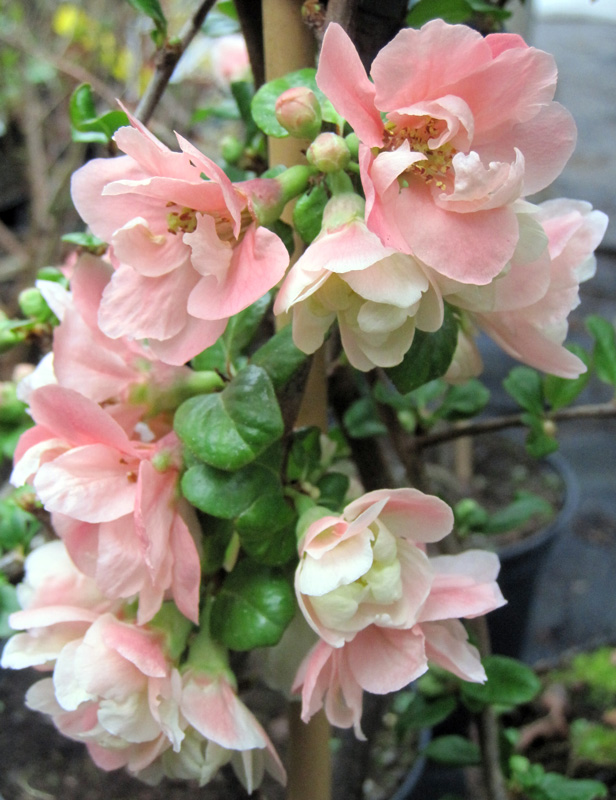
Chaenomeles speciosa Falconnet Charlet
Easy to grow, they thrive almost anywhere — in acidic or calcareous soil, in full sun or partial shade. What they really dislike are very heavy, waterlogged soils.
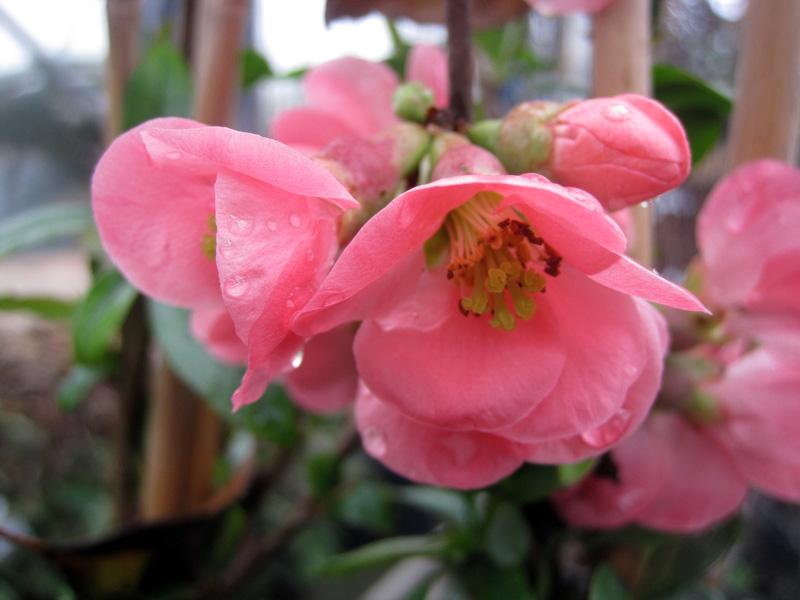
Chaenomeles speciosa Eximia: Variety with very large flowers.
There are two main categories of Chaenomeles: C. speciosa and C. superba. The speciosa are recognisable by their large flowers; they flower a little later than the superba and are slightly larger. The superba often produce smaller but more numerous flowers; they have a more compact habit and somewhat more twisted branching than the speciosa.
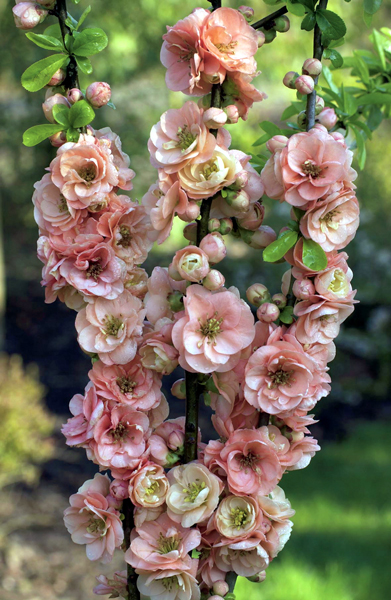
Chaenomeles (x) superba Cameo: Flowers are smaller but more numerous.
Japanese quinces will thus flower for 3 weeks to a month and later, in summer, some will bear yellow fruits the size of a ping‑pong ball. Note that the fruits are eaten cooked and are reportedly as tasty as those of the traditional quince (Cydonia oblonga). Unlike the latter, Chaenomeles have the considerable advantage of taking up very little space: as adults they reach about 2 metres in height and width, making them well suited to small gardens and to container growing.


































Comments