Theine and caffeine sometimes need to be avoided in diet. People suffering from digestive disorders and acid reflux — the well-known GERD — must especially find alternatives to coffees and teas they used to drink. Others prefer beverages not sourced from other side of the planet as part of an eco-responsible approach, while pregnant or breastfeeding women look for stimulant-free products.
Which flavours come closest to coffee and tea? While chicory immediately springs to mind when discussing alternatives to these two timeless drinks, there are a few others to discover. Here are best coffee- and tea-substitutes without caffeine or theine for people who are intolerant or sensitive, or for anyone seeking new flavours.
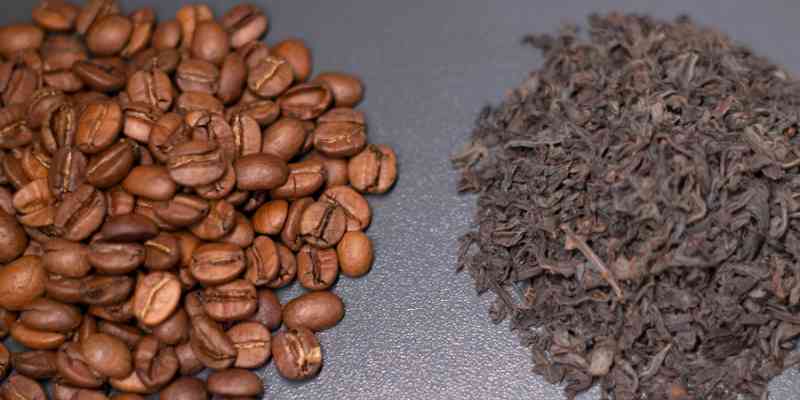
Coffee alternatives: not so recent after all!
Even if in 2025 some millennials — and sometimes a bit of a hipster, to be frank — have taken a shine to coffee substitutes, it was mainly during darker periods of history that people tried to replace coffee. Notably during second world war, when alternatives were sought in a period of extreme shortage. At that time people turned mainly to chicory, but also to cereals or nuts such as acorns, bran, barley or rye.
Even earlier, in 1895, Postum was born in United States — a drink made from roasted bran with molasses added. Concerns about coffee’s side effects already existed at that time. Postum was widely consumed during second world war in America and then Canada, and within Mormon communities that avoid coffee.
Coffee substitutes
There are actually rather few substitutes that recreate same sensation as a piping-hot cup of coffee, because flavour is often quite distant. Roasting stage is a trick to restore black colour and toasted aromas that simulate espresso.
Chicory
I will always remember Leroux chicory packets at my Breton grandparents’ — ahead of their time! And yet brand originates in north of France and is one of region’s strong emblems alongside endives or beer.
Chicory is THE drink that replaced coffee on millions of French breakfast tables in 1950s, although it had been consumed since late 19th century. From a pretty perennial plant with blue flowers, Cichorium intybus var. sativum, chicory is made from roots that are roasted. Soluble chicory has gradually been developed alongside ground chicory for convenience, then a liquid version, a little sweeter, and more recently organic chicory.
Characteristic is bitterness and slightly caramelised note. It is a soluble powder to dilute in boiling water or milk, to which sugar may be added to taste, as with coffee.
NB: For the record, chicory was already cultivated in ancient Egypt and Greece, roasting roots to extract powerful flavour, and Napoleonic era elevated it to stardom thanks to blockade on coffee imports from England!
Be careful not to buy blends of coffee and chicory if you are intolerant. Of course you can make own blend at home if you just want to reduce caffeine dose!
My view: you must appreciate its bitter side — pure chicory is very strong on palate. It may be closest substitute to coffee for morning coffee-with-milk (which tones down bitterness) and interesting for price, remaining cheaper than some options but still economical for fans of long coffees.

Roasted cereals
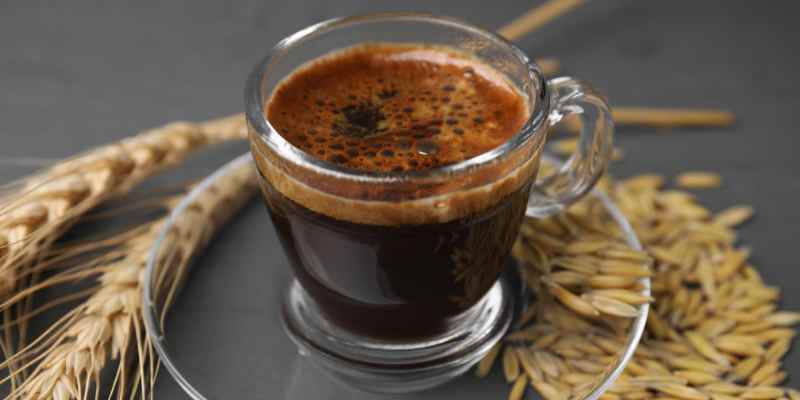
These are very interesting options that aim to mimic coffee through roasting process that produces malty, toasted, bitter and more or less full-bodied or earthy aromas. Best known and easiest to find is barley coffee, but specialist shops also stock spelt coffee or rye coffee. Advantage of these products is they are from organic supply chains and generally artisanal and local (many currently sourced in Brittany). They are prepared like coffee in various machines (percolator, filter coffee maker, French press, moka pot…).
Orzo coffee
This is one of most ambitious substitutes for replacing caffeine, and the one Italians adopted during embargo imposed on Fascist Italy in second world war, hence name (Italian caffè d’orzo, literally barley coffee).
My view: I enjoy the coffee ritual — espresso cup, black colour and slight crema when prepared in a percolator. Flavour is not comparable with coffee, so don’t expect same thing, as it is much lighter. It reminds me of filter coffee. For caffeine-intolerant people or those with stomach issues, it is one of my best allies, leaving pleasant aftertaste.
NB: ready-made mixes combining chicory, barley, rye, acorns and/or figs are also available in shops or online.
Substitutes made from flower seeds, fruits… or kernels
Unlike chicory, these come from seeds or nuts:
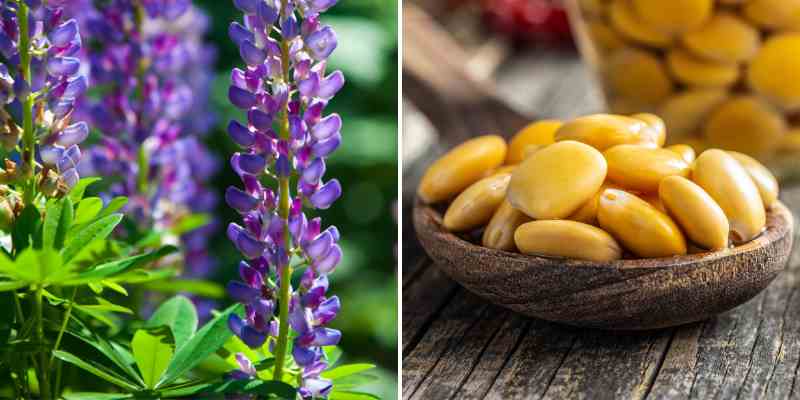
Lupin coffee
This is one of locally grown alternatives recently developed in France, and for longer in Italy and Germany, made from seeds inside lupin pods, that superb perennial from legume family. Again, very old consumption dating back to ancient Egypt!
Flavour may be closest to coffee. It is roasted to varying degrees depending on brand, giving more or less chocolatey and toasted notes. Peculiarity? Grind is coarser than coffee, so use less — between 20 and 50% less — than usual coffee powder quantities because it expands more.
My view: it has a bit more “body” than barley coffee, with a stronger taste. It doesn’t work well in percolator, so I use my small Turkish coffee pot, a cezve!
NB: avoid for people allergic to peanuts or soy.
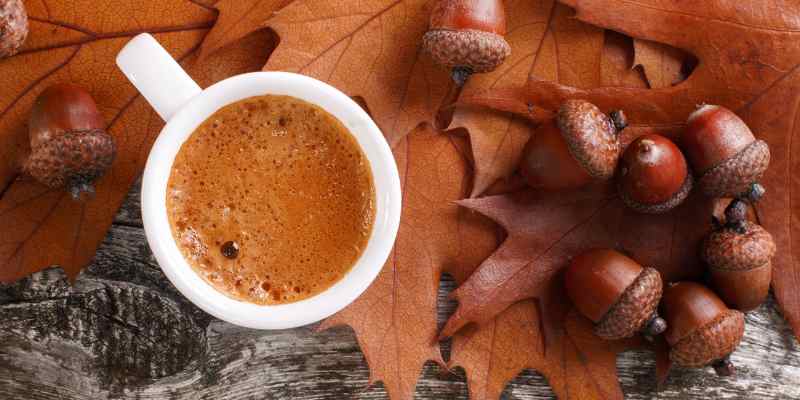
Acorn coffee
Recipes and videos now appear on wild food sites. Yet this coffee substitute also emerged during second world war. Process involves drying, shelling, then washing and boiling several times and finally roasting the “almonds” inside acorns before grinding — and it must be done correctly because oak acorns are naturally toxic to humans. If you make it yourself after a walk in woods, be sure to follow steps carefully to remove very toxic tannins contained in oak fruits.
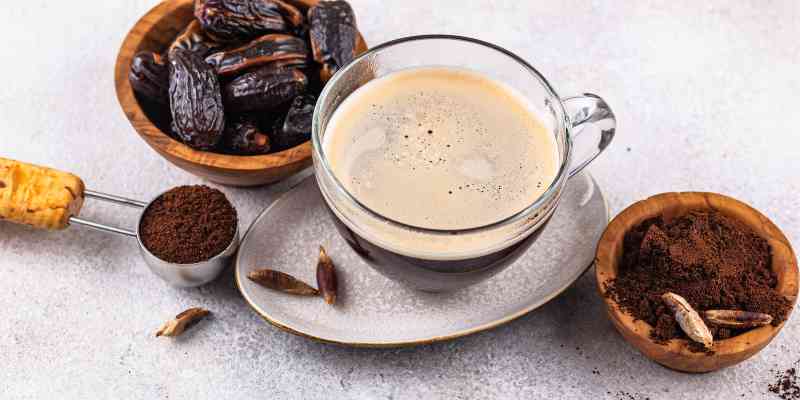
Date-kernel coffee
…or rather coffee from date pits! More complicated to make at home unless you live in Mediterranean fringe countries, as you need to crack dates and grind pits, so not easy — but date-pit coffee is now an option to consider. It has advantage of valorising this plant waste.
It’s a newer option found in organic shops where pits are roasted and ground. It’s said to have caramelised flavour. Of course it is least local of coffee substitutes.
My view: I haven’t tried it yet, put off a little by price per pack (around €15 for 200 g, though cheaper online). If you know it, feel free to leave opinion in comments!
Tea alternatives
For tea lovers who prefer lighter brews such as infusions or decoctions, and who can no longer drink theine for health reasons, several aromatic alternatives are also worth trying.
Rooibos
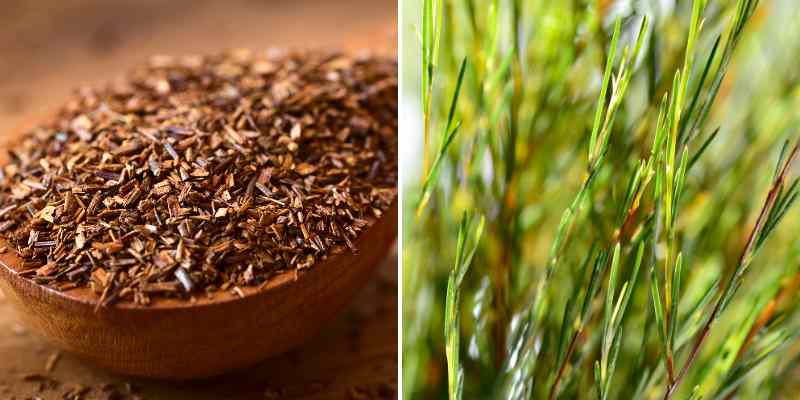
Little known a few years ago, rooibos — “red bush” in Dutch — has established itself as most interesting alternative to replace tea. First because flavoured rooibos (vanilla, almond, red fruits, etc.) can surprisingly resemble tea. Second because it is completely free of theine. Finally because like green tea it contains antioxidants.
Its red colour gives nickname red tea or African tea, though it is not tea at all, as soon as you open packet. Native to South Africa, rooibos comes from small shrub Aspalathus linearis, of legume family, growing in sandy soils around Cape. Stems and fine acidular leaves are used, which are crushed and sometimes fermented.
It is prepared like tea by infusing crushed stems sold loose or in bags.
Specialist tea merchants offer natural rooibos and a wide range of flavoured varieties. Wooded flavour is appealing for those used to black teas.
My view: best of tea substitutes, widely distributed and now available in very large range.
NB: honeybush from Cyclopia or “honey bush”, another South African plant, is milder and sweeter.
Sobacha or buckwheat infusion
Again a roasted cereal: buckwheat used as tea substitute. From long Japanese tradition (soba means buckwheat in Japanese), this infusion made from roasted buckwheat seeds has very pale yellow colour and distinct buckwheat notes. Sometimes called buckwheat tea by extension, although technically an infusion.
Price seems high compared with other alternatives listed here, but more affordable if you buy buckwheat seeds in shop and prepare by toasting seeds yourself.

Mugicha: barley infusion
Here again roasted barley, this time in a lighter version closer to an infusion. Steeping time is longer, about 10 minutes. From Japanese tradition (drunk in cooler regions), it suits those who mainly enjoy green or very light teas.
Moringa
Moringa is a life tree native to India. Name also refers to infusion made from tree leaves. Flavour is very grassy, close to matcha. However it has a stimulating, energising effect.
Teas lowest in theine
For those sensitive to theine, consider teas naturally lower in theine such as Kukicha with iodised, minty taste (made from stems), or Bancha, astringent, produced from mature leaves picked late, or Hojicha, a roasted green tea with woody notes. Lapsang Souchong teas, interesting for pronounced smoky flavour, are smoked. Jasmine white tea is another option.
Golden milk or golden latte
I mentioned this recently in article about uses of turmeric in cooking. Originating in India, this drink does not try to resemble any theined or caffeinated brew. Here softness and indulgence take centre stage, perfect to replace cosy tea moment in winter. It has become my favourite winter snack: milk, turmeric, cinnamon and honey — delicious.

Good to know
- Beware of mate and matcha: they contain as much or more theine/caffeine than many other drinks!
- Theine content does not depend on tea colour (black, green, white) but on leaf processing and notably leaf “youth” (first leaves of harvest are richest in theine, while more mature leaves contain less)
- So-called decaffeinated or de-theined teas and coffees undergo chemical-solvent treatments… avoid!
- For people sensitive to theine, it is still possible to partially and naturally “de-thein” drink by discarding first infusion water after about 30 seconds.
Further reading
Learn more about rooibos in this excellent National Geographic article: Rooibos, the “miracle” infusion from South Africa.
Have you tried any of these alternatives? Tell us about it!

































Comments