Contrary to what its name might suggest, lemon balm water is not a simple decoction or infusion of lemon balm. Eau des Carmes, its other name, was developed in the early 17th century in Paris, from a blend of an assortment of plants and spices… and alcohol.
Benefits, history and a homemade recipe: I explain everything you need to know to easily prepare your own lemon balm water in this tutorial.
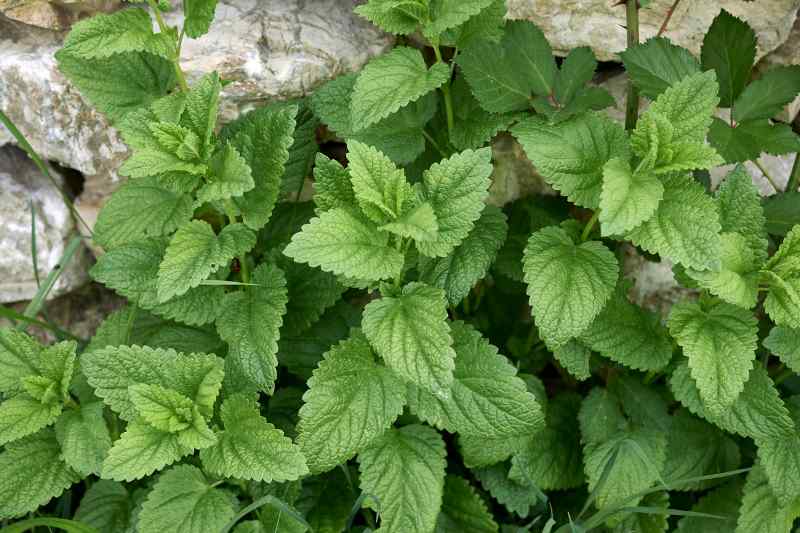
Lemon balm: a plant with many benefits
Some reminders about lemon balm (Melissa officinalis) and its benefits are in order because, although invasive in a garden, it has genuine health virtues recognised by universal pharmacopoeia.
Used since Antiquity for its aromatic properties, it was introduced into France in the Middle Ages as one of the flagship plants of the physic garden. Among its benefits, today we chiefly note its calming, digestive and antispasmodic properties, which still see it included in herbal teas for difficult digestion. It was also widely adopted as a miracle remedy for nausea, migraine and dizziness, and as a panacea for anxiety, "melancholy" and dark thoughts — what we would now call depression and stress.
Lemon balm owes its benefits to a synergy of compounds: terpenes (citral, citronellol, geraniol) which give it its lemon scent and antispasmodic properties, polyphenols (such as rosmarinic acid) and coumarins which enhance its anti-inflammatory and relaxing effects.

Eau des Carmes: 400 years of history
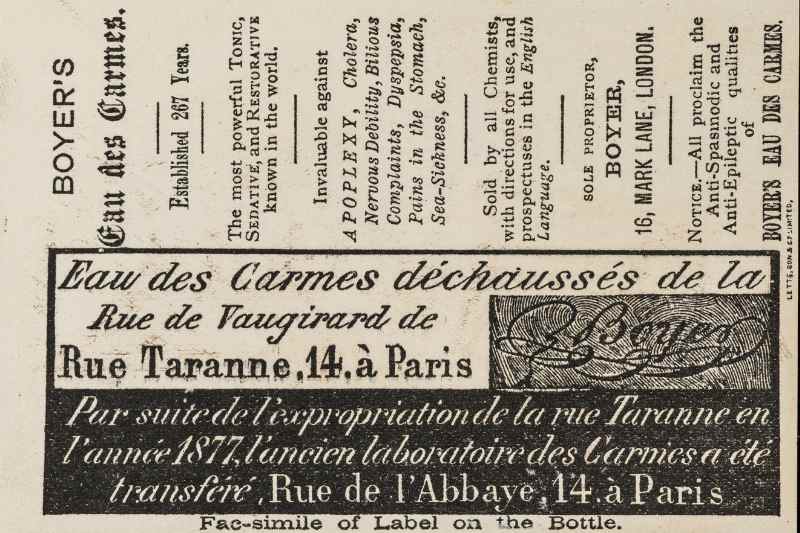
Invented by apothecary Pierre Boyer in 1611, eau des Carmes is a precise blend of water, alcohol and fourteen aromatic plants and nine spices, presented at the time as a miracle elixir. Marketed as a universal remedy (and even used as eau de toilette at the court of Louis XIV), it became such a success that Louis XIII made it his official potion, and the Carmelites cleverly profited by producing it in their convent. As an anecdote, Richelieu always kept a small vial of lemon balm water to calm his terrible migraines, which no physician of the time could relieve. This "water" survived the centuries to become a Parisian legend, gradually exported to neighbouring countries — England, Spain, Germany and Italy.
The historic manufacturing address is the Discalced Carmelites' convent, rue de Vaugirard in Paris. After the Revolution, production moved to 14 rue Taranne, an address still printed on bottles of lemon balm water, then later to Carrières-sur-Seine, where it is produced today under the name Renouard Larivière & Cie. Lemon balm water is still sold in pharmacies today.
When to harvest lemon balm for making lemon balm water?
Fresh leaves are used for this preparation. As with many aromatic plants, it is best to harvest in spring, before flowering, to benefit from foliage rich in aromatic compounds. Cut stems once the dew has dried, on a fine day.
Homemade recipe: make your own lemon balm water
Although the recipe was jealously guarded by the Boyer family and several versions have been created, the ingredients are well documented: lemon balm, lemon zest, angelica, lavender, chamomile, rosemary, thyme, sage, savory, mugwort, marjoram, watercress, lily of the valley, cowslip for the plants, and for the spices, green anise, fennel, cinnamon, nutmeg, cloves, coriander, gentian root, angelica root and sandalwood.
Lemon balm water can be made more simply using only lemon balm and lemon peels for the plants, and green anise seeds, fennel seeds, plus cinnamon and cloves — ingredients that contribute most to the desired effects and that are often found in the kitchen or are easy to obtain. Here is my "light" recipe, inspired by the Carmes, simpler to make at home:
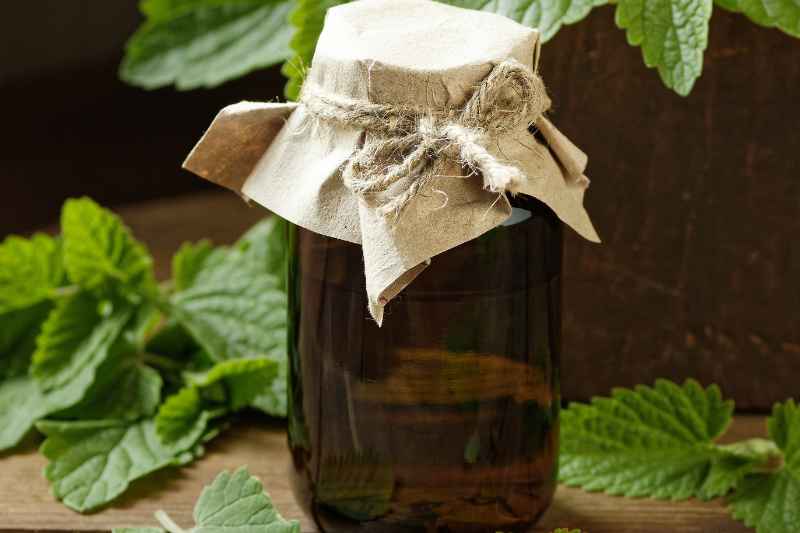
Ingredients
- 500 ml neutral spirit at 40–50% (eg vodka) or brandy at 40%
- 500 ml water
- 50 g fresh lemon balm leaves (about 3 handfuls fresh lemon balm)
- 30 g organic lemon zest
- 7 g green anise seeds
- 5 g cinnamon
- 5 g cloves
- 5 g fennel seeds
The 4 steps:
- In a jar or large glass bottle, mix the bruised leaves of lemon balm, the lemon zest, anise and fennel seeds coarsely crushed with a pestle, the cinnamon and cloves. Pour over the alcohol and water. Stir, then seal tightly.
- Let macerate for 10–15 days away from light, shaking the jar once a day.
- Strain through a clean cloth, muslin or a coffee filter, then decant into a dark glass bottle with an airtight lid (screw cap or cork both suitable). Lemon balm water is almost ready to use!
- Allow to rest for 48 hours in the bottle;
- Use: dilute 10–20 drops in a glass of water, a herbal tea, or on a sugar cube. Store in a cool place.
- Storage: after opening, keep away from light, in a cupboard; this homemade lemon balm water can keep for several years thanks to the alcohol.
Further reading
Find out everything about lemon balm water in this comprehensive article, as well as on Wikipedia, and on the website of the Society for the History of Pharmacy.

































Comments