Sculptural angelica (Angelica archangelica) appeals to many gardeners for its unique flowering in huge, tangy globes. Beautiful to look at and melliferous, it also provides edible stems and roots with medicinal properties. Let’s sow it quickly in the garden or vegetable plot to enjoy this atypical, generous plant!
When to sow angelica?
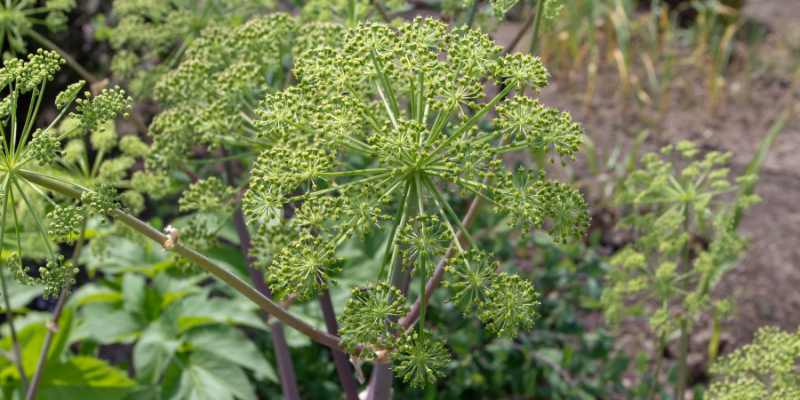
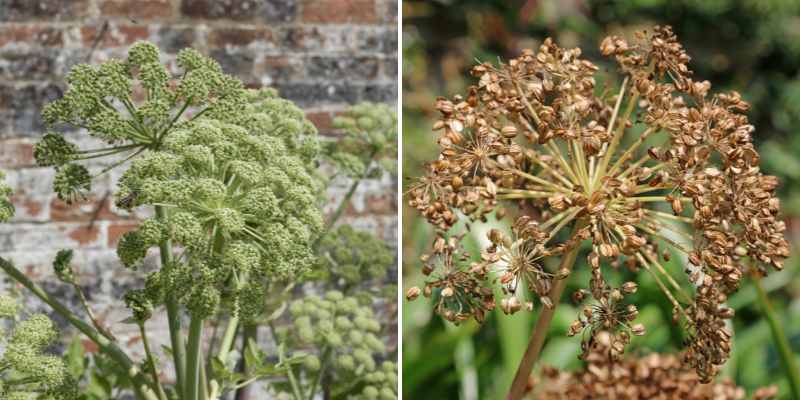
Angelica is a biennial plant that produces leaves in the first year and strong stems bearing large, round, lime-green umbels in the second year, then dies (it is semelparous). The germination viability of the seeds is unfortunately short.
It is sown:
- in March or April, after vernalization, that is a cold treatment of the seeds
- or between July and September, using freshly harvested seeds because angelica is fussy with slightly old seed lots — that’s its little flaw!
Where to sow angelica?
Angelica officinalis is sown directly in the ground, outdoors, in many regions. Do not sow in a pot — it is far too imposing for container culture.
It is as lovely to look at as it is to eat! It can therefore be planted either in the vegetable garden or in the ornamental garden, always leaving plenty of space around this giant. If you have a small physic garden, a physic garden, it fits well alongside other herbalism plants.
Here are its growing requirements:
- Soil: should be fresh to moist, deep and fertile (rich in humus), not sticky, neutral to slightly acidic;
- Light: partial shade or sun suit it, or light shade in the warmest regions as it needs soil that stays cool;
- Companion plants: take advantage of angelica’s pollen- and nectar-rich nature by planting it near vegetables such as courgettes, peas and tomatoes; alternatively near aromatic infusion plants such as fennel and lemon balm.
How to sow angelica?
- Place seeds in cold, in the bottom of the fridge, for around ten days for spring sowings.
- Amend the soil with compost or manure in late winter.
- Mark out shallow furrows (1 cm), spaced 30 cm apart.
- Sow 3 seeds per cluster.
- Cover with a thin layer of soil and water with a fine spray.
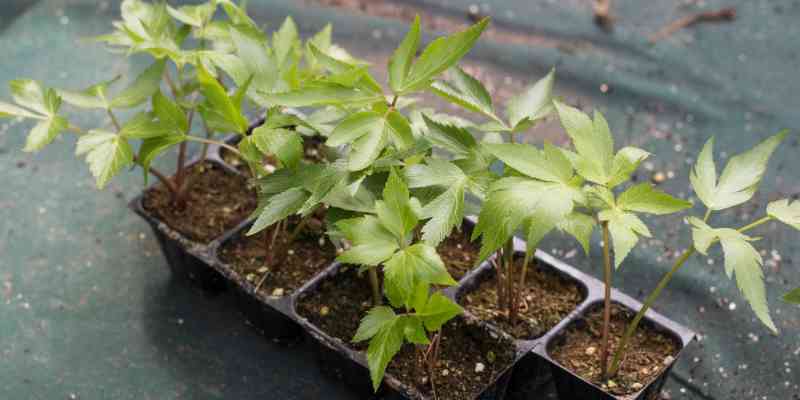
- Germination takes about 3 weeks.
- Transplant 90 cm–1 m apart in all directions to their final position, keeping the strongest plants. For summer sowings, transplant well-developed seedlings in March of the following year.
- Water generously; angelica likes plenty of water.
- Mulch to keep the soil cool.
You can also sow angelica in a seed tray in spring: place the whole tray in the bottom of the fridge or in a cold frame for two weeks. Then place the tray outside at 10–12°C. Germination will occur at 20°C.
Did you know?
- Angelica belongs to the umbellifers (Apiaceae) that self-seed: keep some flowers if you want to save seed or share some; small spontaneous seedlings often appear from autumn and can be transplanted in spring.
- Once the plant has flowered (between June and July), you can extend its lifespan by one to two years (or a little more) by cutting off its inflorescences: this increases leaf production.
- Angelica root is one of the ingredients of Carmelite water featured in this tutorial.
Key points
- Sow the freshest possible seeds and cold-stratify them in spring
- Angelica needs sun and soil that stays cool: partial shade in most regions; mulching recommended!
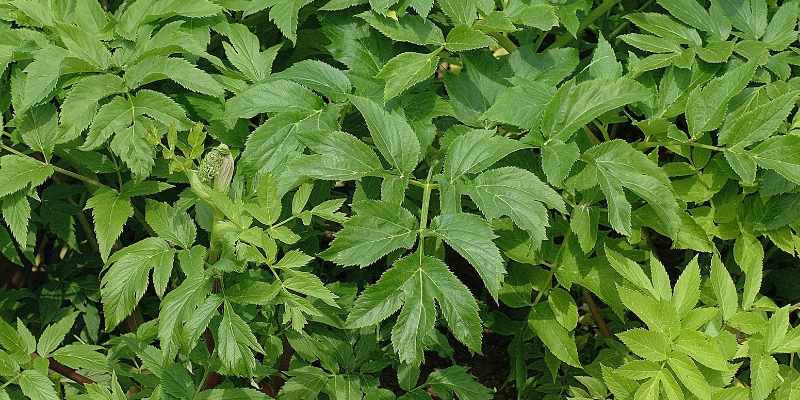
- Be patient when harvesting, it is a biennial (or even triennial): stems and roots are harvested in the second year.
Learn more about angelica
See our full file: Angelica: sowing, planting and care, and our ideas for pairing with angelica. Discover with Ingrid the candied angelica recipe and how to harvest and store angelica seeds.


































Comments