Here’s a distinctive trend emerging in outdoor spaces, and not only among landscapers fond of conceptual gardens or in coastal areas! While a sand garden is particularly suited to coastal gardens, it proves to be an undemanding, on-trend garden, halfway between a gravel garden and a dry garden, perfectly in tune with current climate upheavals.
We invite you to discover it in three scenes that demonstrate its aesthetic appeal and sunny atmosphere!
Sand garden: a landscaping trend between frugality and aesthetics
Far from the image of the traditional Japanese zen garden with raked gravel or pale sand, the sand garden imposes itself as a new version of the garden. It retains a sense of serenity but transposes it into a warmer register, where maintenance and watering are reduced to an absolute minimum. It answers a need created by climate change: how to introduce more Mediterranean plants into northern regions? Even if rising temperatures allow it, the problem of waterlogged winter soils, often fatal to these plants, remains. The sand garden is one solution, providing effective drainage.
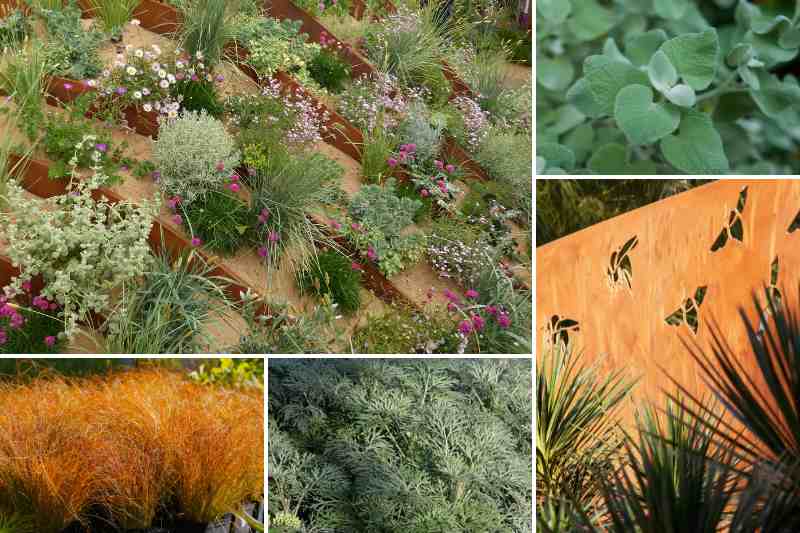
It is a functional garden, still experimental globally, which showcases plants that ripple in the wind, like a reminder of a sea that is not always present. It also emphasises contrasting materials and textures, often using Corten steel as a support, woven willow in tontines or sculptures, large stones or retaining walls.
Undemanding plants grow in a substrate made up of a thick layer of sand. They therefore need to draw water from deep down to survive. For this reason we choose the most drought-tolerant plants and xerophilous plants, those whose taproot systems mean they will withstand heatwave summers.
We also seek to enhance the golden aspect of the sand using a palette of warm tones available to us, both in plants and materials. Plants will generally be low-growing, mat-forming or supple, also incorporating some greyed foliage to reinforce the impression of warmth.
A holiday feel
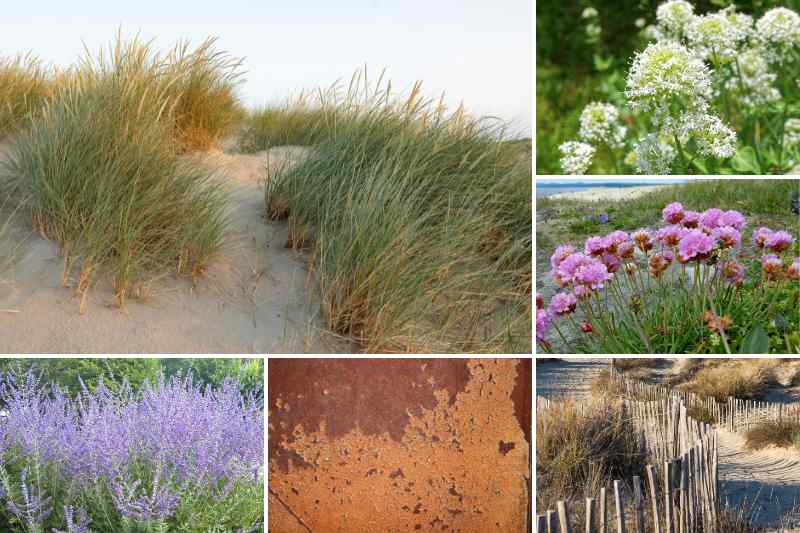
Coastal gardens, and especially those located right on the coastline, are difficult to plant because of the omnipresence of sand on site. They are perfectly suited to the constraints of a sand garden. In a beach-return spirit, the focus is fully on the sand-and-beach duo, taking inspiration from the dune ecosystem.
Essential plants: valerian, Lagurus ovatus and oyat (Ammophila arenaria), Armeria maritima 'Vesuvius' (sea thrift), sandwort, Erigeron glaucus 'Sea Breeze' or Erigeron karvinskanius, sand carnations, Perovskia, blue fescue, sea holly (Eryngium maritimum), milk thistle, etc.
To bring back vegetal blond tones, use wooden slats as decking, mini sand fences, and pair with coppery accents such as a brazier, useful for summer evenings.
Our tip: take care not to multiply beach clichés. Restrict decoration to sand alone, without superfluous additions of pebbles, shells or other seaside trimmings to avoid caricature. Plants create the scene, not the other way round!
Contemporary sand garden
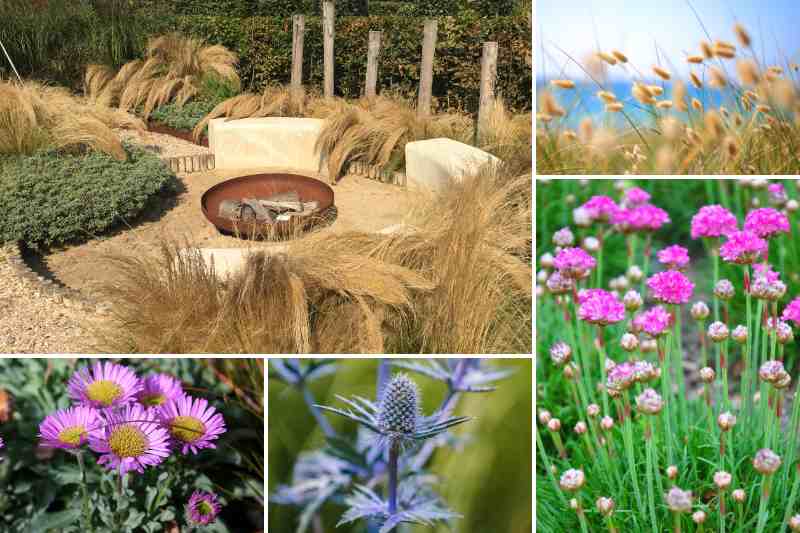
At the opposite end from the dune garden that naturally links to its environment, the idea of undemanding plants and sand also evokes minimalism and the mineral feel of modernist gardens. The sobriety of the sand, combined with an appropriate plant palette, allows creation of a sand garden that suggests a coast not necessarily nearby, in perfect harmony with contemporary architecture.
Here, colour is conceived in monochrome, or in white/black, white/mauve or purple and green duos, to name a few pertinent combinations. Plants are chosen for their prostrate habit, their original textures or the shapes of their inflorescences. Greyed tones for foliage are also favoured to blend well with often anthracite outdoor furniture. Corten steel, used for boards or attractive windbreaks, stands out as a material that enhances the sand’s sheen, as does brick, which can serve as a path.
Essential plants: silver santolina, Artemisia 'Powis Castle', Ballota pseudodictamnus, medium to tall grasses such as coppery Carex (Carex testacea), the movement of Hordeum jubatum, graphic silhouettes (Cordylines, Yuccas) on flat ground, and low to medium plants as on a shaped sand mound (sea thrift, creeping gypsophila, wild thyme, etc.).
South African atmosphere
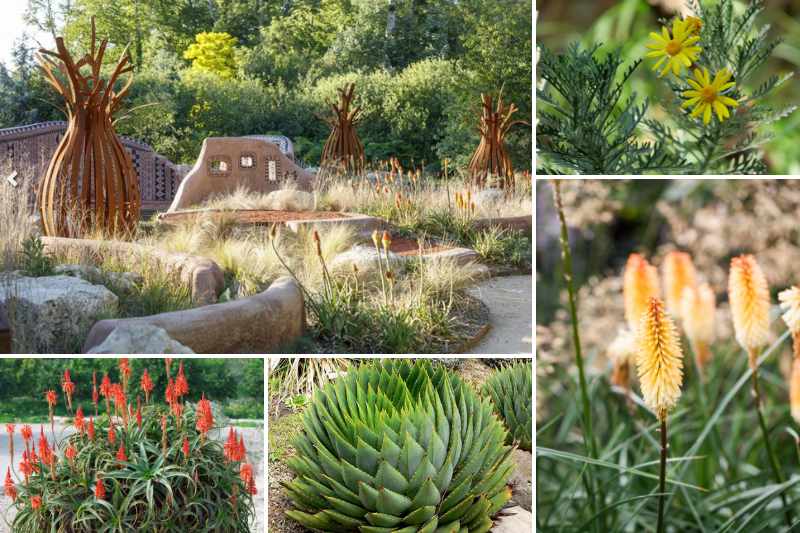
One attractive idea with the sand garden is to travel to an arid, heat-baked world. You can plant stunning perennials and ultra-resilient grasses and lean towards a Californian vibe, or, as here, a South African feel.
Let’s take inspiration from Léon Kluge’s work, the world-renowned South African landscaper, at Domaine de Chaumont-sur-Loire in France: few plants for a spectacular effect in this full-sun garden. The scene draws from the African bush, where red sand and oversized stylised baobab sculptures mainly make up the decor, with waves of Stipa tenuifolia and torch lilies. At home, imagine tall red-willow tontines or large woven willow spheres to add volume and blend into this atmosphere.
Key plants: succulents and light grasses (Aloes, Euphorbia myrsinites, Stipas, Sesleria argentea, Lomandra longifolia), and perennials with sunny yellow to orange blooms (Kniphofias, Euryops pectinatus, bulbines, Leonotis leonurus, gazanias…). Plants native to South Africa, Patagonia or Tasmania are favoured, some tolerating down to -8°C in sheltered conditions.
The naturalistic garden and the English garden also draw on this avant-garde technique, and we could just as well have developed scenes in these two worlds, which lend themselves to experimentation currently being carried out notably across the Channel.
Find our selection of plants suited to the Sand Garden spirit on our online nursery as well as on our inspiration page in the 2026 Trend Book !
Do you enjoy these distinctive atmospheres? Discover other inspiring scenes in related worlds:


































Comments