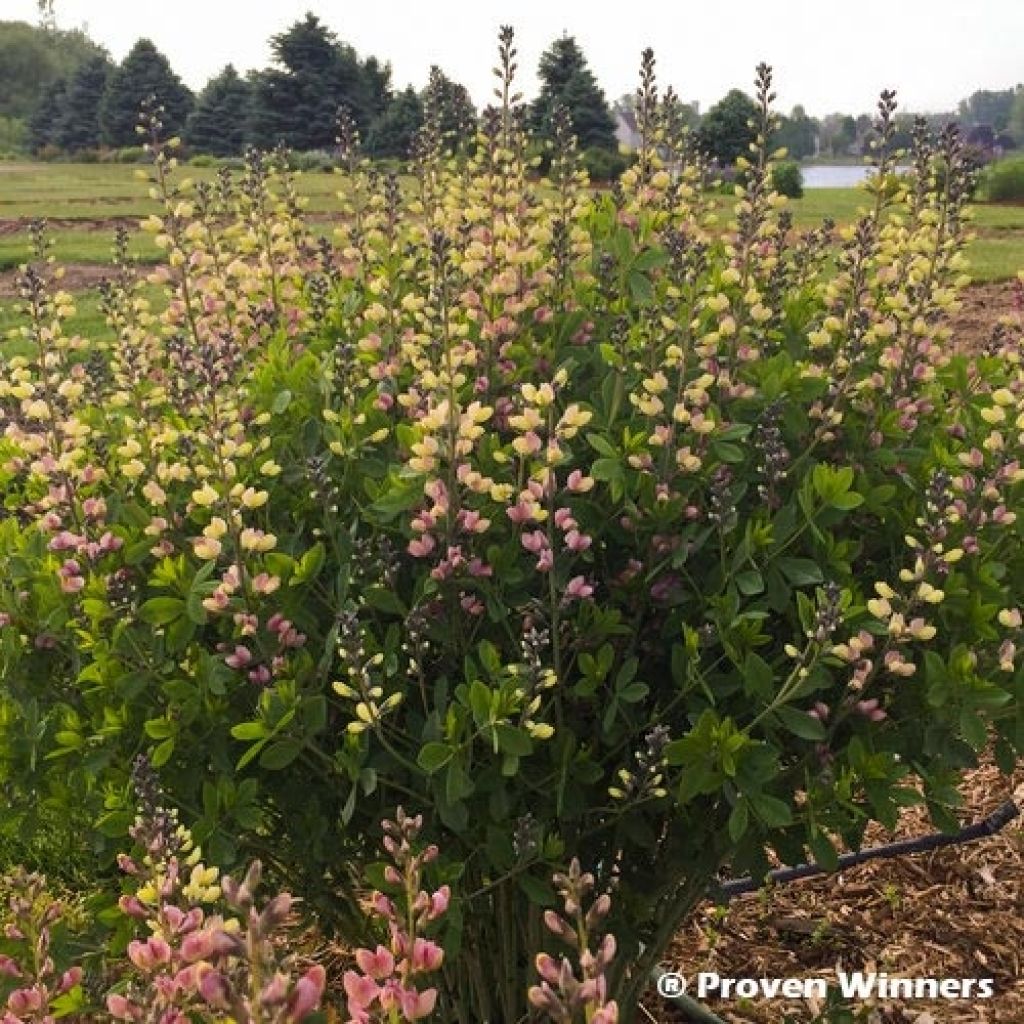
Baptisia Decadence Series Pink Lemonade - False Indigo
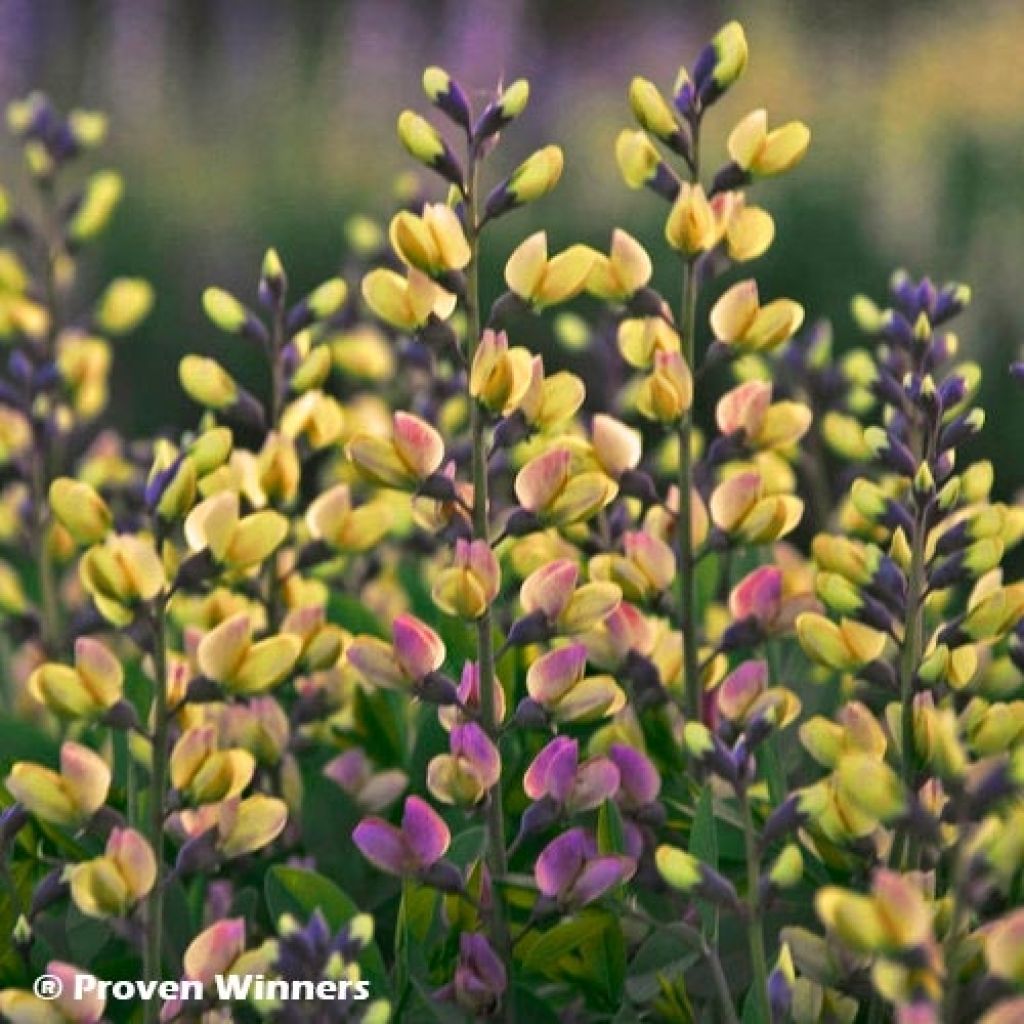
Baptisia Decadence Series Pink Lemonade - False Indigo
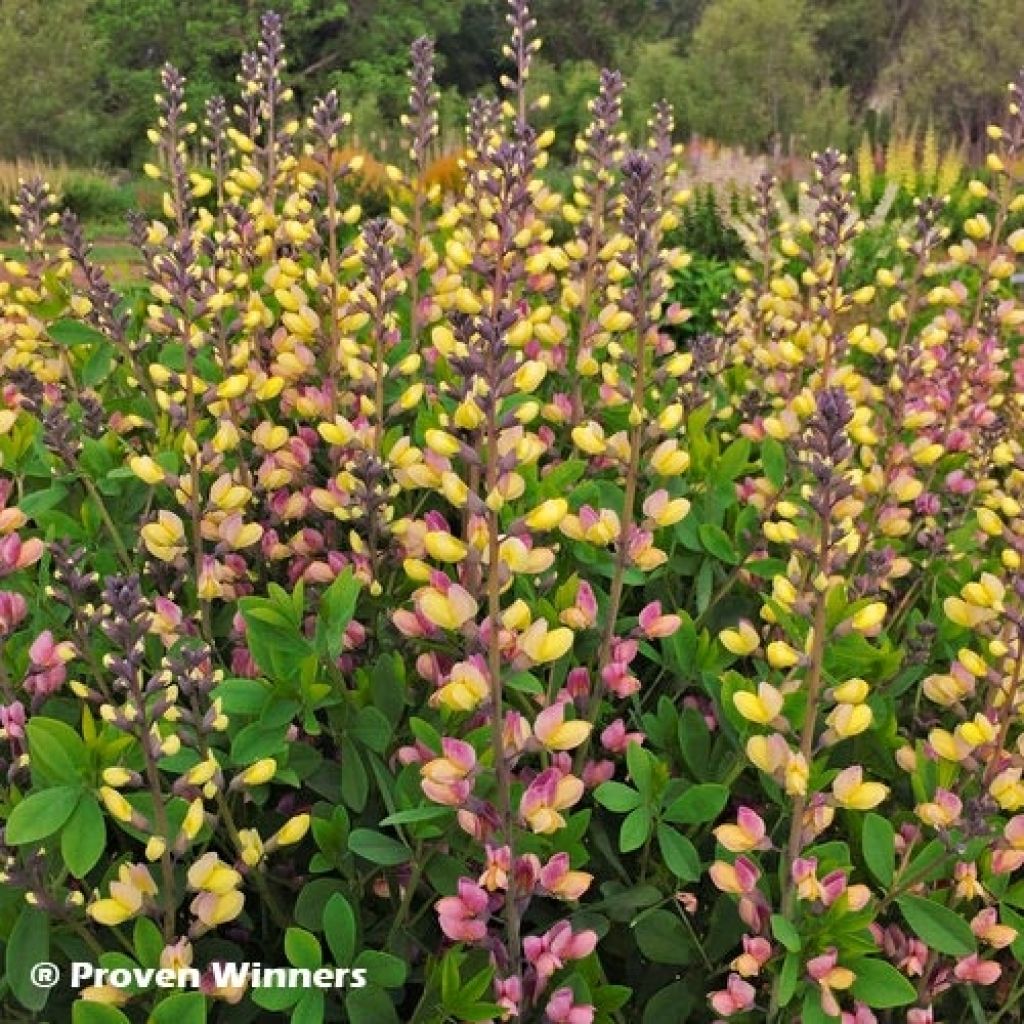
Baptisia Decadence Series Pink Lemonade - False Indigo
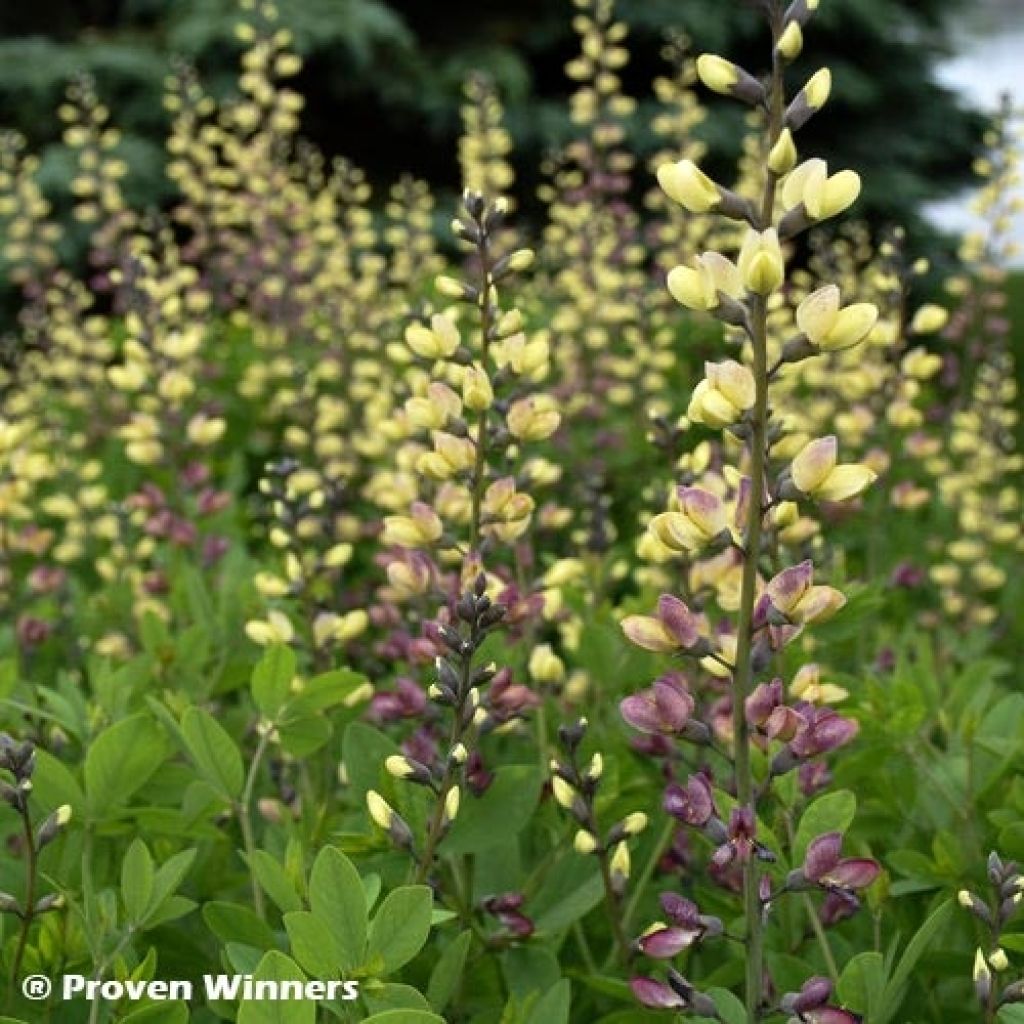
Baptisia Decadence Series Pink Lemonade - False Indigo
Baptisia Decadence Series Pink Lemonade - False Indigo
Baptisia x australis Decadence ® Deluxe Pink Lemonade
False Indigo, Blue Wild Indigo
I purchased and planted this baptisia in March 2023. The young plant seemed small, but it requires patience to establish itself. It becomes more beautiful and stronger every year. The colours are superb, and the fine leaf is very decorative. I am won over and can't wait to discover it again in 2026.
Vivi, 28/03/2026
Back-to-school special offer!
Get €10 off for every €50 you spend! And get up to €40 off on a single order.
How does it work?
1. Shop your favourites
Add your favourite plants to your basket. For every €50 you spend (excluding delivery charges, store credit and the plastic-free option), you’ll receive a €10 voucher.
€50 spent = €10 voucher
€100 spent = €20 voucher
€150 spent = €30 voucher
€200 spent = €40 voucher
2. Place your order
Once your basket reaches one of the spending thresholds, place your order. You can even choose your delivery date!
3. Receive your voucher
As soon as your order has been shipped, you’ll receive an email containing your personal voucher code and its value.
4. Use it on your next order
Your voucher is valid for 90 days from the date you receive it. It can be used once only, on a new order worth at least the value of the voucher, excluding delivery charges.
Please note: Vouchers can be combined with other offers, but cannot be split or refunded.
Home or relay delivery (depending on size and destination)
Important: You may be charged customs duties by your country’s customs authorities upon delivery.
Schedule delivery date,
and select date in basket
This plant carries a 12 months recovery warranty
More information
We guarantee the quality of our plants for a full growing cycle, and will replace at our expense any plant that fails to recover under normal climatic and planting conditions.

Would this plant suit my garden?
Set up your Plantfit profile →
Description
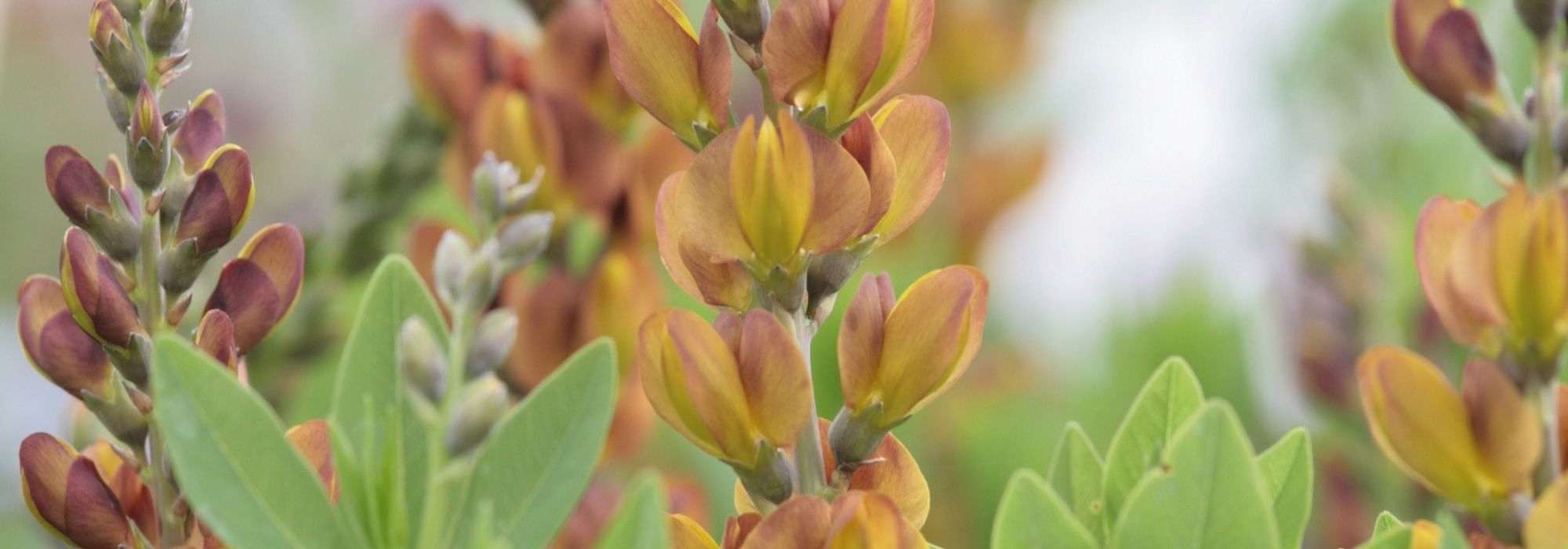
Baptisia 'Pink Lemonade' is a brand new variety of Indigo Lupin from the Decadence Deluxe series, which brings together a series of hybrids with a compact and bushy habit and flowers with very original colours. This one is seductive with its unprecedented, overall bicolour and pastel shade of its spikes, a mix of tender yellow and raspberry pink-violet. This beautiful perennial, as ornamental and durable as a bush, grows in dense clumps and is adorned with beautiful green-blue trifoliate foliage, ornamental even outside of flowering. Both hardy, undemanding, and drought-resistant once established, it is an excellent plant for poor soils.
Baptisia 'Pink Lemonade', recently obtained in the United States in 2015, is a perennial plant from the Fabaceae family resulting from extensive research and hybridization. Its ancestors, including the best-known Baptisia australis, are all native to the meadows and woods of the eastern and central United States (Texas, Oklahoma). They grow among tall grasses, without any care, perfectly tolerating frost and dry summers. Their only enemy is active limestone, when it is too present in the soil.
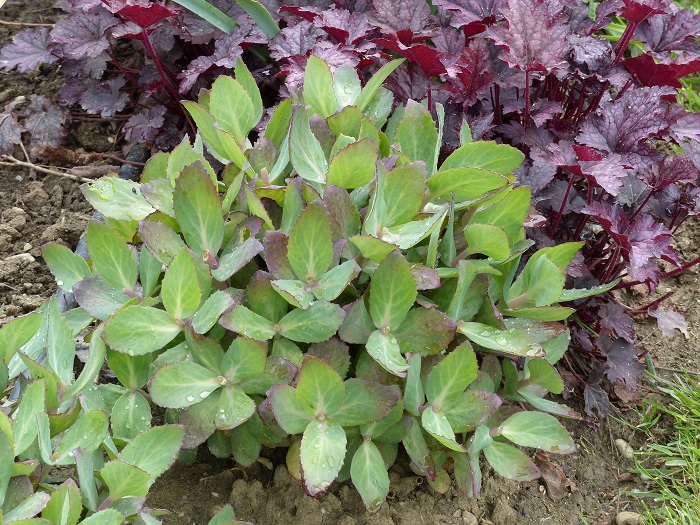
The 'Pink Lemonade' variety forms a bushy and ramified clump reaching an average height of 1.10m (4ft) and a width of 1.20m (4ft). Flowering begins in May-June and continues for at least 3 weeks. This variety is often still in bloom when others have faded. Above a clump of leafy stems, spikes of 35-40cm (14-16in) appear, with a very dark, charcoal-coloured main stem, adorned with papillonaceous flowers in very unusual shades for these hybrids. The overall impression when looking at this flowering is bicolour, resulting from the mix of tender yellow flowers, both yellow and pink flowers that are older, and mature mauve-violet flowers. The foliage, which disappears in winter, is also very ornamental as it sways in the wind. It consists of green-blue leaves, divided into three rounded leaflets, resembling those of alfalfa or clover. This very perennial plant is capable of living for many years in the garden, without any special care once well established.
Baptisia are close cousins of lupins, which are much better known in Europe, but they are much less demanding in terms of soil and moisture. They have very robust roots, allowing them to live as long as shrubs in our gardens. They just need time to settle. A true camel plant, the 'Pink Lemonade' indigo lupin will find its place in a contemporary, romantic, dry garden, or in natural areas. It is also useful for decorating a degraded plot of land, which often surrounds a recently built house. It looks stunning when paired with white or blue flowers, allowing for numerous associations according to each gardener's taste. For example, it can be paired with roses, Camassia leichtlinii 'Alba Semiplena', Eremurus himalaicus, or Allium bulgaricum. It also pairs well with bear's breeches, annual poppies, or hybrid mulleins, which are equally spectacular.
The vernacular name 'Indigo Lupin' comes from the use that some Native American peoples made of these dye plants. Indeed, they provide dye pigments comparable to those of true indigos (from the Antillean genus Indigofera), but of lesser quality.
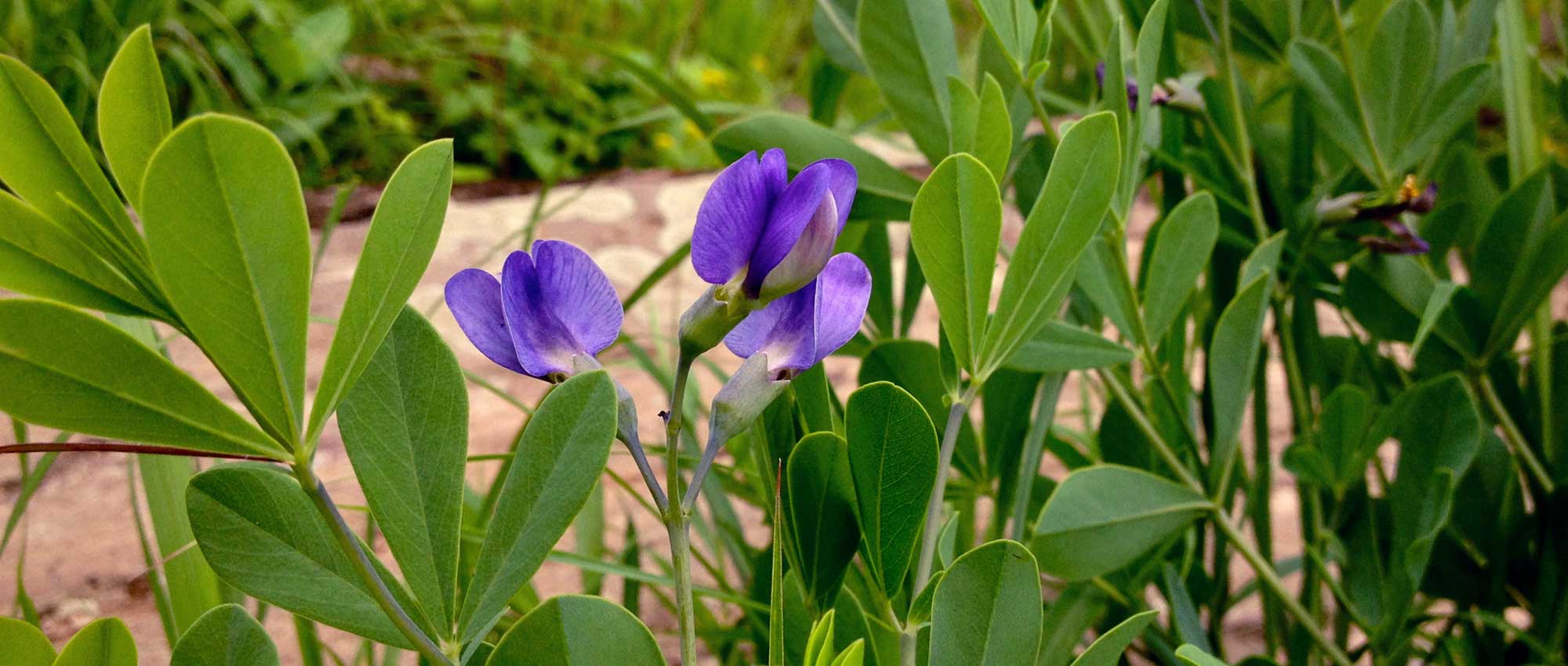
Baptisia Decadence Series Pink Lemonade - False Indigo in pictures
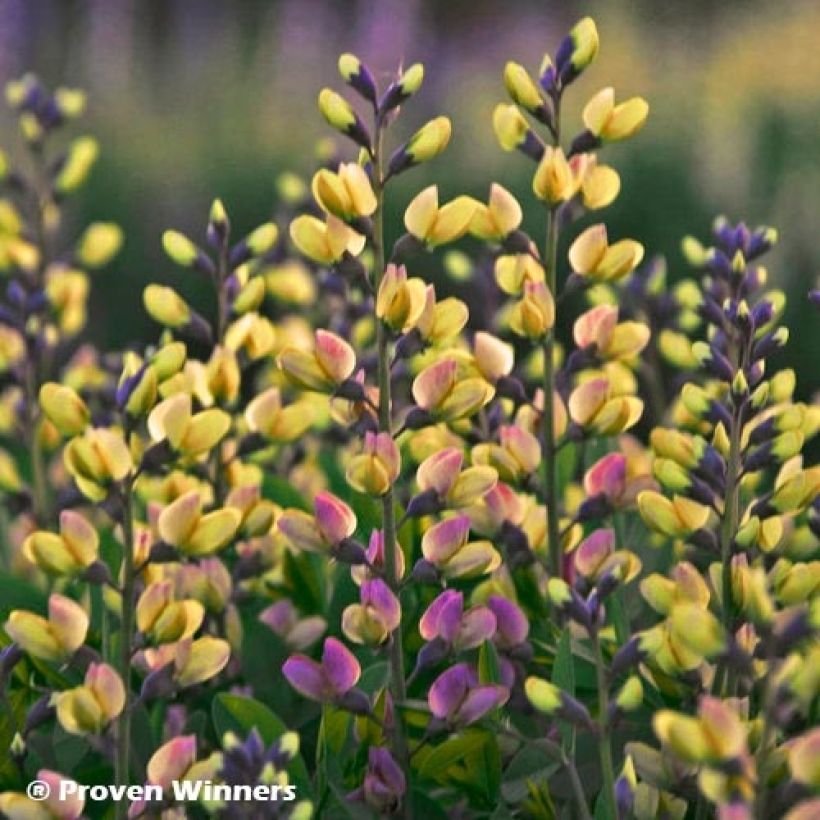
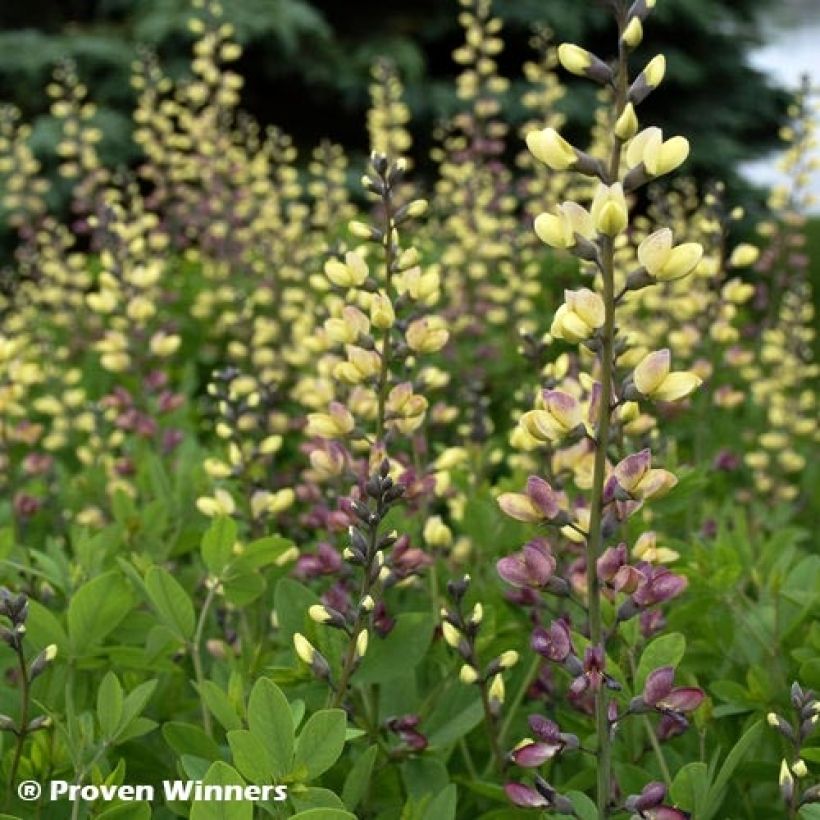
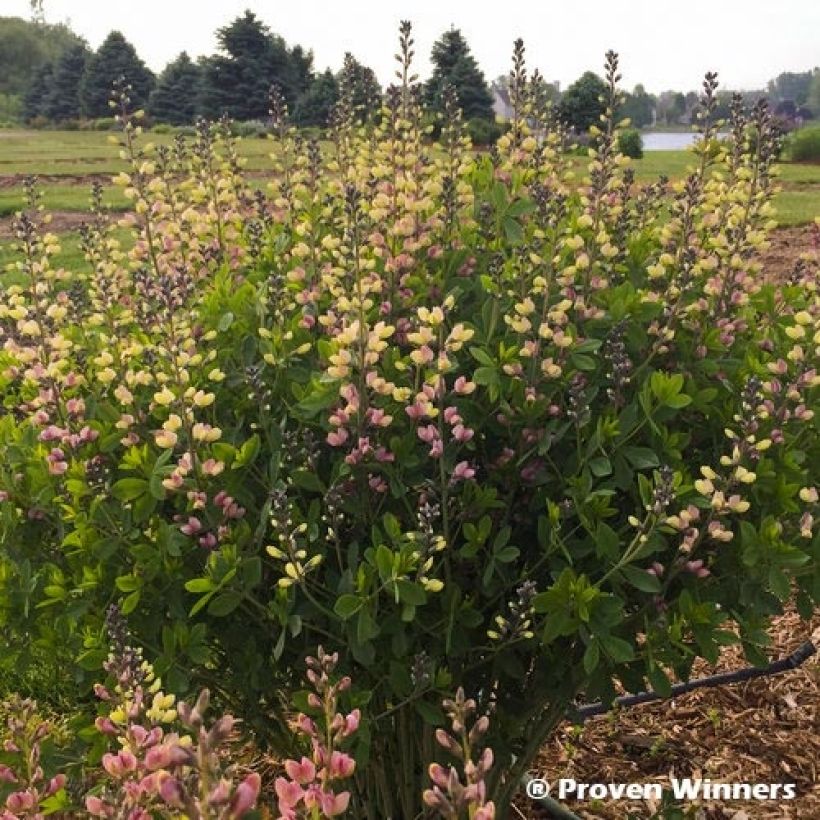
Flowering
Foliage
Plant habit
Safety measures
Botanical data
Baptisia
x australis
Decadence ® Deluxe Pink Lemonade
Fabaceae
False Indigo, Blue Wild Indigo
Cultivar or hybrid
ingestion
Cette plante est toxique si elle est ingérée volontairement ou involontairement.
Ne la plantez pas là où de jeunes enfants peuvent évoluer, et lavez-vous les mains après l'avoir manipulée.
Pensez à conserver l'étiquette de la plante, à la photographier ou à noter son nom, afin de faciliter le travail des professionnels de santé.
Davantage d'informations sur https://plantes-risque.info
Planting and care
The cultivation of Baptisia 'Pink Lemonade' requires some skill to succeed without any problems:
Not very tolerant of calcareous soils, this tall perennial appreciates light and well-draining soils, but can tolerate summer drought.
In the first year of cultivation, the plant may seem to stagnate, which is normal. Young Baptisia plants have very slow growth, and their taproot is particularly fragile until it is deeply anchored in the soil. Make sure not to damage it when planting! Also, do not leave a young plant in its bucket for too long: the taproot could bend when reaching the bottom.
Possibly add a small handful of phosphatic fertilizer (it stimulates root growth) that you will mix with the soil at the time of planting. Add 1/3 sand and 1/3 gravel to heavy soil to ensure good drainage, which is essential. Water moderately in the first year.
In the second or third year, the plant will be established, will not require any special care, and can flower profusely for many years!
Attention, voles also seem to be fond of its fleshy roots...
Planting period
Intended location
Care
Planting & care advice
-

-
-
-
-
-
-

-

-
, onOrder confirmed
Reply from on Promesse de fleurs
Recently viewed products
Haven't found what you were looking for?
Hardiness is the lowest winter temperature a plant can endure without suffering serious damage or even dying. However, hardiness is affected by location (a sheltered area, such as a patio), protection (winter cover) and soil type (hardiness is improved by well-drained soil).

The flowering period indicated on our website applies to countries and regions located in USDA zone 8 (France, the United Kingdom, Ireland, the Netherlands, etc.)
It will vary according to where you live:- In zones 9 to 10 (Italy, Spain, Greece, etc.), flowering will occur about 2 to 4 weeks earlier.
- In zones 6 to 7 (Germany, Poland, Slovenia, and lower mountainous regions), flowering will be delayed by 2 to 3 weeks.
- In zone 5 (Central Europe, Scandinavia), blooming will be delayed by 3 to 5 weeks.
In temperate climates, pruning of spring-flowering shrubs (forsythia, spireas, etc.) should be done just after flowering.
Pruning of summer-flowering shrubs (Indian Lilac, Perovskia, etc.) can be done in winter or spring.
In cold regions as well as with frost-sensitive plants, avoid pruning too early when severe frosts may still occur.
The planting period indicated on our website applies to countries and regions located in USDA zone 8 (France, United Kingdom, Ireland, Netherlands).
It will vary according to where you live:
- In Mediterranean zones (Marseille, Madrid, Milan, etc.), autumn and winter are the best planting periods.
- In continental zones (Strasbourg, Munich, Vienna, etc.), delay planting by 2 to 3 weeks in spring and bring it forward by 2 to 4 weeks in autumn.
- In mountainous regions (the Alps, Pyrenees, Carpathians, etc.), it is best to plant in late spring (May-June) or late summer (August-September).
The harvesting period indicated on our website applies to countries and regions in USDA zone 8 (France, England, Ireland, the Netherlands).
In colder areas (Scandinavia, Poland, Austria...) fruit and vegetable harvests are likely to be delayed by 3-4 weeks.
In warmer areas (Italy, Spain, Greece, etc.), harvesting will probably take place earlier, depending on weather conditions.
The sowing periods indicated on our website apply to countries and regions within USDA Zone 8 (France, UK, Ireland, Netherlands).
In colder areas (Scandinavia, Poland, Austria...), delay any outdoor sowing by 3-4 weeks, or sow under glass.
In warmer climes (Italy, Spain, Greece, etc.), bring outdoor sowing forward by a few weeks.
Shipping country and language
Your country of residence may be:
Your country of residence is:
For a better user experience on our website, you can select:
Your shipping country:
-
 Austria
-
 Belgium
-
 Bosnia & Herzegovina
-
 Bulgaria
-
 Croatia
-
 Cyprus
-
 Czechia
-
 Denmark
-
 Estonia
-
 Finland
-
 France
-
 Germany
-
 Greece
-
 Hungary
-
 Iceland
-
 Ireland
-
 Italy
Italy
-
 Latvia
-
 Liechtenstein
-
 Lithuania
-
 Luxembourg
-
 Malta
Malta
-
 Netherlands
-
 Poland
-
 Portugal
-
 Romania
-
 Serbia
-
 Slovakia
-
 Slovenia
-
 Spain
Spain
-
 Sweden
-
 Switzerland
Language:
-
French
-
 English
-
Spanish
-
Italian
-
German
-
Portuguese
-
Dutch
-
Finnish
My Account
Hello
My wish lists
My cart
Log in / Register
Existing customer?
This form is protected by reCAPTCHA - the Google Privacy Policy and Terms of Service apply.
New customer?
Create an account to track your orders, access our customer service and, if you wish, make the most of our upcoming offers.