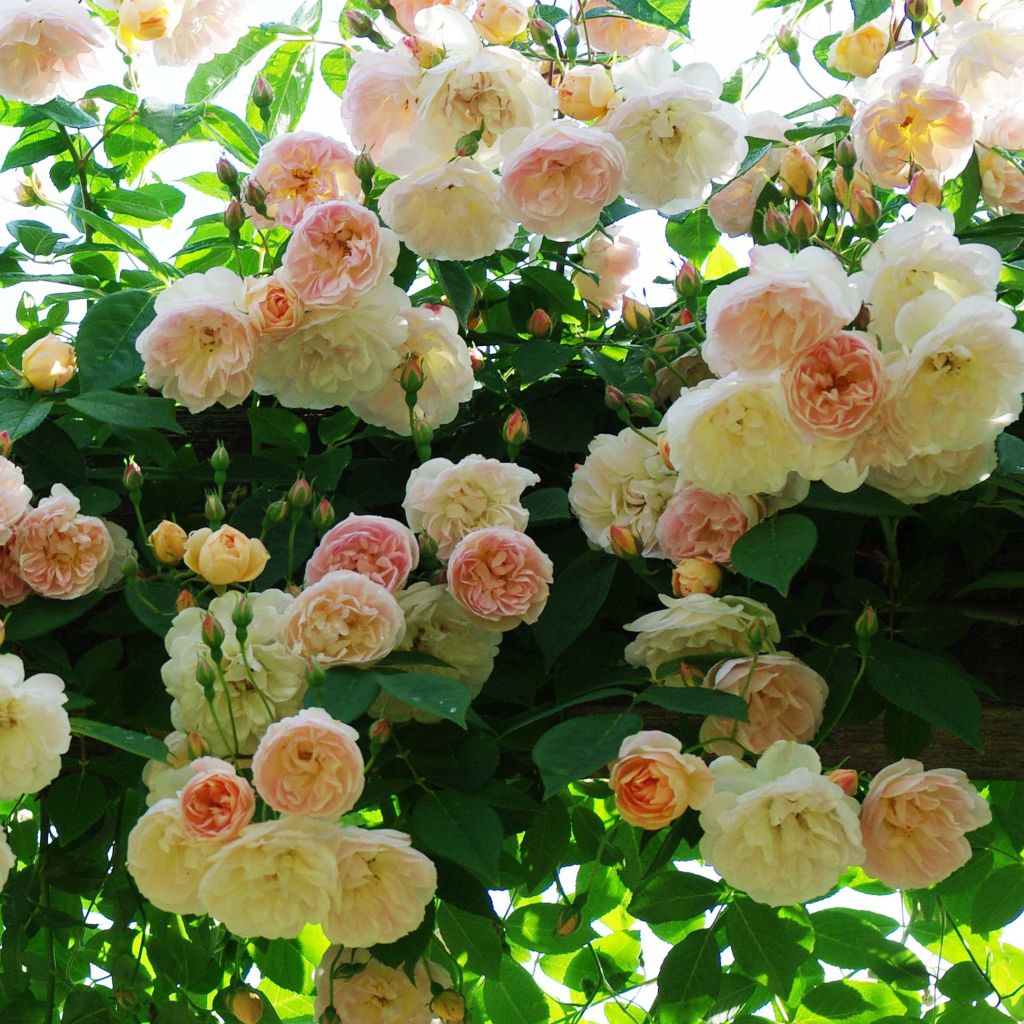
Rosa x filipes 'Treasure Trove' - Rambling Rose
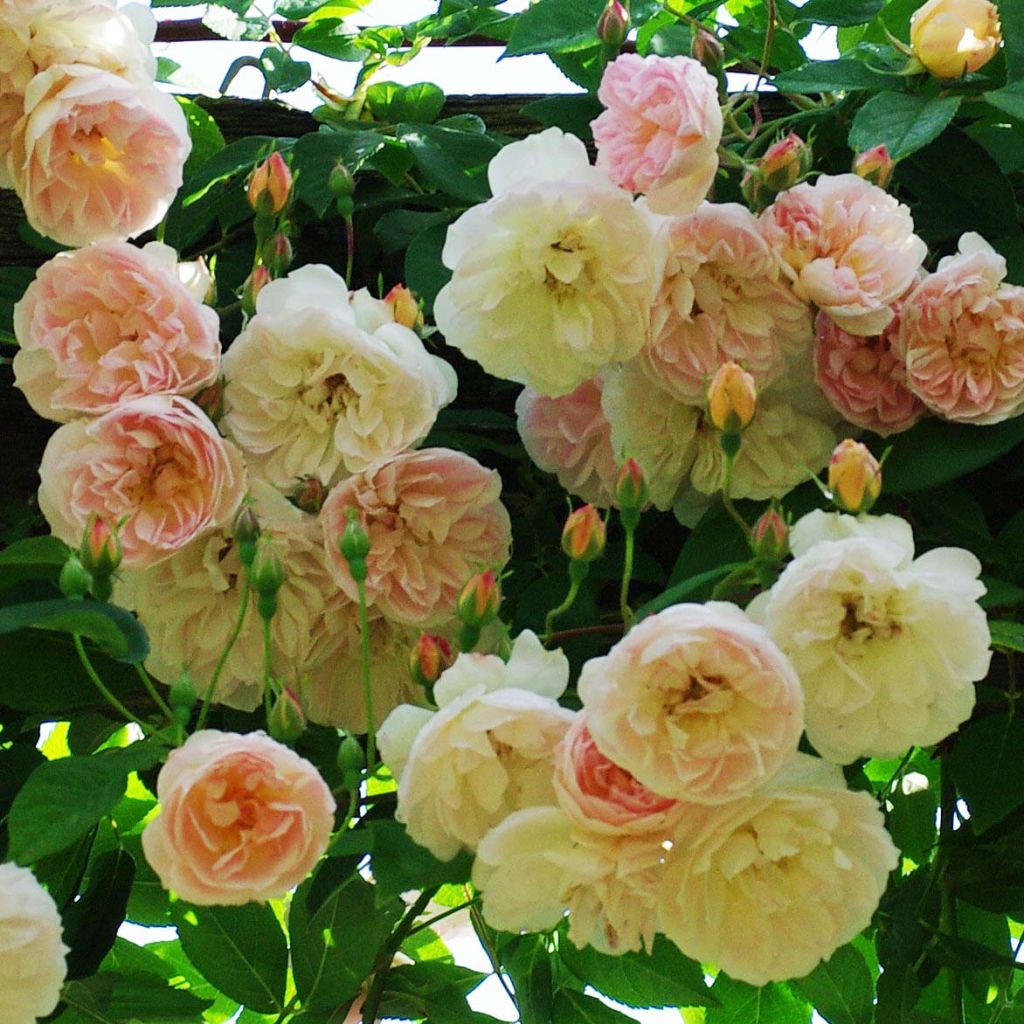
Rosa x filipes 'Treasure Trove' - Rambling Rose
Rosa x filipes 'Treasure Trove' - Rambling Rose
Rosa x filipes Treasure Trove
Kiftsgate Rose
Thanks to Hélène (order preparation & quality control) and the shipping department, the bare-root rose plant I received looks healthy. Planted near several others, I am now waiting for it to start growing again in spring... A comment from an amateur who has successfully planted over 630 different varieties of roses in his garden (including over 100 old ones and over 100 AUSTIN and similar ones). Note for the rose plant: It was received with a variety label around one of the branches (important for identifying roses outside of the growing season!!!).
Thierry, 18/12/2019
Back-to-school special offer!
Get €10 off for every €50 you spend! And get up to €40 off on a single order.
How does it work?
1. Shop your favourites
Add your favourite plants to your basket. For every €50 you spend (excluding delivery charges, store credit and the plastic-free option), you’ll receive a €10 voucher.
€50 spent = €10 voucher
€100 spent = €20 voucher
€150 spent = €30 voucher
€200 spent = €40 voucher
2. Place your order
Once your basket reaches one of the spending thresholds, place your order. You can even choose your delivery date!
3. Receive your voucher
As soon as your order has been shipped, you’ll receive an email containing your personal voucher code and its value.
4. Use it on your next order
Your voucher is valid for 90 days from the date you receive it. It can be used once only, on a new order worth at least the value of the voucher, excluding delivery charges.
Please note: Vouchers can be combined with other offers, but cannot be split or refunded.
Why not try an alternative variety in stock?
View all →
Available in 2 sizes

Available in 2 sizes
Available in 2 sizes

Available in 2 sizes
Available in 3 sizes
Available in 3 sizes
Available in 3 sizes

Available in 2 sizes

Available in 2 sizes
Available in 2 sizes
This plant carries a 24 months recovery warranty
More information
We guarantee the quality of our plants for a full growing cycle, and will replace at our expense any plant that fails to recover under normal climatic and planting conditions.

Description
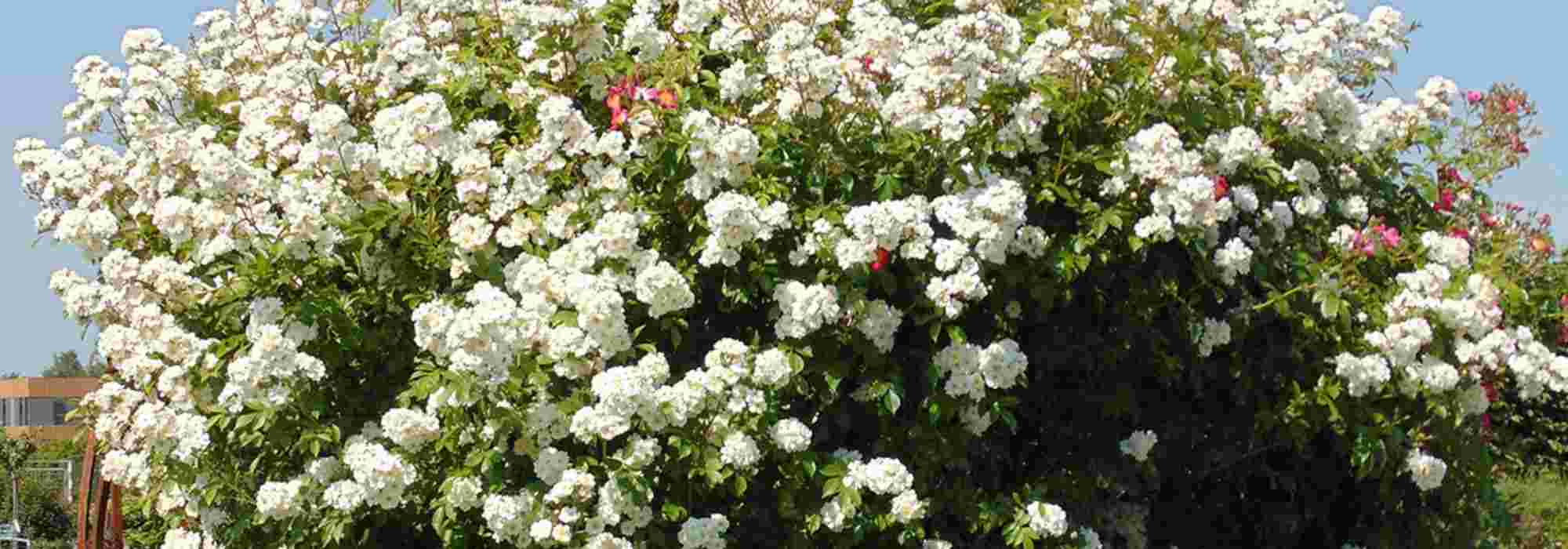
The 'Treasure Trove' Rose is a superb descendant of the filipes rambling rose 'Kiftsgate'. Exceptional in every way, this powerful English liana produces branches that disappear into the heart of summer under opulent bouquets of strongly scented small flowers. Their colour, a tender apricot fading into white-cream tinged with pink and lavender, is an absolute novelty for this type of rose. Once the flowering is finished, it is adorned with clusters of red hips highly decorative, which persist for a long time on its branches. With its fabulous qualities, this rose will tempt all gardeners, but it must be specified that it takes time to offer its first flowering, the time it needs to sink its giant foot into the ground. To accommodate such a force of nature, it is essential to provide enough space!
Gigantic rose bred in 1977 by Treasure and named by Graham Thomas, 'Treasure Trove' was introduced to the horticultural market in 1979. Its parent, 'Kiftsgate', is a sport of the botanical rose Rosa filipes, native to the northwest of the Sichuan Province in western China. According to recent DNA expertise, its second parent could be a chinensis rose, perhaps the Rosa x odorata, probably 'Old Blush'.
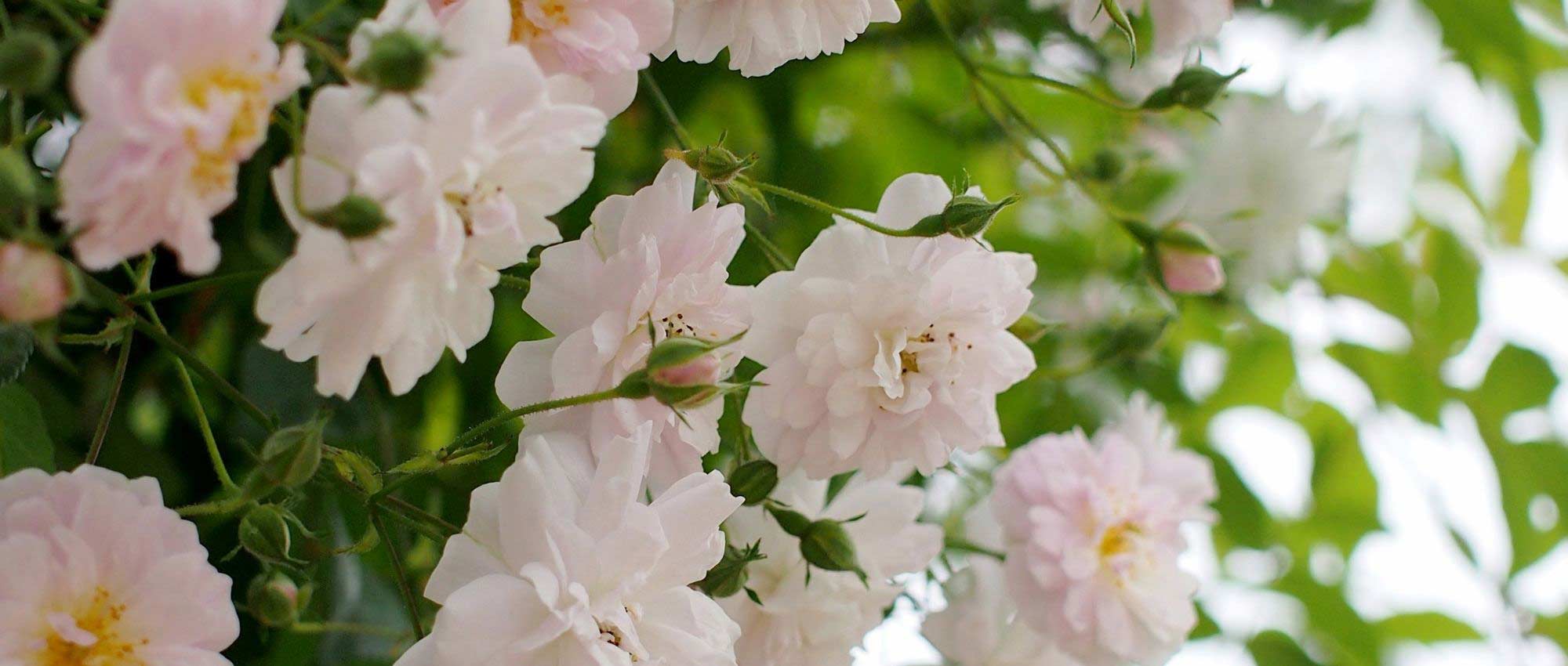
'Treasure Trove' possesses the same vigour as 'Kiftsgate'. This sarmentous rose with few thorns can produce shoots up to 10 metres (33 feet) long, depending on the growing conditions. It will reach 3 to 6 m (10 to 20ft) when mature. It produces red, thread-like young shoots with curved prickle-like thorns. The coppery juvenile foliage later becomes a medium green with a satin-like appearance on the upper side. When most rambling roses have faded in July, its incredible flowering appears. It lasts for several weeks in cool climates—grouped in corymbs, over 20 tiny salmon-coloured buds open into semi-double rosettes 4 cm (2in) wide. Initially cream-orange, they gradually turn salmon-pink, then fade to almost white mauve. A bouquet of golden yellow stamens accentuates each one. Small red fruits follow this, and the rose is covered in these clusters of pearls, which are still very decorative. The filipes rose 'Treasure Trove' is highly resistant to rose diseases and can withstand summer drought once well established; its flowering will be earlier in hot climates.
'Treasure Trove', in the same vein as Paul's Himalayan Musk, but more colourful and later blooming, is an adorable giant: undemanding, fragrant and highly healthy. It will thrive in cooler and hot climates, but it prefers sunny locations and will probably flower at a younger age if the soil it is planted in is not too fertile. Like other rambling roses (Mermaid, Sander's White Rambler, Seagull), it is incomparable for filling large spaces and giving a slightly abandoned, free and planted look above overly strict flowerbeds. It can also be used as ground cover; its exemplary foliage and prolific flowering allow it. In this use, it will create an exceptional summer decoration. It is an ideal companion for large trees that it will revive, a dying evergreen hedge, and unsightly buildings or sheds to which it adds excellent charm. Trained on a large arch near the terrace, it will create a romantic and fragrant passage. Since its flowering is late, it can be paired with a vigorous clematis of the montana or terniflora type, with staggered flowering times.
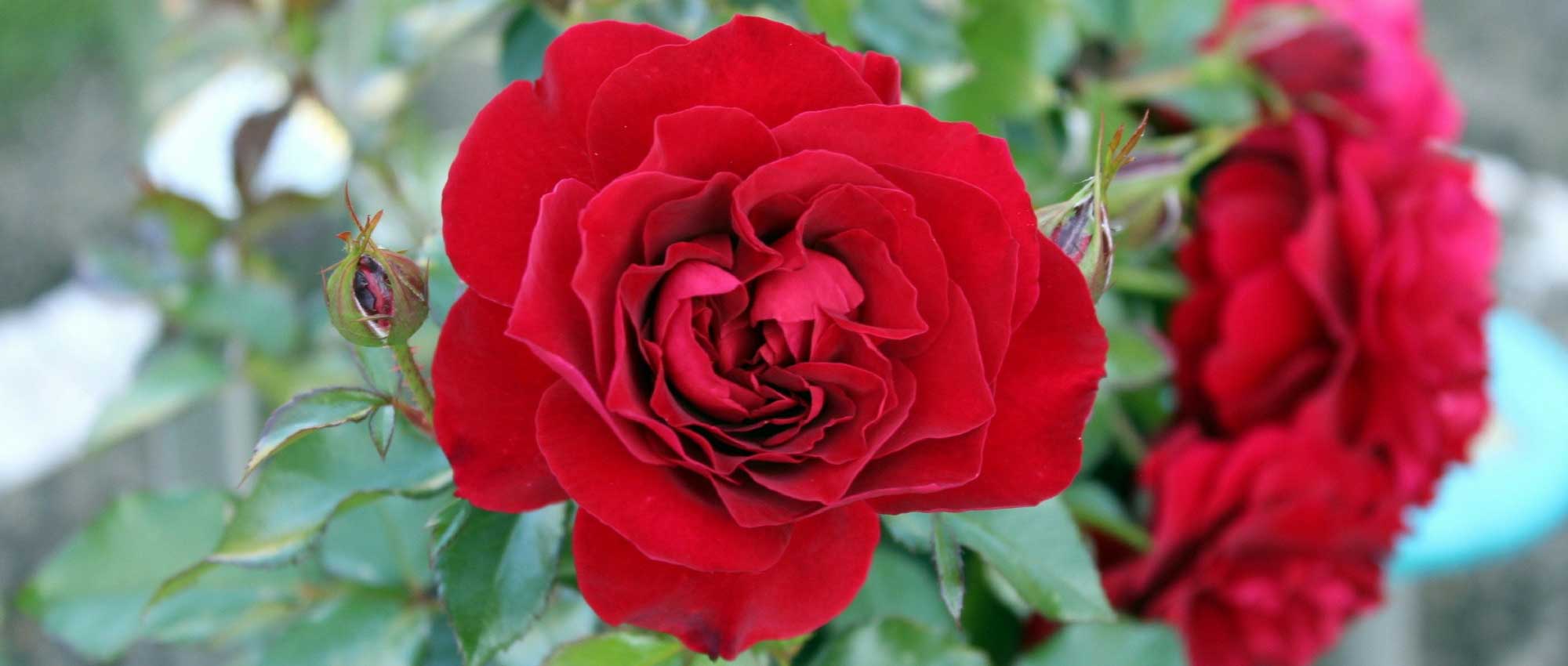
Rosa x filipes 'Treasure Trove' - Rambling Rose in pictures
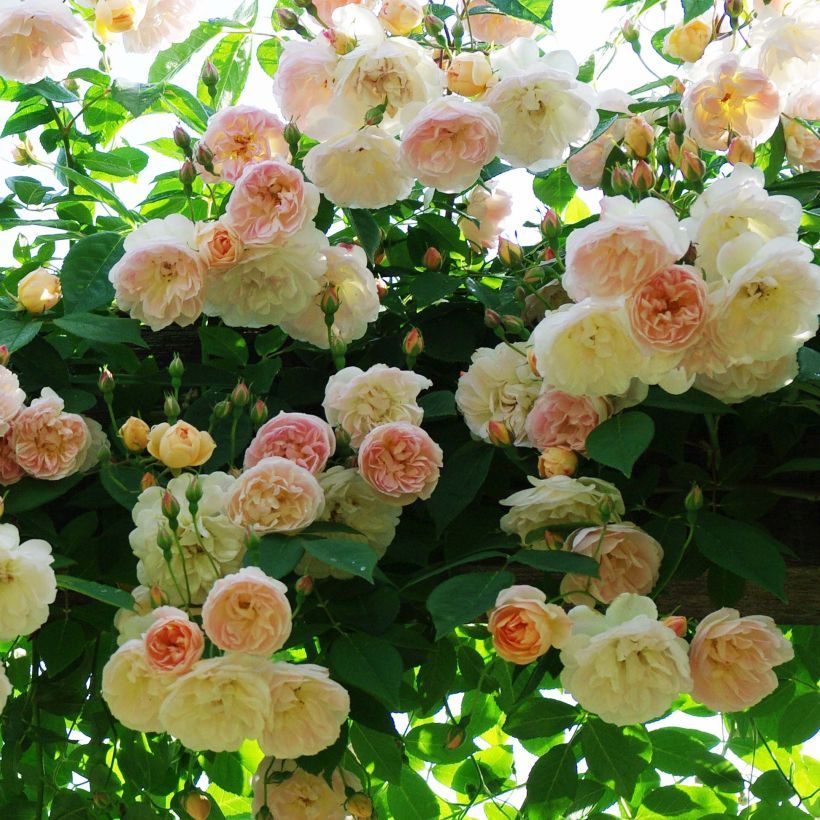
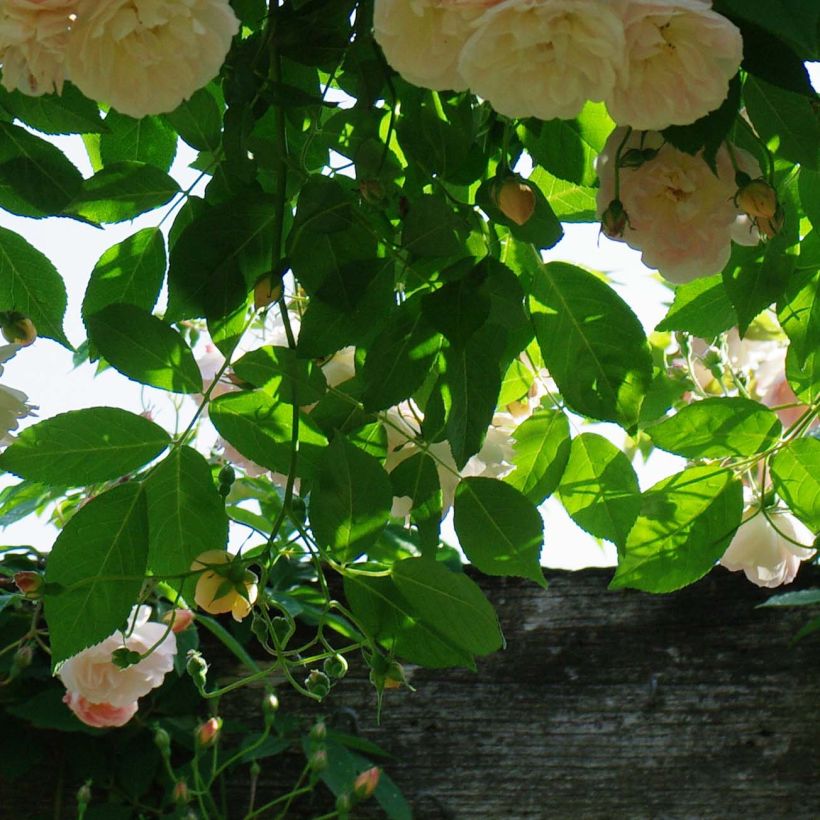
Plant habit
Flowering
Foliage
Botanical data
Rosa
x filipes
Treasure Trove
Rosaceae
Kiftsgate Rose
Cultivar or hybrid
Planting and care
The 'Treasure Trove' rose can grow well in any type of soil, including heavy or sandy soil, as long as it is well taken care of and not deprived of water or nutrients. However, it may take several years before it produces its first blooms. Over-fertilised soil can also affect its flowering, so it's important to avoid excessive use of fertilisers.
The 'Treasure Trove' rose is a hybrid of Rosa chinensis, which is a sturdy plant that can tolerate dry and mediocre soils in summer. To grow this rose variety, plant it in well-drained and well-worked soil, preferably in a sunny or semi-shaded location. It can also tolerate hot climates. Avoid planting it in winter when it freezes. If planted in the shade of a tree, it may take longer to start growing.
The 2-year-old branches of the 'Treasure Trove' rose tend to produce the most flowers. To encourage the growth of new strong stems, it's advisable to prune the branches that have flowered the previous year to 3 or 4 buds or cut them down to 15 cm (6in). If necessary, remove old branches.
This rose variety is quite hardy and can withstand temperatures as low as -20°C (-4°F). If the branches freeze to the ground after a harsh winter, the rose will regrow from the base in spring. In winter, it's recommended to remove dead wood, and in spring, after the risk of frost, do a light pruning. If you don't want hips remove faded flowers.
If you plant a climbing rose near a living tree, the root system of the rose may compete with the established tree's root system. To control watering, plant the rose in a large container with a perforated bottom at the base of the tree. The tree roots will not penetrate the container for at least a year. After a year, remove the container by cutting one side without disturbing the rose's root system. The rose will have had enough time to develop its root system and will be more resilient.
Roses may develop unsightly stains by the end of summer, but this natural phenomenon poses no threat to their growth.
Planting period
Intended location
Care
Planting & care advice
-
-

-

-

-
-
-
-

-
, onOrder confirmed
Reply from on Promesse de fleurs
Recently viewed products
Haven't found what you were looking for?
Hardiness is the lowest winter temperature a plant can endure without suffering serious damage or even dying. However, hardiness is affected by location (a sheltered area, such as a patio), protection (winter cover) and soil type (hardiness is improved by well-drained soil).

The flowering period indicated on our website applies to countries and regions located in USDA zone 8 (France, the United Kingdom, Ireland, the Netherlands, etc.)
It will vary according to where you live:- In zones 9 to 10 (Italy, Spain, Greece, etc.), flowering will occur about 2 to 4 weeks earlier.
- In zones 6 to 7 (Germany, Poland, Slovenia, and lower mountainous regions), flowering will be delayed by 2 to 3 weeks.
- In zone 5 (Central Europe, Scandinavia), blooming will be delayed by 3 to 5 weeks.
In temperate climates, pruning of spring-flowering shrubs (forsythia, spireas, etc.) should be done just after flowering.
Pruning of summer-flowering shrubs (Indian Lilac, Perovskia, etc.) can be done in winter or spring.
In cold regions as well as with frost-sensitive plants, avoid pruning too early when severe frosts may still occur.
The planting period indicated on our website applies to countries and regions located in USDA zone 8 (France, United Kingdom, Ireland, Netherlands).
It will vary according to where you live:
- In Mediterranean zones (Marseille, Madrid, Milan, etc.), autumn and winter are the best planting periods.
- In continental zones (Strasbourg, Munich, Vienna, etc.), delay planting by 2 to 3 weeks in spring and bring it forward by 2 to 4 weeks in autumn.
- In mountainous regions (the Alps, Pyrenees, Carpathians, etc.), it is best to plant in late spring (May-June) or late summer (August-September).
The harvesting period indicated on our website applies to countries and regions in USDA zone 8 (France, England, Ireland, the Netherlands).
In colder areas (Scandinavia, Poland, Austria...) fruit and vegetable harvests are likely to be delayed by 3-4 weeks.
In warmer areas (Italy, Spain, Greece, etc.), harvesting will probably take place earlier, depending on weather conditions.
The sowing periods indicated on our website apply to countries and regions within USDA Zone 8 (France, UK, Ireland, Netherlands).
In colder areas (Scandinavia, Poland, Austria...), delay any outdoor sowing by 3-4 weeks, or sow under glass.
In warmer climes (Italy, Spain, Greece, etc.), bring outdoor sowing forward by a few weeks.
Shipping country and language
Your country of residence may be:
Your country of residence is:
For a better user experience on our website, you can select:
Your shipping country:
-
 Austria
-
 Belgium
-
 Bosnia & Herzegovina
-
 Bulgaria
-
 Croatia
-
 Cyprus
-
 Czechia
-
 Denmark
-
 Estonia
-
 Finland
-
 France
-
 Germany
-
 Greece
-
 Hungary
-
 Iceland
-
 Ireland
-
 Italy
Italy
-
 Latvia
-
 Liechtenstein
-
 Lithuania
-
 Luxembourg
-
 Malta
Malta
-
 Netherlands
-
 Poland
-
 Portugal
-
 Romania
-
 Serbia
-
 Slovakia
-
 Slovenia
-
 Spain
Spain
-
 Sweden
-
 Switzerland
Language:
-
French
-
 English
-
Spanish
-
Italian
-
German
-
Portuguese
-
Dutch
-
Finnish
My Account
Hello
My wish lists
My cart
Log in / Register
Existing customer?
This form is protected by reCAPTCHA - the Google Privacy Policy and Terms of Service apply.
New customer?
Create an account to track your orders, access our customer service and, if you wish, make the most of our upcoming offers.