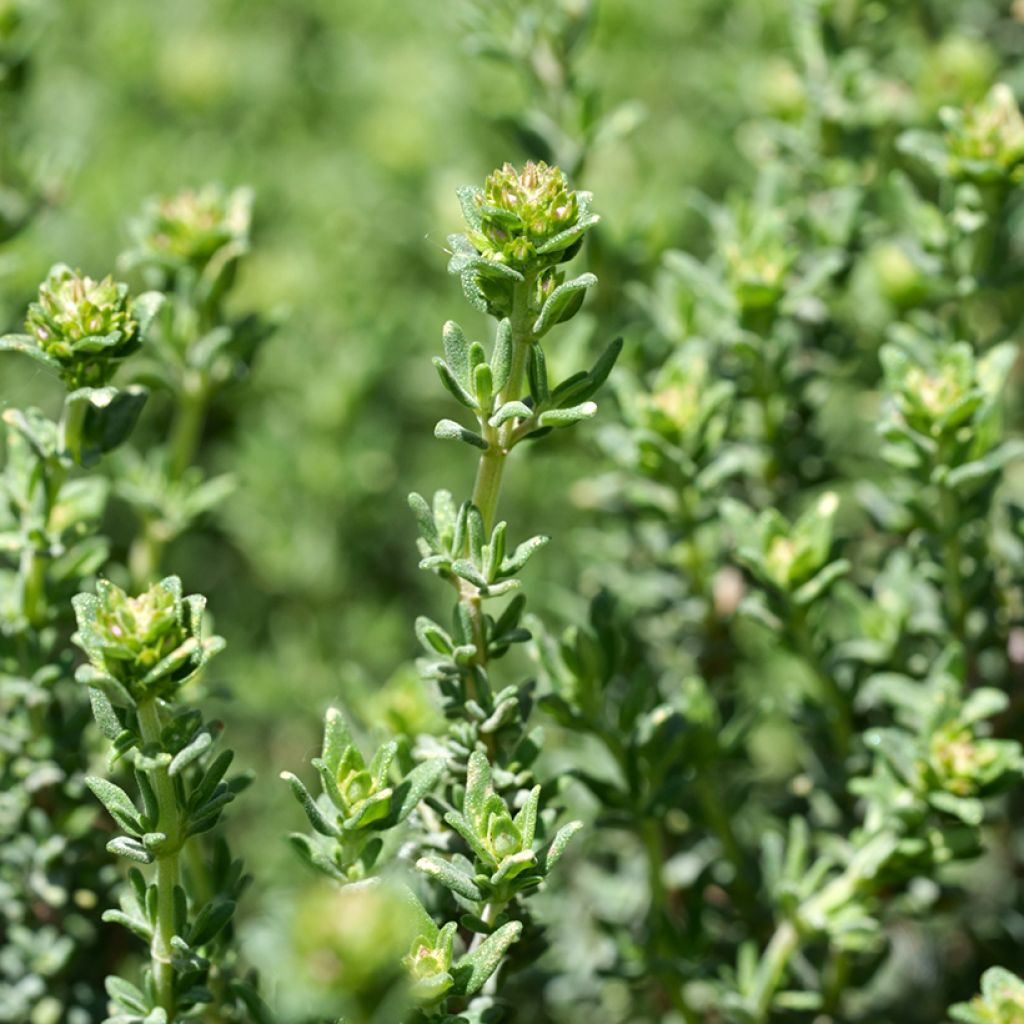
Rose-scented thyme in plant form
Rose-scented thyme in plant form
Thymus fragrantissimus rose
Very pleased with these plug plants, which arrived in superb condition and are thriving in my garden.
Arnaud, 31/03/2024
Back-to-school special offer!
Get €10 off for every €50 you spend! And get up to €40 off on a single order.
How does it work?
1. Shop your favourites
Add your favourite plants to your basket. For every €50 you spend (excluding delivery charges, store credit and the plastic-free option), you’ll receive a €10 voucher.
€50 spent = €10 voucher
€100 spent = €20 voucher
€150 spent = €30 voucher
€200 spent = €40 voucher
2. Place your order
Once your basket reaches one of the spending thresholds, place your order. You can even choose your delivery date!
3. Receive your voucher
As soon as your order has been shipped, you’ll receive an email containing your personal voucher code and its value.
4. Use it on your next order
Your voucher is valid for 90 days from the date you receive it. It can be used once only, on a new order worth at least the value of the voucher, excluding delivery charges.
Please note: Vouchers can be combined with other offers, but cannot be split or refunded.
Why not try an alternative variety in stock?
View all →
Available in 3 sizes

Available in 2 sizes

Available in 3 sizes

Available in 3 sizes
Available in 2 sizes

Available in 2 sizes

Available in 1 sizes
Available in 2 sizes

Available in 1 sizes
Available in 2 sizes
This plant carries a 6 months recovery warranty
More information
We guarantee the quality of our plants for a full growing cycle, and will replace at our expense any plant that fails to recover under normal climatic and planting conditions.
Description
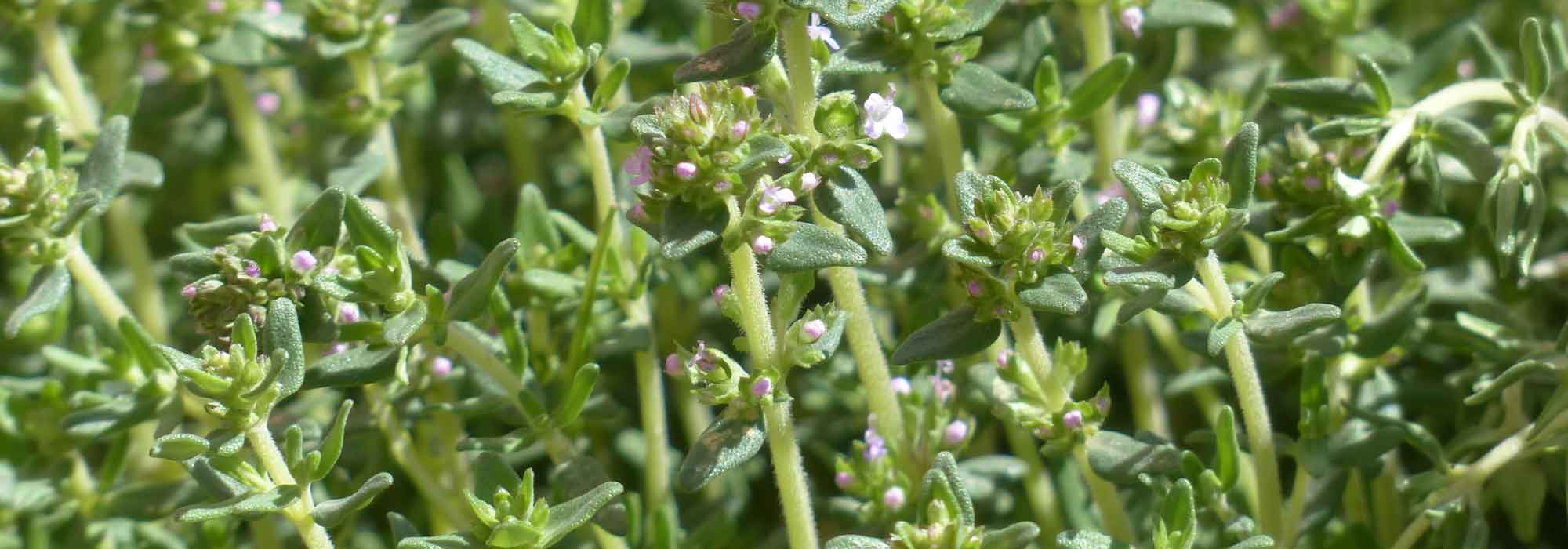
The Rose-Scented Thyme is a variety whose aromatic leaves release a floral scent with notes of rose... which is sure to delight collectors!
Native to western and southern Europe, where it is sometimes found in the wild, Thyme is an evergreen undershrub belonging to the Lamiaceae family. Hardy, it forms small fragrant clumps with grayish-green persistent foliage. This nectar-producing plant produces pretty small flowers in summer, ranging in color from white to pinkish-purple depending on the varieties. Its leaves, with their scent of the Mediterranean scrubland, are highly appreciated in cooking. Used alone or in a bouquet garni, combined with Bay Leaf, Parsley, and Rosemary, Thyme leaves flavor stews, sauces, marinades, and broths. They are also used in infusions, renowned for their digestive benefits.
Thyme thrives in most types of soils, including rocky ones, but it is sensitive to excessive humidity. The plug plants are produced using organic methods and can be planted in spring or autumn for year-round harvest. This hardy and easy-to-grow herbaceous plant prefers poor soils. If your soil is rather moist and clayey, we recommend growing it in a pot where it will thrive.
Harvest: Thyme can be harvested throughout the year as its leaves are persistent. It is best to pick in the morning. Thyme is most fragrant during its flowering period in summer. Since it should be pruned to maintain a compact shape, take advantage of this to stock up for the winter months!
Storage: Thyme is traditionally preserved by drying. After washing and drying the stems, hang the bunches upside down in a dry and well-ventilated place. This is a simple and quick process that you can replace with freezing if it seems more convenient to you.
Gardener's Tip: In the garden, don't hesitate to mix genres by planting some aromatic plants like Thyme right in the middle of your perennial flower beds or even in rockeries. They will blend in perfectly, and the sometimes strong scents of aromatic plants often have the ability to repel insects that may attack more delicate plants like certain roses.
Harvest
Plant habit
Foliage
Botanical data
Thymus
fragrantissimus
rose
Lamiaceae
Cultivar or hybrid
Perennial
Planting and care
Thyme is a hardy and easy-to-grow herb that thrives in poor, light, even rocky and well-drained soils. If your soil is rather moist and clayey, we recommend growing it in a pot where it will thrive very well. Planting plug plants can be done in spring (March-April) or at the end of summer (August-September).
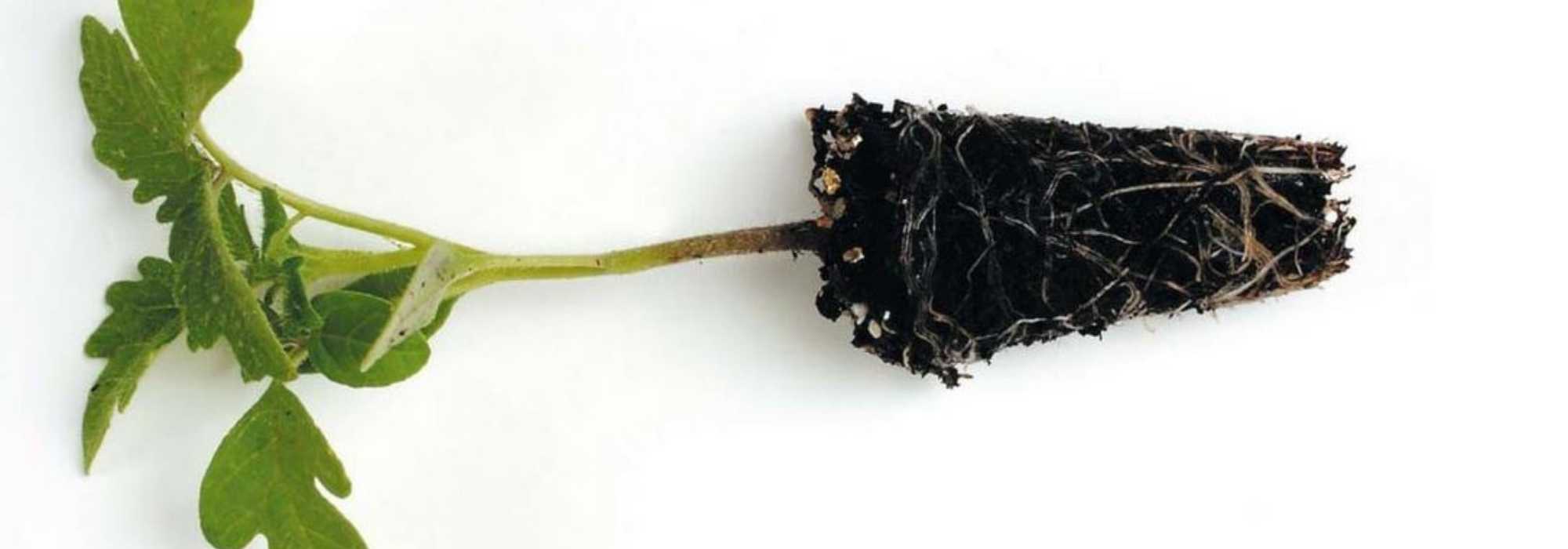
In the ground: First, let the plug plants grow by transplanting them into trays or pots with a diameter of 8 to 13 cm (3 to 5in), filled with compost. Place them in a warm and bright location. Water regularly. For planting in the ground, choose a very sunny exposure. Space the plants 30 cm (12in) apart in all directions. Dig a hole, add well-rotted compost, place the root ball and cover with soil. Firmly press down and water lightly.
In a pot: Place a layer of gravel or clay pebbles at the bottom of the pot to facilitate drainage. Fill the pot with a mixture of compost and garden soil. Gently place the plug plant, cover with soil and firm down. Water lightly. Place your pot in the sun.
As for maintenance, water very moderately, mainly in summer, as Thyme does not appreciate excessive moisture. For pot cultivation, do not let water stagnate in the saucer.
An annual pruning (on the wood of the year) will maintain a nice round and sturdy habit.
Thyme can be propagated by dividing clumps or by propagation by cuttings in summer. This operation is recommended after a few years, especially in cold and humid climates.
Cultivation
Care
Intended location
Planting & care advice
-

-
-
-
-
-
-

-
-
, onOrder confirmed
Reply from on Promesse de fleurs
Recently viewed products
Haven't found what you were looking for?
Hardiness is the lowest winter temperature a plant can endure without suffering serious damage or even dying. However, hardiness is affected by location (a sheltered area, such as a patio), protection (winter cover) and soil type (hardiness is improved by well-drained soil).

The flowering period indicated on our website applies to countries and regions located in USDA zone 8 (France, the United Kingdom, Ireland, the Netherlands, etc.)
It will vary according to where you live:- In zones 9 to 10 (Italy, Spain, Greece, etc.), flowering will occur about 2 to 4 weeks earlier.
- In zones 6 to 7 (Germany, Poland, Slovenia, and lower mountainous regions), flowering will be delayed by 2 to 3 weeks.
- In zone 5 (Central Europe, Scandinavia), blooming will be delayed by 3 to 5 weeks.
In temperate climates, pruning of spring-flowering shrubs (forsythia, spireas, etc.) should be done just after flowering.
Pruning of summer-flowering shrubs (Indian Lilac, Perovskia, etc.) can be done in winter or spring.
In cold regions as well as with frost-sensitive plants, avoid pruning too early when severe frosts may still occur.
The planting period indicated on our website applies to countries and regions located in USDA zone 8 (France, United Kingdom, Ireland, Netherlands).
It will vary according to where you live:
- In Mediterranean zones (Marseille, Madrid, Milan, etc.), autumn and winter are the best planting periods.
- In continental zones (Strasbourg, Munich, Vienna, etc.), delay planting by 2 to 3 weeks in spring and bring it forward by 2 to 4 weeks in autumn.
- In mountainous regions (the Alps, Pyrenees, Carpathians, etc.), it is best to plant in late spring (May-June) or late summer (August-September).
The harvesting period indicated on our website applies to countries and regions in USDA zone 8 (France, England, Ireland, the Netherlands).
In colder areas (Scandinavia, Poland, Austria...) fruit and vegetable harvests are likely to be delayed by 3-4 weeks.
In warmer areas (Italy, Spain, Greece, etc.), harvesting will probably take place earlier, depending on weather conditions.
The sowing periods indicated on our website apply to countries and regions within USDA Zone 8 (France, UK, Ireland, Netherlands).
In colder areas (Scandinavia, Poland, Austria...), delay any outdoor sowing by 3-4 weeks, or sow under glass.
In warmer climes (Italy, Spain, Greece, etc.), bring outdoor sowing forward by a few weeks.
Shipping country and language
Your country of residence may be:
Your country of residence is:
For a better user experience on our website, you can select:
Your shipping country:
-
 Austria
-
 Belgium
-
 Bosnia & Herzegovina
-
 Bulgaria
-
 Croatia
-
 Cyprus
-
 Czechia
-
 Denmark
-
 Estonia
-
 Finland
-
 France
-
 Germany
-
 Greece
-
 Hungary
-
 Iceland
-
 Ireland
-
 Italy
Italy
-
 Latvia
-
 Liechtenstein
-
 Lithuania
-
 Luxembourg
-
 Malta
Malta
-
 Netherlands
-
 Poland
-
 Portugal
-
 Romania
-
 Serbia
-
 Slovakia
-
 Slovenia
-
 Spain
Spain
-
 Sweden
-
 Switzerland
Language:
-
French
-
 English
-
Spanish
-
Italian
-
German
-
Portuguese
-
Dutch
-
Finnish
My Account
Hello
My wish lists
My cart
Log in / Register
Existing customer?
This form is protected by reCAPTCHA - the Google Privacy Policy and Terms of Service apply.
New customer?
Create an account to track your orders, access our customer service and, if you wish, make the most of our upcoming offers.