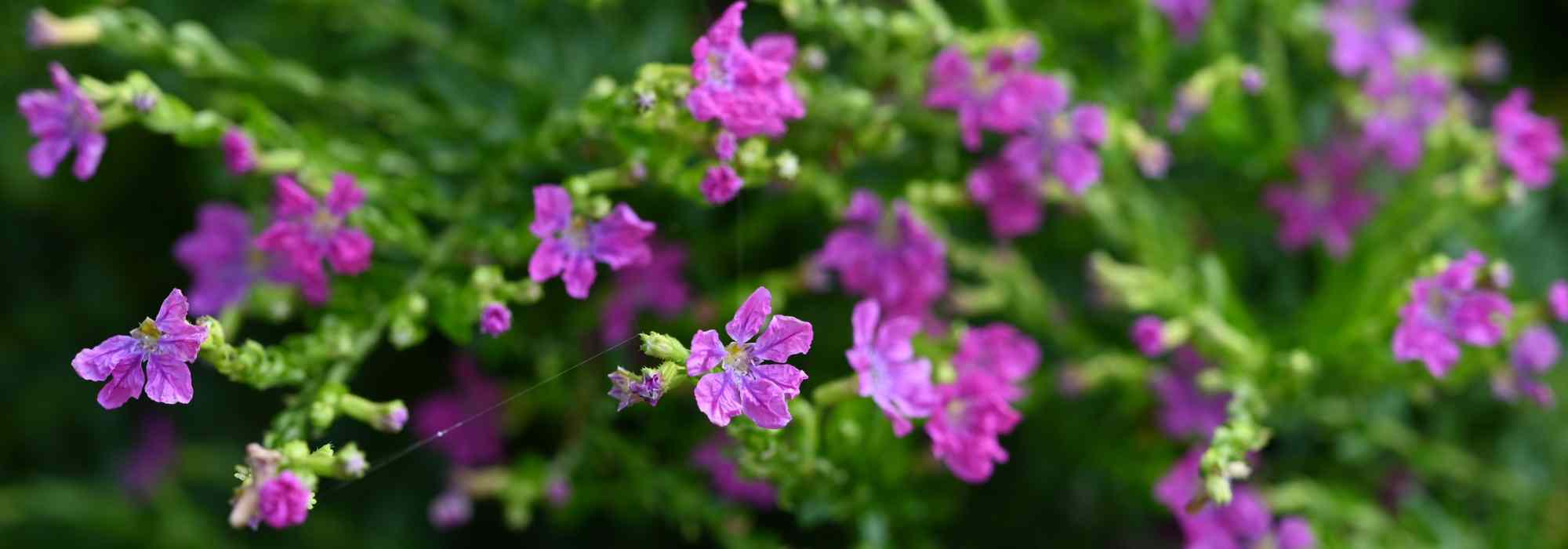
Cuphea: planting, care and cultivation in pots or garden
Contents
All you need to know about Cuphea
- Cuphea is a bushy shrub offering over six months’ flowering
- Produces small, highly decorative tubular flowers from May to October
- Its flowering attracts pollinators, especially bees and butterflies
- Well suited to sunny positions, thrives in warm, bright conditions
- Frost-tender; plant in open ground only in mildest areas of Côte d’Azur
- Used as an annual or houseplant in cooler climates
- Compact, floriferous plant ideal for borders, balconies and terraces
A word from our expert
Cuphea is a tropical shrub particularly appreciated for its long, generous flowering, which brings colour and lightness to beds and pots. Forming a small compact bush with fine foliage, it produces a profusion of small, vivid flowers throughout the summer, as in Cuphea hyssopifolia.
Not very hardy, Cuphea is sensitive to frost and is mainly grown in pots in our climates, but can be planted outdoors in milder regions. Easy to grow, it likes warmth, light and well-drained soil, making it an excellent plant for conservatories, sunny terraces and balconies or as edging for gardens on the Côte d’Azur.
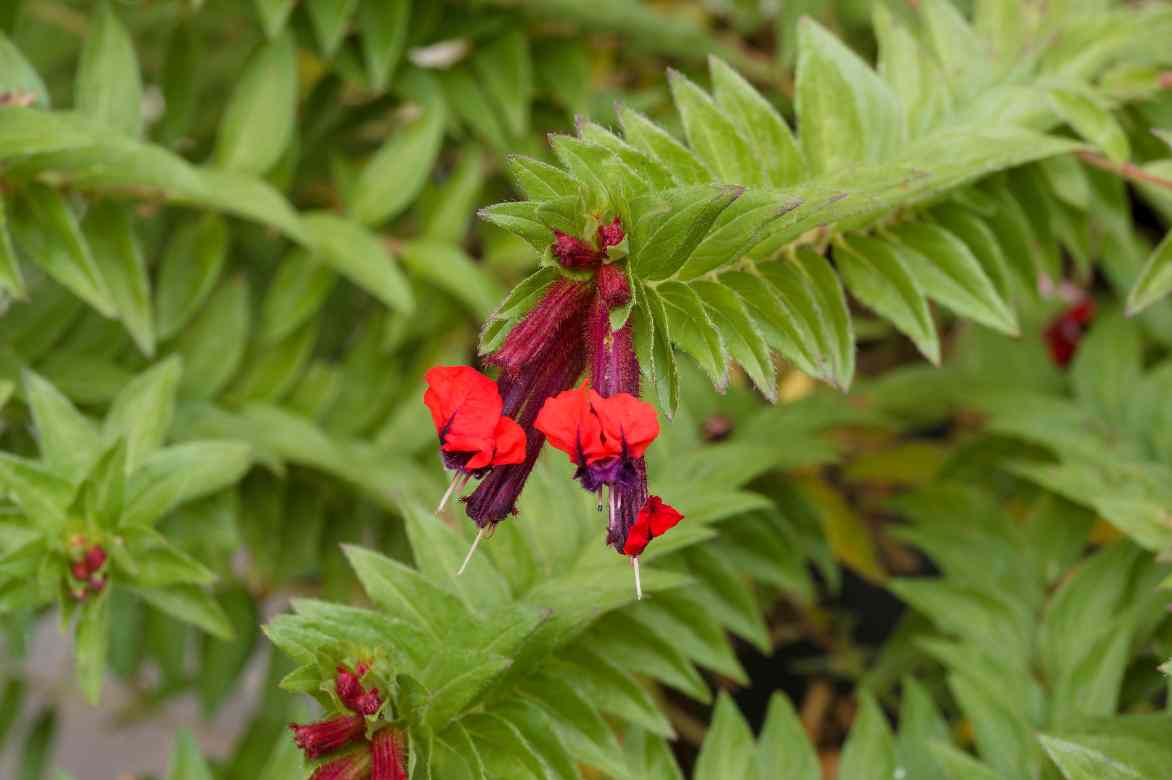
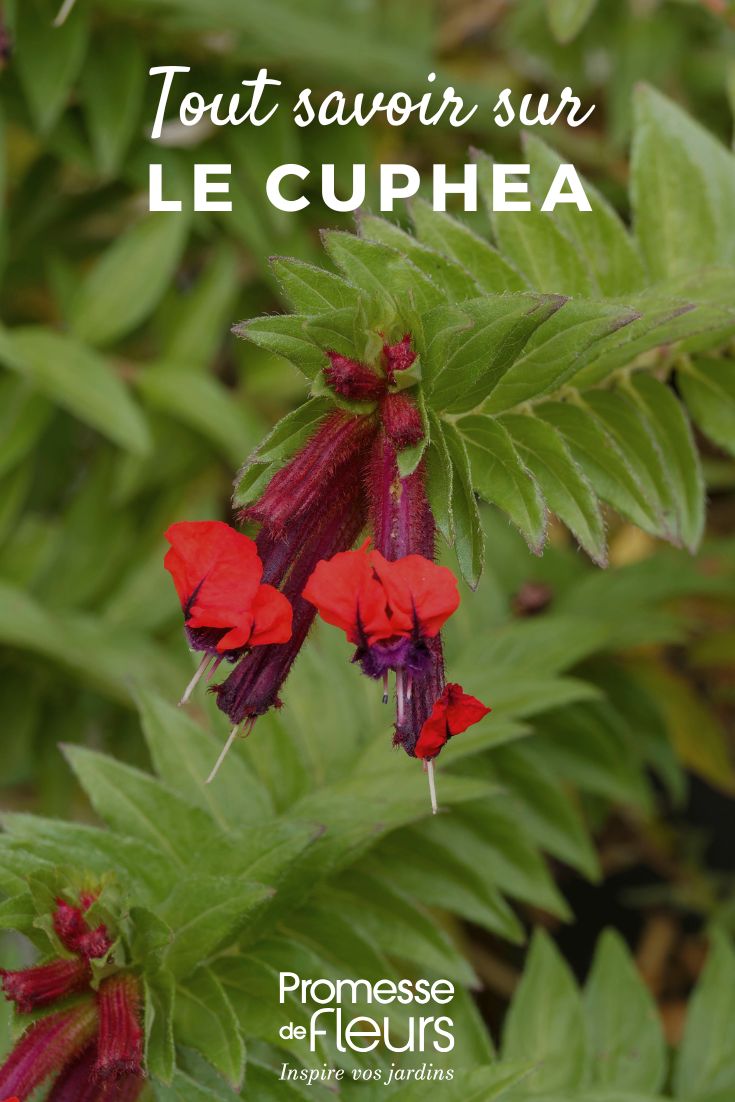
Cuphea llavea

Cuphea cultivation requirements
| Criterion | Cuphea needs |
| Exposure | Full sun to partial shade |
| Soil | Light, well-drained, fairly fertile |
| Watering | Regular but moderate; allow to dry out slightly between waterings |
| Cultivation | Ideal in a pot; open ground possible in mild climates |
| Pruning | Light pruning or pinching to promote a compact habit |
| Hardiness | Not very hardy; protect from frost |
Read also
Annuals: seeds, plug plants or pots?Cuphea fact sheet
Botanical data
- Latin name Cuphea
- Family Lythraceae
- Common name Cigarette plant, Mexican heather, Mexican star
- Flowering May to October
- Height 40 to 80 cm
- Exposure Sun, partial shade
- Soil type fresh, rich, free-draining
- Hardiness Down to -4°C (USDA zone 9b)
Description and botany
The genus Cuphea belongs to the family Lythraceae, alongside well-known ornamental genera such as Lagerstroemia, or crape myrtle, and Pomegranate, sharing with them often generous, decorative flowering. Its name derives from the Greek « kuphos », meaning curved or humped, in reference to the distinctive shape of the floral calyx, often tubular and slightly incurved. Cupheas are commonly called “cigarette plant” because of the elongated, colourful shape of their flowers, resembling a glowing ember, or “Mexican false-heather” for Cuphea hyssopifolia, owing to its fine foliage and light silhouette reminiscent of certain Ericaceae.
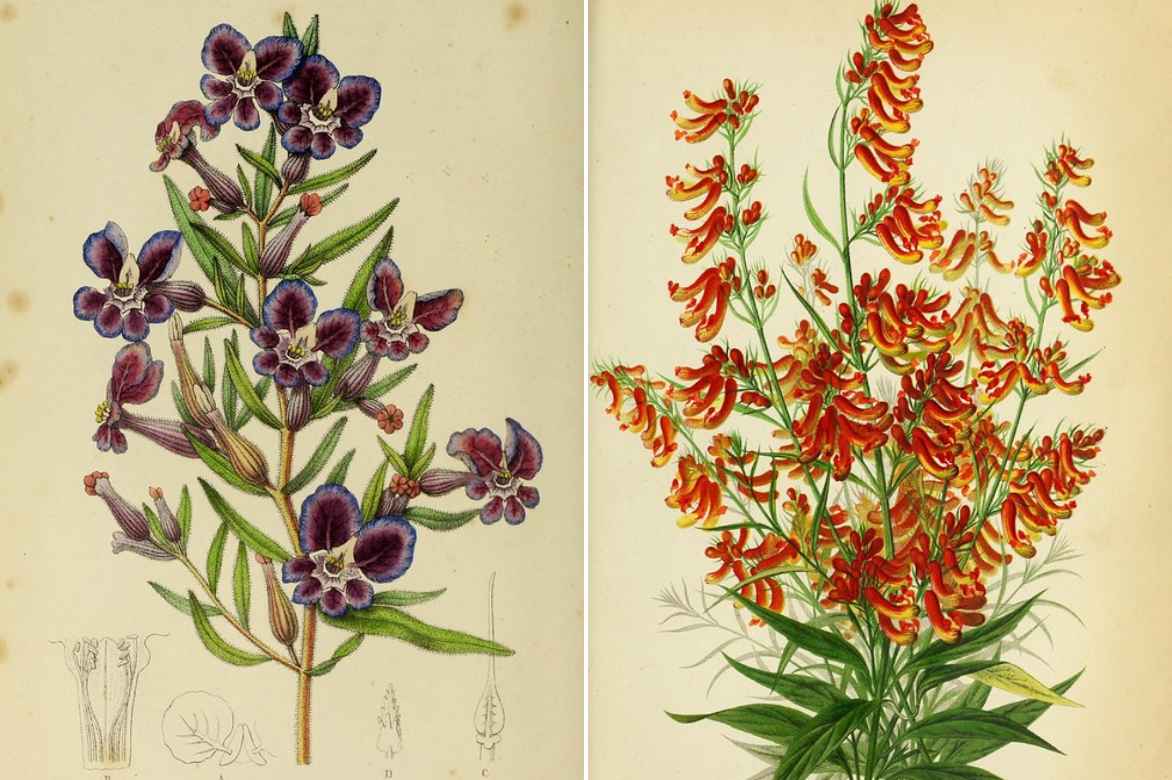
Cuphea silenoides and Cuphea roezlii, botanical plates
Native to warm regions of the Americas, mainly Mexico and Jamaica but more widely distributed across Central and South America, Cupheas develop naturally in open, bright habitats such as forest edges, dry meadows or well-drained rocky areas. These undershrubs prefer stable, frost-free temperatures and a position in full sun to partial shade depending on species. Their adaptation to tropical and subtropical climates explains their marked sensitivity to cold.
The genus Cuphea comprises about 260 species, including annual or perennial herbaceous plants and semi-woody undershrubs, the latter representing most horticultural forms grown in our latitudes. The number of horticultural varieties is particularly large, with many cultivars selected for prolonged flowering, compact habit or suitability for container growing. Some recent varieties, such as those of the HEATBEAT series including ‘Vulcano’, have been selected for compact habit, prolific flowering and flowers noticeably larger than those of traditional forms.
The Cuphea species most commonly cultivated are Cuphea hyssopifolia, Cuphea ignea and Cuphea llavea, valued for abundant flowering and good suitability to container growing. Tender, barely tolerating temperatures below -3 °C, Cupheas are mostly grown in pots. In France, only the mildest coastal areas, notably those benefiting from a Mediterranean microclimate, allow long-term outdoor cultivation.

Cuphea hispida et Cuphea hissopifolia
Habit is that of a dense, rounded to spreading undershrub, sometimes slightly trailing with age or when container-grown. The plant quickly forms a branched clump from the base, flexible yet well structured, its silhouette generally remaining compact with sufficient light. Depending on species and cultivar, height most often ranges from 30 to 60 cm in ornamental culture, some vigorous specimens approaching 80 cm in all directions. Shoots, numerous, opposite or subopposite depending on sections of the genus, are slender, sometimes quadrangular in young growth, more or less pubescent, and characterised by close branching that contributes to the plant’s bushy habit.
Foliage is opposite, sometimes subopposite depending on internodes, made up of simple, entire leaves, generally lanceolate to elliptical, measuring 1–6 cm in length according to species. Lamina, from bright to dark green, sometimes slightly glossy, has a fine to somewhat coriaceous texture with discreet but well-structured venation and a prominent midrib on the lower surface. Margins are entire, slightly undulate, and petiole, short to virtually absent, inserts leaves closely on stems, accentuating the compact appearance of the foliage. On some forms a slight down may be observed on young organs, reflecting fine, transient pubescence.
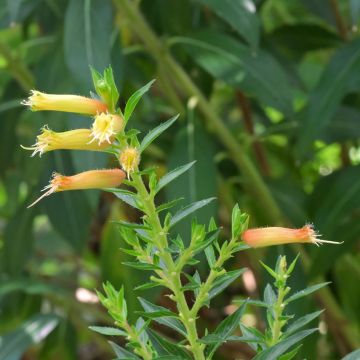
Cuphea produces superb, vivid flowers in summer. Flowering is usually axillary, occasionally grouped in loose cymes, and is distinguished by a tubular, elongated, often coloured calyx whose base may be slightly swollen or spurred. This persistent calyceal tube is topped by short lobes, while corolla, with reduced or very discreet petals in some species, inserts at its end. Stamens, exserted, contribute to the graphic aspect of the flower. Some Cuphea species, notably Cuphea llavea, display unusual flowers evoking a bat’s head, with a coloured tube extended by two small characteristic “ears”. Colours range from bright red to orange, purple or violet, sometimes bicoloured. Flowering is particularly long, extending from spring through to autumn in favourable conditions, even continuous under controlled indoor cultivation.
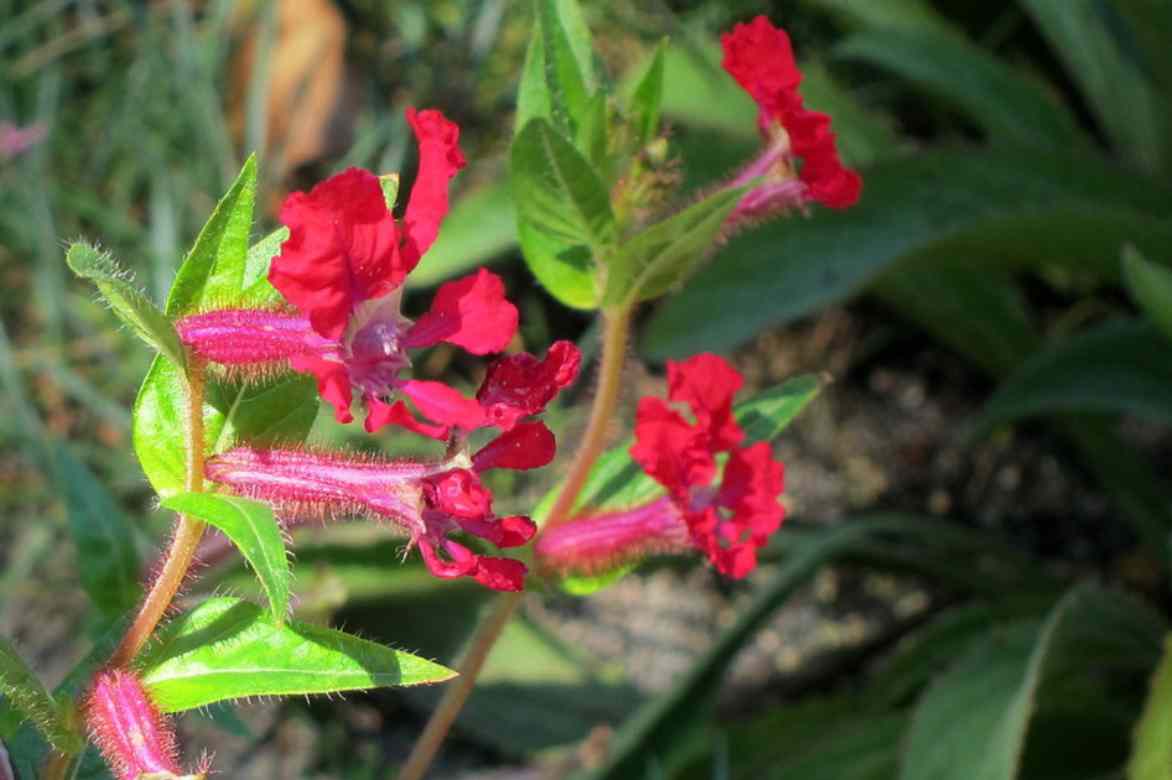
Cuphea llavea (© Flickr, Cultivar 413
Fruit is more discreet, presented as a dry dehiscent capsule, releasing numerous fine seeds.
Our favourite varieties
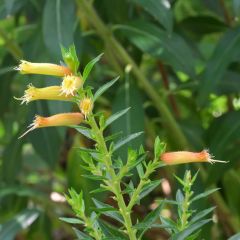
Cuphea micropetala
- Flowering time June to November
- Height at maturity 1 m

Cuphea llavea Torpedo - Bat-faced cuphea
- Flowering time June to November
- Height at maturity 35 cm

Cuphea lanceolata Purple Passion seeds
- Flowering time August to November
- Height at maturity 70 cm

Cuphea miniata Mix seeds
- Flowering time July to November
- Height at maturity 50 cm
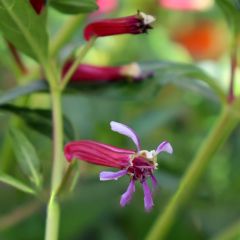
Cuphea Twinkle Pink
- Flowering time June to November
- Height at maturity 80 cm
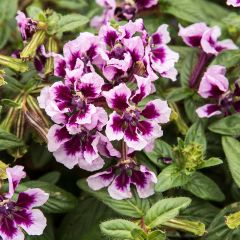
Cuphea procumbens Heatbeat Amethyst
- Flowering time July to September
- Height at maturity 25 cm
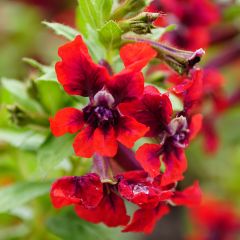
Cuphea procumbens Heatbeat Vulcano
- Flowering time July to September
- Height at maturity 20 cm
Discover other Cuphea
View all →
Available in 1 sizes

Available in 1 sizes
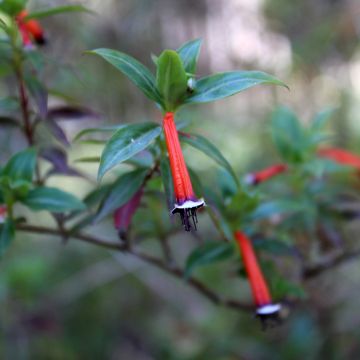
Available in 1 sizes

Available in 1 sizes

Available in 1 sizes
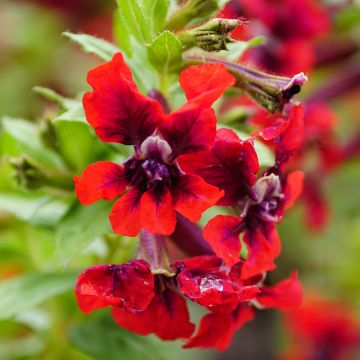
Available in 1 sizes
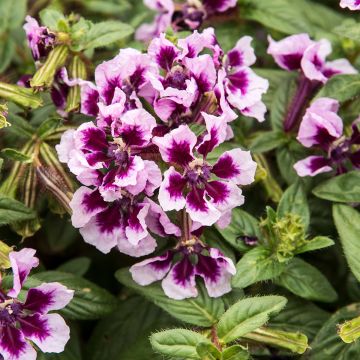
Available in 1 sizes
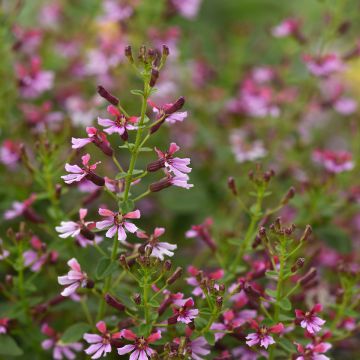
Available in 1 sizes

Available in 1 sizes
Available in 1 sizes
How to plant Cuphea in a pot or in the ground?
When to plant?
Cuphea is best planted in spring, between April and June, when temperatures are warm enough and risk of frost has passed for outdoor planting. Indoors, planting is possible year-round in a room kept above 15 °C.
Where to plant it?
Cuphea is a tropical plant that prefers warmth and light.
Cultivation in open ground is reserved for sheltered areas of the French Riviera. In those regions it can remain in ground from year to year. Outdoors, it makes an excellent border plant in gardens on the Mediterranean coast, or on exposed terraces and balconies.
Elsewhere, it is preferable to grow it in a pot so it can be brought in for winter, or to treat it as an annual while still planting it in beds. It can be taken outside during warm season (above 10 °C), then brought in as soon as night temperatures approach 5 °C.
It grows in full sun or light partial shade, in a warm spot protected from wind. It tolerates heat well provided soil remains slightly cool but is very well drained.
Cuphea is also easily grown as an indoor plant, in a cold greenhouse or a cool conservatory. In winter, temperature should remain above 5–7 °C. Indoors, place it in a very bright spot near a window, in a temperate room.
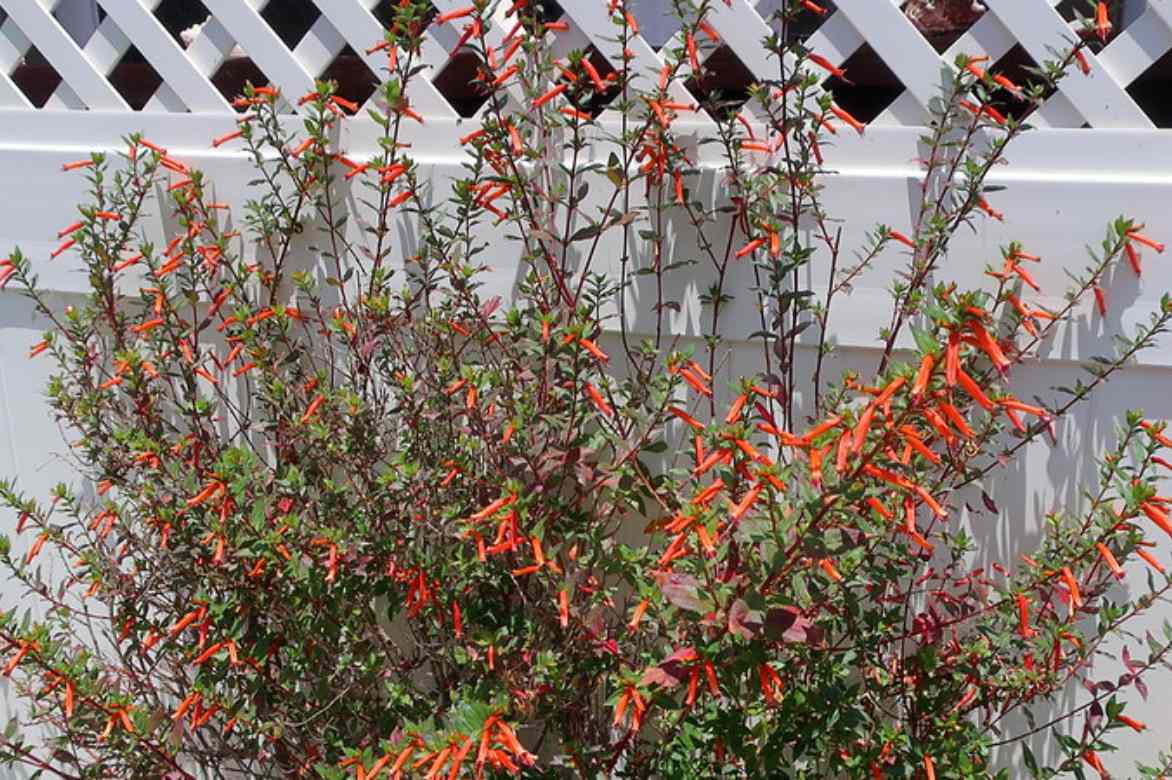
Cuphea ‘Vermillionaire’ planted in full sun (© Flickr, Cultivar 413)
How to plant it?
In a pot (indoors or outdoors)
Substrate
Should be light, airy and well-draining, holding slight moisture without waterlogging:
- A mix of potting compost and garden soil
- 20% perlite, clay pebbles or pumice
Planting steps
- Choose a pot with drainage holes, 18–20 cm diameter
- Place 3–5 cm of clay pebbles or gravel in bottom
- Fill with prepared substrate
- Set rootball so collar is not buried
- Top up and firm lightly
- Water after planting (about 0.5–1 L depending on pot size)
In open ground (outdoors, mild climates only)
It prefers well-drained, fertile, non-calcareous soil.
- Choose a sunny, sheltered spot
- Dig a hole twice as wide as rootball
- Place plant level with ground
- Backfill and firm lightly
- Water well at planting
- Space plants 30–40 cm apart
Watch our step-by-step guide to planting annuals!
Cultivation and care of Cuphea
Watering
In pots :
Cuphea grown in pots needs regular, not excessive watering. From spring to autumn, water 2 to 3 times a week depending on temperature, applying about 0.5 to 1 litre of water for a medium pot. Potting mix should remain slightly moist, allowing the surface to dry between waterings. In winter, needs are reduced: water every 7 to 10 days indoors, avoiding the rootball drying out completely.
In the ground :
In the ground, watering is necessary. Keep soil slightly moist, especially during flowering (this plant is of tropical origin, not Mediterranean). Once established, Cuphea tolerates short dry spells, but prolonged drought reduces flowering. Tolerates heat well and flowers profusely if watering is regular.
Feeding
In pots :
Cuphea is a heavy feeder when grown in pots. Apply a fertiliser for flowering plants, rich in potassium, applied with irrigation water every two weeks from spring to late summer. This encourages abundant flowering and compensates for rapid depletion of the potting mix.
Suspend feeding in autumn and winter.
In the ground :
In rich soil, little fertilisation is necessary. A dressing of well-rotted compost in spring is usually sufficient.
Pruning
Pruning keeps a compact habit and stimulates branching. Pinch back tips regularly to make plant bushier. In late winter or early spring, a harder prune can be carried out, especially if plant has suffered from cold or become bare. It usually reshoots from the base.
Repotting
Repot in spring every 1 to 2 years. Choose a slightly larger pot and renew part of the potting mix. Ensure effective drainage.
Overwintering
Cuphea can only be grown in the ground in regions with very mild winters, notably on the French Riviera. It tolerates occasional light frosts of around -3 to -5 °C, but foliage can be damaged by more severe cold. It is preferable to protect the base with a mulch.
Elsewhere, pot culture is essential so plant can be brought indoors before winter, into a bright room or an unheated conservatory. During winter, avoid overly humid or stuffy atmosphere.
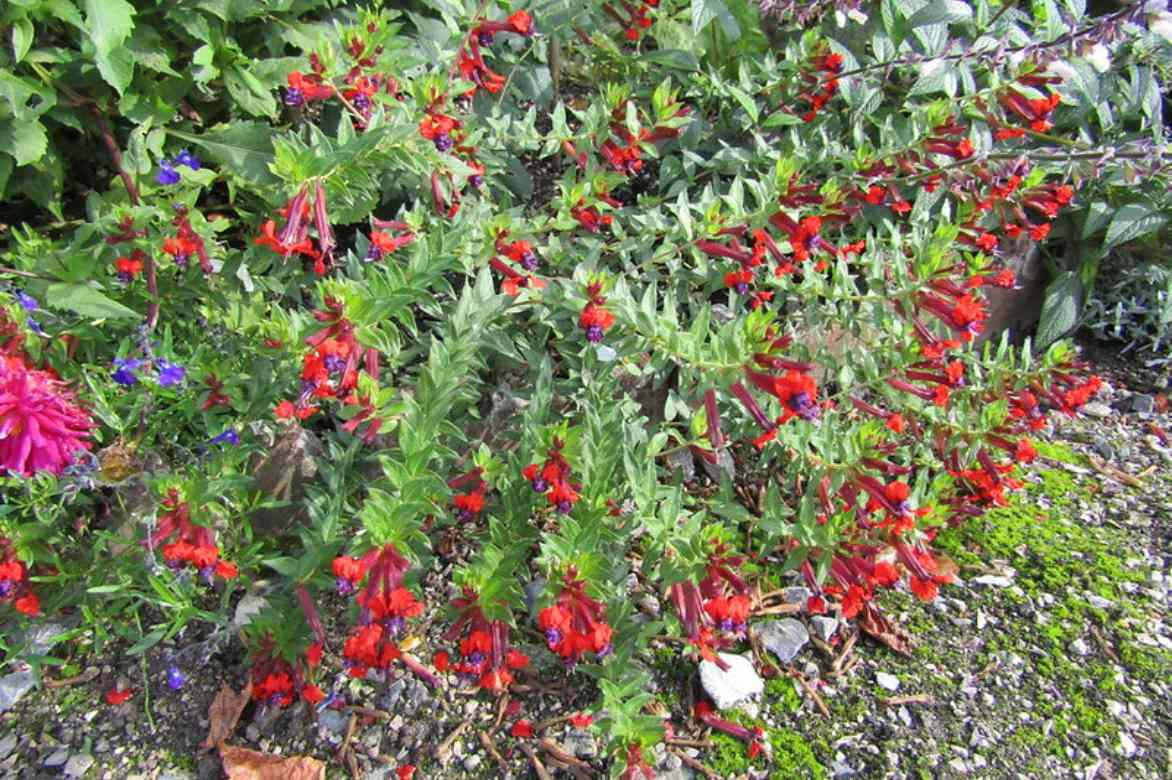
Cuphea Firecracker (© Flickr- Leonora Enking)
Possible diseases and pests
Cuphea is generally hardy but can be affected by poor growing conditions. It is especially sensitive to excess water and cold: use a well-drained substrate, place in a bright position sheltered from draughts, and regularly check for pests.
| Problem | Main symptoms | Causes | Solutions |
| Root rot | Yellowing, wilting | Excess water | Reduce watering, improve drainage |
| Aphids | Insects, sticky leaves | Dry air | Black soap, rinsing |
| Whiteflies | Small white insects, yellowing | Warm, stuffy air | Traps, appropriate treatment |
| Cold | Damaged leaves | Low temperatures | Protect or bring plant indoors |
| Dryness | Dry leaves | Lack of water | Water more |
How to propagate Cuphea?
Cuphea multiplies easily by propagation by cuttings in spring or summer, the simplest and quickest method to obtain new plants true to the parent plant.
- With a pruning shear, take non-flowering stems 8–10 cm long, with several nodes
- Remove leaves at the base and keep 2 to 4 leaves at the top
- Plant the cuttings in a small pot with drainage holes, filled with a seed sowing and pricking-out compost
- Firm substrate lightly around the stem to ensure contact with the substrate
- Water lightly after planting
- Place cuttings in bright light, avoiding direct sun
- Maintain an ideal temperature between 18 and 22 °C
- Keep humidity light and regular (substrate moist but not waterlogged)
- Rooting usually occurs in 2 to 3 weeks
- Once roots are well formed (new shoots visible), pot on into an individual pot with a richer substrate
- Pinch out the tip to encourage branching and obtain a more compact plant
Sowing Cuphea
Sowing takes longer than propagation by cuttings but produces many young plants at lower cost.
- Sow from February to April in warmth, in a fine seed compost
- Scatter Cuphea seeds on the surface and cover very lightly with fine compost or vermiculite (light favours germination)
- Maintain temperature at 18 to 20 °C and constant humidity
- Cover the sowing (mini-greenhouse or plastic bag) to retain heat and humidity
- Germination occurs in 8 to 10 days
- As soon as seedlings can be handled, pot into small pots (about 7.5 cm)
- Then place in a cooler, brighter environment
- Preferably repot to support growth
- Before moving outdoors, gradually acclimatise young plants
- Plant out at the end of spring, after last frosts
- Space about 25 cm apart
- Plant in well-drained soil, in a sunny or lightly part-shaded position, sheltered from scorching sun
Companion planting in the garden
Cuphea fits easily into colourful summer scenes, in borders with summer perennial plants as well as in pots, where it displays fine, abundant flowering.
Cuphea therefore fits perfectly into exotic-inspired compositions. In the garden, it can be planted at the foot of strelitzia reginae to create a contrast between broad foliage and the spectacular flowers of bird of paradise and the delicacy of Cuphea. It also pairs very well with agapanthus, which favour similar growing conditions and add verticality to the composition.
In pots, as in the garden, it can be paired with varieties of Phormium whose purple, pink or orange foliage tones set off its flowering. In a warm, bright setting, it also suits plants such as Lantana camara, the Cassia floribunda in yellow and orange tones, or Abutilon with its colourful bell-shaped flowers.
In cooler climates, Cuphea is ideal in pots or large containers. It can then be combined for a striking summer display with very floriferous annuals such as Bidens. For softer compositions, opt for the small flowers of Bacopa or Diascia. Balcony geraniums, surfiniae, supertunias or petunias in warm tones, or annual sages, will accompany it until the last days of summer.
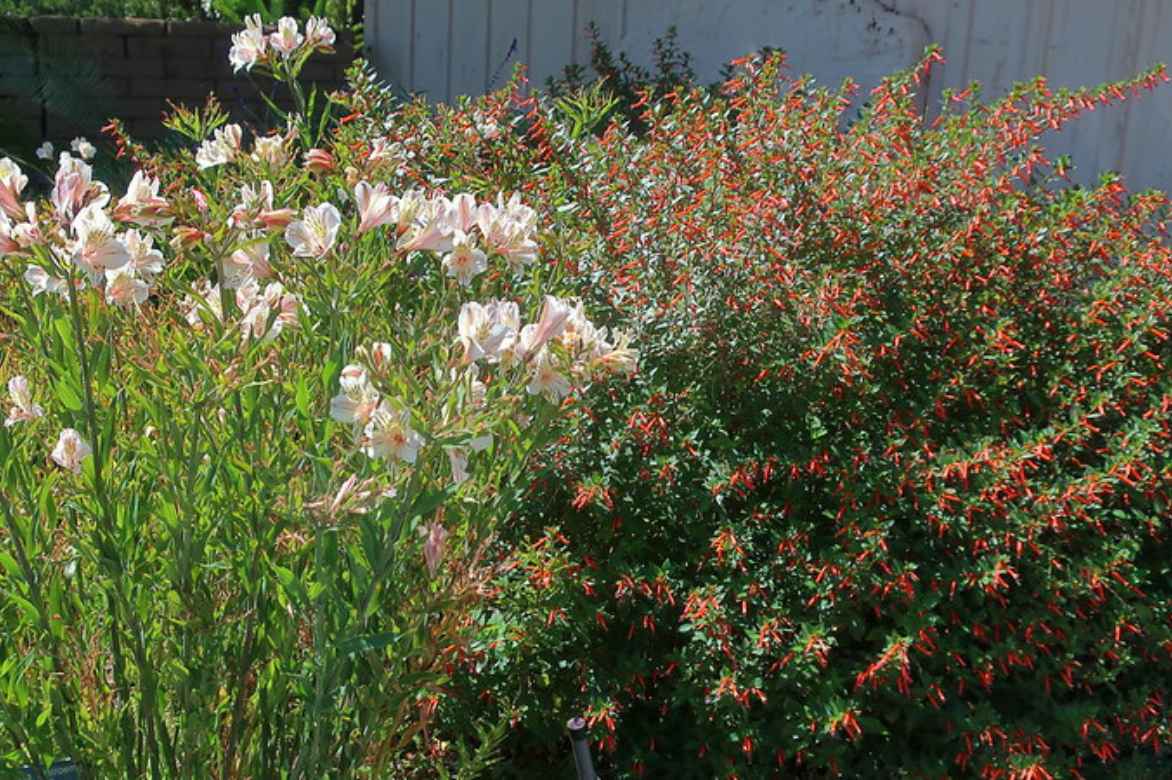
Cuphea ignea on the right, and Alstroemeria ‘Casablanca’ at San Diego Botanic Garden (©Flickr, Cultivar 413)
Frequently asked questions
-
Does Cuphea tolerate frost?
No, it is sensitive to cold and must be protected or taken indoors as soon as temperatures fall below 5 °C.
-
Can Cuphea be grown indoors?
Yes, provided you give it plenty of light and a well-drained substrate.
- Subscribe!
- Contents
This form is protected by reCAPTCHA - the Google Privacy Policy and Terms of Service apply.

































Comments