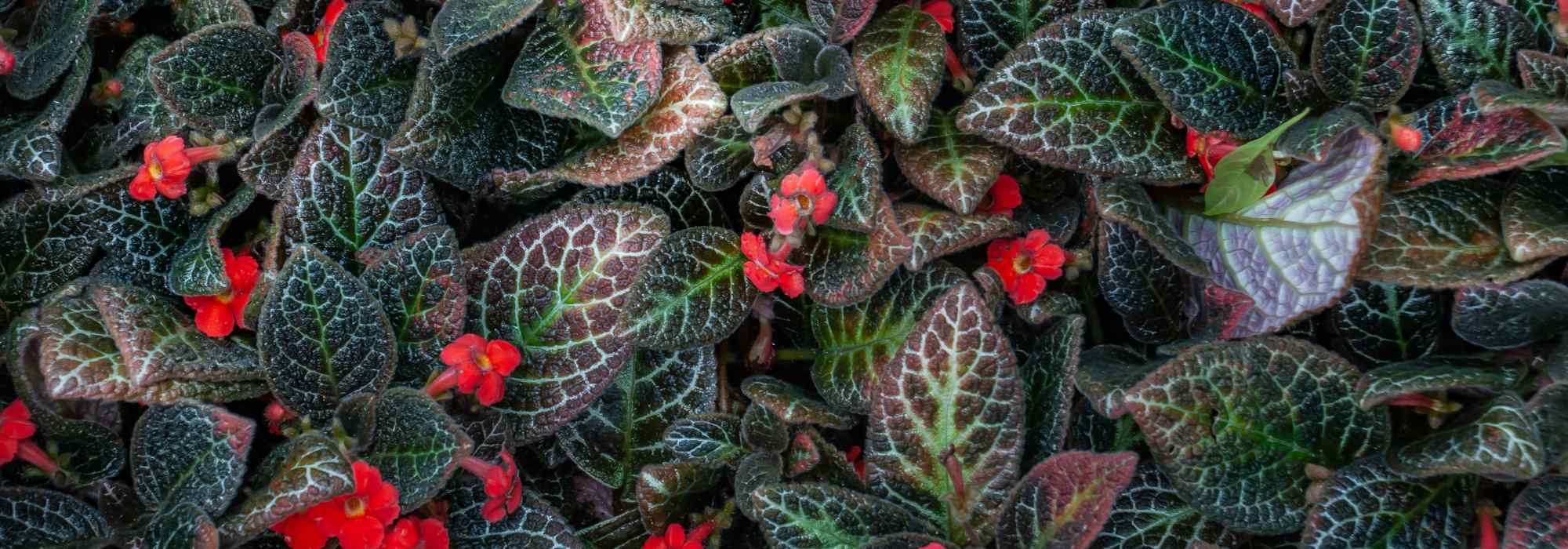
Episcia: care, indoor cultivation, cutting
Contents
All about Episcia
- Tropical plant with velvety, colourful foliage, often coppery, silvery or bronze.
- Relative of Saintpaulias.
- Likes soft light, high humidity and temperatures above 18°C.
- Needs a light, humus-bearing, moist and well-draining substrate.
- Episcia cutting is simple and quick.
- Particularly well suited to rooms such as the living room or lounge
- Easily grown as a hanging plant, in a pot or in an open terrarium.
A word from our expert
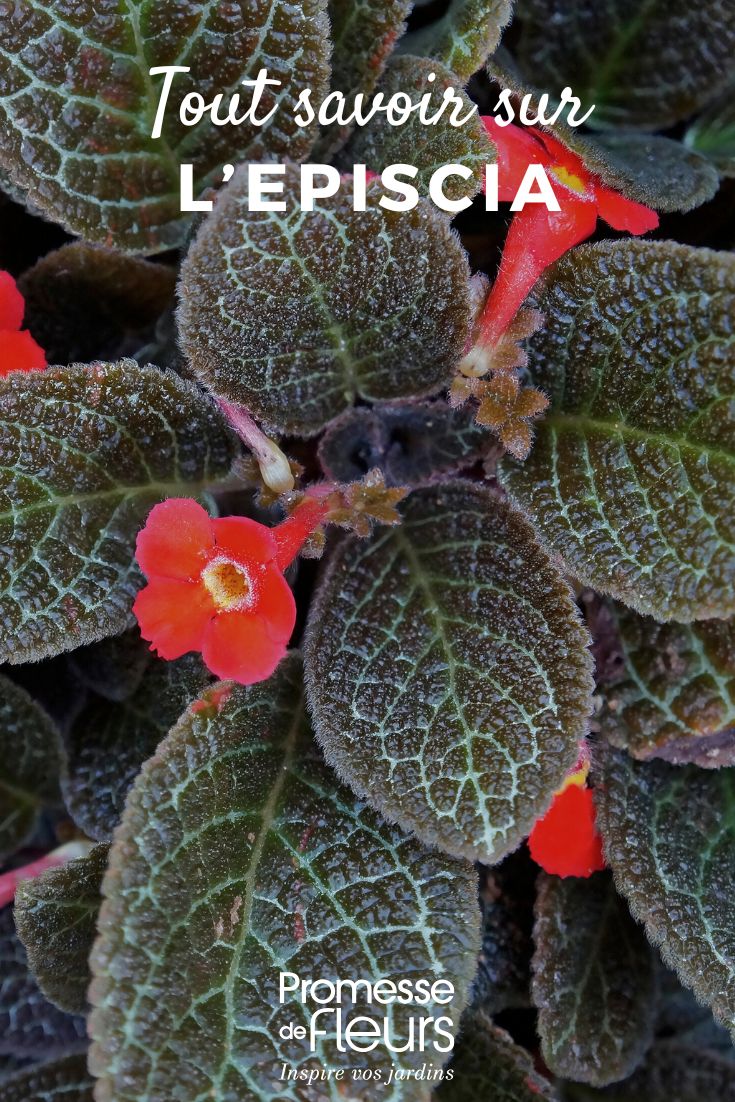
Episcia, sometimes nicknamed “Brazilian violet”, is a tropical houseplant with velvety foliage and delicate flowering. Compact and stoloniferous, it forms hanging cascades or a dense carpet in an open terrarium. Episcia cupreata and its varieties such as ‘Silver Shield’ charm with their colourful leaves and scarlet flowers.
Somewhat demanding to cultivate, it requires soft light without direct sun, ambient humidity above 50%, and a porous, light substrate kept slightly moist. Keep plant away from draughts, dry radiator air in winter and temperatures below 15 °C, which it does not tolerate. However, cultivation remains accessible to enthusiasts with some basic houseplant experience.
Caring for Episcia is simple: frequent watering, avoid misting leaves directly. For propagation, Episcia cuttings are easy to take from its stolons.
Ideal plant to brighten a sunny living room, a light bedroom or even a conservatory!
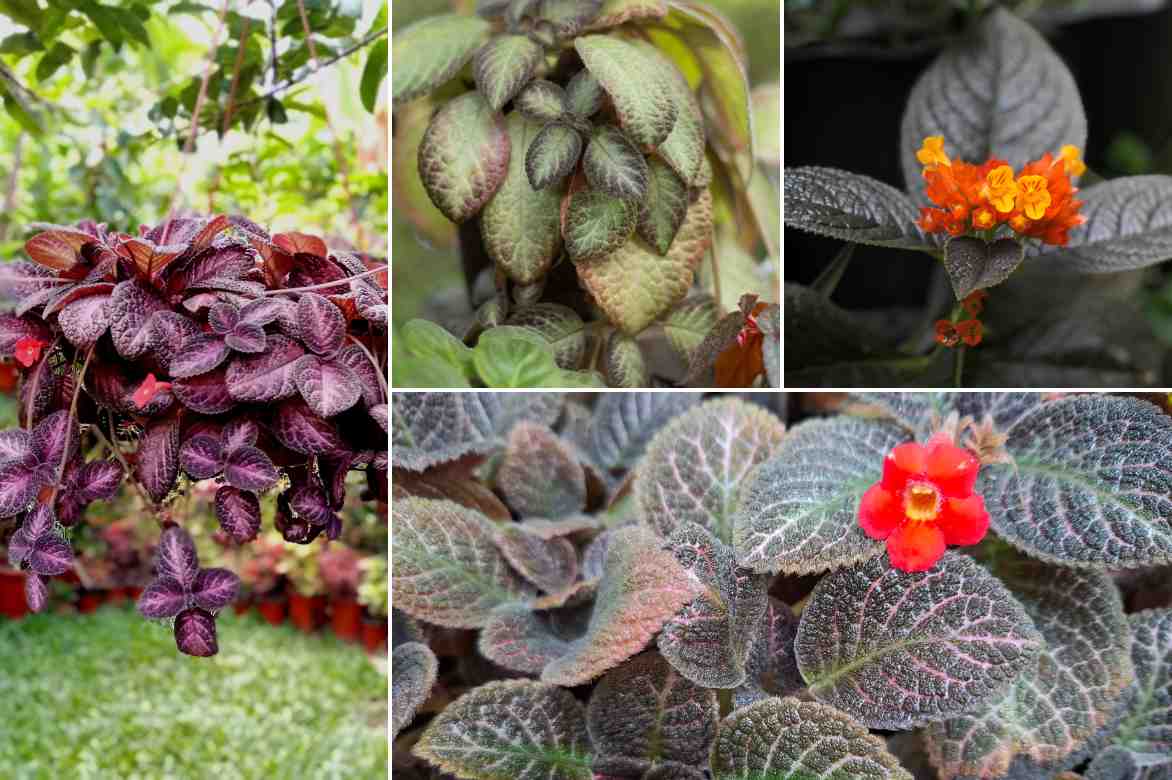
Impressive diversity of foliage and flower colours in Brazilian violet

Episcia fact sheet
Botanical data
- Latin name Episcia
- Family Gesneriaceae
- Common name Flaming violet, Brazilian violet, Episcia
- Flowering May to September
- Height 5 to 15 cm
- Exposure Bright indirect light
- Soil type Light, well-draining soil
- Hardiness Frost-tender
Read also
7 trailing indoor plantsDescription and botany
Episcia belongs to the family Gesneriaceae, like Saintpaulia and Gloxinia, well known houseplants for their generous flowering. The genus name Episcia comes from the Greek episkios, meaning “shaded”, a reference to its natural habitat, often in the dense shade of the tropical canopy.
Known as the “flame violet” or “Brazilian violet”, this tropical plant originates from the humid forests of Central and South America, notably Colombia, Brazil and Venezuela. In its natural habitat, Episcia grows as a groundcover in moist understory, or sometimes as an epiphyte, taking advantage of ambient humidity and dappled light to develop.
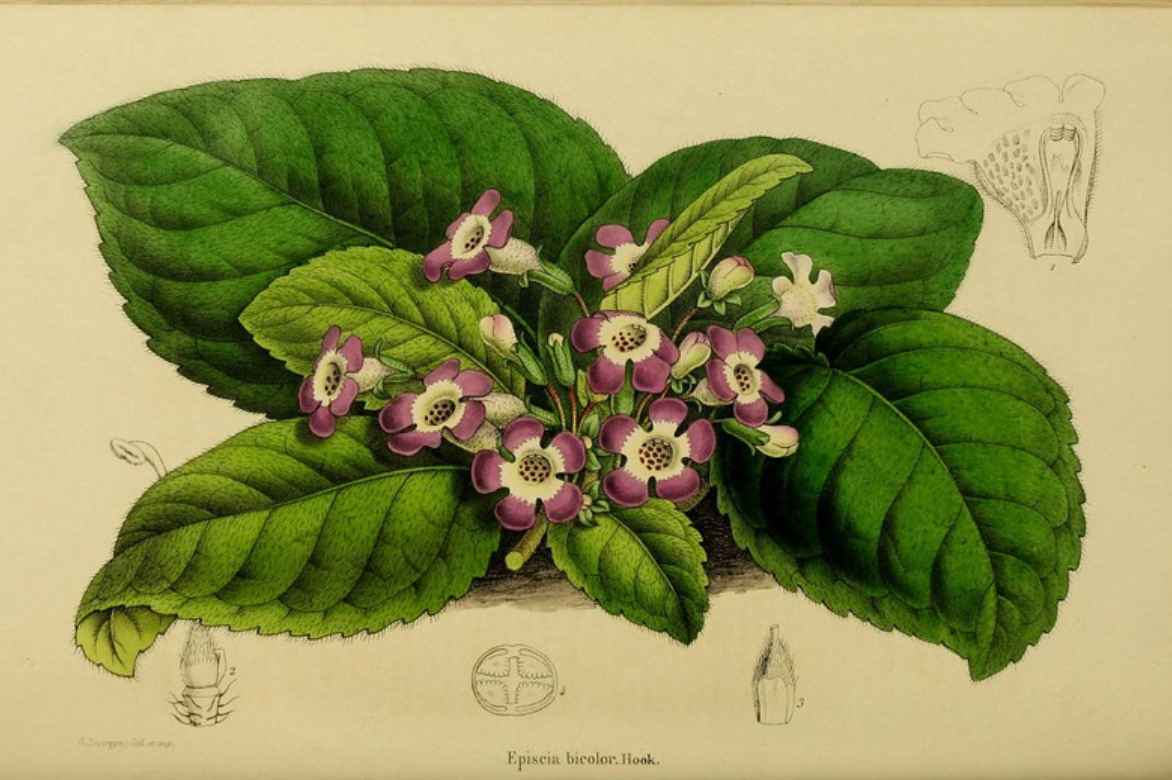
Episcia bicolor botanical plate circa 1845
Tender, it particularly dislikes cold, damp conditions. This chill-sensitivity, common to many tropical plants, makes it an ideal candidate for indoor cultivation in our latitudes.
The genus Episcia includes about ten species of perennial plants, all native to tropical regions of the Americas. In cultivation, hybrids resulting from crosses are most often encountered, selected for the beauty of their foliage as much as for their flowering. The species most widely grown is Episcia cupreata, recognisable by its velvety, coppery-tinged leaves and its small tubular scarlet flowers. Among popular horticultural varieties, ‘Silver Shield’ charms with its metallic-tinged foliage, while ‘Pink Acajou’ attracts attention with shades of bronze-green, silver and pink, highlighted by bright red flowers.
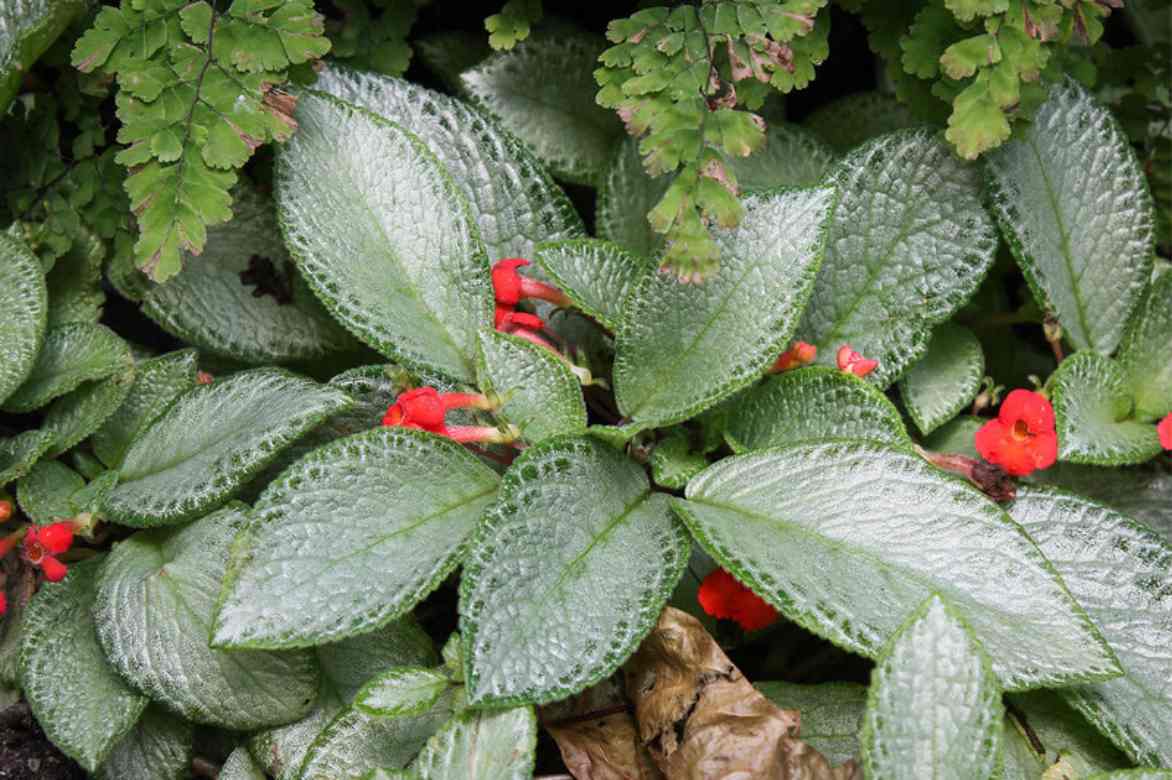
Episcia cupreata ‘Silver Sheen’ (© Maja Dumat)
Also encountered is Episcia reptans, a more discreet species. Less spectacular in colour range, it is nevertheless valuable for its ability to create a low, stable vegetation well suited to the confined, humid conditions of terrariums.
Episcia is a perennial herbaceous plant with a low, spreading to trailing habit, forming a dense carpet thanks to its creeping, stoloniferous stems, which root at soil contact and allow rapid spread. In cultivation it generally reaches 10 to 15 cm in height, but can cover up to 30 to 40 cm in width, depending on available space and vigour. Episcia reptans usually does not exceed 5 to 8 cm in height, but can easily spread to 30 cm width or more. Root system is shallow, made up of fine roots, often fasciculate, adapted to the light, humus-rich substrates encountered in tropical understories.
The plant develops soft, cylindrical, downy stems that lengthen horizontally, sometimes slightly erect at the base before turning back towards the soil. These stems produce abundant branching, each bearing dense, ornamental foliage.
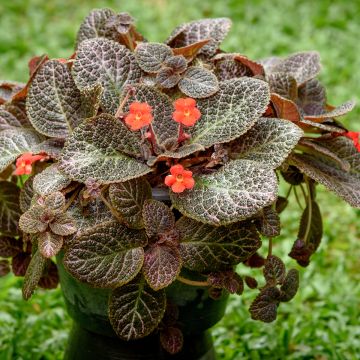
Leaves, arranged in a rosette or along the stems, are opposite, petiolate, oval to elliptical in shape, with entire or finely crenulate margin. Lamina, fleshy and delicately blistered, is covered with a fine down giving a velvety appearance, sometimes satiny. Colouration, extremely variable by cultivar, ranges from deep green, bronze, silver, purple or pink, often with pronounced veins or contrasting patterns.
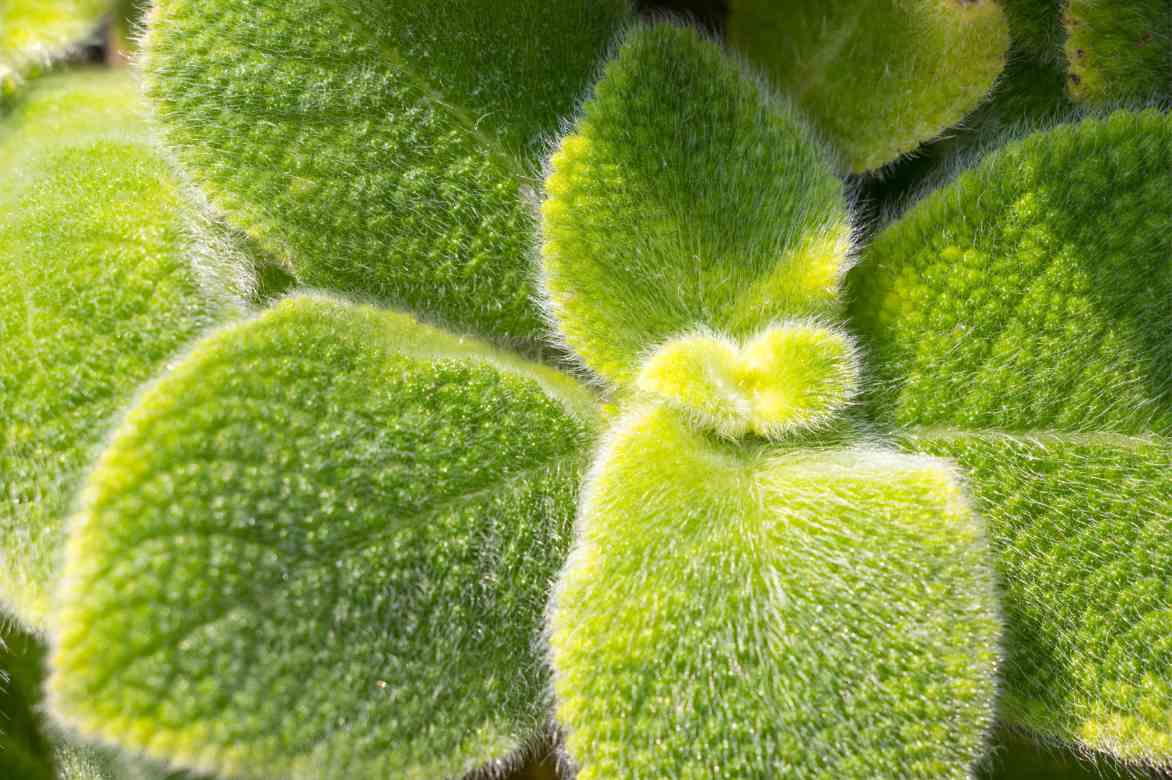
Episcia lilacina
Flowering, discreet but regular, appears in leaf axils from spring to autumn. Flowers, solitary or sometimes grouped in pairs, are tubular, slightly flared at the tip, with five rounded lobes. Colour varies from scarlet red to bright pink, sometimes orange or violet depending on cultivar, with a throat often decorated with lighter or darker markings. Although not very fragrant, they are melliferous and attract small pollinators in their natural habitat.
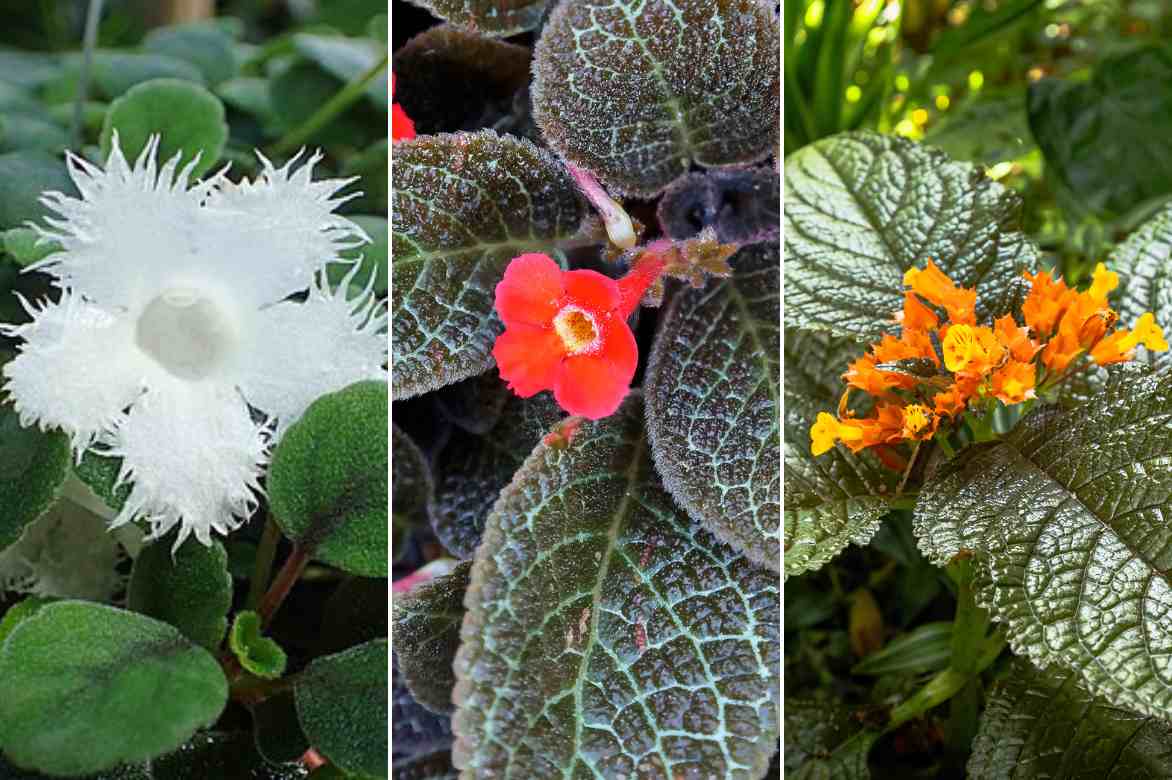
Episcia dianthiflora (©wikimedia commons, Krzysztof Ziarnek), and centre and right Episcia cupreata
Fruiting, rarer in cultivation, produces small capsules containing minute seeds. However, the plant reproduces mainly vegetatively via numerous stolons, far more effective than seed dispersal.
Our Episcia varieties
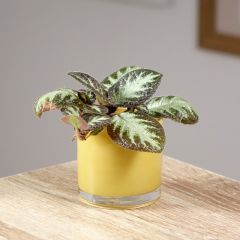
Episcia cupreata Silver Shield - Flame violet
- Flowering time June to October
- Height at maturity 15 cm

Episcia cupreata Pink Brocade - Flame violet
- Height at maturity 20 cm

Episcia cupreata Pink Acajou - Flame violet
- Flowering time June to November
- Height at maturity 15 cm
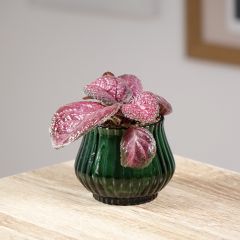
Episcia cupreata Malayan Gem - Flame violet
- Flowering time June to October
- Height at maturity 15 cm
Discover other Episcia - Flame violet
View all →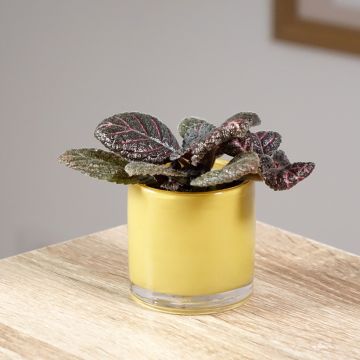
Available in 1 sizes
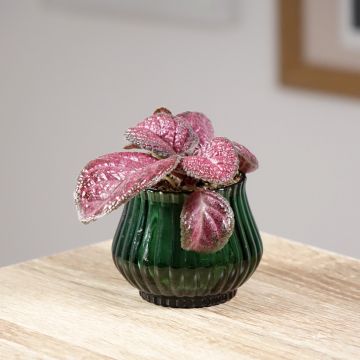
Available in 1 sizes
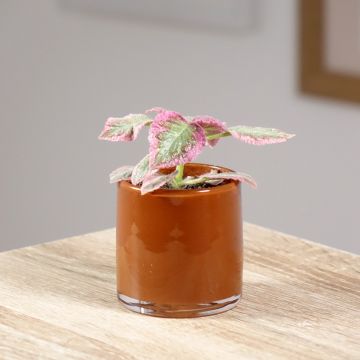
Available in 1 sizes
Available in 1 sizes
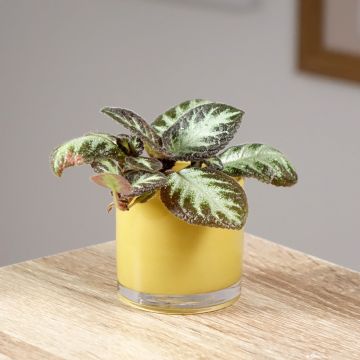
Available in 1 sizes
Planting Episcia in pots
What is best time to plant an Episcia in a pot?
Ideal time to plant an Episcia in a pot is spring. Mild temperatures (between 18 and 24 °C) and increasing light provide optimal hardening. Planting year-round is also possible, provided periods of extreme heat are avoided and adequate humidity is maintained.
Which pot to choose and what type of soil to use for an Episcia?
To plant an Episcia plug plant, a small pot with a drainage hole 7–9 cm in diameter is ideal to encourage rooting without excess moisture. As plant grows and develops stolons, repot into a wider, shallow pot of 12–14 cm. Lightweight plastic pots are suitable, while terracotta pots require more frequent monitoring of moisture. In a hanging pot or in a well-ventilated open terrarium — such as a glass bowl or cylindrical vase — Episcia reveals its full decorative potential. Avoid closed terrariums, which are too humid for its velvety foliage.
It is recommended to place a layer of clay pebbles at pot base to ensure good drainage, then fill with a light, humus-bearing and well-draining substrate. A combination of potting compost for indoor plants, turf or coconut coir, and perlite or coarse sand gives an airy soil similar to conditions of the tropical understorey.
How to plant an Episcia in a pot?
- Place a layer of clay pebbles at pot base to improve drainage.
- Set plug plant without burying the collar, firm lightly.
- Water moderately with soft, room-temperature water.
Where to place an Episcia indoors?
To position this tropical plant in the home, it is essential to provide bright but filtered light, sheltered from direct sun. An east- or north-facing window is ideal: it receives sufficient light without risk of scorching the foliage, which is very sensitive to direct sun.
This tropical plant also appreciates a stable ambient temperature, ideally between 18 and 24 °C year-round. Below this range, growth slows and plant becomes more vulnerable to disease and pests.
Episcia dislikes dry atmospheres, often responsible for outbreaks of pests such as spider mites. Avoid very dry spots, such as close to radiators. It needs ambient humidity above 50%. To maintain steady humidity, place pot on a tray of moist clay pebbles, use a humidifier or group several tropical plants to create a favourable microclimate. Also avoid cold draughts, which can weaken plant over time.
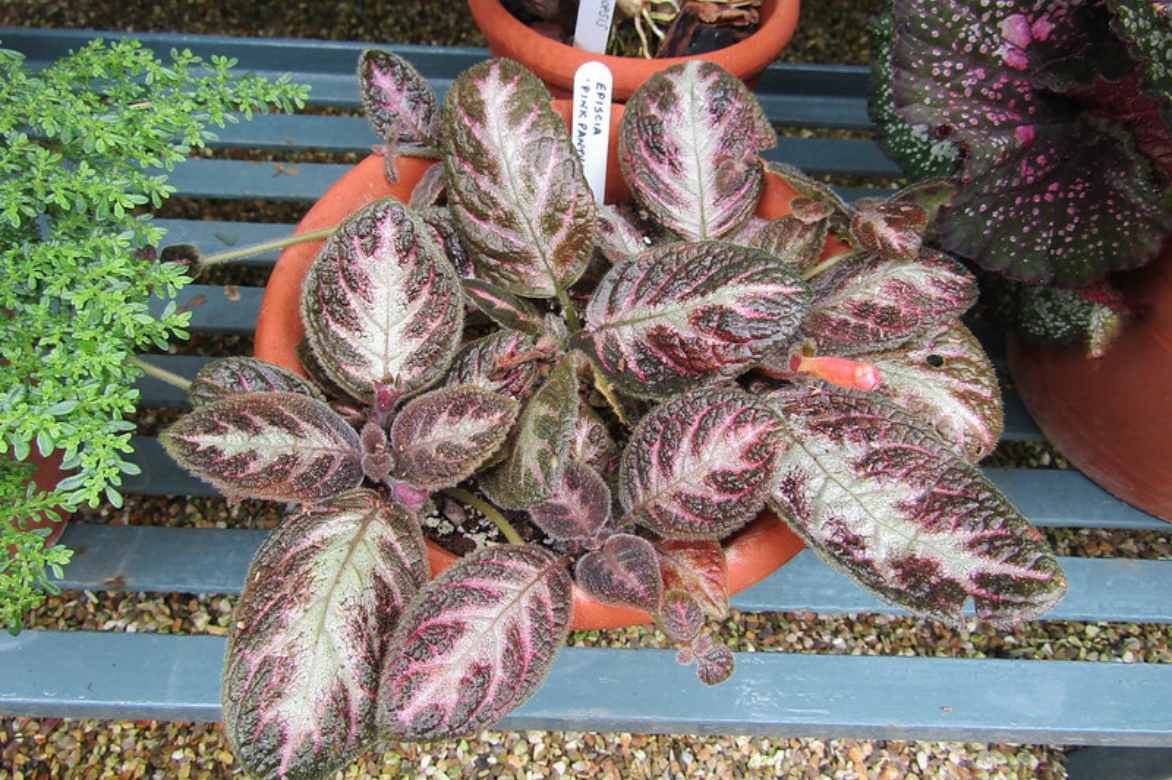
Episcia cupreata ‘Pink Panther’ (© Leonora Enking)
How to care for Episcia?
Watering
Watering should be regular but not excessive, and avoid wetting foliage. Potting mix should remain slightly moist at surface without ever becoming waterlogged. Excess water pooling at pot base can weaken roots or cause rot. During growth, from spring to autumn, watering every 4 to 5 days is generally sufficient, depending on ambient temperature and room humidity. Potting mix should be slightly dry on surface between waterings.
In winter, when plant enters relative dormancy, frequency decreases: watering every 7 to 10 days is often enough. Use water at room temperature, preferably soft (low in calcium), and empty saucer after each watering to prevent water retention around roots. Excess moisture remains main cause of rot in this tropical plant.
Fertilising
Light feeding can be applied during active growth, from March to September. A balanced liquid fertiliser for flowering houseplants, diluted to half strength and applied every three to four weeks, is more than sufficient. Excessive feeding can compromise flowering and lead to uneven foliage growth.
Foliage care
Episcia does not require pruning as such, but regular cleaning is recommended to maintain healthy foliage. Remove faded or damaged leaves at the base to prevent cryptogamous diseases. Too many or unruly stolons can also be shortened to control plant development or encourage rooting of young seedlings in other pots.
After flowering, pinch stem tips to encourage branching and preserve a compact, balanced habit.
Misting
Misting is not recommended for Episcia. Stagnant moisture on leaves can cause spots or encourage disease. To maintain good humidity, favour a tray of damp clay pebbles or use a humidifier, without wetting foliage directly.
When and how to repot an Episcia?
Repotting Episcia should be done every one to two years, usually in spring, at the start of new growth. This allows renewal of potting mix, enlargement of root space, and division of rooted stolons to propagate the plant. Simply transfer the rootball into a slightly larger pot with fresh, well-draining potting mix, taking the same precautions as when planting. Young seedlings from stolons can be separated and planted individually to create new pots.
Pests and diseases of Episcia
Indoors, Episcia is moderately sensitive, but certain growing conditions can encourage pest outbreaks. Dry air and high temperatures are the main stress factors, favouring proliferation of red spider mites, which appear as a fine web beneath leaves and discoloured foliage. Spray preventatively with nettle manure or horsetail decoction.
Aphids can also establish, especially on young shoots or during opportunistic attacks when the plant is stressed. In case of infestation, spray a mixture of warm water and black soap, concentrating on colonised areas, while temporarily isolating the plant.
As for diseases, Episcia is mainly threatened by excess moisture, which can lead to root rot or leaf spots of fungal origin, particularly if air circulation is poor or leaves remain wet. Good watering management, a well-draining substrate and controlled humidity greatly reduce these risks.
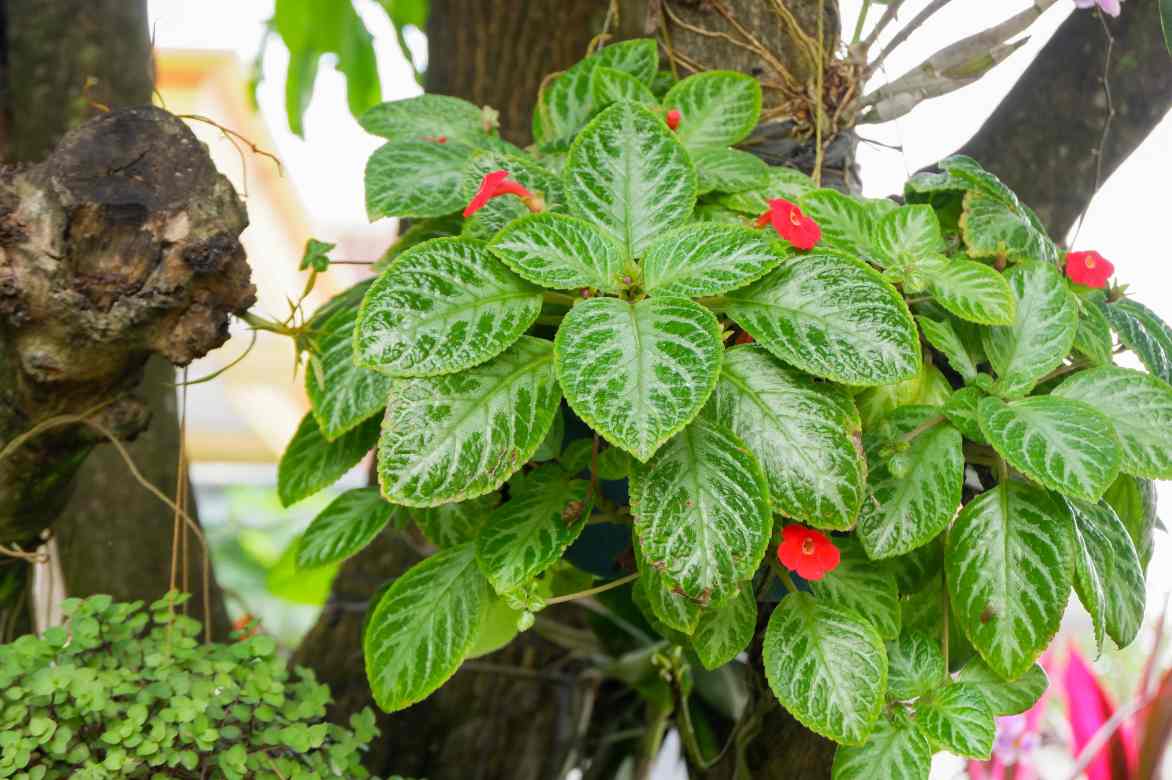
Episcia cupreata
Episcia cuttings: when and how to propagate?
Episcia is mainly propagated by propagation by cuttings of stolons, a simple and very effective method. Establishment is rapid: roots take hold within a few days.
- On the plant, identify a creeping stem (stolon) that grows horizontally and bears, at its tip or at a node, a small rosette of leaves.
- Once small roots appear beneath this rosette, you can remove it: cut the stolon with a clean tool, just before the point of rooting.
- Plant this young rosette in a small pot filled with a light, fresh and well-draining substrate.
- Water lightly, without waterlogging the soil, then place the pot in bright light out of direct sun, at 20 to 24 °C.
Episcia for décor
Episcia thrives particularly well in bright rooms, such as a living room, a bright bedroom or a sheltered conservatory, where it benefits from generous light without direct sun exposure. In a well-lit bathroom, it brings a lush touch while taking advantage of naturally high humidity.
Thanks to its stoloniferous stems, it fits easily into a hanging basket or wall planter, where its trailing habit can develop freely. On a high shelf, it creates an elegant trailing effect, ideal for dressing a bookcase or a bright corner.
Dans un terrarium ouvert, on pourra admirer ses feuilles veloutées et colorées. Il est parfait pour recréer un sous-bois tropical miniature. Episcia forms a textured plant backdrop, ideal when paired with Helxine or small ferns.
Episcia is equally at home in bohemian interiors and contemporary minimalist settings, thanks to its rich textures and foliage contrasts. Varieties with silver or coppery sheens add a chic tropical touch. For an attractive plant display, it can be combined with plants that share similar light and humidity requirements, such as Fittonia ‘Pink Special’, Calathea ‘Freddie’, Pilea peperomioides and Peperomia rotundifolia, for example.
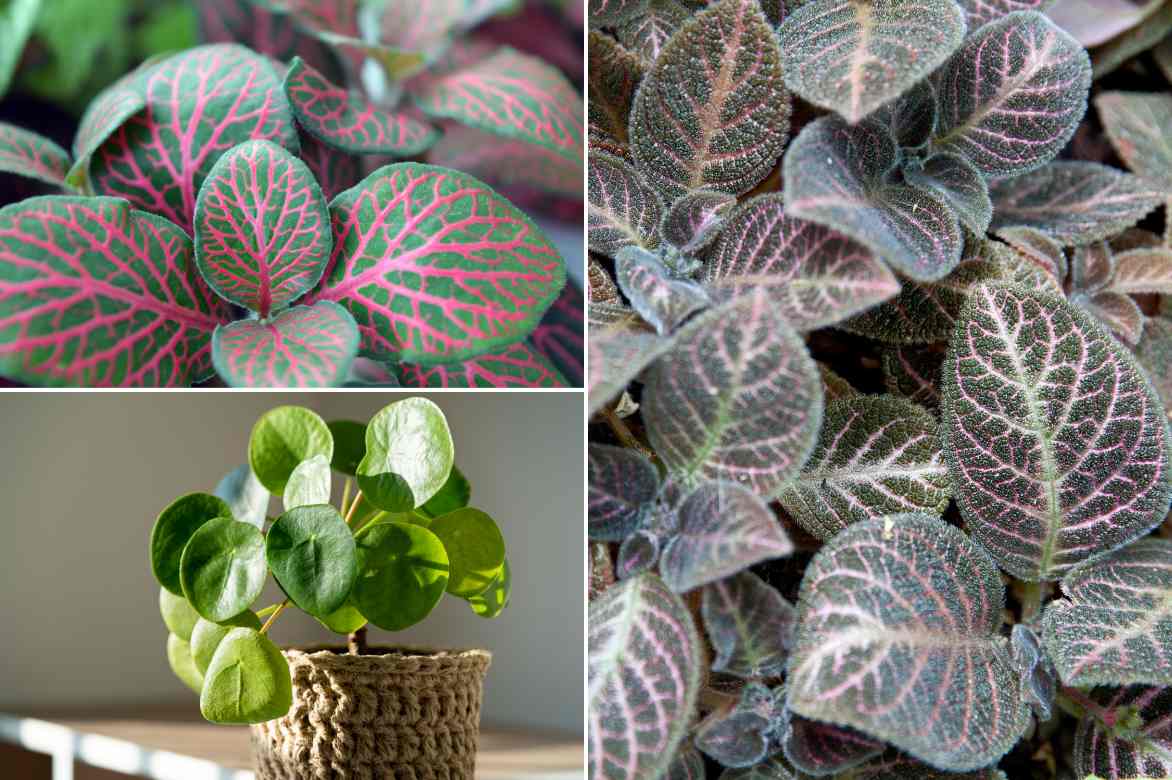
Fittonia, Pilea and Episcia cupreata
See also
→Discover our wide range of indoor plants.
→Our indoor plants with decorative foliage and our indoor flowering plants.
→Our many books on indoor plants
- Subscribe!
- Contents
This form is protected by reCAPTCHA - the Google Privacy Policy and Terms of Service apply.

































Comments