Guzmania: care throughout the seasons
All care needed for this tropical indoor plant
Contents
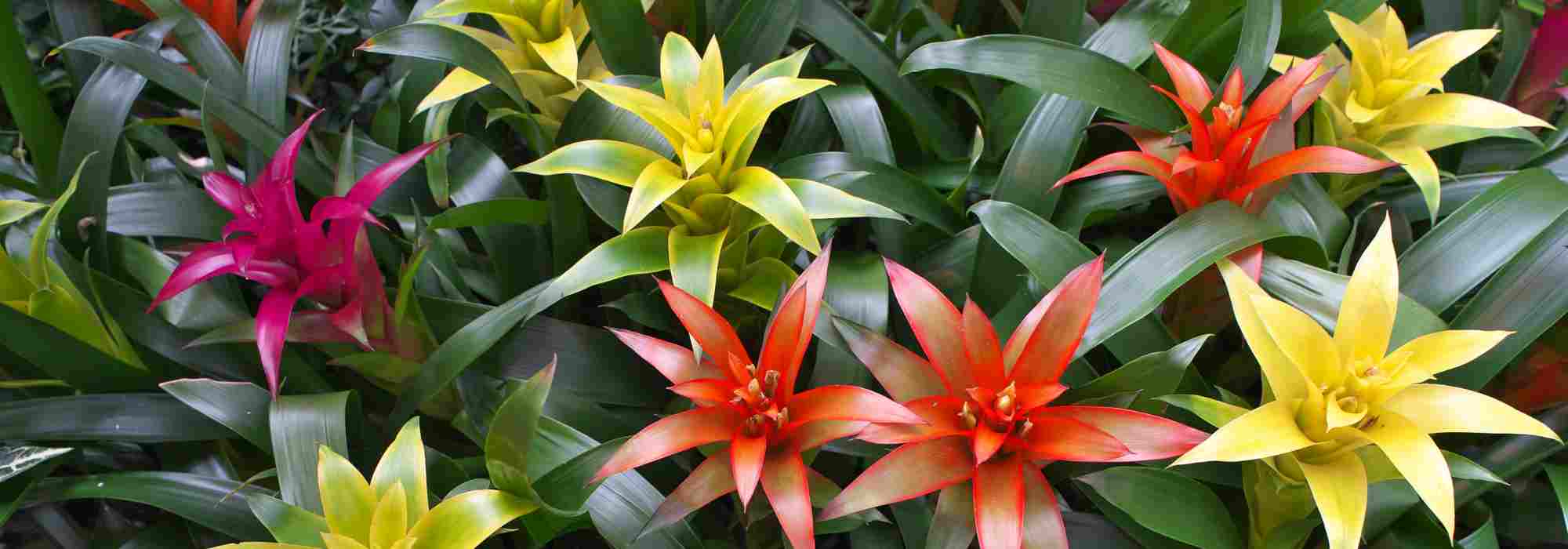
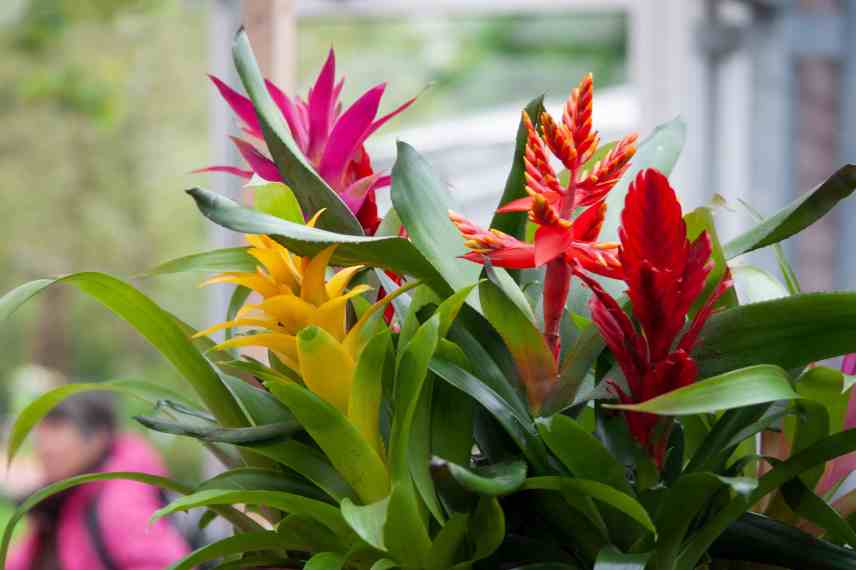
Native to tropical forests of Central America, the Guzmania is one of the most popular houseplants for its spectacular flowering and the shimmering colours of its bracts, pink, yellow or red. Easy to grow, this bromeliad does, however, require season-specific care to thrive fully. Here are some tips to care for it throughout the year.
Spring: season of renewal
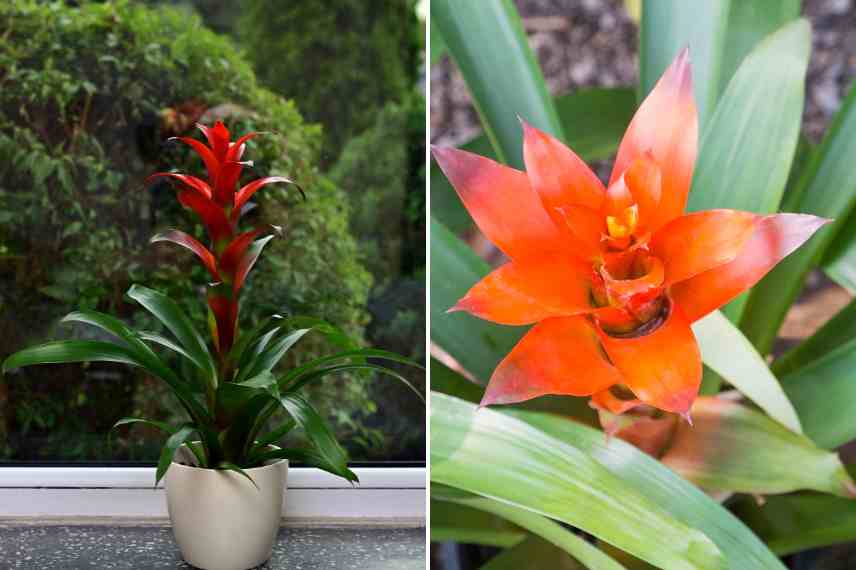
Early spring is a key time for Guzmania: it is often when it unfurls its colourful bracts (which can occur a little earlier in late winter). Brighter light and mild temperatures stimulate the plant, which needs appropriate care to support or prepare its flowering and encourage the appearance of offshoots.
Resuming watering
Resumption of watering should be gradual. In spring, water your Guzmania once a week, ensuring the centre of the plant remains slightly moist. Preferably use soft, room-temperature water (ideally rainwater) to avoid damaging delicate leaves. Stagnant water in the saucer must be avoided, as it encourages root rot, but a layer of clay pebbles that helps keep the pot cool will provide the necessary moisture.
Feeding
After a period of winter rest, your Guzmania needs nutrients to support growth and the formation of future flowers. From March, you can start giving a liquid fertiliser for flowering plants, diluted to half strength, only once a month. This type of fertiliser, rich in essential elements, will stimulate both foliage development and flower formation.
Repotting
If your Guzmania seems cramped in its pot, spring is also the ideal time to repot. Choose a pot slightly larger than the previous one, but not too large to avoid waterlogging. Opt for a light, free-draining mix made of potting compost for houseplants and perlite. This mix will allow roots to breathe and reduce the risk of rot.
For full details, see our dedicated article: How to repot a Guzmania with minimal stress?
Propagation by offshoots
In spring, offshoots appear after the mother plant has flowered (usually 2–3 months later) and enjoy optimal conditions for rooting successfully. Separate and repot offshoots that have roots (typically 15–20 cm long) between March and May to take advantage of increased light and mild temperatures. Use a free-draining potting mix, maintain consistent moisture without excess, and keep them at 20–22°C. Learn more in our guide How to propagate Guzmania at home?
Read also
Guzmania: care, planting, and adviceSummer demands vigilance to preserve radiance
In summer, Guzmania thrives but is also more vulnerable to heat, drought and pests. Coloured bracts, when present, need special care to retain their colour for as long as possible.
Protection from sun
Protect Guzmania from direct sunlight, especially between 12:00 and 16:00, by using a sheer curtain or moving it slightly away from window. Inspect leaves regularly for scale insects or red spider mites, common at this time of year. Treat promptly with a mixture of water, black soap and vegetable oil if necessary.
Watering
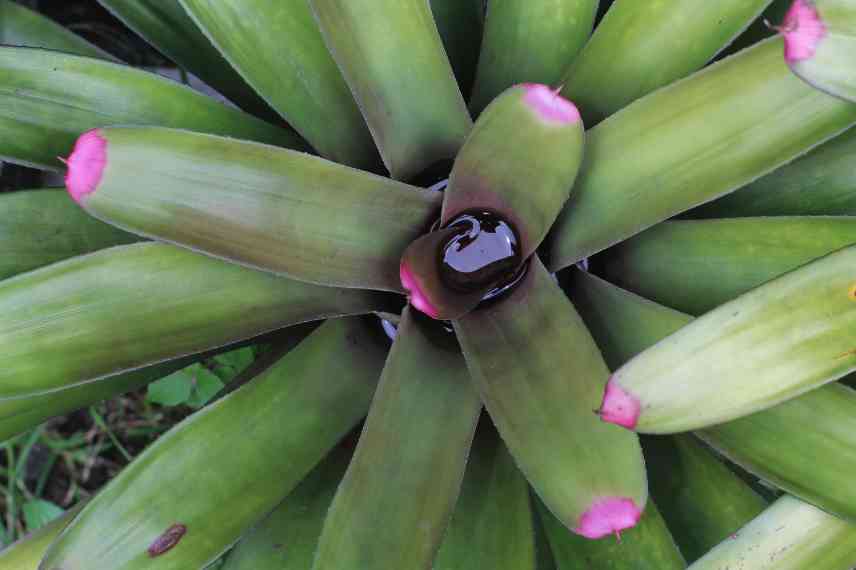
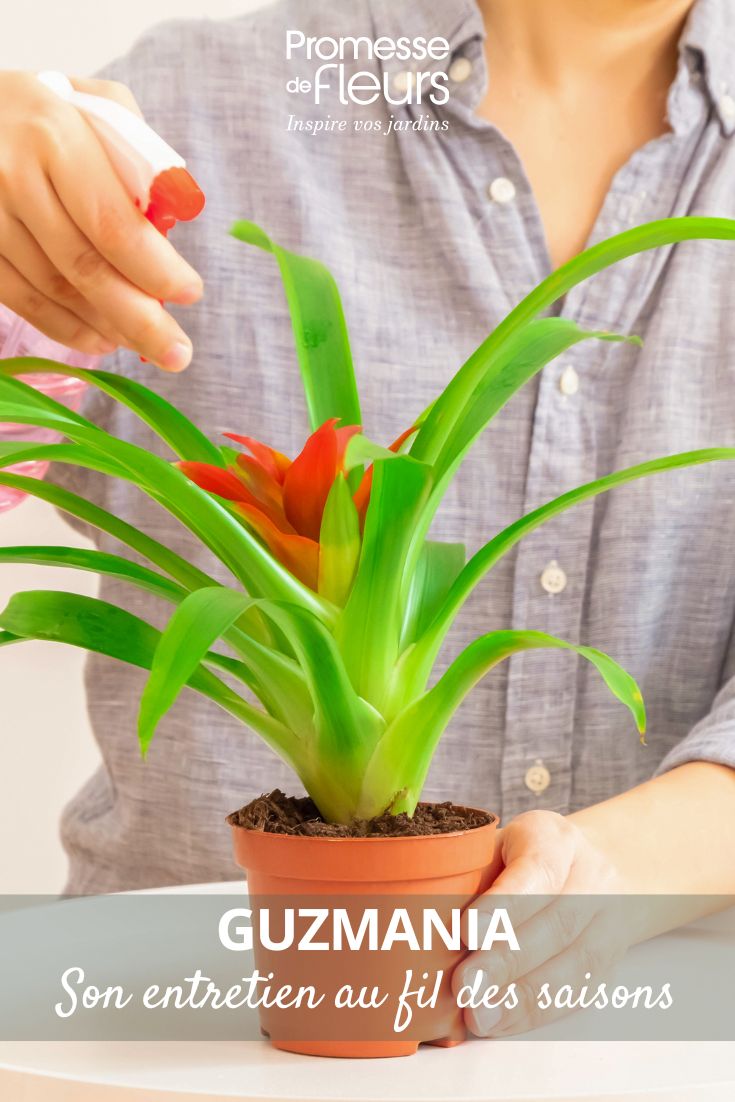
Slightly increase watering frequency: twice a week, depending on ambient heat. Mist leaves regularly with rainwater to recreate humid conditions, or water at base of plant if flowering, and into centre if not. Empty saucer after half an hour. Place pot on a bed of moist clay pebbles to maintain constant humidity around plant.
Fertilisation
Continue fertiliser applications every two weeks, using a product suitable for bromeliads or orchids. Stop applications if plant has been in full flowering for several months, to avoid exhausting parent plant.
Putting Guzmania outdoors to stimulate flowering
Provided ideal conditions are respected (partial shade, stable temperature, humidity), Guzmania benefits greatly from spending a few weeks outdoors in summer (however, never take it outside in summer if it is in flower, as coloured bracts are very sensitive to humidity and temperature fluctuations). A Guzmania happy outdoors will be more resistant and more floriferous in the long term, and produce more offshoots because it has enjoyed natural conditions for a few months (humidity, light, temperatures and air circulation). So if you want to see it flower well, don’t hesitate to give it a short spell outdoors.
But do this only in most favourable season, between June and mid-September (depending on region), when night temperatures do not fall below 15–16°C. Guzmania, a tropical plant, is indeed sensitive to sudden temperature changes, but day–night temperature differences are very beneficial, as with many bromeliads. In metropolitan France, ideal period to place Guzmania outdoors is generally June, July and August, or early September if nights remain mild. Bring it back indoors at first cooler nights.
Start with short outings and observe reaction of plant! Place Guzmania imperatively in partial shade, under a tree, pergola or awning, where it will benefit from indirect, dappled light. Bring back indoors in case of prolonged rain.
If balcony or garden does not meet these conditions, simply air the room where Guzmania sits in summer, or place it near an open window (with a sheer curtain to filter direct light).
Autumn: ensure transition to winter
Autumn is a season when maintenance is reduced, but there are two important requirements for Guzmania.
Watering and fertilising
Reduce watering gradually: once every two weeks is sufficient from September, allowing substrate to dry out slightly at the surface between waterings. Completely stop fertiliser applications from late October. This allows the plant to rest and to prepare to produce offshoots, useful for reproduction, as Guzmania dies after flowering.
Light conditions
Maintain good light levels, as days are shorter. A lack of light in autumn may delay the appearance of offshoots or weaken the plant before winter. Avoid cold drafts, which could stress the plant. A stable temperature between 18°C and 22°C is ideal.
Finally, watch for the first offshoots appearing at the base of the mother plant, a sign that the life cycle is proceeding normally.
Winter: period of slowdown, not strict dormancy
Unlike some houseplants, Guzmania does not enter complete dormancy in winter. However, growth slows considerably, water and nutrient needs decrease, and this is when it requires least care. It is a period when the plant rests while preparing, for some varieties, a possible winter flowering. Here is how to care for it so it gets through this season in good health.
- Do not apply any fertiliser in winter: nutrient inputs are unnecessary now and could even scorch roots weakened by the cooler conditions.
- Reduce watering frequency to one watering every three weeks, using room-temperature soft water as you do in other seasons. Always allow substrate to dry over the first 2 to 3 centimetres between waterings. Overwatering is the main cause of winter rot. If indoor air is very dry, supplement with a light misting of the foliage (once a week) to maintain minimal necessary humidity.
- Light: place Guzmania near an east- or north-facing window, where it will receive bright but indirect light. Avoid direct sun, even in winter, which could scorch leaves weakened by lack of humidity. Avoid cold draughts (open windows, front doors) and sources of dry heat (radiators, fireplaces), which dry the air and stress the plant. Guzmania does very well in winter at temperatures between 16 and 20°C.
- Watch for signs of stress: yellowing leaves (overwatering), brown tips (air too dry), or limpness (lack of water or light).
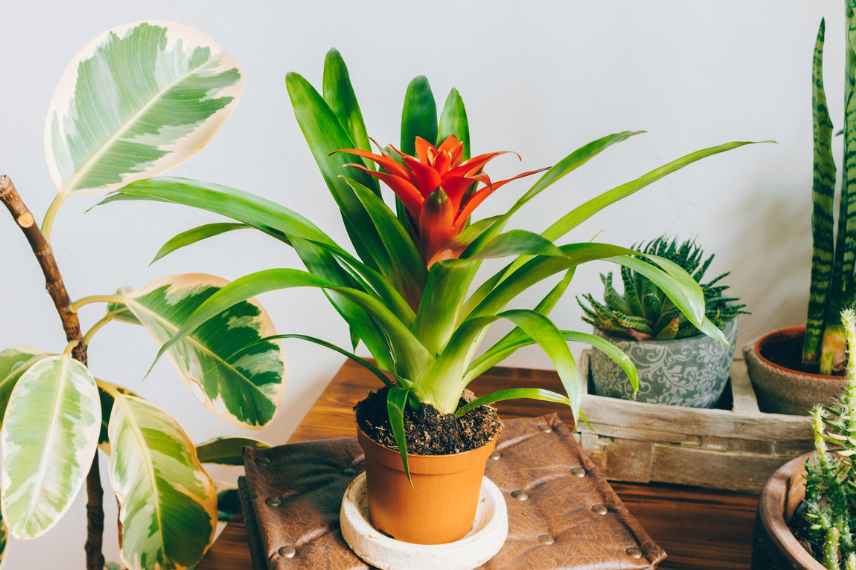
Year-round care guidelines for Guzmania
- Place Guzmania in bright light, but never in direct sunlight, regardless of season.
- Like other houseplants, Guzmania also collects dust in flats or houses. Clean leaves regularly, all year round with a damp cloth to remove accumulated dust. This promotes photosynthesis, helps plant capture ambient moisture better, while reducing risk of disease.
- Watch for first offshoots appearing at base of mother plant, a sign that life cycle is proceeding normally and that plant can be propagated. Wait until offshoots (side shoots) reach 15–20 cm before separating them: mother plant still nourishes them for 2–4 months.
Finally, some care is required after flowering, whenever it occurs during the year:
- Cut faded flower spike at its base to avoid exhausting mother plant and to encourage offshoots.
- Reduce watering (once every 2–3 weeks) and lightly mist foliage to maintain humidity without excess.
- Subscribe!
- Contents
This form is protected by reCAPTCHA - the Google Privacy Policy and Terms of Service apply.

































Comments