
































Tanacetum cinerariifolium - Pyrèthre de Dalmatie, Chrysanthème insecticide, Tanaisie à feuilles de cinéraire
Tanacetum cinerariifolium - Pyrèthre de Dalmatie, Chrysanthème insecticide, Tanaisie à feuilles de cinéraire
Tanacetum cinerariifolium
Special offer!
Receive a €20 voucher for any order over €90 (excluding delivery costs, credit notes, and plastic-free options)!
1- Add your favorite plants to your cart.
2- Once you have reached €90, confirm your order (you can even choose the delivery date!).
3- As soon as your order is shipped, you will receive an email containing your voucher code, valid for 3 months (90 days).
Your voucher is unique and can only be used once, for any order with a minimum value of €20, excluding delivery costs.
Can be combined with other current offers, non-divisible and non-refundable.
Why not try an alternative variety in stock?
View all →
Available in 2 sizes
Available in 0 sizes
Available in 2 sizes

Available in 1 sizes

Available in 1 sizes
Available in 1 sizes
Available in 1 sizes
Available in 1 sizes

Available in 1 sizes
Available in 2 sizes
This plant carries a 12 months recovery warranty
More information
We guarantee the quality of our plants for a full growing cycle, and will replace at our expense any plant that fails to recover under normal climatic and planting conditions.
Would this plant suit my garden?
Set up your Plantfit profile →
Description
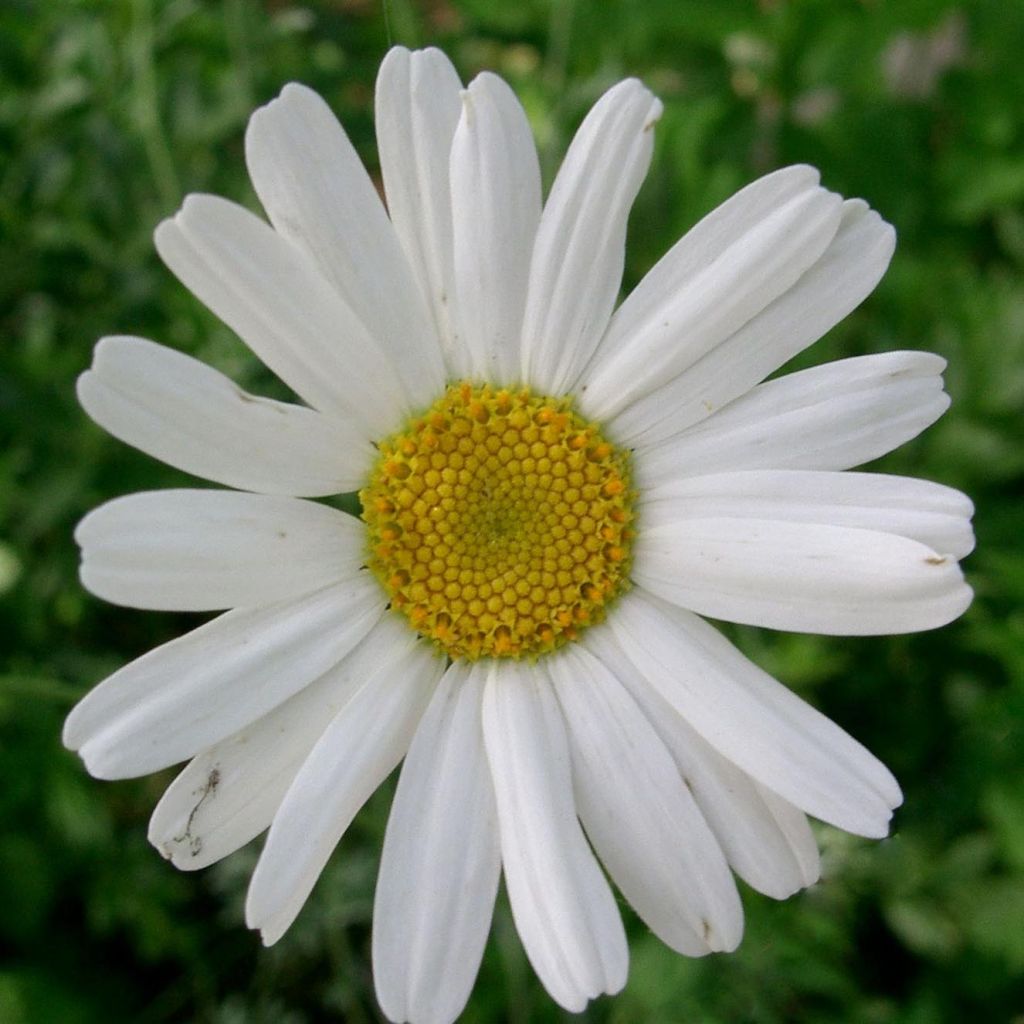
Tanacetum cinerariifolium, the Dalmatian pyrethrum, is still often offered under its former name of Chrysanthemum cinerariifolium. This Mediterranean perennial forms a clump of finely divided grey-green foliage, topped in summer with white flowers with a yellow centre resembling small daisies. Ornamental for its foliage and natural flowering, it is best known as the main plant source of pyrethrins. Undemanding and hardy, it thrives in rock gardens and on dry banks. It is also grown in gardens dedicated to useful plants.
Dalmatian pyrethrum belongs to the Asteraceae family. It is a herbaceous perennial plant: its vegetation dies back at the end of the season, while the rootstock remains in the soil and produces new stems in spring. Completely deciduous in cold regions, it may partially remain visible in winter in mild climates. This botanical species is native to southeastern Europe, more precisely the eastern coast of the Adriatic and the western Balkan Peninsula. It grows in Croatia, Bosnia-Herzegovina, Montenegro and Albania, in dry grasslands, on rocky slopes and among stones on degraded limestone soils. This origin explains its preference for poor, stony, very well-drained soils, as well as its good drought tolerance once established. The plant has a rootstock with short rhizomes, from which emerge numerous deeply divided leaves. A fine hairiness softens their green colour and gives them a greyish to silvery hue. The clump of leaves remains quite low. The flower stems, erect and sparsely leafy in their upper part, rise to 40 or 60 cm in height. Flowering occurs from June to August. Each stem usually ends in a solitary head 4 cm in diameter. This consists of a domed disc of small yellow florets and a crown of white ligulate flowers, sometimes tinged with pink when opening. The heads are visited by various insects which ensure their pollination. They then produce small dry fruits, the achenes. Pyrethrins are present throughout the plant, but their concentration is significantly higher in the flower heads, especially around the developing seeds. After harvesting and processing, these substances act on the nervous system of insects; they are used in the composition of certain plant-based insecticides. However, cultivated Dalmatian pyrethrum does not directly protect plants growing nearby. It withstands temperatures close to –18 °C if its rootstock remains dry in winter.
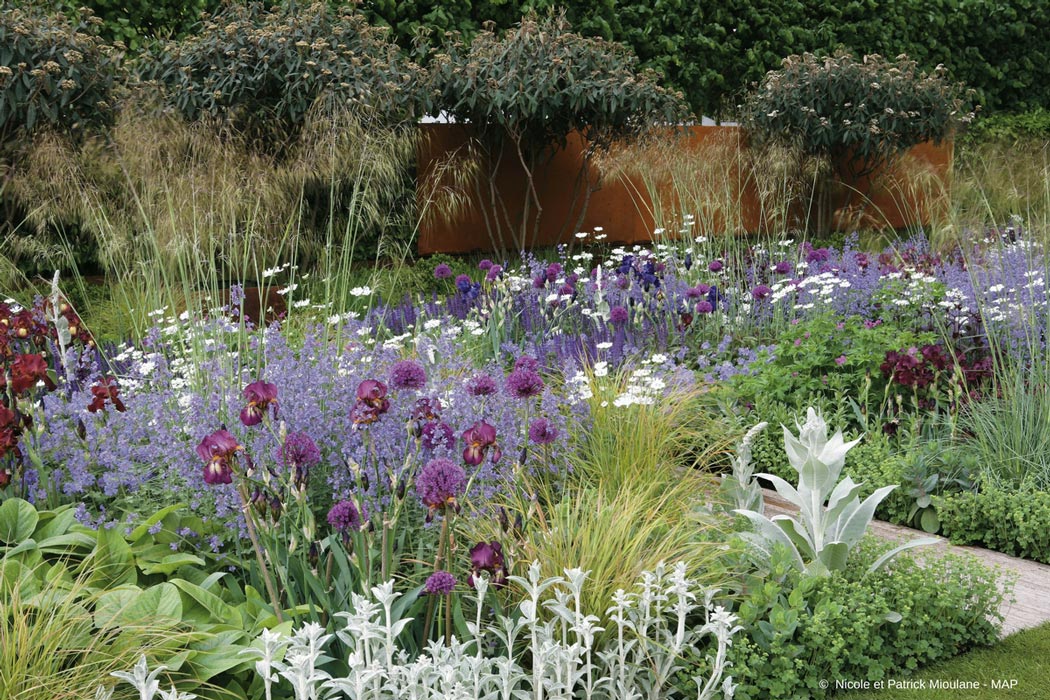
Dalmatian pyrethrum finds its place in full sun in rather poor soils that do not retain water in winter. You can pair it with common sage 'Icterina', whose yellow-variegated leaves remain decorative for much of the year, as well as with the vermilion-red flowers of cottage pink 'Lady in Red'. Stachys 'Big Ears', with its large woolly leaves, thrives in the same type of soil, as does santolina 'Lemon Fizz' whose golden foliage highlights the white flowers of the pyrethrum. This perennial can also be grown in a deep pot, filled with a poor substrate and generously mixed with gravel or coarse sand.
Report an error about the product description
Tanacetum cinerariifolium - Pyrèthre de Dalmatie, Chrysanthème insecticide, Tanaisie à feuilles de cinéraire in pictures
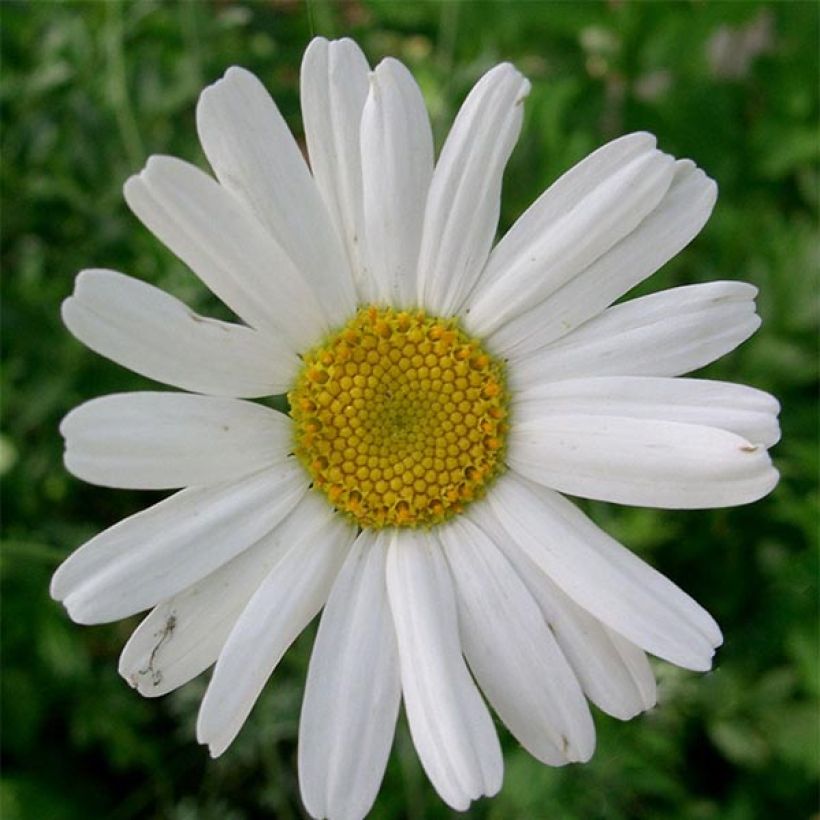
Flowering
Foliage
Plant habit
Botanical data
Tanacetum
cinerariifolium
Asteraceae
Chrysanthemum cinerariifolium, Pyrethrum cinerariifolium
Southern Europe
Planting and care
Plant Dalmatian pyrethrum from March to May or from September to October, in full sun. It requires a very well-drained, rather poor soil, dry to moderately moist, and tolerates lime well. In clay soil, plant it on a raised area and incorporate gravel so that water drains away quickly. Winter dampness is more dangerous for its stump than frost.
Water regularly during the first few weeks, then reduce watering once the young plant is established. Occasional watering may still be useful during prolonged drought, especially in the year of planting. Avoid concentrated fertiliser applications and nitrogen-rich manures: they encourage abundant foliage and less sturdy stems at the expense of flowering.
Planting period
Intended location
Care
Planting & care advice
-
-
-
-
-
-
-
-
This item has not been reviewed yet - be the first to leave a review about it.
Recently viewed products
Haven't found what you were looking for?
Hardiness is the lowest winter temperature a plant can endure without suffering serious damage or even dying. However, hardiness is affected by location (a sheltered area, such as a patio), protection (winter cover) and soil type (hardiness is improved by well-drained soil).

The flowering period indicated on our website applies to countries and regions located in USDA zone 8 (France, the United Kingdom, Ireland, the Netherlands, etc.)
It will vary according to where you live:- In zones 9 to 10 (Italy, Spain, Greece, etc.), flowering will occur about 2 to 4 weeks earlier.
- In zones 6 to 7 (Germany, Poland, Slovenia, and lower mountainous regions), flowering will be delayed by 2 to 3 weeks.
- In zone 5 (Central Europe, Scandinavia), blooming will be delayed by 3 to 5 weeks.
In temperate climates, pruning of spring-flowering shrubs (forsythia, spireas, etc.) should be done just after flowering.
Pruning of summer-flowering shrubs (Indian Lilac, Perovskia, etc.) can be done in winter or spring.
In cold regions as well as with frost-sensitive plants, avoid pruning too early when severe frosts may still occur.
The planting period indicated on our website applies to countries and regions located in USDA zone 8 (France, United Kingdom, Ireland, Netherlands).
It will vary according to where you live:
- In Mediterranean zones (Marseille, Madrid, Milan, etc.), autumn and winter are the best planting periods.
- In continental zones (Strasbourg, Munich, Vienna, etc.), delay planting by 2 to 3 weeks in spring and bring it forward by 2 to 4 weeks in autumn.
- In mountainous regions (the Alps, Pyrenees, Carpathians, etc.), it is best to plant in late spring (May-June) or late summer (August-September).
The harvesting period indicated on our website applies to countries and regions in USDA zone 8 (France, England, Ireland, the Netherlands).
In colder areas (Scandinavia, Poland, Austria...) fruit and vegetable harvests are likely to be delayed by 3-4 weeks.
In warmer areas (Italy, Spain, Greece, etc.), harvesting will probably take place earlier, depending on weather conditions.
The sowing periods indicated on our website apply to countries and regions within USDA Zone 8 (France, UK, Ireland, Netherlands).
In colder areas (Scandinavia, Poland, Austria...), delay any outdoor sowing by 3-4 weeks, or sow under glass.
In warmer climes (Italy, Spain, Greece, etc.), bring outdoor sowing forward by a few weeks.