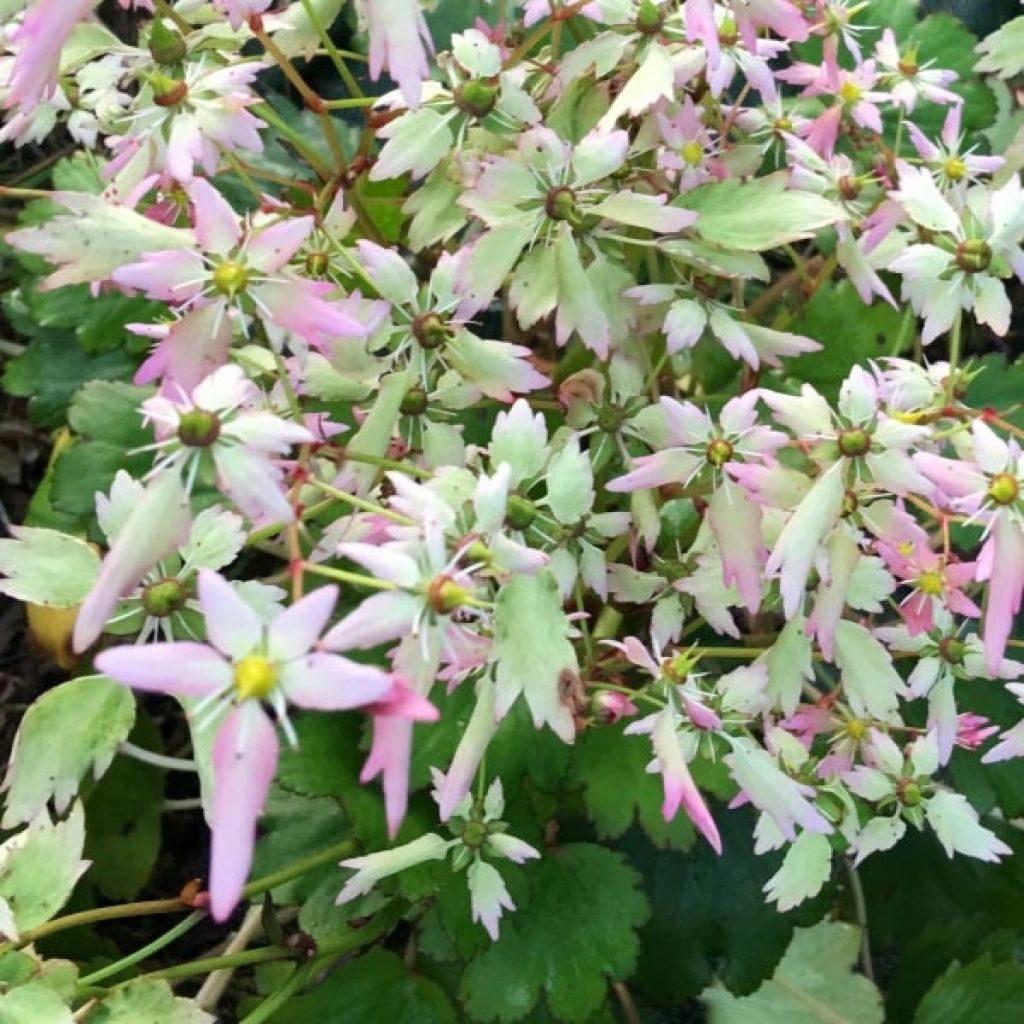
Saxifraga Lakmé
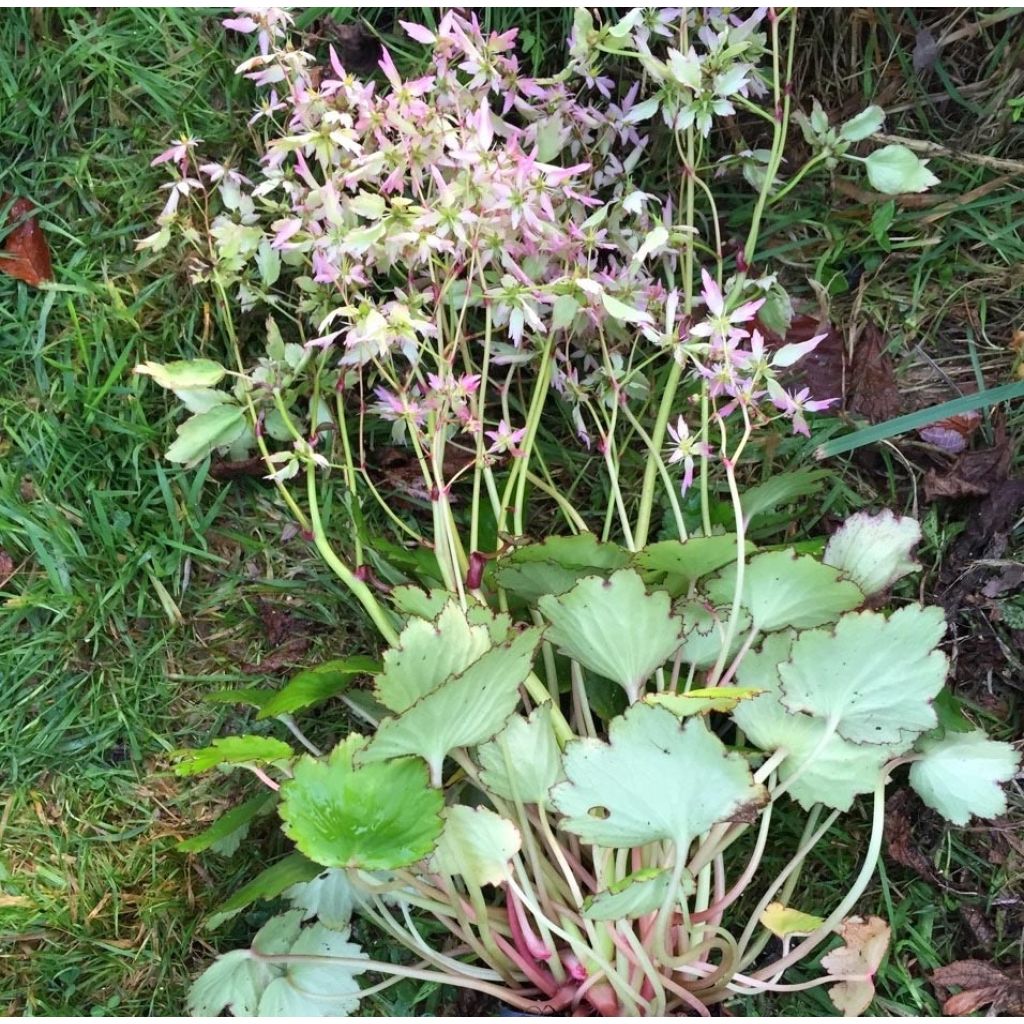
Saxifraga Lakmé
Saxifraga Lakmé
Saxifraga OPERA Lakmé
Saxifrage
Originally, a young plant planted in the spring, it has developed a magnificent flowering in the autumn and has adapted very well.
Christine, 19/06/2021
Back-to-school special offer!
Get €10 off for every €50 you spend! And get up to €40 off on a single order.
How does it work?
1. Shop your favourites
Add your favourite plants to your basket. For every €50 you spend (excluding delivery charges, store credit and the plastic-free option), you’ll receive a €10 voucher.
€50 spent = €10 voucher
€100 spent = €20 voucher
€150 spent = €30 voucher
€200 spent = €40 voucher
2. Place your order
Once your basket reaches one of the spending thresholds, place your order. You can even choose your delivery date!
3. Receive your voucher
As soon as your order has been shipped, you’ll receive an email containing your personal voucher code and its value.
4. Use it on your next order
Your voucher is valid for 90 days from the date you receive it. It can be used once only, on a new order worth at least the value of the voucher, excluding delivery charges.
Please note: Vouchers can be combined with other offers, but cannot be split or refunded.
Why not try an alternative variety in stock?
View all →
Available in 1 sizes
Available in 1 sizes
Available in 1 sizes
Available in 1 sizes
Available in 1 sizes
Available in 1 sizes
Available in 1 sizes
Available in 1 sizes
Available in 1 sizes
Available in 2 sizes
This plant carries a 12 months recovery warranty
More information
We guarantee the quality of our plants for a full growing cycle, and will replace at our expense any plant that fails to recover under normal climatic and planting conditions.

Would this plant suit my garden?
Set up your Plantfit profile →
Description
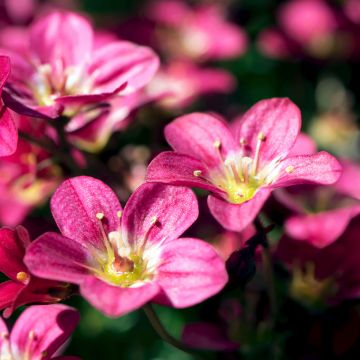
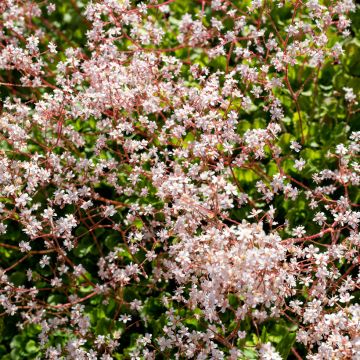
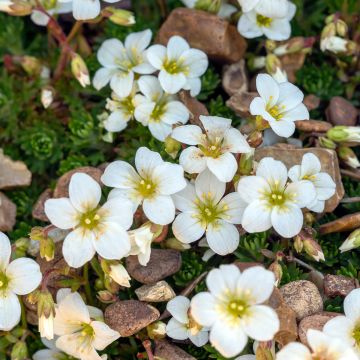
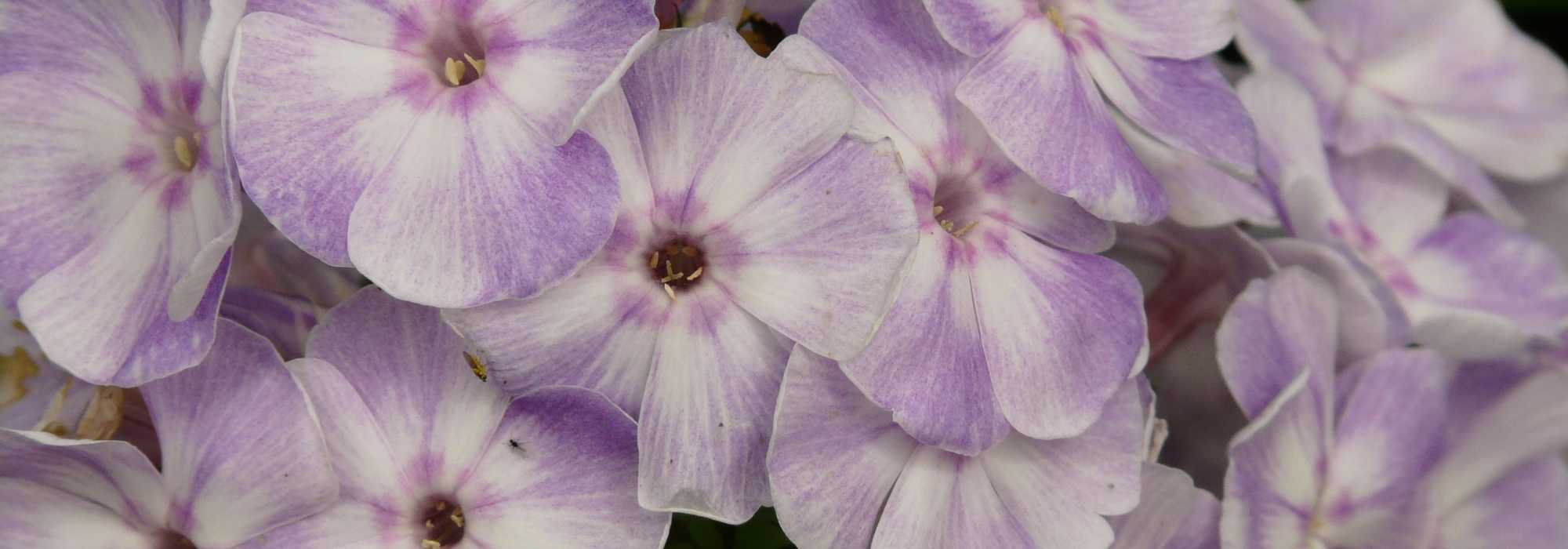
Saxifraga 'Lakmé', from the Opera series, is a recent French hybrid, distinguished by its abundant late flowering in autumn. The lace-like flowers, carried on long stems, are white-pink with superb jade green reflections. The semi-evergreen toothed leaves are dark green. They form a small tuft that will work wonders in a shady rock garden, in humus-rich and rather acidic soil that does not dry out. It can also be grown in a pot.
'Lakmé' is a hybrid of Saxifraga fortunei, a little gem native to the woodlands of Japan. It belongs to the Saxifragaceae family, which provides gardeners with both tiny plants, such as alpine rock saxifrages, and giants like rodgersia, magnificent waterside plants.
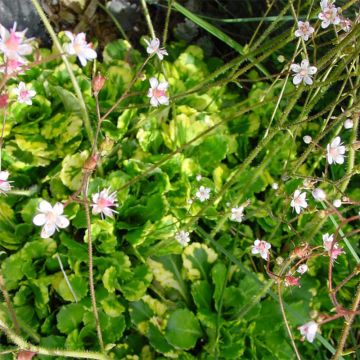
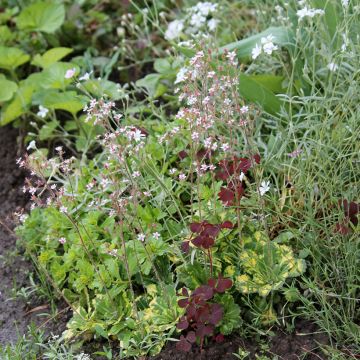
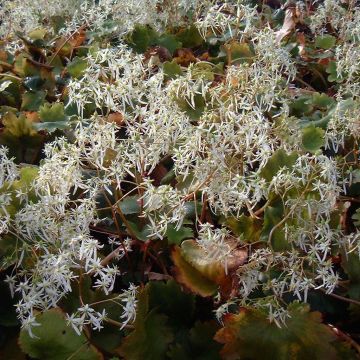
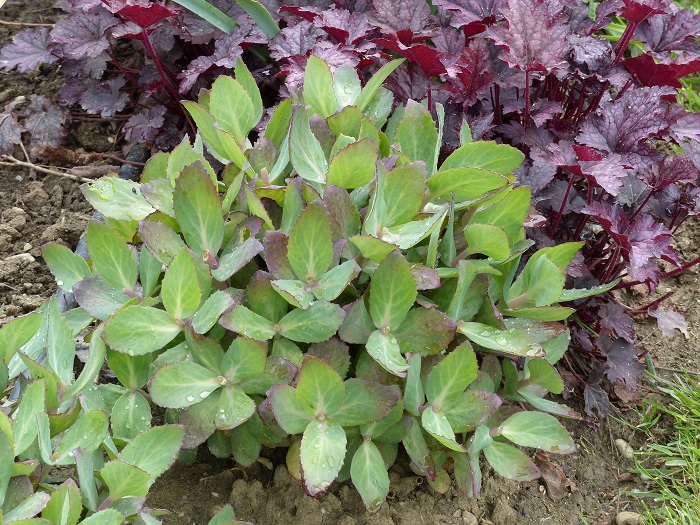
'Lakmé' was recently obtained by Olivier Galéa (Sous un Arbre Perché Nursery). It is a particularly floriferous variety, bringing life to the garden between October and November, when flowers are scarce. The delicately sculpted 5-petalled stars are born white-pink and then take on an attractive jade green hue, which is very elegant. The dark green, fleshy leaves with toothed margins form a small low tuft that is 40cm (16in) in diameter and about 15cm (6in) high. When in bloom, however, the plant reaches 40cm (16in), with the stems rising well above the foliage.
The whole plant is a little gem that deserves attention. To succeed, they require soft, light, humus-rich, slightly acidic, and rather fertile soil that is well-drained and does not dry out. Shade or partial shade, without direct sunlight, suits them. Woodland rich in leaf compost is ideal! They have good hardiness (-15°C (5°F) approximately), but they do not like cold drafts, and waterlogged winter soils are fatal to them. The foliage is deciduous below -5°C (23°F) and will return in spring if the growing conditions are suitable. You can mulch their base, but be careful not to create a buildup of moisture around them during winter (especially with dead leaves).
Growing them in pots is a good alternative if the soil in your garden is too heavy. In this case, provide the plant with a well-aerated substrate, and it will reward you with a rich flowering. Regularly renew the substrate. Given the refined character of this variety, opt for an enamelled pot, for example, which will have the best effect. If frost is intense, protect the pots or, if possible, shelter them in a cold greenhouse.
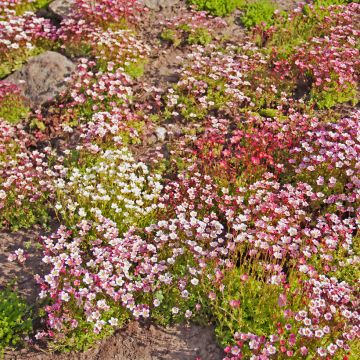
Planted en masse, Saxifraga 'Lakmé' will create a spectacular effect in your shady borders. Of course, you can also create a mixed border with various saxifrage varieties. Keep in mind, however, that these plants are not excellent ground covers on their own - consider Viola labradorica, a pretty little violet that self-seeds without bothering its neighbours. You can also plant them with other Asian plants, but not overly invasive ones, such as Dryopteris sieboldii, Athyrium niponicum 'Pictum', Japanese forest grass, or the delicate Selaginella involvens, all topped by the graceful decaisnea (blue bean tree).
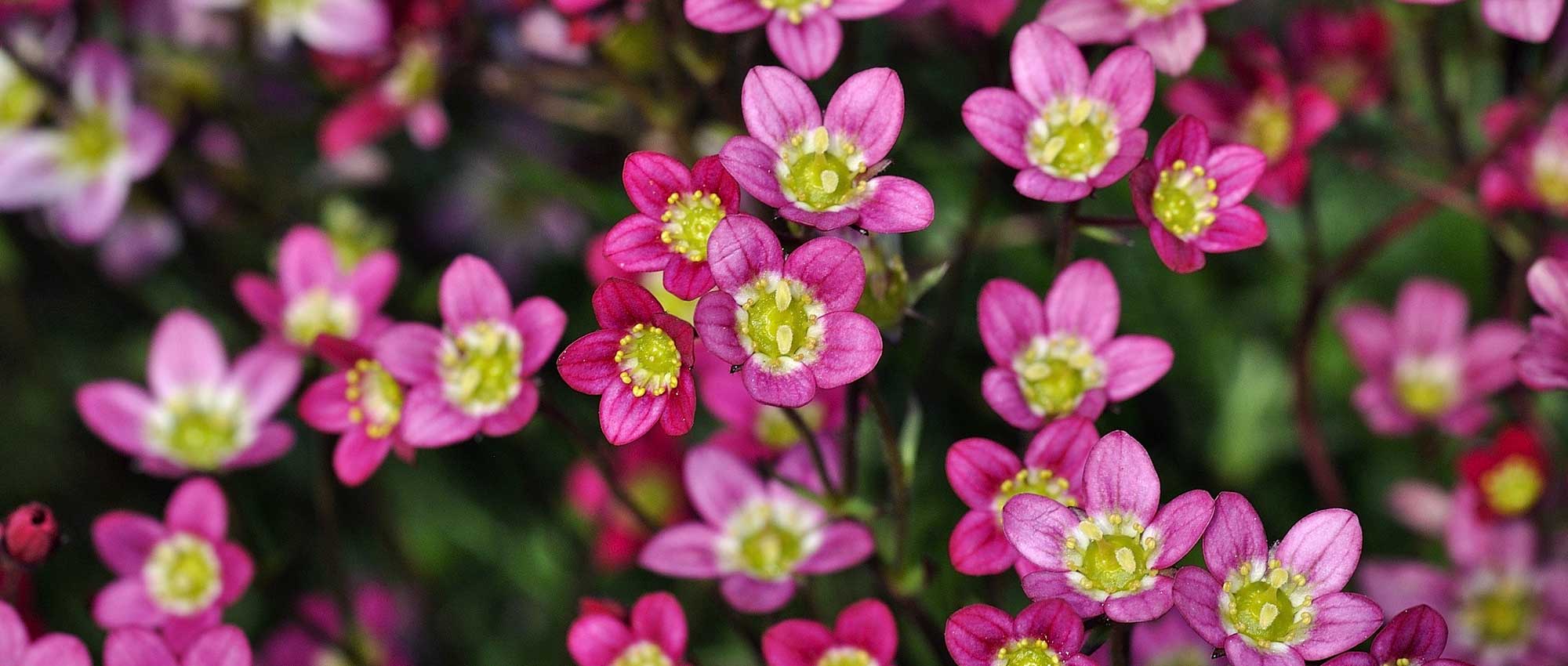
Saxifraga Lakmé in pictures
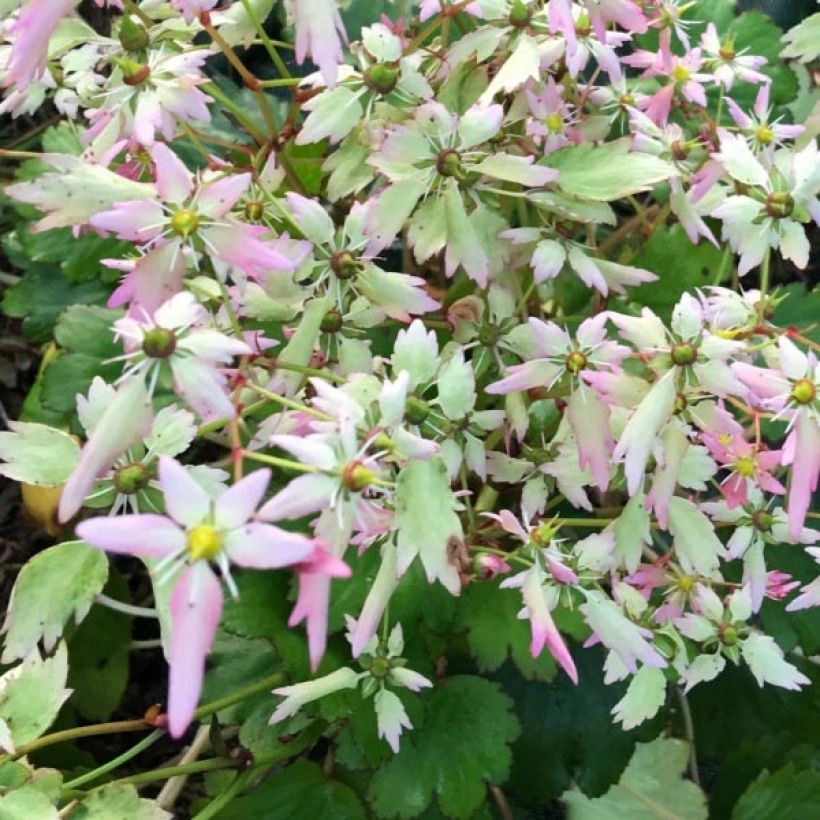
Flowering
Foliage
Plant habit
Botanical data
Saxifraga
OPERA Lakmé
Saxifragaceae
Saxifrage
Cultivar or hybrid
Planting and care
This saxifrage appreciates the moist and humus-rich soils of mountain woodlands and does not tolerate excessive moisture in winter or drought in summer. However, it tolerates root competition from trees and bushes quite well, as long as the soil does not dry out in summer. Choose a semi-shaded to shaded, consistently moist exposure. Remove any leaves that could cover the clump.
Planting period
Intended location
Care
Planting & care advice
-
-
-
-
-
-
-
-
-
, onOrder confirmed
Reply from on Promesse de fleurs
Recently viewed products
Haven't found what you were looking for?
Hardiness is the lowest winter temperature a plant can endure without suffering serious damage or even dying. However, hardiness is affected by location (a sheltered area, such as a patio), protection (winter cover) and soil type (hardiness is improved by well-drained soil).

The flowering period indicated on our website applies to countries and regions located in USDA zone 8 (France, the United Kingdom, Ireland, the Netherlands, etc.)
It will vary according to where you live:- In zones 9 to 10 (Italy, Spain, Greece, etc.), flowering will occur about 2 to 4 weeks earlier.
- In zones 6 to 7 (Germany, Poland, Slovenia, and lower mountainous regions), flowering will be delayed by 2 to 3 weeks.
- In zone 5 (Central Europe, Scandinavia), blooming will be delayed by 3 to 5 weeks.
In temperate climates, pruning of spring-flowering shrubs (forsythia, spireas, etc.) should be done just after flowering.
Pruning of summer-flowering shrubs (Indian Lilac, Perovskia, etc.) can be done in winter or spring.
In cold regions as well as with frost-sensitive plants, avoid pruning too early when severe frosts may still occur.
The planting period indicated on our website applies to countries and regions located in USDA zone 8 (France, United Kingdom, Ireland, Netherlands).
It will vary according to where you live:
- In Mediterranean zones (Marseille, Madrid, Milan, etc.), autumn and winter are the best planting periods.
- In continental zones (Strasbourg, Munich, Vienna, etc.), delay planting by 2 to 3 weeks in spring and bring it forward by 2 to 4 weeks in autumn.
- In mountainous regions (the Alps, Pyrenees, Carpathians, etc.), it is best to plant in late spring (May-June) or late summer (August-September).
The harvesting period indicated on our website applies to countries and regions in USDA zone 8 (France, England, Ireland, the Netherlands).
In colder areas (Scandinavia, Poland, Austria...) fruit and vegetable harvests are likely to be delayed by 3-4 weeks.
In warmer areas (Italy, Spain, Greece, etc.), harvesting will probably take place earlier, depending on weather conditions.
The sowing periods indicated on our website apply to countries and regions within USDA Zone 8 (France, UK, Ireland, Netherlands).
In colder areas (Scandinavia, Poland, Austria...), delay any outdoor sowing by 3-4 weeks, or sow under glass.
In warmer climes (Italy, Spain, Greece, etc.), bring outdoor sowing forward by a few weeks.
Shipping country and language
Your country of residence may be:
Your country of residence is:
For a better user experience on our website, you can select:
Your shipping country:
-
 Austria
-
 Belgium
-
 Bosnia & Herzegovina
-
 Bulgaria
-
 Croatia
-
 Cyprus
-
 Czechia
-
 Denmark
-
 Estonia
-
 Finland
-
 France
-
 Germany
-
 Greece
-
 Hungary
-
 Iceland
-
 Ireland
-
 Italy
Italy
-
 Latvia
-
 Liechtenstein
-
 Lithuania
-
 Luxembourg
-
 Malta
Malta
-
 Netherlands
-
 Poland
-
 Portugal
-
 Romania
-
 Serbia
-
 Slovakia
-
 Slovenia
-
 Spain
Spain
-
 Sweden
-
 Switzerland
Language:
-
French
-
 English
-
Spanish
-
Italian
-
German
-
Portuguese
-
Dutch
-
Finnish
My Account
Hello
My wish lists
My cart
Log in / Register
Existing customer?
This form is protected by reCAPTCHA - the Google Privacy Policy and Terms of Service apply.
New customer?
Create an account to track your orders, access our customer service and, if you wish, make the most of our upcoming offers.