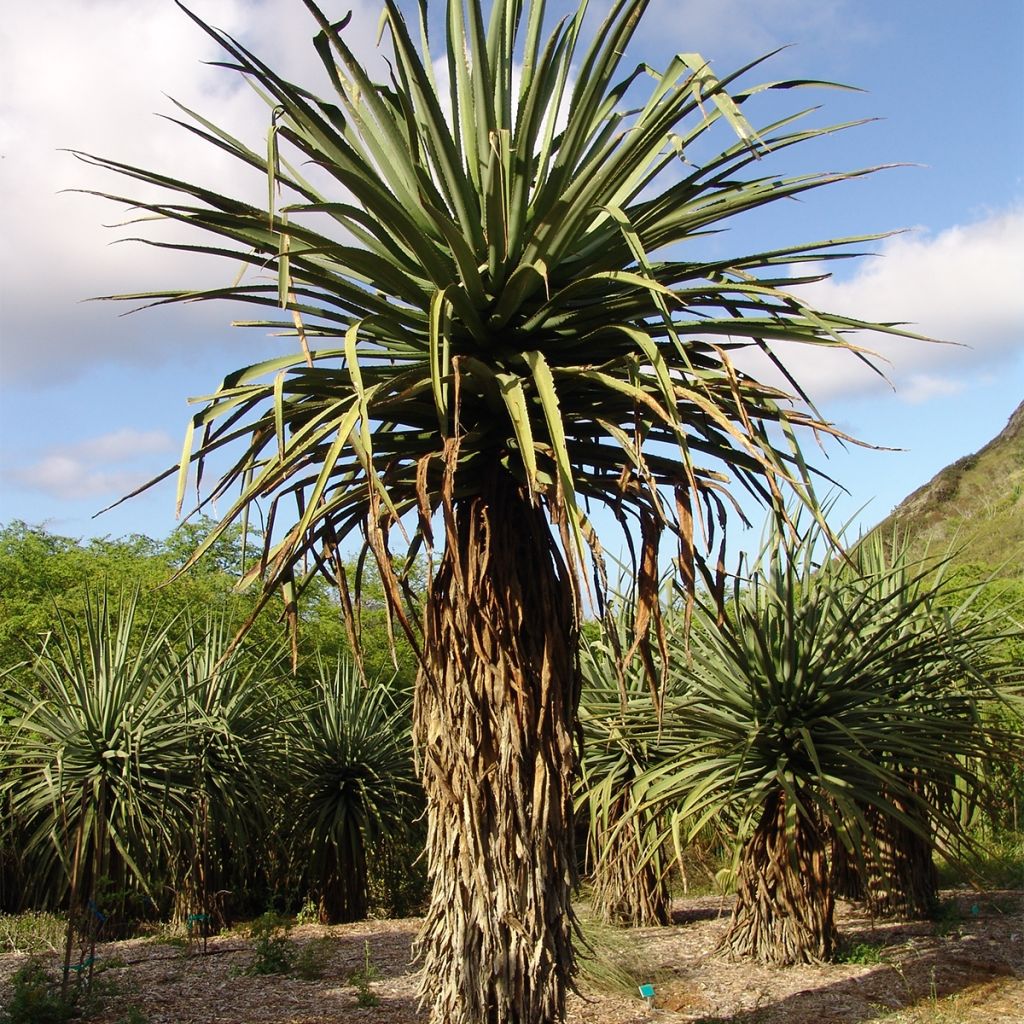
Furcraea macdougallii
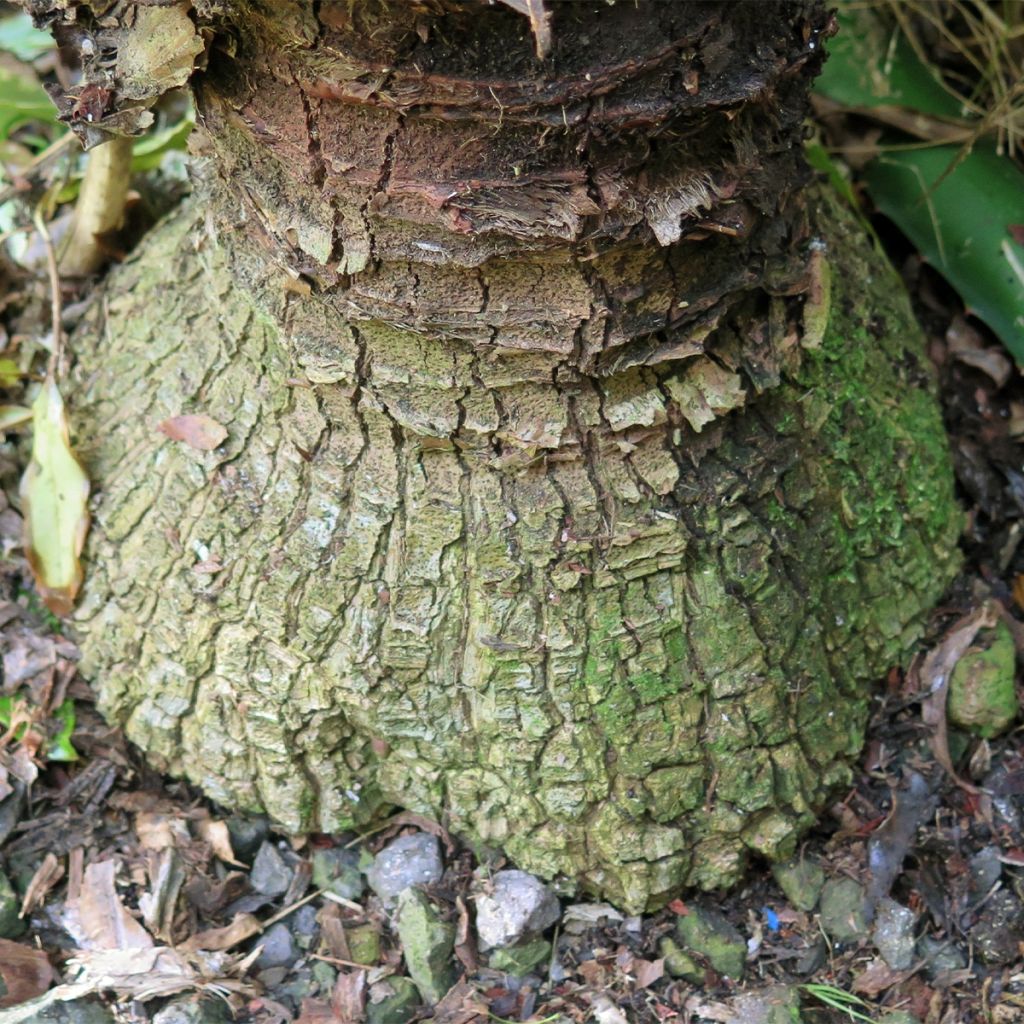
Furcraea macdougallii
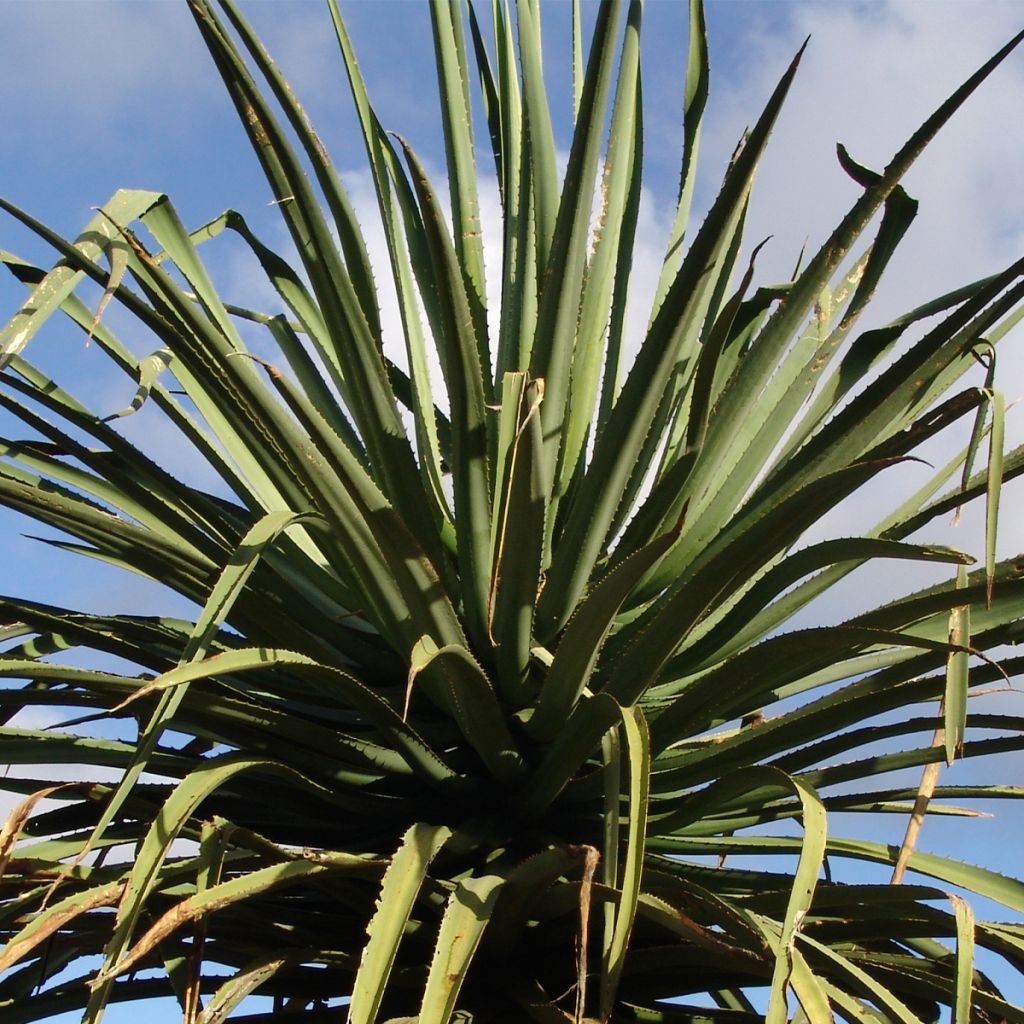
Furcraea macdougallii
Furcraea macdougallii
Furcraea macdougallii
MacDougall's Century Plant, Tree Furcraea, Macdougall’s Furcraea
Back-to-school special offer!
Get €10 off for every €50 you spend! And get up to €40 off on a single order.
How does it work?
1. Shop your favourites
Add your favourite plants to your basket. For every €50 you spend (excluding delivery charges, store credit and the plastic-free option), you’ll receive a €10 voucher.
€50 spent = €10 voucher
€100 spent = €20 voucher
€150 spent = €30 voucher
€200 spent = €40 voucher
2. Place your order
Once your basket reaches one of the spending thresholds, place your order. You can even choose your delivery date!
3. Receive your voucher
As soon as your order has been shipped, you’ll receive an email containing your personal voucher code and its value.
4. Use it on your next order
Your voucher is valid for 90 days from the date you receive it. It can be used once only, on a new order worth at least the value of the voucher, excluding delivery charges.
Please note: Vouchers can be combined with other offers, but cannot be split or refunded.
Why not try an alternative variety in stock?
View all →
Available in 1 sizes
Available in 1 sizes

Available in 1 sizes
Available in 1 sizes
Available in 1 sizes

Available in 1 sizes
Available in 1 sizes

Available in 1 sizes
Available in 1 sizes
Available in 1 sizes
This plant carries a 24 months recovery warranty
More information
We guarantee the quality of our plants for a full growing cycle, and will replace at our expense any plant that fails to recover under normal climatic and planting conditions.
Would this plant suit my garden?
Set up your Plantfit profile →
Description
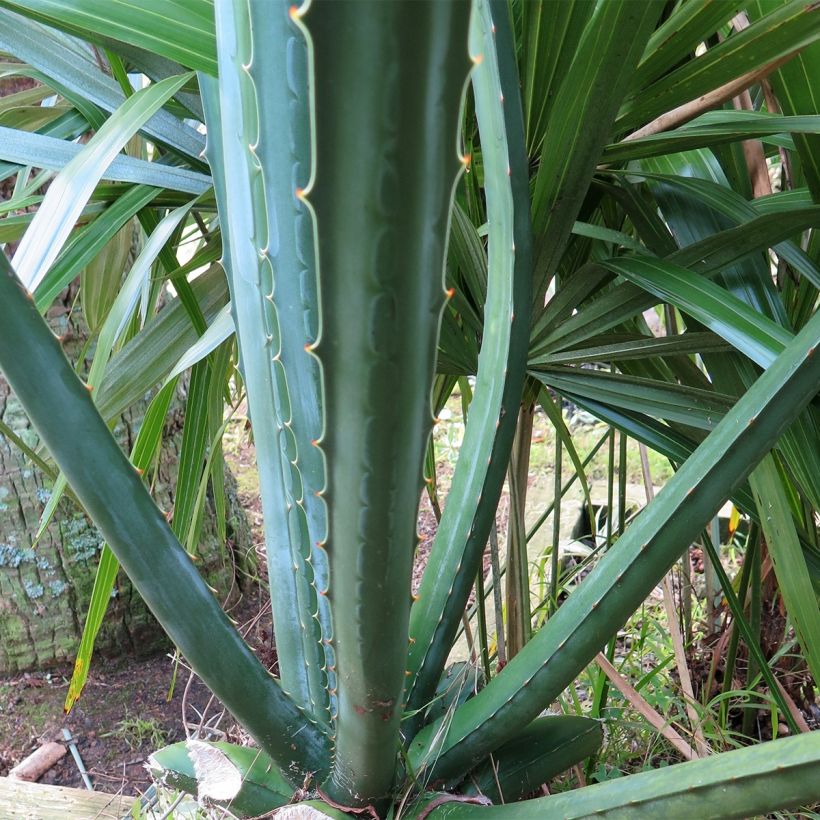
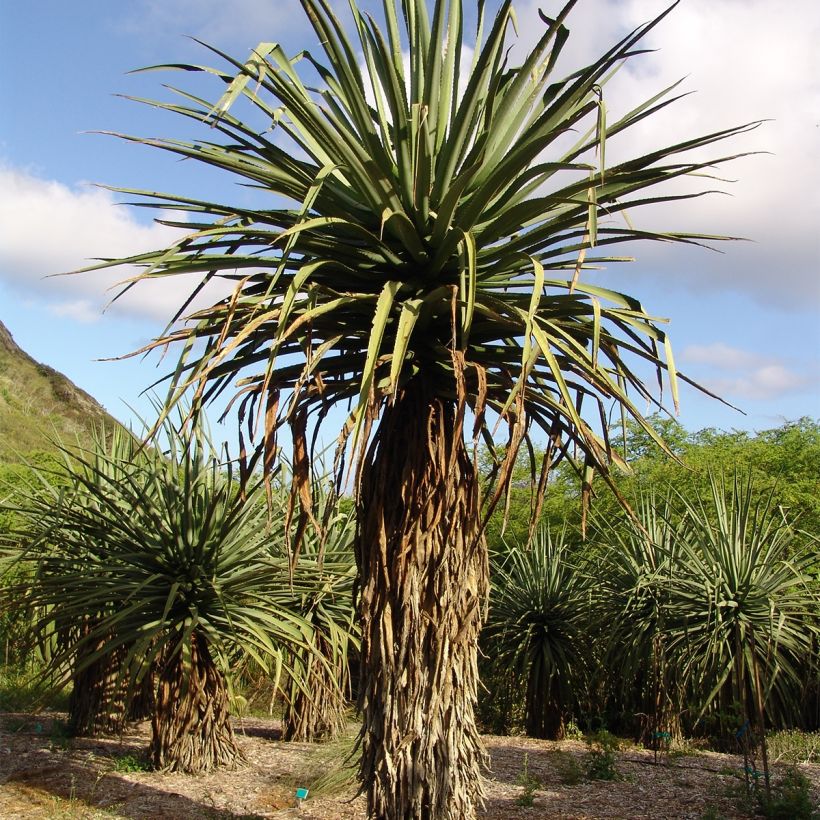
Furcraea macdougallii is the largest, and probably the most spectacular of Furcraea species. The plant impresses with its size, but also with its vertical habit that mimics the sculptural silhouette of certain palm trees or yuccas with trunks. This Mexican species related to agaves develops over time a robust and tall trunk that supports a crown of long, upright, narrow, glaucous green, slightly denticulate succulent leaves. Furcrea plants spend years preparing their spectacular flowering, an apotheosis that marks the end of their life. In this species, F. macdougallii, it takes the form of a giant panicle with creamy white, waxy flowers. In privileged coastal gardens, give this botanical curiosity a prominent location on a slope or in the center of a large rockery.
Originally from southern Mexico, specifically from the province of Oaxaca (Oaxaca and Puebla States), where it grows in pine forests on limestone soil up to 1000 m (3280 ft 10 in) altitude, Furcraea macdougallii can only withstand short frosts of around -5 °C (23 °F) in dry soil. Young plants, very sensitive to cold, like partial shade and water, but well-established specimens tolerate summer drought perfectly. It is a plant from the agave or asparagus family, with a relatively slow growth rate. When young, the Furcraea forms a rosette composed of long, slender, pointed, flexible, succulent leaves, upright, with denticulate edges, and few spines. Each leaf can measure over 2 m (6 ft 7 in) long and 5-6 cm (2-2.4 in) wide on an adult plant. After many years, it forms a trunk up to 8 meters (26 feet 2 inches) tall (depending on the climate), covered with a 'skirt' of dry leaves that eventually fall off, leaving decorative warm brown leaf scars. This trunk bears a large crown measuring up to 1 m (3 ft 4 in) wide. Flowering occurs after 25 to 40 years of cultivation, marking the death of this monocarpic plant. In this species, the inflorescence can reach 6 m (19 ft 8 in) tall under optimal conditions. It develops into a large pyramidal panicle with trailing branches. The tubular flowers with 6 fleshy and villous petals, opening into star-shaped flowers with a diameter of 5.5 cm (2.2 in), are white, more or less tinged with light yellow and green. The plant can reach a total height of 15 m (49 ft 2 in) when flowering in favourable climates. It sometimes produces seeds, but more frequently numerous small bulblets along the flower stalk: they can be collected and planted to perpetuate this magnificent plant.
Furcraea macdougallii requires sun, a very well-draining soil, and tolerates coastal conditions perfectly. It particularly fears humid climates and waterlogged soils in winter. In milder areas, it can be showcased on a large slope, in the center of an exotic or contemporary rockery, or even near a swimming pool if the soil is well prepared to accommodate it. This large plant will simply be magnificent when grown as a standalone specimen, alongside a carpet of cistus, Cerastostigma plumbaginoides, Delosperma, or even a short grass meadow of Zoyzia tenuifolia, the Mascarene grass. It can also be associated with palm trees (Jubaea), agaves, phormiums, Hesperaloe parviflora, Beschorneria yuccoides, all equally spectacular and frugal. Ensure it is planted in a carefully-chosen location, sheltered from winter rains, in full sun.
Report an error about the product description
Furcraea macdougallii in pictures
Plant habit
Flowering
Foliage
Botanical data
Furcraea
macdougallii
Agavaceae (Asparagaceae)
MacDougall's Century Plant, Tree Furcraea, Macdougall’s Furcraea
North America
Planting and care
Plant Furcraea macdougallii in spring, in a very sunny location and sheltered from winter rains if your garden is in a borderline hardiness zone. An adult specimen will withstand brief frosts of around -5 °C if the soil is dry in winter. Its growth is quite slow, it will be boosted by generous but spaced out waterings in summer and a light soil, enriched with leaf compost. In very mild climates, prefer planting in early autumn, especially in regions that are hot and dry in summer.
This species fears heavy and humid soils, especially when combined with cold: plant it in a very well-drained soil, ideally in a large rockery, a dry slope, a raised bed with gravel-enriched soil. On the other hand, it is not demanding on the soil pH, which can be slightly acidic, sandy, rocky, or even distinctly calcareous. It tolerates poor soil, but its growth will be slightly faster in soil that is more fertile. Monitor watering during the first 2 years, especially in hot and dry periods. The plant dies after flowering, it is sometimes possible to collect seeds to be sown in spring. This plant produces numerous bulblets on its flower stalk: they can easily be collected and planted in pots to propagate the plant (young specimens will be overwintered frost-free). Note that this Furcraea tolerates sea spray and coastal areas perfectly.
Planting period
Intended location
Care
Planting & care advice
-
-
-
-
-
-
-

-
This item has not been reviewed yet - be the first to leave a review about it.
Recently viewed products
Haven't found what you were looking for?
Hardiness is the lowest winter temperature a plant can endure without suffering serious damage or even dying. However, hardiness is affected by location (a sheltered area, such as a patio), protection (winter cover) and soil type (hardiness is improved by well-drained soil).

The flowering period indicated on our website applies to countries and regions located in USDA zone 8 (France, the United Kingdom, Ireland, the Netherlands, etc.)
It will vary according to where you live:- In zones 9 to 10 (Italy, Spain, Greece, etc.), flowering will occur about 2 to 4 weeks earlier.
- In zones 6 to 7 (Germany, Poland, Slovenia, and lower mountainous regions), flowering will be delayed by 2 to 3 weeks.
- In zone 5 (Central Europe, Scandinavia), blooming will be delayed by 3 to 5 weeks.
In temperate climates, pruning of spring-flowering shrubs (forsythia, spireas, etc.) should be done just after flowering.
Pruning of summer-flowering shrubs (Indian Lilac, Perovskia, etc.) can be done in winter or spring.
In cold regions as well as with frost-sensitive plants, avoid pruning too early when severe frosts may still occur.
The planting period indicated on our website applies to countries and regions located in USDA zone 8 (France, United Kingdom, Ireland, Netherlands).
It will vary according to where you live:
- In Mediterranean zones (Marseille, Madrid, Milan, etc.), autumn and winter are the best planting periods.
- In continental zones (Strasbourg, Munich, Vienna, etc.), delay planting by 2 to 3 weeks in spring and bring it forward by 2 to 4 weeks in autumn.
- In mountainous regions (the Alps, Pyrenees, Carpathians, etc.), it is best to plant in late spring (May-June) or late summer (August-September).
The harvesting period indicated on our website applies to countries and regions in USDA zone 8 (France, England, Ireland, the Netherlands).
In colder areas (Scandinavia, Poland, Austria...) fruit and vegetable harvests are likely to be delayed by 3-4 weeks.
In warmer areas (Italy, Spain, Greece, etc.), harvesting will probably take place earlier, depending on weather conditions.
The sowing periods indicated on our website apply to countries and regions within USDA Zone 8 (France, UK, Ireland, Netherlands).
In colder areas (Scandinavia, Poland, Austria...), delay any outdoor sowing by 3-4 weeks, or sow under glass.
In warmer climes (Italy, Spain, Greece, etc.), bring outdoor sowing forward by a few weeks.
Shipping country and language
Your country of residence may be:
Your country of residence is:
For a better user experience on our website, you can select:
Your shipping country:
-
 Austria
-
 Belgium
-
 Bosnia & Herzegovina
-
 Bulgaria
-
 Croatia
-
 Cyprus
-
 Czechia
-
 Denmark
-
 Estonia
-
 Finland
-
 France
-
 Germany
-
 Greece
-
 Hungary
-
 Iceland
-
 Ireland
-
 Italy
Italy
-
 Latvia
-
 Liechtenstein
-
 Lithuania
-
 Luxembourg
-
 Malta
Malta
-
 Netherlands
-
 Poland
-
 Portugal
-
 Romania
-
 Serbia
-
 Slovakia
-
 Slovenia
-
 Spain
Spain
-
 Sweden
-
 Switzerland
Language:
-
French
-
 English
-
Spanish
-
Italian
-
German
-
Portuguese
-
Dutch
-
Finnish
My Account
Hello
My wish lists
My cart
Log in / Register
Existing customer?
This form is protected by reCAPTCHA - the Google Privacy Policy and Terms of Service apply.
New customer?
Create an account to track your orders, access our customer service and, if you wish, make the most of our upcoming offers.