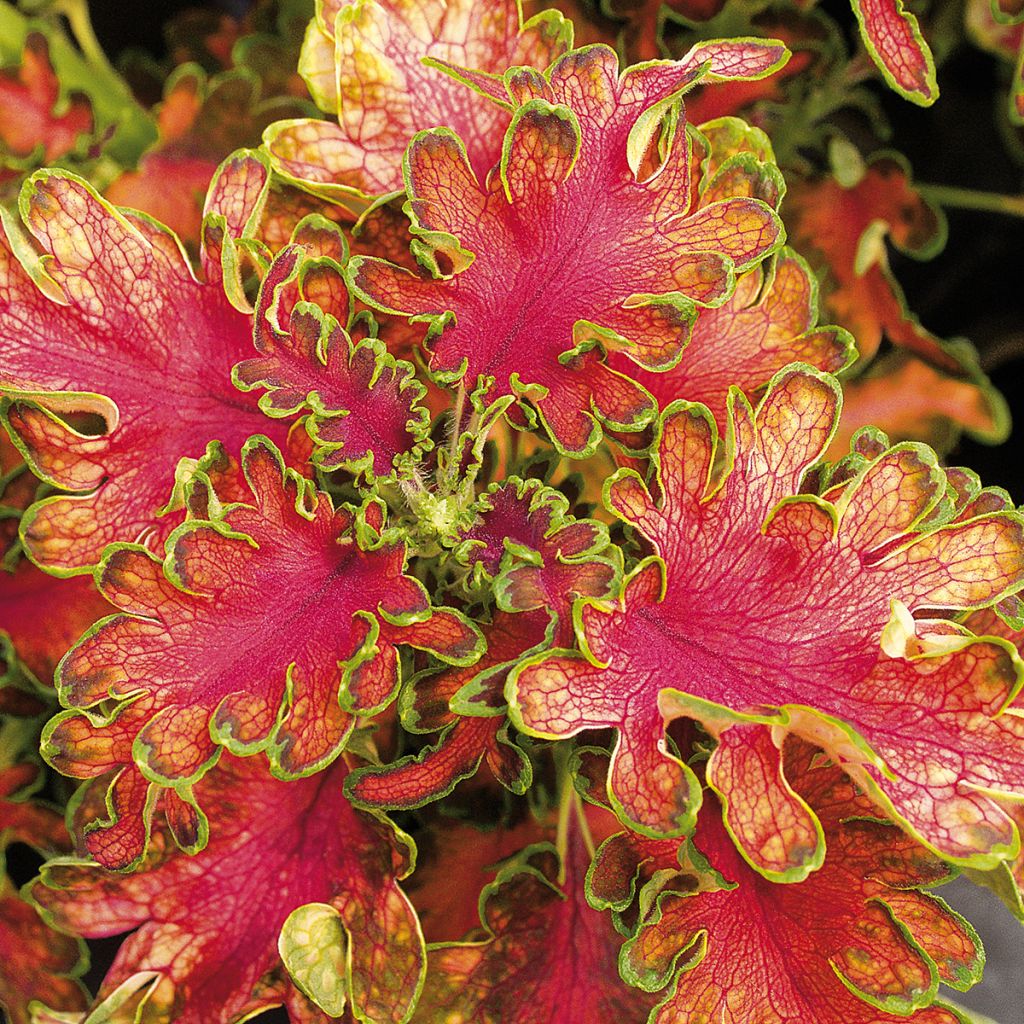
Solenostemon Ruffles Copper
Solenostemon Ruffles Copper
Solenostemon scutellarioides Ruffles Copper
Coleus, Painted Nettle, Flame Nettle
Back-to-school special offer!
Get €10 off for every €50 you spend! And get up to €40 off on a single order.
How does it work?
1. Shop your favourites
Add your favourite plants to your basket. For every €50 you spend (excluding delivery charges, store credit and the plastic-free option), you’ll receive a €10 voucher.
€50 spent = €10 voucher
€100 spent = €20 voucher
€150 spent = €30 voucher
€200 spent = €40 voucher
2. Place your order
Once your basket reaches one of the spending thresholds, place your order. You can even choose your delivery date!
3. Receive your voucher
As soon as your order has been shipped, you’ll receive an email containing your personal voucher code and its value.
4. Use it on your next order
Your voucher is valid for 90 days from the date you receive it. It can be used once only, on a new order worth at least the value of the voucher, excluding delivery charges.
Please note: Vouchers can be combined with other offers, but cannot be split or refunded.
Why not try an alternative variety in stock?
View all →
Available in 1 sizes
Available in 1 sizes
Available in 1 sizes
Available in 1 sizes
Available in 1 sizes
Available in 1 sizes

Available in 1 sizes

Available in 1 sizes

Available in 1 sizes
This plant carries a 6 months recovery warranty
More information
We guarantee the quality of our plants for a full growing cycle, and will replace at our expense any plant that fails to recover under normal climatic and planting conditions.
Would this plant suit my garden?
Set up your Plantfit profile →
Description
The Coleus Ruffles Copper is a variety of Plectranthus with beautifully toothed foliage, copper-coloured, veined with purple and marginated with bright green. Of medium vigor, this variety has an upright habit, with a well-defined appearance. Its mix of colours is pleasantly contrasting. Coleus are frost-sensitive and can be grown as indoor plants or in the garden as annuals to decorate balconies and terraces. They are also particularly appreciated in seasonal compositions and contemporary decorations. Their exotic charm makes a big impression and they require little maintenance, in partial shade and in moist soil.
Coléus, also known as Solenostemon, recently renamed Plectranthus, are plants related to Basil and nettle. They belong to the mint family, as evidenced by their small bilabiate flowers with elongated lower lip, their fleshy square stems, and their toothed and hairy leaves on the underside. This genus comprises around sixty species of frost-tender shrubby perennials, native to Asia and tropical Africa. Horticulture has produced numerous hybrids and cultivars, many of which are descendants of Solenostemon scutellarioides.
The Coleus Ruffles Copper forms an upright, dense and rounded clump, reaching about 40 cm (16in) in all directions in one season. The leaves are slightly hairy, triangular in shape, with a border cut into rounded teeth. Their lamina is copper-coloured, veined with purple, marginated with bright green. The flowering, which is late and very unpredictable in this selection, is discreet. It sometimes occurs at the end of the season, in the form of small pale mauve-blue flowers. It is often recommended to remove these flowers so that the plants do not exhaust themselves producing seeds and maintain a generous foliage.
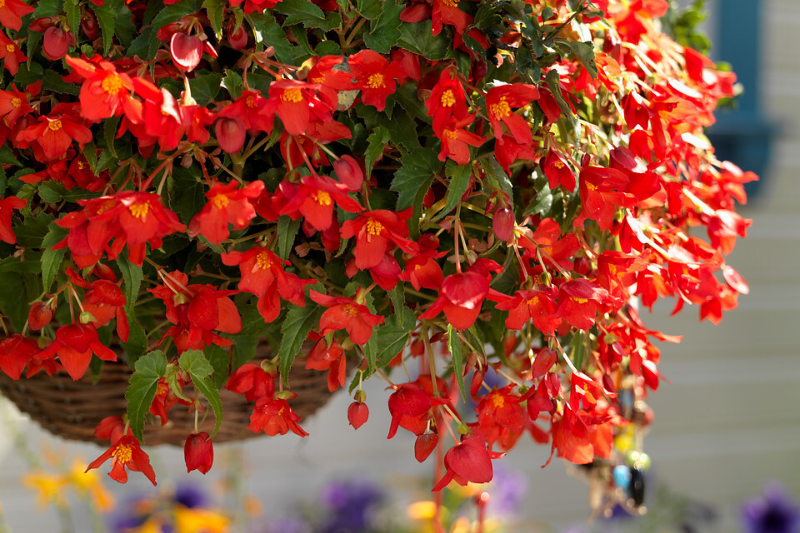
Coleus, sometimes called 'painted nettles' due to their incredibly diverse foliage, are irreplaceable for adding a beautiful exotic touch to any decor, both in the garden and indoors, where they can live for several years. They prefer a partially shaded position, which can be found at the edge of a bed of tall perennials or shrubs, or in a cool rockery, exposed to the north or east, away from the scorching rays of the sun. They can be used to create small mosaic-like beds of colours and go well with begonias in flower pots. The richness of their colors makes them somewhat difficult to pair with other plants: small ferns like Polypodium or purple wandering jew (Tradescantia pallida) are good companions for Coleus. They also go particularly well with begonias in flower pots. For Coleus Ruffles Copper, also consider small perennials with a green color that resembles its margin, such as Heuchera Lime Marmalade or Carex oshimensis Everillo.
Note: Please be aware that our plug plants are professional products reserved for experienced gardeners: upon receipt, repot and store them in a sheltered place (conservatory, greenhouse, cold frame) at a temperature above 14°C (57.2°F) for a few weeks before planting them outdoors once the risk of frost has passed.
Report an error about the product description
Flowering
Foliage
Plant habit
Botanical data
Solenostemon
scutellarioides
Ruffles Copper
Lamiaceae
Coleus, Painted Nettle, Flame Nettle
Cultivar or hybrid
Planting and care
Coleus Ruffles Copper are easy to grow plants. Plant them after the last frost, preferably in a semi-shady or possibly shady, but bright and sheltered from the wind. Morning sun is well tolerated, but hot exposures are to be avoided. They need a light and humus-rich soil, but well-drained and appreciate a fertilizer input. They are not demanding on the nature of the soil and tolerate limestone well. You can plant your coleus in pots, where they will need to be regularly watered. Apply a little liquid fertilizer every two weeks, from June to September. Remove the flowers as soon as they appear to prolong the life of the plant. Usually grown as annuals, they are actually fragile perennials: you can extend their life for a few years by bringing them indoors at the first frost. Outdoor cultivation is possible by the seaside, with good winter mulching. Plan for light pruning in March.
Planting period
Intended location
Care
Planting & care advice
-
-

-
-
-

-
-

-
This item has not been reviewed yet - be the first to leave a review about it.
Recently viewed products
Haven't found what you were looking for?
Hardiness is the lowest winter temperature a plant can endure without suffering serious damage or even dying. However, hardiness is affected by location (a sheltered area, such as a patio), protection (winter cover) and soil type (hardiness is improved by well-drained soil).

The flowering period indicated on our website applies to countries and regions located in USDA zone 8 (France, the United Kingdom, Ireland, the Netherlands, etc.)
It will vary according to where you live:- In zones 9 to 10 (Italy, Spain, Greece, etc.), flowering will occur about 2 to 4 weeks earlier.
- In zones 6 to 7 (Germany, Poland, Slovenia, and lower mountainous regions), flowering will be delayed by 2 to 3 weeks.
- In zone 5 (Central Europe, Scandinavia), blooming will be delayed by 3 to 5 weeks.
In temperate climates, pruning of spring-flowering shrubs (forsythia, spireas, etc.) should be done just after flowering.
Pruning of summer-flowering shrubs (Indian Lilac, Perovskia, etc.) can be done in winter or spring.
In cold regions as well as with frost-sensitive plants, avoid pruning too early when severe frosts may still occur.
The planting period indicated on our website applies to countries and regions located in USDA zone 8 (France, United Kingdom, Ireland, Netherlands).
It will vary according to where you live:
- In Mediterranean zones (Marseille, Madrid, Milan, etc.), autumn and winter are the best planting periods.
- In continental zones (Strasbourg, Munich, Vienna, etc.), delay planting by 2 to 3 weeks in spring and bring it forward by 2 to 4 weeks in autumn.
- In mountainous regions (the Alps, Pyrenees, Carpathians, etc.), it is best to plant in late spring (May-June) or late summer (August-September).
The harvesting period indicated on our website applies to countries and regions in USDA zone 8 (France, England, Ireland, the Netherlands).
In colder areas (Scandinavia, Poland, Austria...) fruit and vegetable harvests are likely to be delayed by 3-4 weeks.
In warmer areas (Italy, Spain, Greece, etc.), harvesting will probably take place earlier, depending on weather conditions.
The sowing periods indicated on our website apply to countries and regions within USDA Zone 8 (France, UK, Ireland, Netherlands).
In colder areas (Scandinavia, Poland, Austria...), delay any outdoor sowing by 3-4 weeks, or sow under glass.
In warmer climes (Italy, Spain, Greece, etc.), bring outdoor sowing forward by a few weeks.
Shipping country and language
Your country of residence may be:
Your country of residence is:
For a better user experience on our website, you can select:
Your shipping country:
-
 Austria
-
 Belgium
-
 Bosnia & Herzegovina
-
 Bulgaria
-
 Croatia
-
 Cyprus
-
 Czechia
-
 Denmark
-
 Estonia
-
 Finland
-
 France
-
 Germany
-
 Greece
-
 Hungary
-
 Iceland
-
 Ireland
-
 Italy
Italy
-
 Latvia
-
 Liechtenstein
-
 Lithuania
-
 Luxembourg
-
 Malta
Malta
-
 Netherlands
-
 Poland
-
 Portugal
-
 Romania
-
 Serbia
-
 Slovakia
-
 Slovenia
-
 Spain
Spain
-
 Sweden
-
 Switzerland
Language:
-
French
-
 English
-
Spanish
-
Italian
-
German
-
Portuguese
-
Dutch
-
Finnish
My Account
Hello
My wish lists
My cart
Log in / Register
Existing customer?
This form is protected by reCAPTCHA - the Google Privacy Policy and Terms of Service apply.
New customer?
Create an account to track your orders, access our customer service and, if you wish, make the most of our upcoming offers.