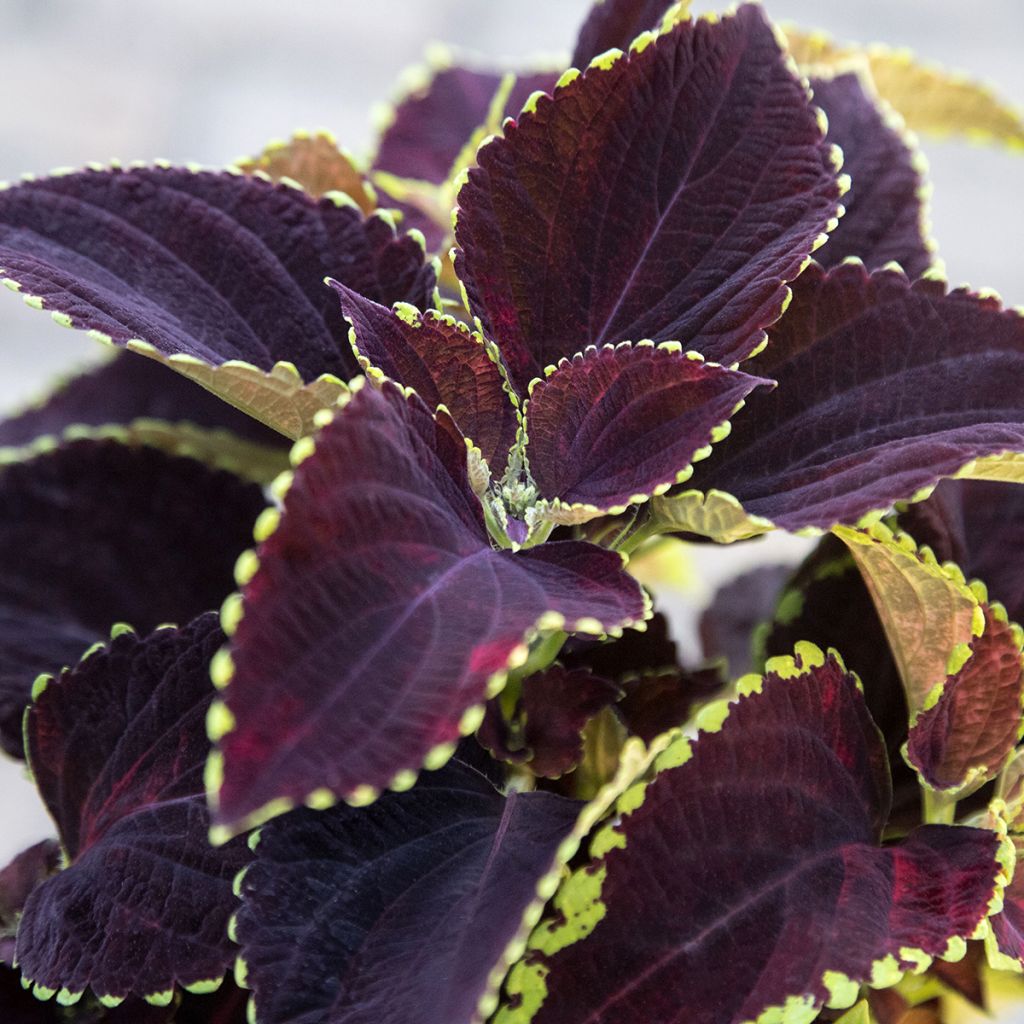
Solenostemon scutellaroides Mezmerize® Chocolate Lime Edge seeds - Coleus
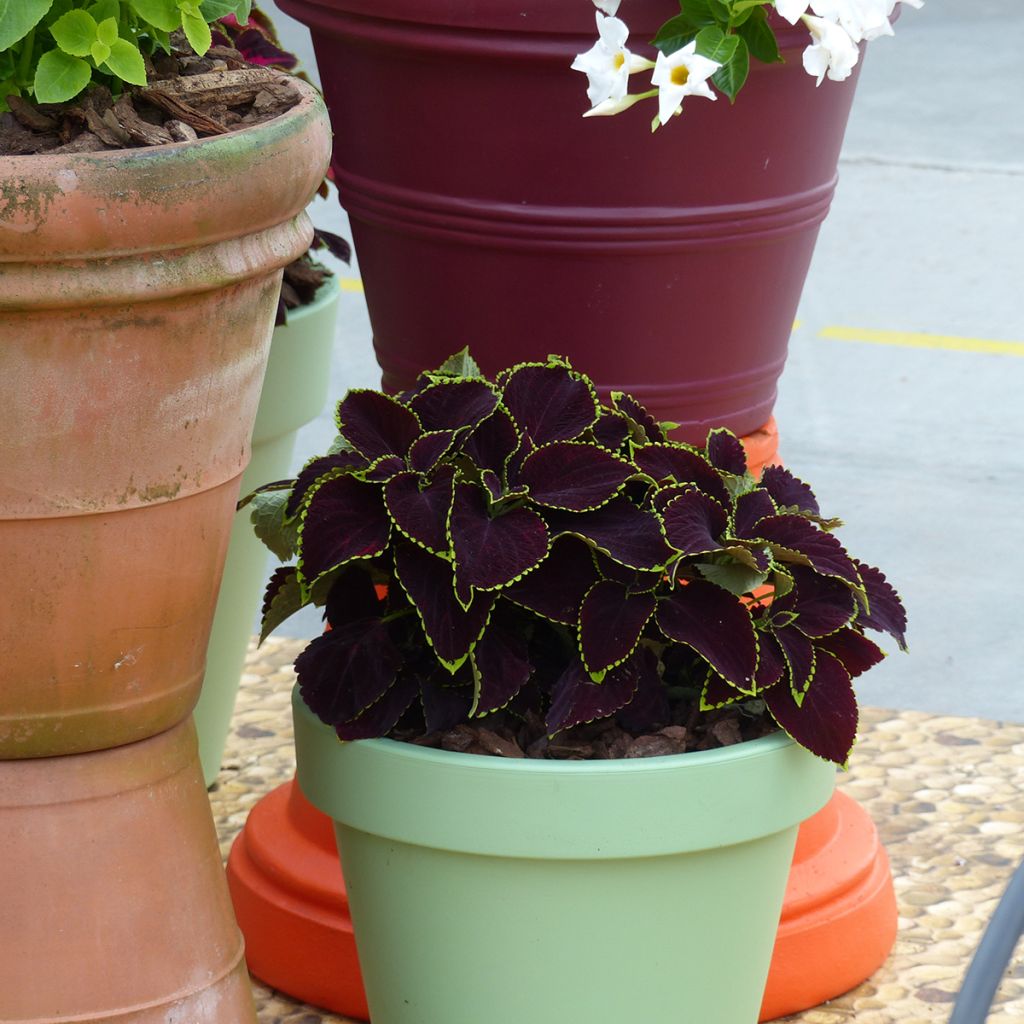
Solenostemon scutellaroides Mezmerize® Chocolate Lime Edge seeds - Coleus
Solenostemon scutellaroides Mezmerize® Chocolate Lime Edge seeds - Coleus
Solenostemon scutellaroides Mezmerize® Chocolate Lime Edge
Coleus, Painted Nettle, Flame Nettle
Back-to-school special offer!
Get €10 off for every €50 you spend! And get up to €40 off on a single order.
How does it work?
1. Shop your favourites
Add your favourite plants to your basket. For every €50 you spend (excluding delivery charges, store credit and the plastic-free option), you’ll receive a €10 voucher.
€50 spent = €10 voucher
€100 spent = €20 voucher
€150 spent = €30 voucher
€200 spent = €40 voucher
2. Place your order
Once your basket reaches one of the spending thresholds, place your order. You can even choose your delivery date!
3. Receive your voucher
As soon as your order has been shipped, you’ll receive an email containing your personal voucher code and its value.
4. Use it on your next order
Your voucher is valid for 90 days from the date you receive it. It can be used once only, on a new order worth at least the value of the voucher, excluding delivery charges.
Please note: Vouchers can be combined with other offers, but cannot be split or refunded.
Home or relay delivery (depending on size and destination)
Important: You may be charged customs duties by your country’s customs authorities upon delivery.
Schedule delivery date
and select date in basket
This plant carries a 6 months recovery warranty
More information
We guarantee the quality of our plants for a full growing cycle, and will replace at our expense any plant that fails to recover under normal climatic and planting conditions.
Would this plant suit my garden?
Set up your Plantfit profile →
Description
Sow the seeds of Coleus Mezmerize® Chocolate Lime Edge to grow an ornamental plant prized for its decorative foliage with striking contrasts. Its bushy, compact habit makes it an excellent choice for borders, flowerbeds and pots. Its finely toothed leaves display a deep chocolate shade enhanced by a bright lime-green edge. Easy to grow, it thrives in rich, well-drained soil kept moist, with a preference for semi-shade, although it tolerates sun if soil moisture is adequate. Sensitive to cold, it is grown as an annual outdoors or as a houseplant. Sow it in spring or year-round indoors.
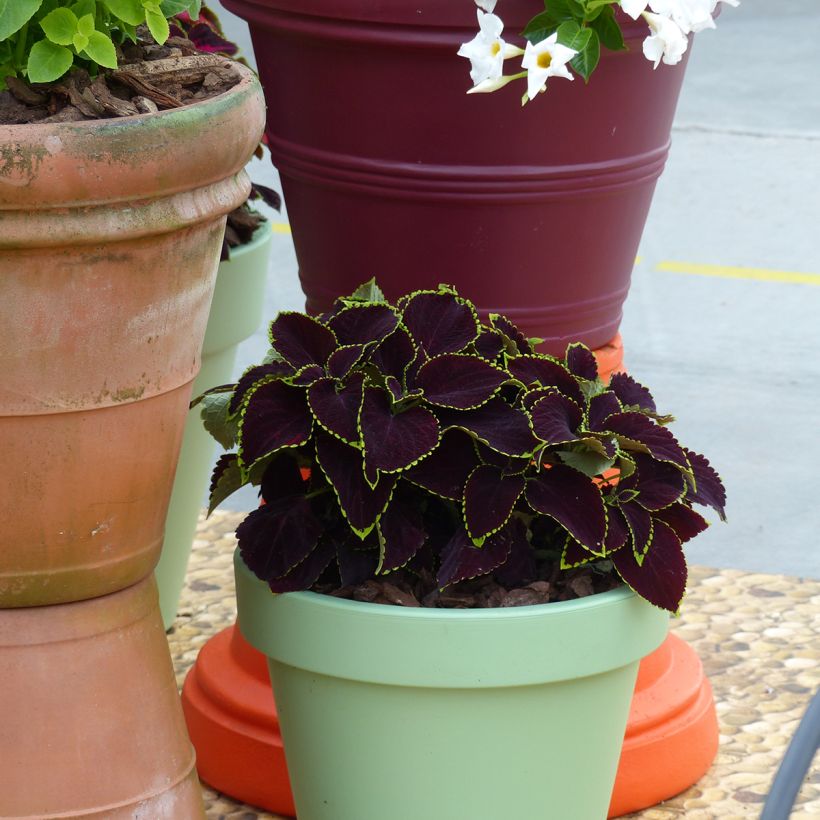
From the Lamiaceae family, like nettle and basil, Coleus, also known as Solenostemon or Plectranthus, are frost-tender shrubby perennials, native to Asia and tropical Africa. They have as botanical synonyms: Plectranthus scutellarioides, Coleus hybridus, Coleus blumei var. verschaffeltii, Solenostemon scutellarioides, Coleus saundersiae, Ocimum scutellarioides, Coleus verschaffeltii, Coleus pumilus, Coleus blumei. They are also known as False Skullcap Plectranthus, Flame Nettle, Bishop's Carpet or Old Bachelor. They are mainly grown for their ornamental foliage, but they also offer a spike-like flowering in summer. Their small two-lipped flowers with an elongated lower lip are typical of Lamiaceae. Flowers are usually removed as soon as buds appear so that the plants do not exhaust themselves producing seeds, and maintain generous foliage. Coleus Mezmerize® Chocolate Lime Edge forms a clump of 40 to 50cm in all directions in one season. The final dimensions are similar in the ground and in a pot. The leaves are finely toothed. Mezmerize® Chocolate Lime Edge has been selected for its foliage, which is better able to withstand heat and sun. Even in low-humidity conditions, its leaves remain well-developed and do not curl due to heat stress. The stems are quadrangular, a typical characteristic of Lamiaceae. The root system is fibrous and shallow. Although mainly grown for its foliage, it produces small bluish flower spikes, usually at the end of the season.
In a play of light and contrasts, Coleus Mezmerize Chocolate Lime Edge reveals its full intensity when combined with foliage in deep or metallic shades. In a pot on a shaded terrace, it makes a focal point alongside a Plectranthus coleoides 'Variegata', which brings a soft, velvety texture to the display. In the ground, it integrates well into a semi-shaded flowerbed, where the purple brilliance of an Alternanthera ‘Purple Knight’ further accentuates the relief of its foliage. Playing on contrasts and layering, it becomes a structuring element in architectural or contemporary gardens, where its colourful foliage replaces flowering, creating a display from spring until the first frosts. Combined with begonias with a soft habit or impatiens with delicate flowering, it creates an elegant, refined atmosphere, ideal for gardens with a tropical feel.

Solenostemon scutellaroides Mezmerize® Chocolate Lime Edge seeds - Coleus in pictures
Flowering
Foliage
Plant habit
Botanical data
Solenostemon
scutellaroides
Mezmerize® Chocolate Lime Edge
Lamiaceae
Coleus, Painted Nettle, Flame Nettle
Plectranthus scutellarioides, Coleus hybridus, Coleus blumei var. verschaffeltii, Solenostemon scutellarioides, Coleus saundersiae, Ocimum scutellarioides, Coleus verschaffeltii, Coleus pumilus, Coleus blumei
Cultivar or hybrid
Planting and care
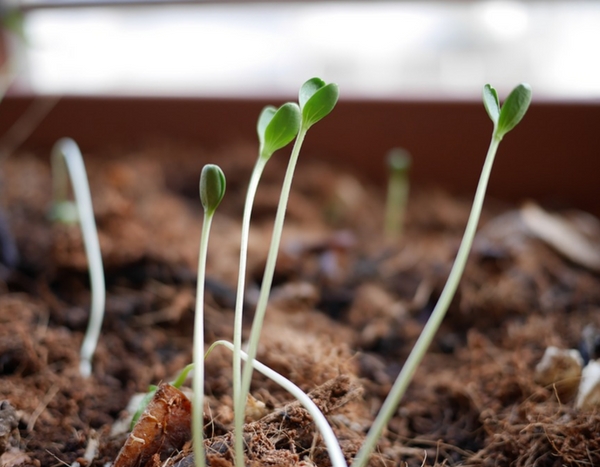
You can sow Coleus 'Mezmerize Chocolate Lime Edge' all year round if you are growing them as houseplants. For borders and pots, sow them in spring, from March onwards, so they are ready to be planted out after the last frosts. Use a good-quality seed compost, optionally enriched with well-rotted compost. Gently firm the surface of the seed tray before scattering the seeds thinly over the surface. Do not cover the seeds with compost. Water with a fine spray. Place the tray in a light position at a temperature of 20 to 25°C. Using a propagator will speed up germination. The substrate must be kept moist: mist morning and evening.
Germination will take 15 to 20 days. As soon as the young plants are large enough to handle (around 4 to 6 leaves), transplant them into pots. Pinch out the tips of the shoots to encourage branching of your coleus.
Plants intended for growing outdoors should be gradually hardened off to a temperature of 15°C, ideally 15 days before their final planting out. By late May to early June, the outdoor temperature should be warm enough to plant out your young plants. Choose a lightly sunny spot that is not scorching. Add a good amount of compost to each planting hole. Space the plants 25 to 30cm apart.
Water regularly. For potted plants, remember to empty the saucers placed under the pots. In winter, you can store them in a frost-free, light location with minimal heating, while reducing watering.
Remove flower spikes as soon as they form to prevent the plant from exhausting itself prematurely.
Sowing period
Intended location
Planting & care advice
-

-

-
-

-

-

-

-

This item has not been reviewed yet - be the first to leave a review about it.
Recently viewed products
Haven't found what you were looking for?
Hardiness is the lowest winter temperature a plant can endure without suffering serious damage or even dying. However, hardiness is affected by location (a sheltered area, such as a patio), protection (winter cover) and soil type (hardiness is improved by well-drained soil).

The flowering period indicated on our website applies to countries and regions located in USDA zone 8 (France, the United Kingdom, Ireland, the Netherlands, etc.)
It will vary according to where you live:- In zones 9 to 10 (Italy, Spain, Greece, etc.), flowering will occur about 2 to 4 weeks earlier.
- In zones 6 to 7 (Germany, Poland, Slovenia, and lower mountainous regions), flowering will be delayed by 2 to 3 weeks.
- In zone 5 (Central Europe, Scandinavia), blooming will be delayed by 3 to 5 weeks.
In temperate climates, pruning of spring-flowering shrubs (forsythia, spireas, etc.) should be done just after flowering.
Pruning of summer-flowering shrubs (Indian Lilac, Perovskia, etc.) can be done in winter or spring.
In cold regions as well as with frost-sensitive plants, avoid pruning too early when severe frosts may still occur.
The planting period indicated on our website applies to countries and regions located in USDA zone 8 (France, United Kingdom, Ireland, Netherlands).
It will vary according to where you live:
- In Mediterranean zones (Marseille, Madrid, Milan, etc.), autumn and winter are the best planting periods.
- In continental zones (Strasbourg, Munich, Vienna, etc.), delay planting by 2 to 3 weeks in spring and bring it forward by 2 to 4 weeks in autumn.
- In mountainous regions (the Alps, Pyrenees, Carpathians, etc.), it is best to plant in late spring (May-June) or late summer (August-September).
The harvesting period indicated on our website applies to countries and regions in USDA zone 8 (France, England, Ireland, the Netherlands).
In colder areas (Scandinavia, Poland, Austria...) fruit and vegetable harvests are likely to be delayed by 3-4 weeks.
In warmer areas (Italy, Spain, Greece, etc.), harvesting will probably take place earlier, depending on weather conditions.
The sowing periods indicated on our website apply to countries and regions within USDA Zone 8 (France, UK, Ireland, Netherlands).
In colder areas (Scandinavia, Poland, Austria...), delay any outdoor sowing by 3-4 weeks, or sow under glass.
In warmer climes (Italy, Spain, Greece, etc.), bring outdoor sowing forward by a few weeks.
Shipping country and language
Your country of residence may be:
Your country of residence is:
For a better user experience on our website, you can select:
Your shipping country:
-
 Austria
-
 Belgium
-
 Bosnia & Herzegovina
-
 Bulgaria
-
 Croatia
-
 Cyprus
-
 Czechia
-
 Denmark
-
 Estonia
-
 Finland
-
 France
-
 Germany
-
 Greece
-
 Hungary
-
 Iceland
-
 Ireland
-
 Italy
Italy
-
 Latvia
-
 Liechtenstein
-
 Lithuania
-
 Luxembourg
-
 Malta
Malta
-
 Netherlands
-
 Poland
-
 Portugal
-
 Romania
-
 Serbia
-
 Slovakia
-
 Slovenia
-
 Spain
Spain
-
 Sweden
-
 Switzerland
Language:
-
French
-
 English
-
Spanish
-
Italian
-
German
-
Portuguese
-
Dutch
-
Finnish
My Account
Hello
My wish lists
My cart
Log in / Register
Existing customer?
This form is protected by reCAPTCHA - the Google Privacy Policy and Terms of Service apply.
New customer?
Create an account to track your orders, access our customer service and, if you wish, make the most of our upcoming offers.