What is a rotary cultivator used for?
Perfect tool for light soils
Contents
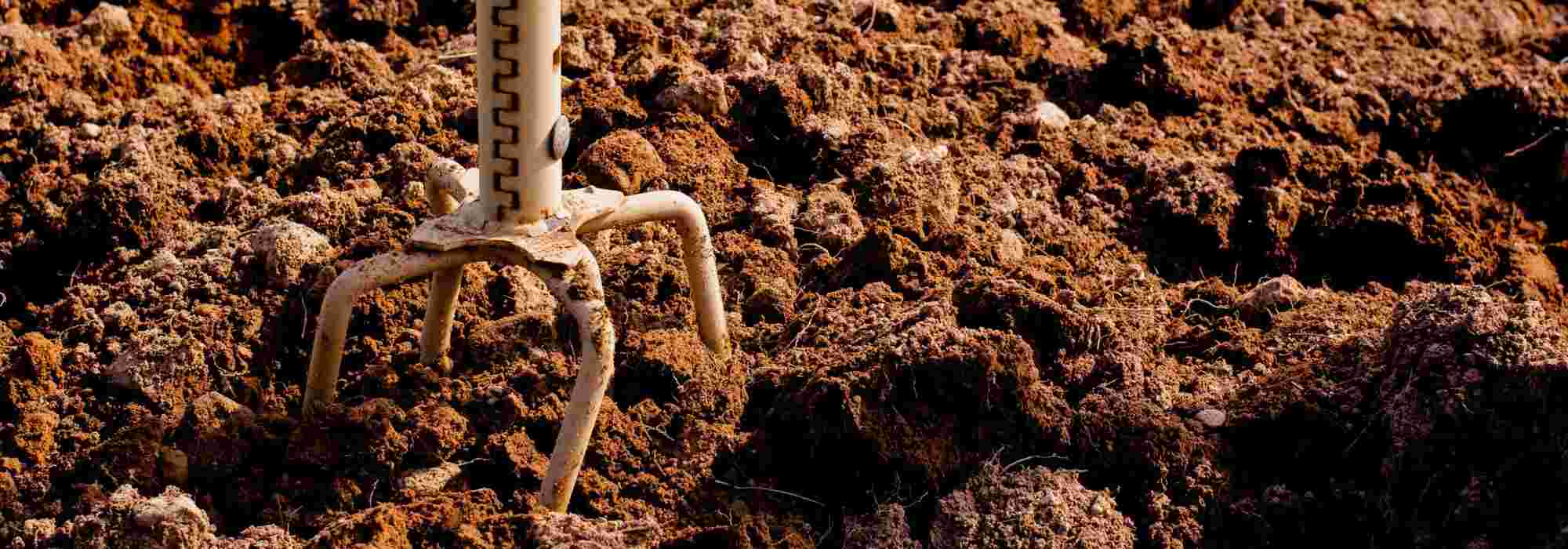
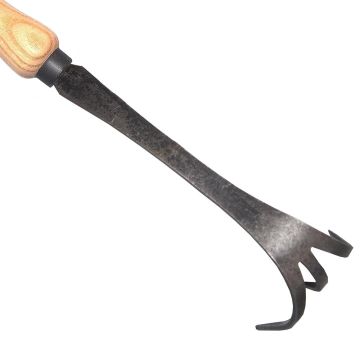
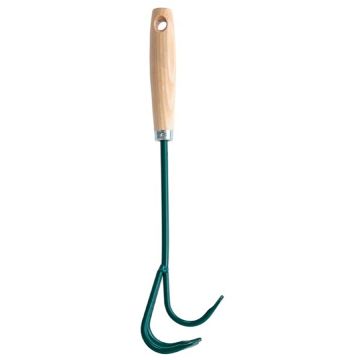
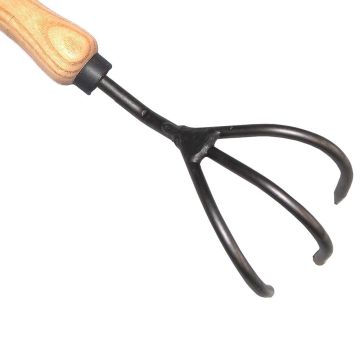
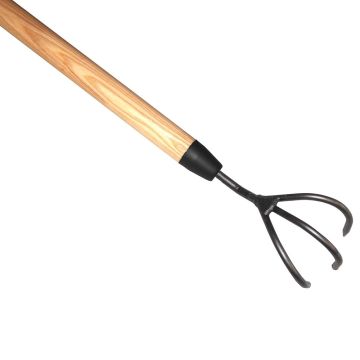
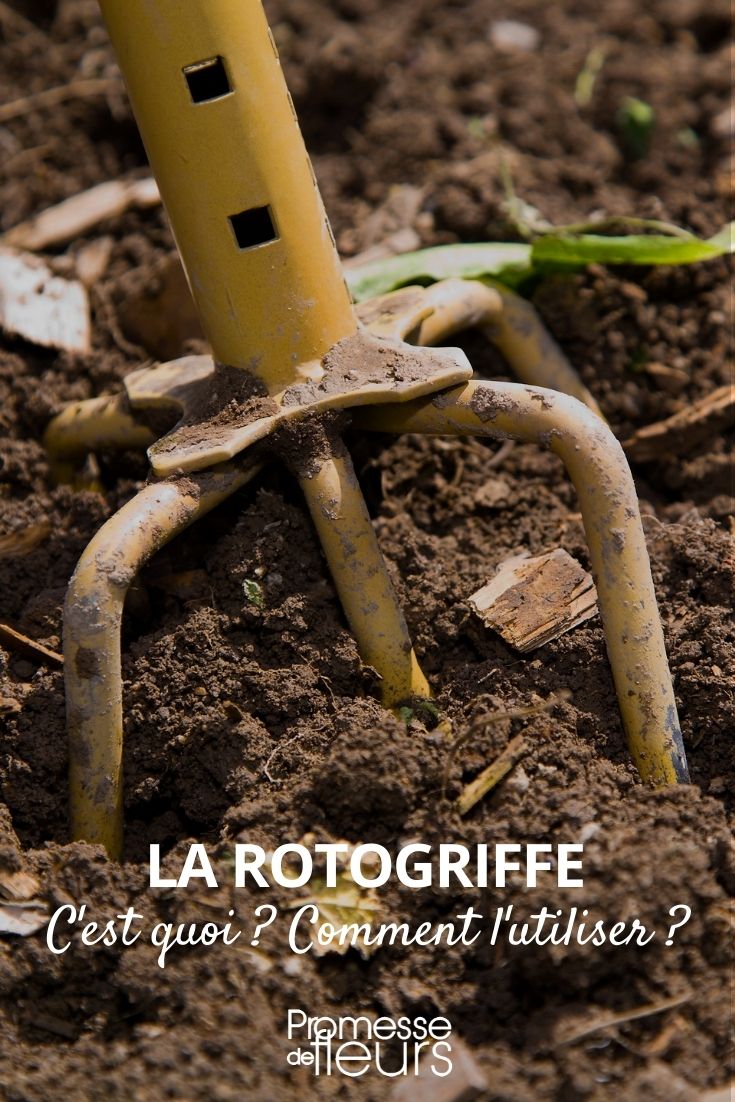
A rotary claw, or rotary garden tine, is a garden tool fitted with 3 to 5 helicoid tines. This tool is used to turn or loosen soil and to weed light soils. It is used both in vegetable gardens and in ornamental gardens.

Une rotogriffe est un outil motorisé de préparation du sol constitué d’un corps muni de griffes rotatives (tiges courbées ou fraises) qui pénètrent et retournent la terre lorsque l’appareil avance. On le trouve en versions portables (petits modèles électriques ou thermiques) pour potagers et massifs, ou en versions plus puissantes pour plus grandes surfaces. Principales utilisations - Broyer et aérer la couche superficielle du sol (préparer un lit de semence). - Désherbage mécanique des rangs et plates‑bandes. - Incorporer amendements légers (compost, fumier fin). - Réduire les mottes et niveler rapidement une parcelle. Avantages - Rapide et peu fatigant comparé au travail manuel à la bêche. - Idéal pour préparer des parcelles avant semis ou plantations. - Permet un travail superficiel régulier. Limites et précautions - Ne remplace pas un labour profond : efficacité limitée en sols très compacts ou argileux. - À éviter sur sol trop humide (risque de compactage) ou trop pierreux (usure voire casse des griffes). - Peut remonter des graines de mauvaise herbe en surface si utilisé sans autre gestion. Conseils d’utilisation - Régler la profondeur progressivement (souvent 5–15 cm selon modèle). - Faire plusieurs passages croisés pour un résultat homogène. - Préparer le terrain en retirant gros cailloux et débris. - Porter protections (lunettes, gants) et suivre consignes de sécurité du fabricant. Entretien - Nettoyer et graisser les pièces après usage, vérifier état des griffes, niveau d’huile et bougie sur modèles thermiques. - Remplacer griffes usées pour garder efficacité. En résumé, la rotogriffe est un excellent outil pour l’entretien et la préparation rapide de petites à moyennes surfaces potagères, à utiliser en complément d’autres méthodes selon la nature du sol et les objectifs culturales.
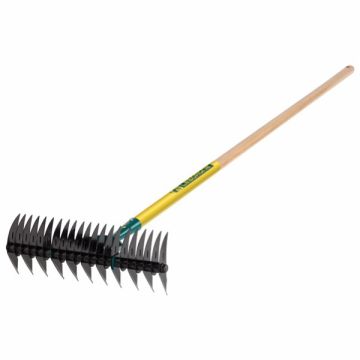
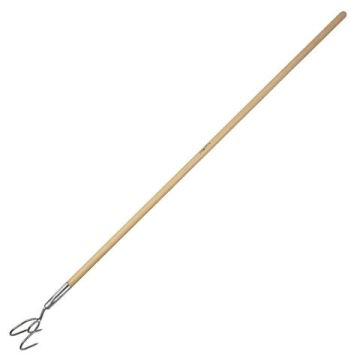
This somewhat special garden claw consists of a shaft and a head fitted with 3 to 5 helical tines. The shaft is often long (at least 100 cm) and ends in an ‘S’-shaped handlebar that allows the tool to be pushed into the soil and given a slight circular motion. This ‘S’-shaped handlebar is designed to reduce effort. The clawed head, meanwhile, is made of stainless steel.
Long-handled models allow working while standing with a straight back. This type of tool helps prevent injuries and muscle soreness. An example is Rotogrif’ Leborgne 4 dents.
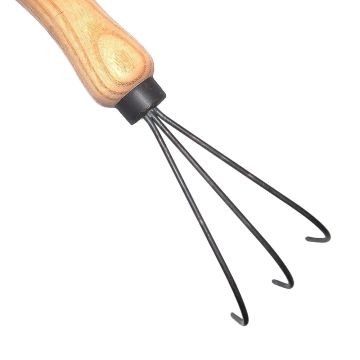
However, there are also mini rotogriffs with a much shorter shaft (30–40 cm, or even just a simple handle). They are used while crouching, kneeling or in raised beds or planters. This is the case with the Mini Rotogrif’ 3 dents Leborgne.
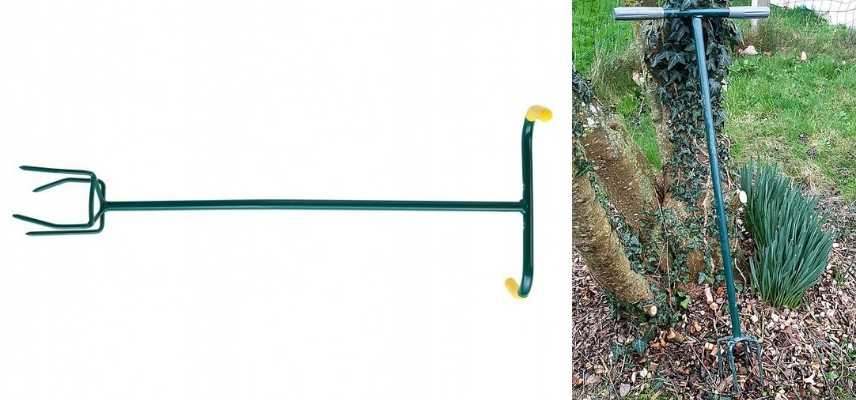
On the left, Rotogrif’ Leborgne 4 dents
Read also
What is a griffe or a croc used for?What is a rotogriffe used for?
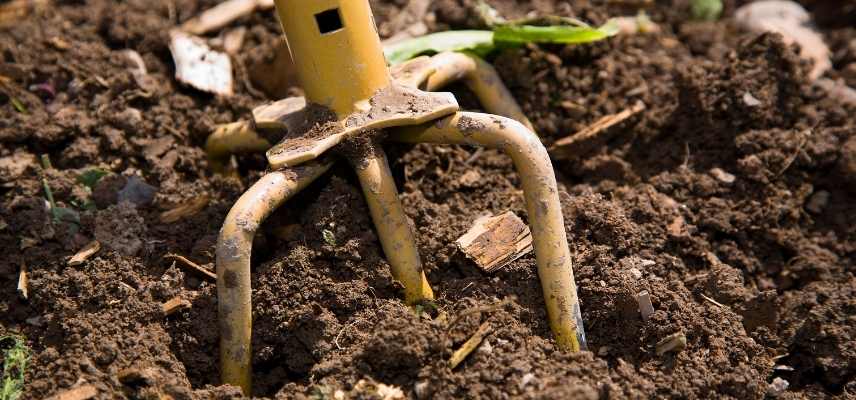
Rotogriffe loosens the soil’s surface layer, to about 10–15 cm. This tool is ideal in nature-friendly gardens, as it does not turn over soil layers and does not kill pedofauna (soil fauna). With this tool, you can:
- Loosen soil before sowing or to break up a surface crust after heavy rain;
- Aerate soil around plants in vegetable or ornamental gardens;
- Mix compost or potting soil into surface soil;
- Aerate compost heap;
- Weed or hoe between plants: only in well-worked or naturally loose soils;
- Harvest small potatoes.
Discover other Hand rakes, hand claws, and hand forks
View all →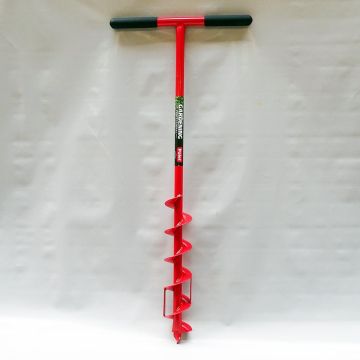
Available in 1 sizes
Available in 1 sizes
Available in 1 sizes
Available in 1 sizes
Available in 1 sizes
Available in 1 sizes
Available in 1 sizes
Available in 1 sizes
Available in 1 sizes
Available in 1 sizes
How to use a rotogriffe?
Using a rotary cultivator is relatively simple. Simply push the head into the soil by pressing down with your foot on it, then rotate the handle. Pull out the tool and repeat elsewhere. And so on…
Note that a rotary cultivator or rotary claw is only really effective in well-worked or naturally loose soil. In heavy, compact, stony soil or where vegetation is too dense, choose a digging fork instead. However, you can still try a rotary cultivator on heavy soils if it has fewer tines (maximum 3) and if these are shorter: penetration into the soil will be easier.
Don’t forget! : clean the tines with soapy water after each use to prevent soil sticking to them. This will prevent your tool from rusting and maintain excellent penetration of the tines into the soil.
- Subscribe!
- Contents
This form is protected by reCAPTCHA - the Google Privacy Policy and Terms of Service apply.

































Comments