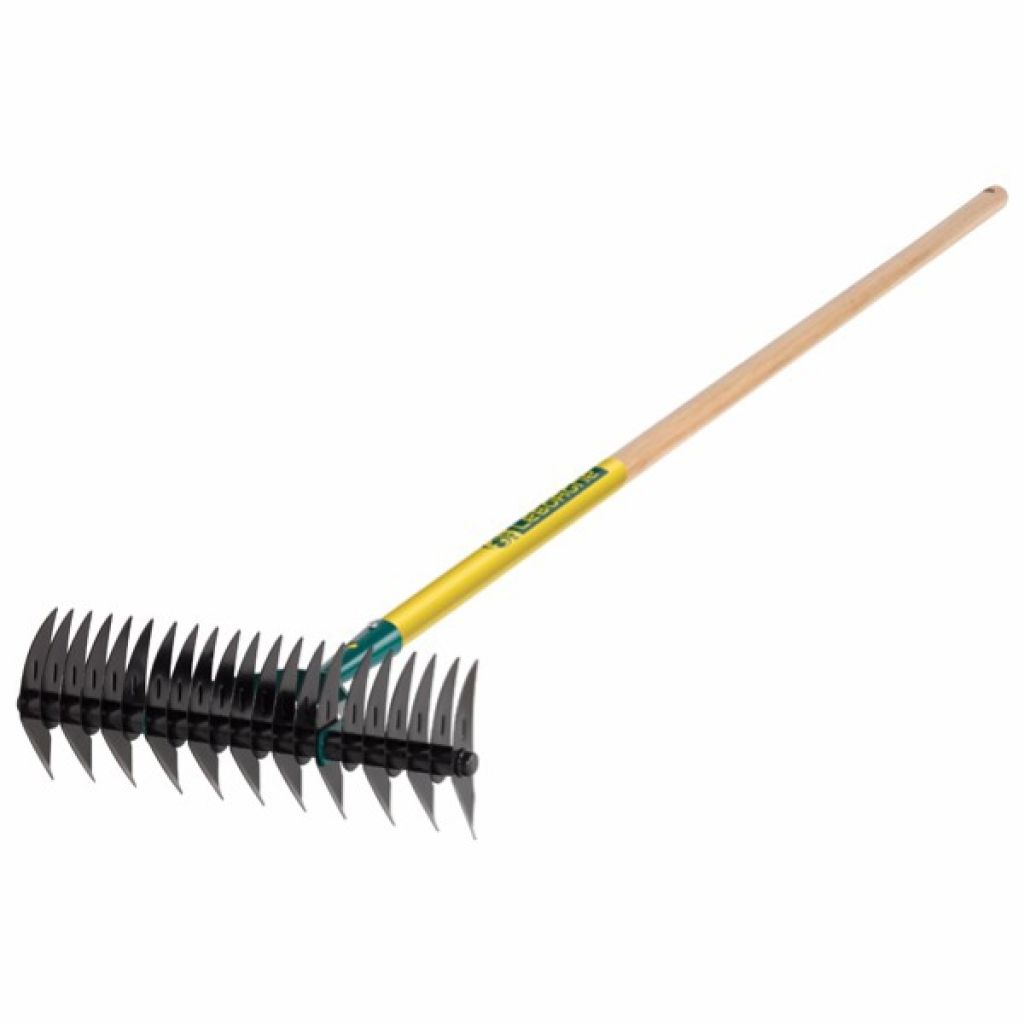
32-tooth Scarifier
32-tooth Scarifier
Back-to-school special offer!
Get €10 off for every €50 you spend! And get up to €40 off on a single order.
How does it work?
1. Shop your favourites
Add your favourite plants to your basket. For every €50 you spend (excluding delivery charges, store credit and the plastic-free option), you’ll receive a €10 voucher.
€50 spent = €10 voucher
€100 spent = €20 voucher
€150 spent = €30 voucher
€200 spent = €40 voucher
2. Place your order
Once your basket reaches one of the spending thresholds, place your order. You can even choose your delivery date!
3. Receive your voucher
As soon as your order has been shipped, you’ll receive an email containing your personal voucher code and its value.
4. Use it on your next order
Your voucher is valid for 90 days from the date you receive it. It can be used once only, on a new order worth at least the value of the voucher, excluding delivery charges.
Please note: Vouchers can be combined with other offers, but cannot be split or refunded.
Home or relay delivery (depending on size and destination)
Important: You may be charged customs duties by your country’s customs authorities upon delivery.
Schedule delivery date
and select date in basket
We guarantee the quality of our plants for a full growing cycle, and will replace at our expense any plant that fails to recover under normal climatic and planting conditions.

This Leborgne classic double-toothed scarifier is a two-in-one garden tool that easily removes moss and weeds from your lawn, as well as scrapes the soil to aerate its roots. The tool head has 21 long and fine teeth on one side, and 11 shorter and hooked teeth on the other. Simply flip the tool head for the side you want. It bears a very long PEFC-certified wooden handle that helps the gardener work while protecting the back. Ideal for scarifying the lawn, it will also be very useful for picking up any debris scattered on the ground, such as grass clippings, dead leaves, and various waste.
Scarification is essential for maintaining the health of the lawn. Due to rain, mowing, and trampling, grass tends to suffocate under a layer of dry and decomposing debris that blocks light as well as the essential exchange of air and water for the grasses that make up the lawn. This causes the grass to turn yellow and eventually wither, leaving room for mosses and various colonising plants such as clover, plantains, or dandelions. The classic scarifier is a garden tool whose teeth or blades tear the surface of the soil to remove this layer. They also scrape the surface of the soil to restore the exchange of air, water, and nutrients. Scarifiers generate a large amount of waste and leaves the lawn looking sparse after use. However, the operation is beneficial and invigorating for the grass, which will quickly regenerate, multiply, and regain a lush green appearance. It is generally recommended to scarify the lawn twice a year, in spring after the last frost, and in autumn before the first frost. This operation is also necessary before sowing on a heavily damaged lawn.
The Leborgne manual double-toothed model perfectly fulfills this function, and its action is reinforced by the 21 long and pointed teeth that prepare the ground by removing most of the compact layer and weeds, while the 11 short and hooked teeth effectively scratch the soil. It is a durable manual scarifier with a steel head. Its handle is PEFC certified. This label guarantees that the wood comes from responsible sources that contribute to the sustainable management of forests by considering its environmental, social, and economic dimensions. The handle is compostable, and the metal head is recyclable.
Technical specifications:
- Total width: 38cm (15in)
- Handle length: 150cm (59in)
- Weight: 1.31kg
- PEFC-certified wooden handle
- Steel head
- Assembled in France
The Leborgne company has been selling tools for gardening, agriculture, and landscaping to both professionals and amateurs since 1829. It started as a metallurgical activity in a territory (Savoie) where forging has been practiced for centuries. Today, their range reflects all this experience by offering innovative, high-quality products adapted to various uses.
Technical features
Tips
This item has not been reviewed yet - be the first to leave a review about it.
Recently viewed products
Haven't found what you were looking for?
Hardiness is the lowest winter temperature a plant can endure without suffering serious damage or even dying. However, hardiness is affected by location (a sheltered area, such as a patio), protection (winter cover) and soil type (hardiness is improved by well-drained soil).

The flowering period indicated on our website applies to countries and regions located in USDA zone 8 (France, the United Kingdom, Ireland, the Netherlands, etc.)
It will vary according to where you live:- In zones 9 to 10 (Italy, Spain, Greece, etc.), flowering will occur about 2 to 4 weeks earlier.
- In zones 6 to 7 (Germany, Poland, Slovenia, and lower mountainous regions), flowering will be delayed by 2 to 3 weeks.
- In zone 5 (Central Europe, Scandinavia), blooming will be delayed by 3 to 5 weeks.
In temperate climates, pruning of spring-flowering shrubs (forsythia, spireas, etc.) should be done just after flowering.
Pruning of summer-flowering shrubs (Indian Lilac, Perovskia, etc.) can be done in winter or spring.
In cold regions as well as with frost-sensitive plants, avoid pruning too early when severe frosts may still occur.
The planting period indicated on our website applies to countries and regions located in USDA zone 8 (France, United Kingdom, Ireland, Netherlands).
It will vary according to where you live:
- In Mediterranean zones (Marseille, Madrid, Milan, etc.), autumn and winter are the best planting periods.
- In continental zones (Strasbourg, Munich, Vienna, etc.), delay planting by 2 to 3 weeks in spring and bring it forward by 2 to 4 weeks in autumn.
- In mountainous regions (the Alps, Pyrenees, Carpathians, etc.), it is best to plant in late spring (May-June) or late summer (August-September).
The harvesting period indicated on our website applies to countries and regions in USDA zone 8 (France, England, Ireland, the Netherlands).
In colder areas (Scandinavia, Poland, Austria...) fruit and vegetable harvests are likely to be delayed by 3-4 weeks.
In warmer areas (Italy, Spain, Greece, etc.), harvesting will probably take place earlier, depending on weather conditions.
The sowing periods indicated on our website apply to countries and regions within USDA Zone 8 (France, UK, Ireland, Netherlands).
In colder areas (Scandinavia, Poland, Austria...), delay any outdoor sowing by 3-4 weeks, or sow under glass.
In warmer climes (Italy, Spain, Greece, etc.), bring outdoor sowing forward by a few weeks.
Shipping country and language
Your country of residence may be:
Your country of residence is:
For a better user experience on our website, you can select:
Your shipping country:
-
 Austria
-
 Belgium
-
 Bosnia & Herzegovina
-
 Bulgaria
-
 Croatia
-
 Cyprus
-
 Czechia
-
 Denmark
-
 Estonia
-
 Finland
-
 France
-
 Germany
-
 Greece
-
 Hungary
-
 Iceland
-
 Ireland
-
 Italy
Italy
-
 Latvia
-
 Liechtenstein
-
 Lithuania
-
 Luxembourg
-
 Malta
Malta
-
 Netherlands
-
 Poland
-
 Portugal
-
 Romania
-
 Serbia
-
 Slovakia
-
 Slovenia
-
 Spain
Spain
-
 Sweden
-
 Switzerland
Language:
-
French
-
 English
-
Spanish
-
Italian
-
German
-
Portuguese
-
Dutch
-
Finnish
My Account
Hello
My wish lists
My cart
Log in / Register
Existing customer?
This form is protected by reCAPTCHA - the Google Privacy Policy and Terms of Service apply.
New customer?
Create an account to track your orders, access our customer service and, if you wish, make the most of our upcoming offers.