Hebe andersonii Variegata - Andersons hebe, shrubby veronica
Hebe andersonii Variegata - Andersons hebe, shrubby veronica
Hebe andersonii Variegata - Andersons hebe, shrubby veronica
Hebe andersonii Variegata - Andersons hebe, shrubby veronica
Hebe andersonii Variegata - Andersons hebe, shrubby veronica
Hebe andersonii Variegata
Andersons hebe, shrubby veronica
Back-to-school special offer!
Get €10 off for every €50 you spend! And get up to €40 off on a single order.
How does it work?
1. Shop your favourites
Add your favourite plants to your basket. For every €50 you spend (excluding delivery charges, store credit and the plastic-free option), you’ll receive a €10 voucher.
€50 spent = €10 voucher
€100 spent = €20 voucher
€150 spent = €30 voucher
€200 spent = €40 voucher
2. Place your order
Once your basket reaches one of the spending thresholds, place your order. You can even choose your delivery date!
3. Receive your voucher
As soon as your order has been shipped, you’ll receive an email containing your personal voucher code and its value.
4. Use it on your next order
Your voucher is valid for 90 days from the date you receive it. It can be used once only, on a new order worth at least the value of the voucher, excluding delivery charges.
Please note: Vouchers can be combined with other offers, but cannot be split or refunded.
Why not try an alternative variety in stock?
View all →
Available in 1 sizes

Available in 1 sizes

Available in 1 sizes
Available in 1 sizes
Available in 1 sizes

Available in 1 sizes
Available in 1 sizes
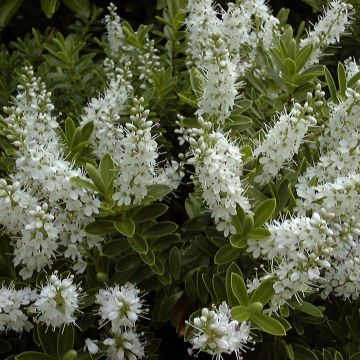
Available in 1 sizes
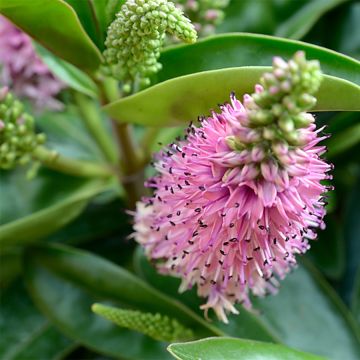
Available in 1 sizes
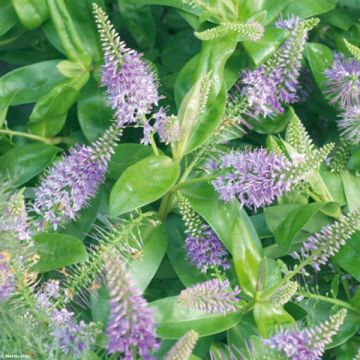
Available in 1 sizes
This plant carries a 24 months recovery warranty
More information
We guarantee the quality of our plants for a full growing cycle, and will replace at our expense any plant that fails to recover under normal climatic and planting conditions.
Would this plant suit my garden?
Set up your Plantfit profile →
Description
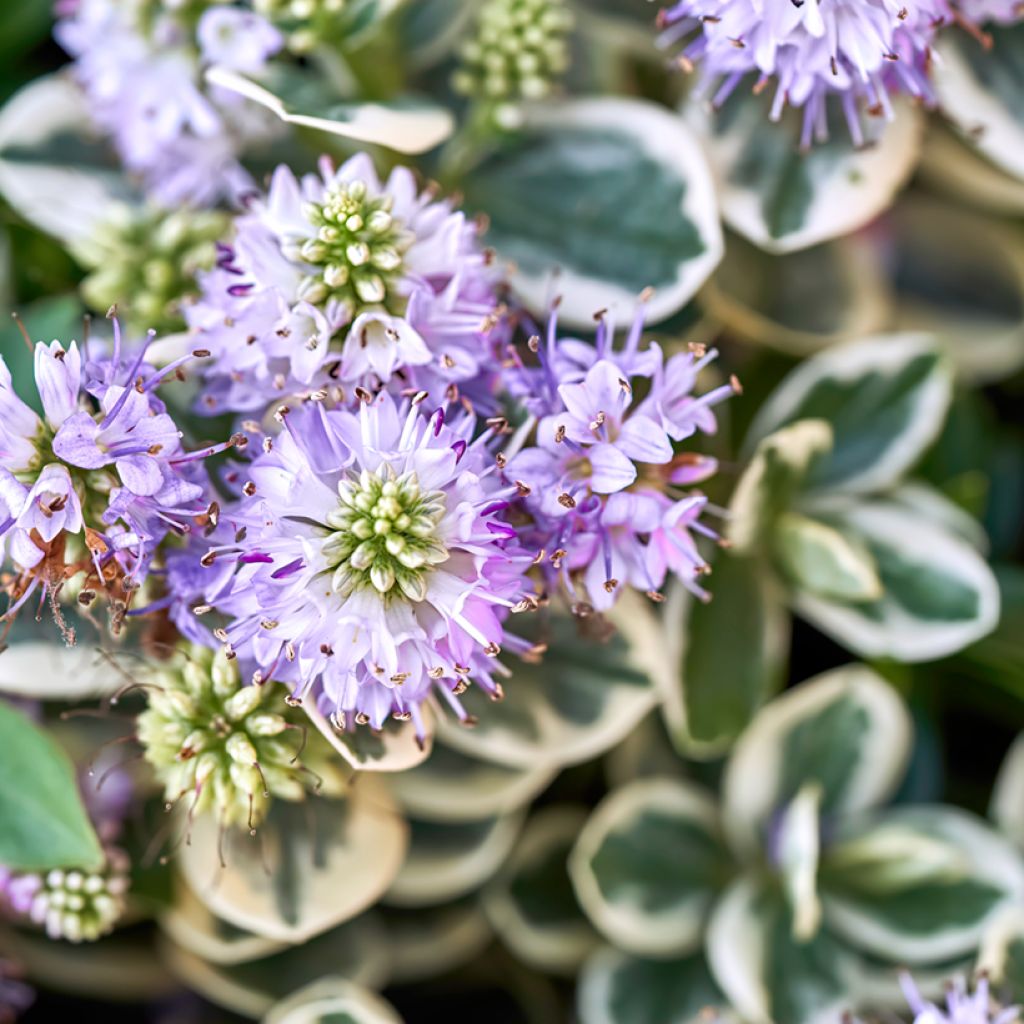
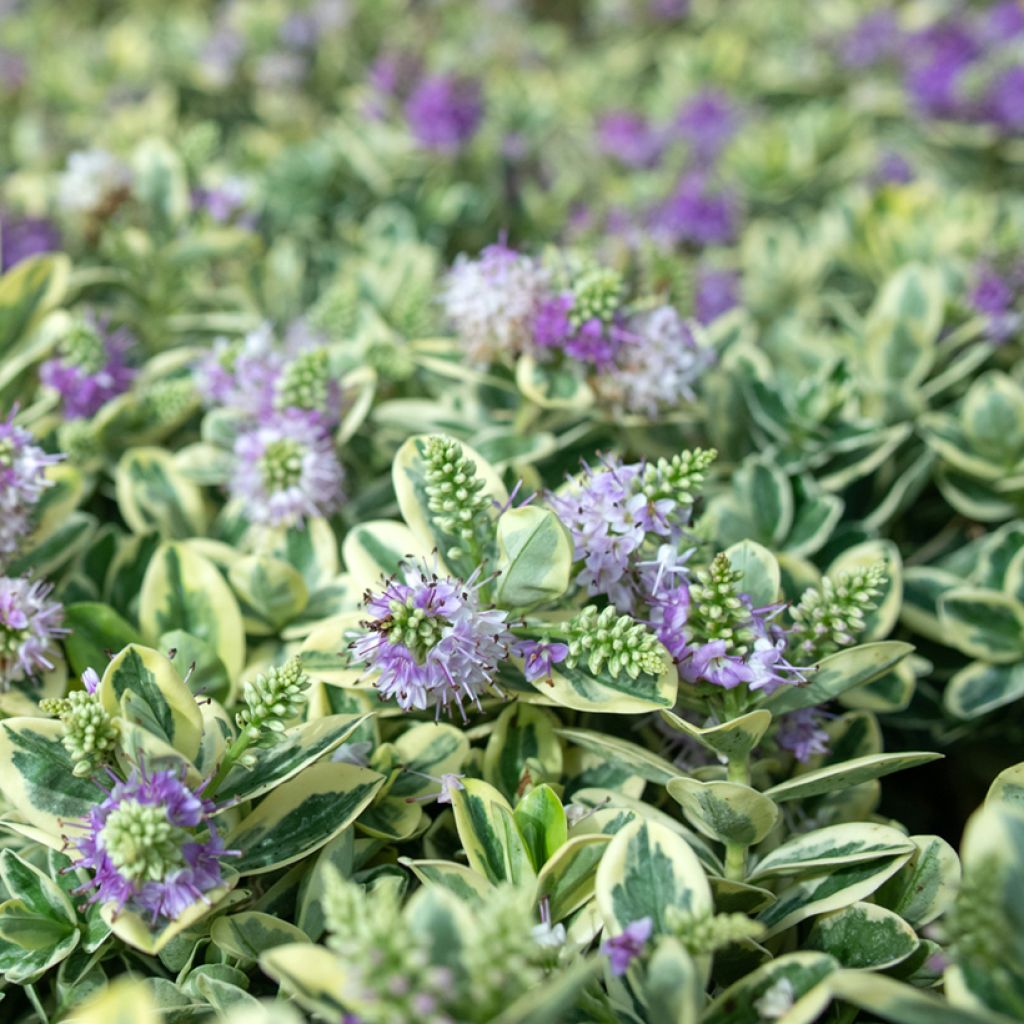
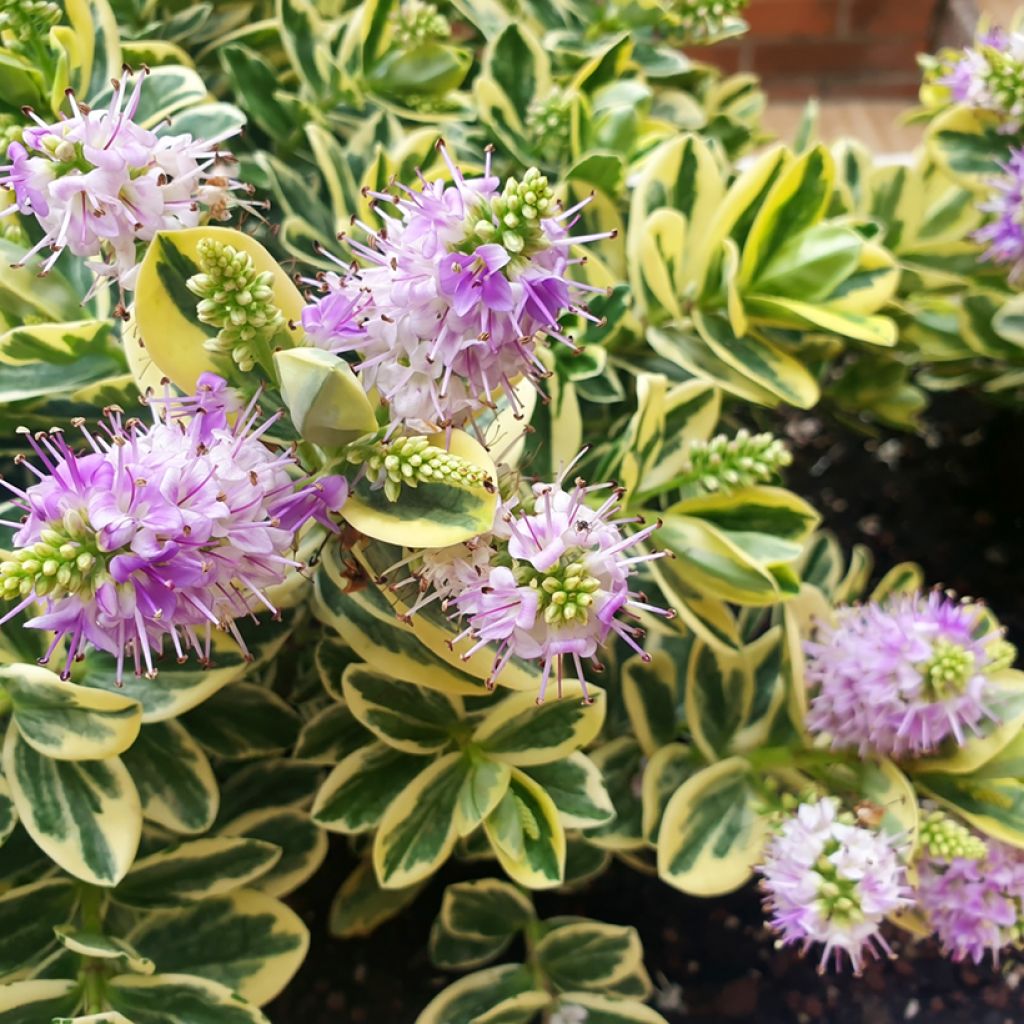
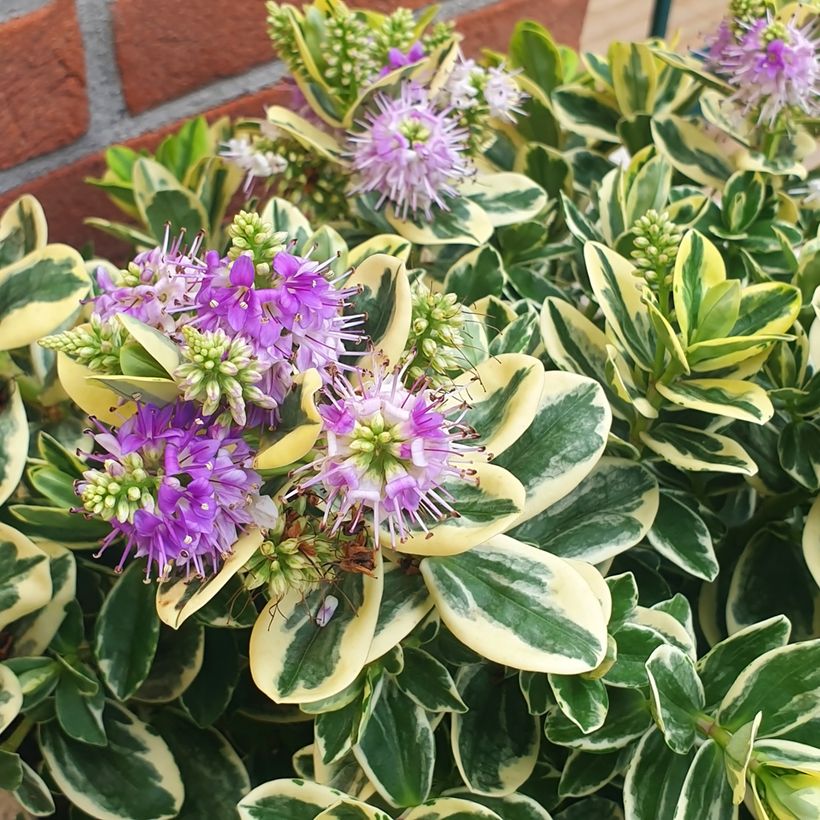
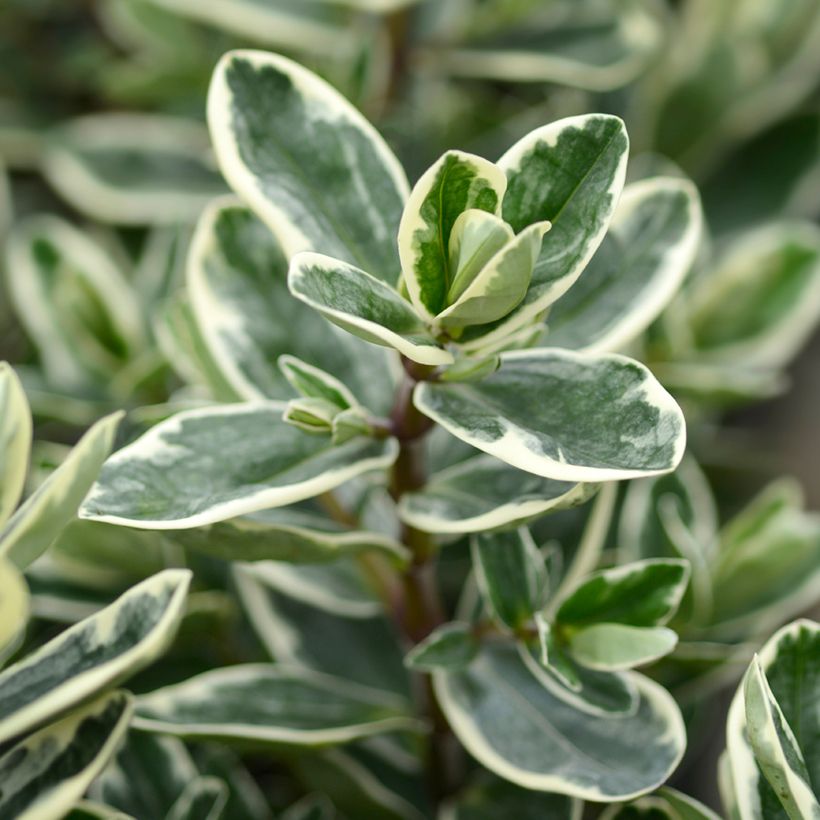
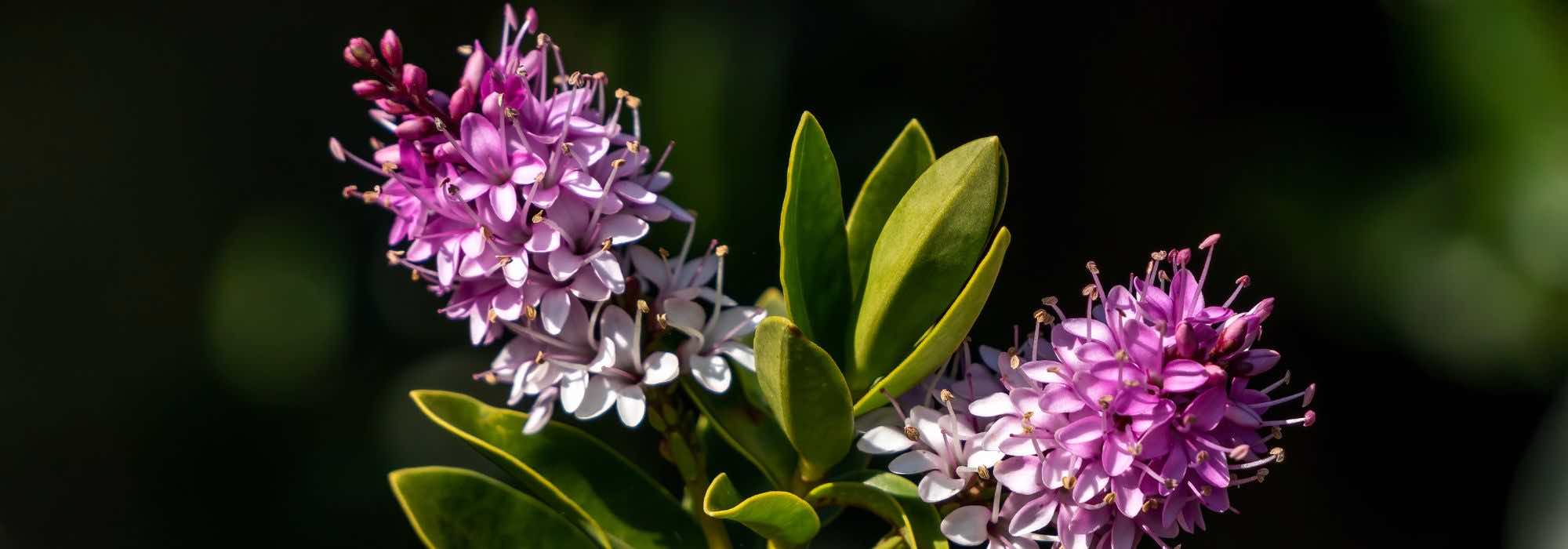
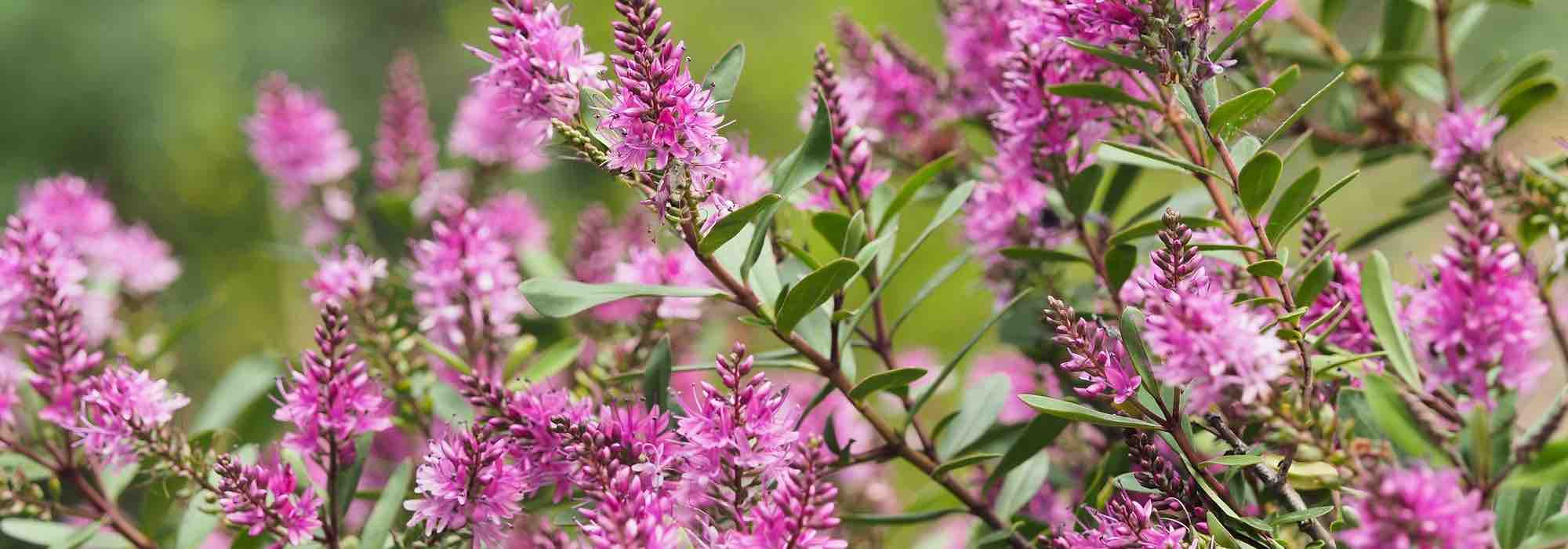
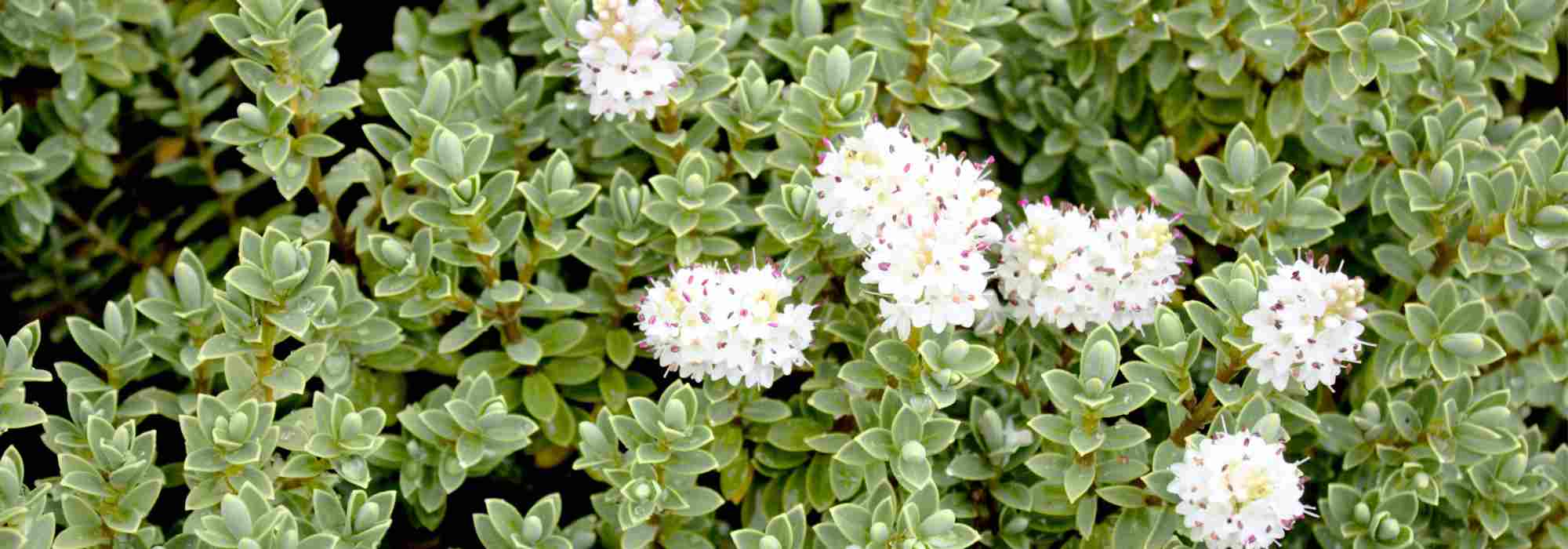
Hebe x andersonii 'Variegata' is a Variegated Shrubby Veronica, superb throughout the year, thanks to its variegated evergreen foliage and its long-lasting summer flowering. This small shrub forms a dense tuft with branches adorned with leathery, glossy leaves, variegated with olive green and creamy white. From July onwards, numerous spikes of small violet flowers develop at the tips of branches, enhancing the plant's ornamental appeal. Its low hardiness, around -7°C, restricts its planting in the ground to mild areas. Elsewhere, it can easily be kept in a pot to overwinter away from severe cold.
Formerly classified among the Scrophulariaceae, the Hebe genus now belongs to the Plantaginaceae alongside around a hundred others, such as Ribwort Plantain (or Plantago, a genus that gave its name to the family). Commonly known as Shrubby Veronica, Hebe species number in the tens and are mainly native to New Zealand and Australia, with a smaller presence in South America. While "true" Speedwells (from the genus Veronica) are herbaceous plants, Hebe is a shrublet with woody stems, thus quite different in appearance. The first introduction to Europe dates back to 1775, when George Forster brought back a Hebe elliptica from a famous Captain Cook expedition.
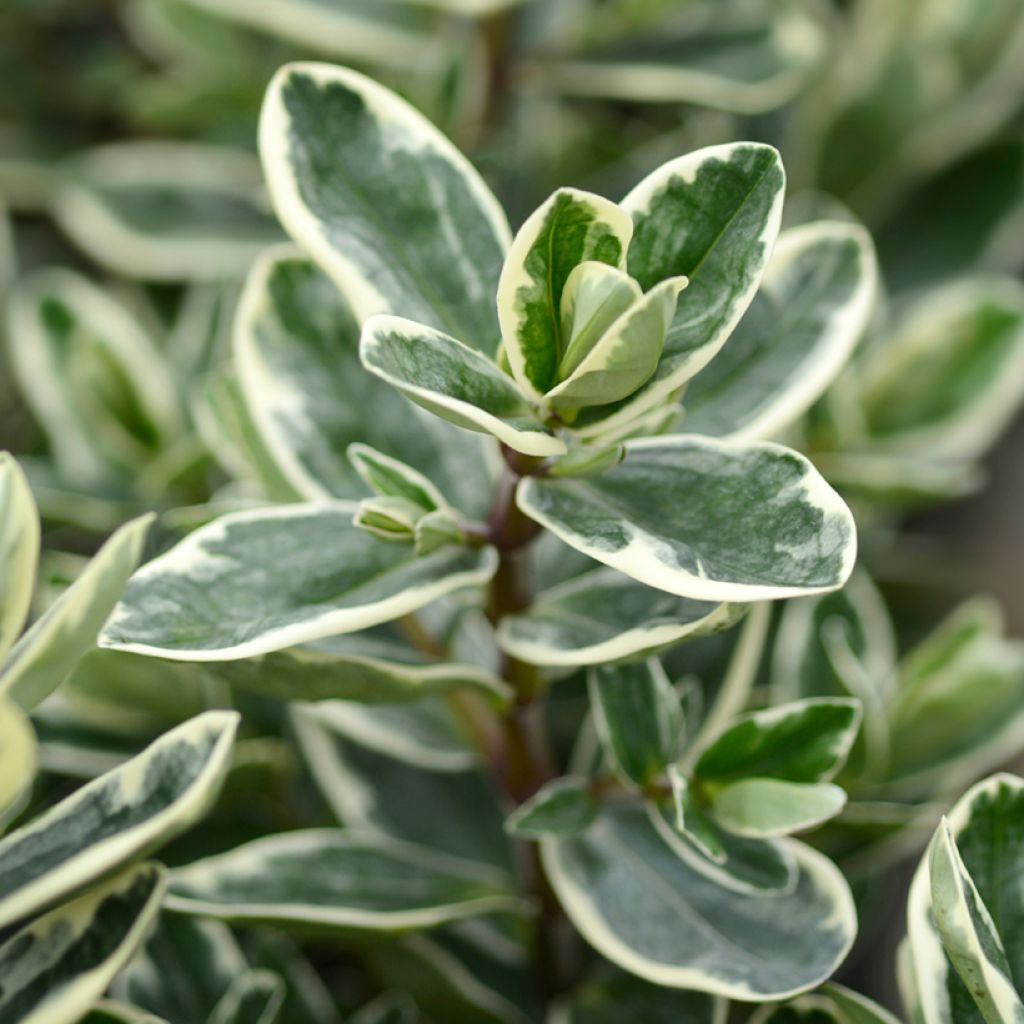
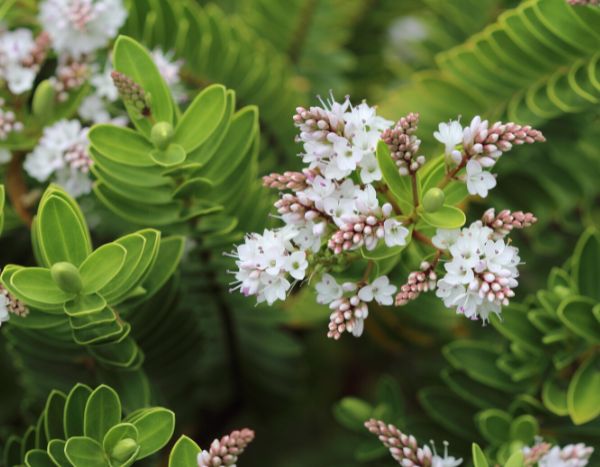
Hebe x andersonii is a hybrid obtained around 1830 in New Zealand by crossing an H. salicifolia, a 2 m tall shrub growing on the South Island up to 2800 m altitude, and also in Chile, with a New Zealand H. speciosa, from which numerous horticultural varieties originate. This hybrid was initially popular due to its attractive fleshy foliage and late flowering (August-September), but it is now surpassed by its cultivars with brighter flower colours, or like 'Variegata', offering the additional allure of even more decorative variegated foliage than the species. Hebe x andersonii 'Variegata' is a beautiful compact shrub that reaches 1.50 m in height and 1.20 m in width after ten years of growth, eventually reaching around 2 m in height when thriving in its environment. It is very easy to recognise due to its characteristic foliage, arranged in a very architectural manner on the branches. The leaves are opposite and decussate, facing each other on either side of the branch, with each pair rotated 90° from the previous one. The leaves are therefore aligned in crosses when viewed from the front. Measuring around 4 cm in length and 2.5 cm in width, the leaves have an obovate shape, with the widest part in the upper third. They are abundant and give the plant a dense appearance and a very attractive silhouette. Beyond their particular geometry, the eye is drawn to their colouration, a beautiful olive green to grey-green in the middle of the leaf, bordered by a wide creamy white margin. Evergreen, two-toned, and slightly shiny, the foliage is truly ornamental throughout the year. Between July and October, the shrub produces a beautiful flowering display in the form of axillary spikes around 8 cm long, composed of numerous small violet flowers. These inflorescences bloom for several weeks, further enhancing the plant's attractiveness.
Not very hardy and often used as an annual in container plantings in cold regions, this Shrubby Veronica deserves a place in gardens with mild climates, as its ornamental qualities are evident. It is compact, tolerates pruning well if needed and will easily find a place in the garden. You can create a colourful scene by planting it at the base of a Crape Myrtle, which blooms profusely in summer. Choose a cultivar with dark purple foliage for a fireworks display of colours! Buddleia davidii 'Argus White', a dwarf and non-invasive variety, will balance your planting with the serenity of its long pure white spikes in summer. A Ceanothus impressus 'Victoria', a beautiful shrub with small dark green persistent leaves covered in a multitude of blue-mauve flowers in spring, with a lovely summer rebloom, will also be a perfect companion in the border.
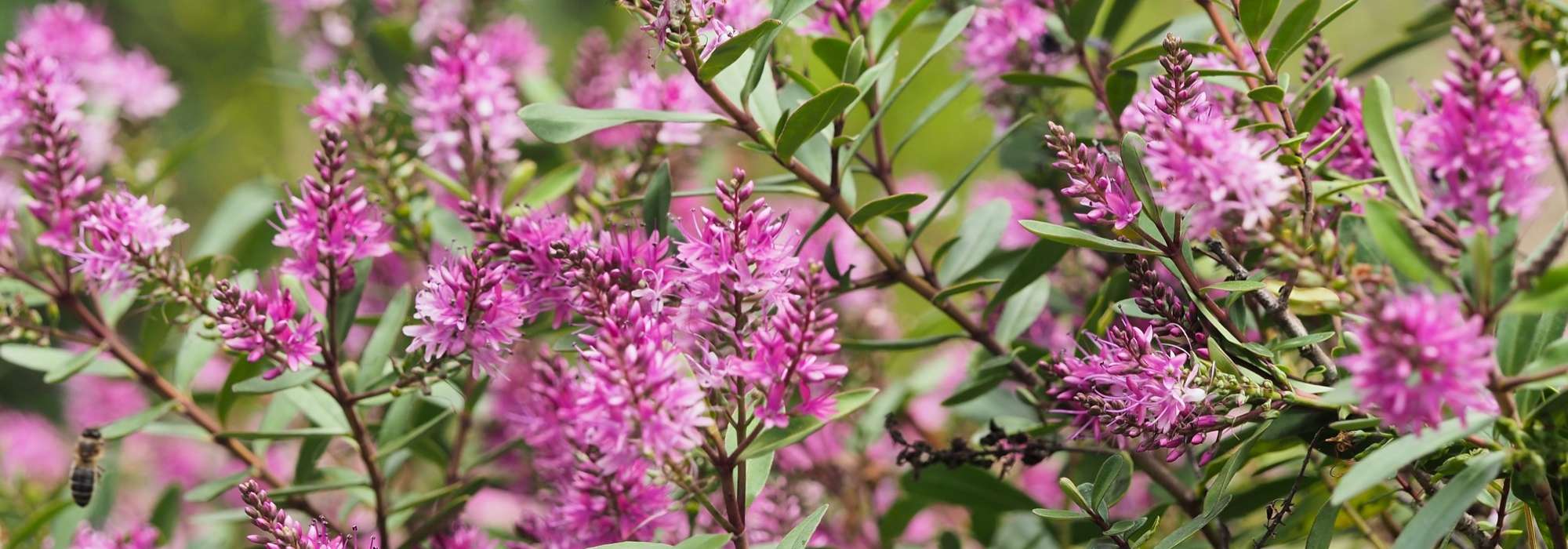
Hebe andersonii Variegata - Andersons hebe, shrubby veronica in pictures

Plant habit
Flowering
Foliage
Botanical data
Hebe
andersonii
Variegata
Plantaginaceae
Andersons hebe, shrubby veronica
Veronica x andersonii Andersonii Variegata, Hebe x andersonii Variegata
Cultivar or hybrid
Planting and care
Hebe x andersonii 'Variegata' is a bush for a mild climate, which can thrive in the ground in not too dry conditions. The plant can withstand brief frosts not exceeding -6/-7°C, in good conditions, sheltered from the wind and in well-drained soil in winter. It enjoys the sun and can grow in partial shade in the south. Hebe likes soils rich in humus, moist but well-drained, and tolerates limestone. Water it regularly in dry periods to maintain sufficient root moisture.
In regions with cold winters, grow it in a large pot that you can overwinter in a bright porch or cool room (e.g. garage with windows). As it grows, light pruning with hedge shears can be useful to maintain a dense and compact habit, balanced in line with the container's dimensions.
Planting period
Intended location
Care
Planting & care advice


This item has not been reviewed yet - be the first to leave a review about it.
Recently viewed products
Haven't found what you were looking for?
Hardiness is the lowest winter temperature a plant can endure without suffering serious damage or even dying. However, hardiness is affected by location (a sheltered area, such as a patio), protection (winter cover) and soil type (hardiness is improved by well-drained soil).

The flowering period indicated on our website applies to countries and regions located in USDA zone 8 (France, the United Kingdom, Ireland, the Netherlands, etc.)
It will vary according to where you live:- In zones 9 to 10 (Italy, Spain, Greece, etc.), flowering will occur about 2 to 4 weeks earlier.
- In zones 6 to 7 (Germany, Poland, Slovenia, and lower mountainous regions), flowering will be delayed by 2 to 3 weeks.
- In zone 5 (Central Europe, Scandinavia), blooming will be delayed by 3 to 5 weeks.
In temperate climates, pruning of spring-flowering shrubs (forsythia, spireas, etc.) should be done just after flowering.
Pruning of summer-flowering shrubs (Indian Lilac, Perovskia, etc.) can be done in winter or spring.
In cold regions as well as with frost-sensitive plants, avoid pruning too early when severe frosts may still occur.
The planting period indicated on our website applies to countries and regions located in USDA zone 8 (France, United Kingdom, Ireland, Netherlands).
It will vary according to where you live:
- In Mediterranean zones (Marseille, Madrid, Milan, etc.), autumn and winter are the best planting periods.
- In continental zones (Strasbourg, Munich, Vienna, etc.), delay planting by 2 to 3 weeks in spring and bring it forward by 2 to 4 weeks in autumn.
- In mountainous regions (the Alps, Pyrenees, Carpathians, etc.), it is best to plant in late spring (May-June) or late summer (August-September).
The harvesting period indicated on our website applies to countries and regions in USDA zone 8 (France, England, Ireland, the Netherlands).
In colder areas (Scandinavia, Poland, Austria...) fruit and vegetable harvests are likely to be delayed by 3-4 weeks.
In warmer areas (Italy, Spain, Greece, etc.), harvesting will probably take place earlier, depending on weather conditions.
The sowing periods indicated on our website apply to countries and regions within USDA Zone 8 (France, UK, Ireland, Netherlands).
In colder areas (Scandinavia, Poland, Austria...), delay any outdoor sowing by 3-4 weeks, or sow under glass.
In warmer climes (Italy, Spain, Greece, etc.), bring outdoor sowing forward by a few weeks.
Shipping country and language
Your country of residence may be:
Your country of residence is:
For a better user experience on our website, you can select:
Your shipping country:
-
 Austria
-
 Belgium
-
 Bosnia & Herzegovina
-
 Bulgaria
-
 Croatia
-
 Cyprus
-
 Czechia
-
 Denmark
-
 Estonia
-
 Finland
-
 France
-
 Germany
-
 Greece
-
 Hungary
-
 Iceland
-
 Ireland
-
 Italy
Italy
-
 Latvia
-
 Liechtenstein
-
 Lithuania
-
 Luxembourg
-
 Malta
Malta
-
 Netherlands
-
 Poland
-
 Portugal
-
 Romania
-
 Serbia
-
 Slovakia
-
 Slovenia
-
 Spain
Spain
-
 Sweden
-
 Switzerland
Language:
-
French
-
 English
-
Spanish
-
Italian
-
German
-
Portuguese
-
Dutch
-
Finnish
My Account
Hello
My wish lists
My cart
Log in / Register
Existing customer?
This form is protected by reCAPTCHA - the Google Privacy Policy and Terms of Service apply.
New customer?
Create an account to track your orders, access our customer service and, if you wish, make the most of our upcoming offers.