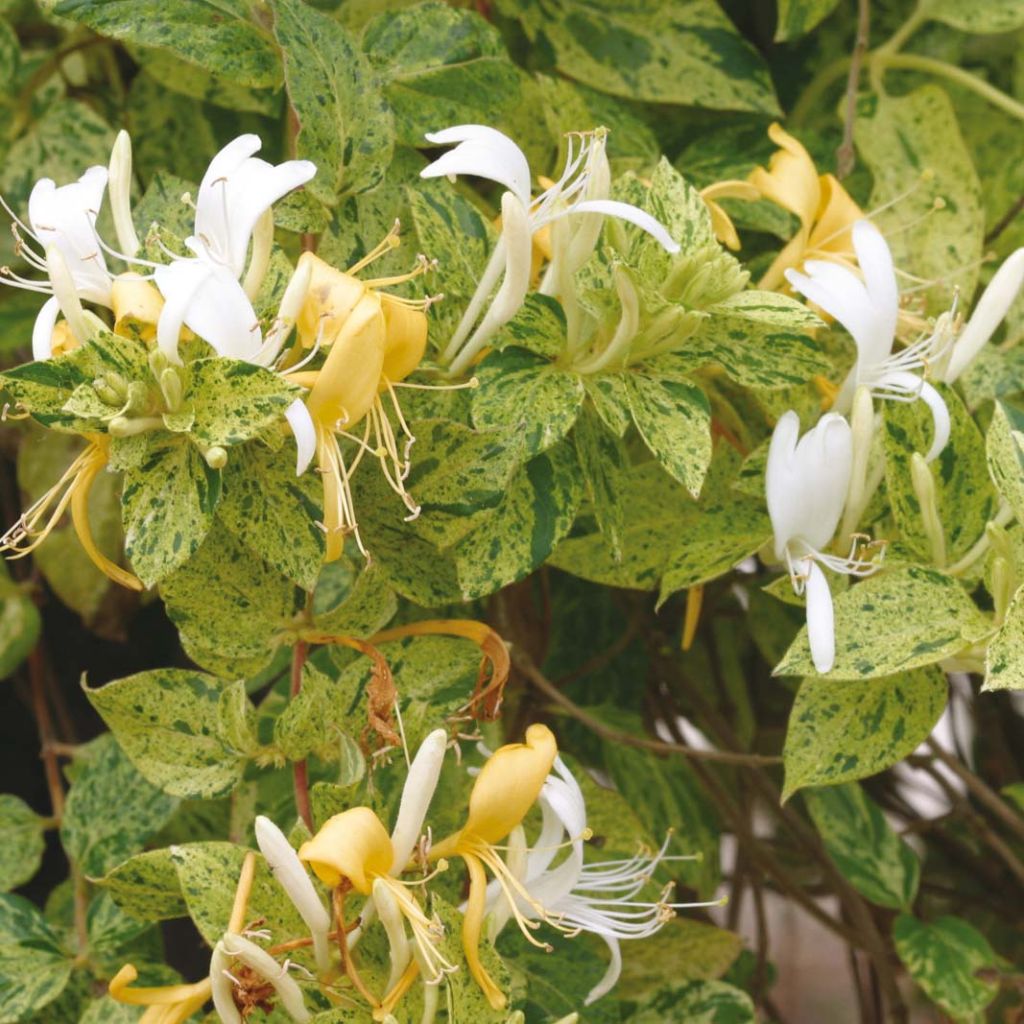
Lonicera japonica Mint Crisp
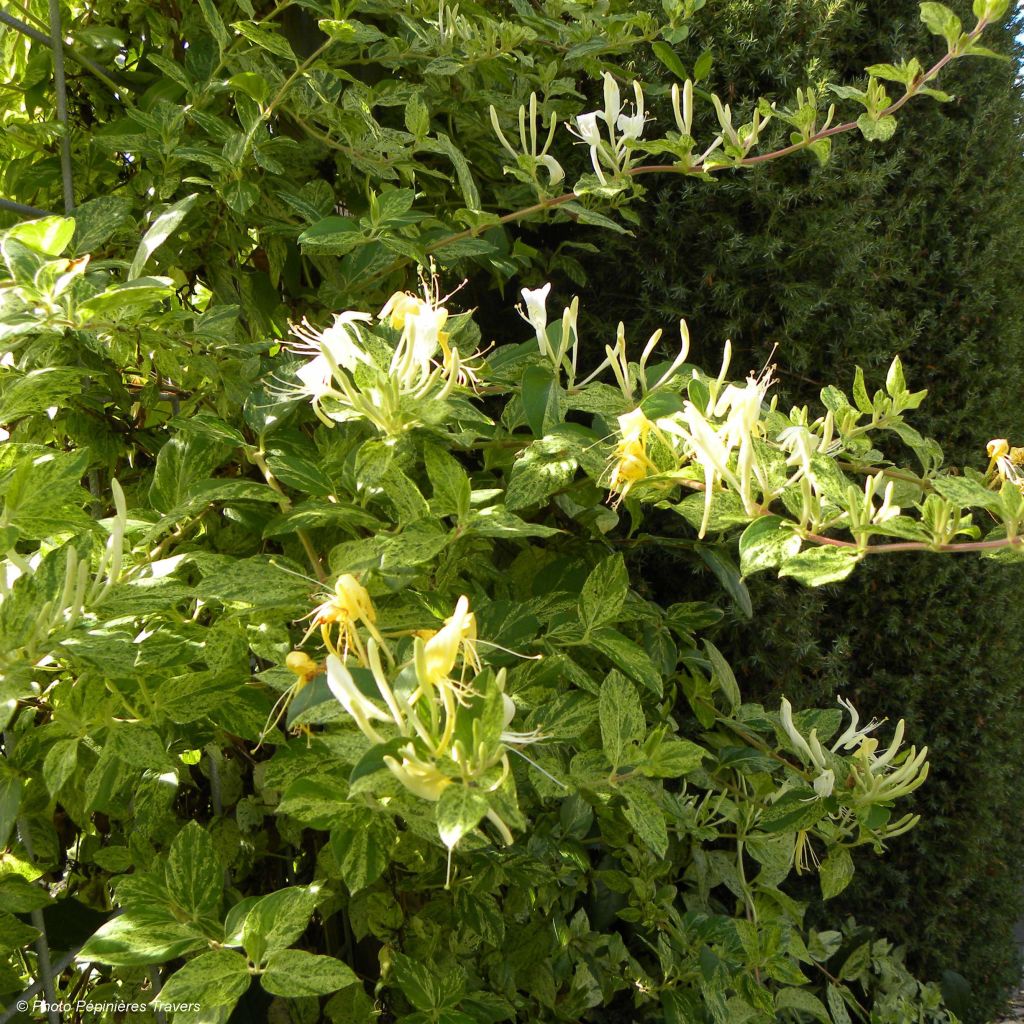
Lonicera japonica Mint Crisp
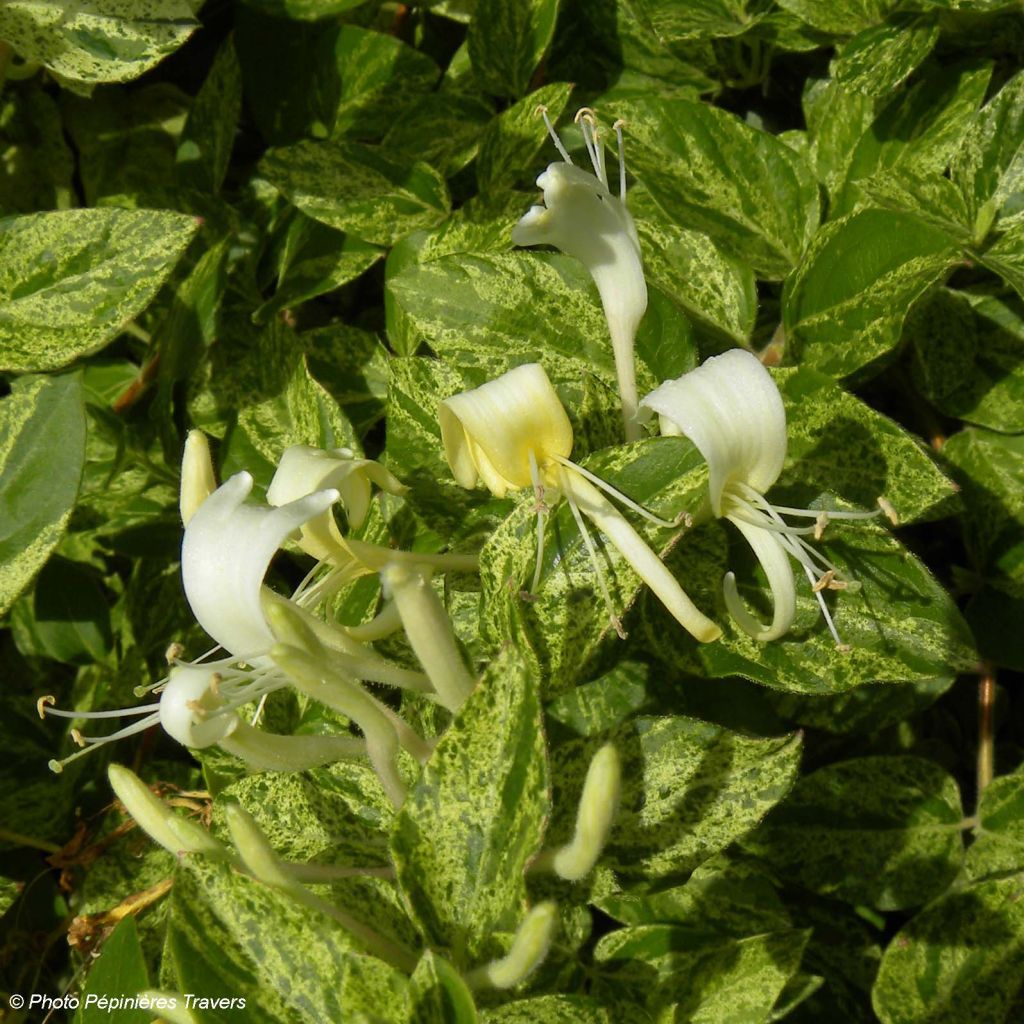
Lonicera japonica Mint Crisp
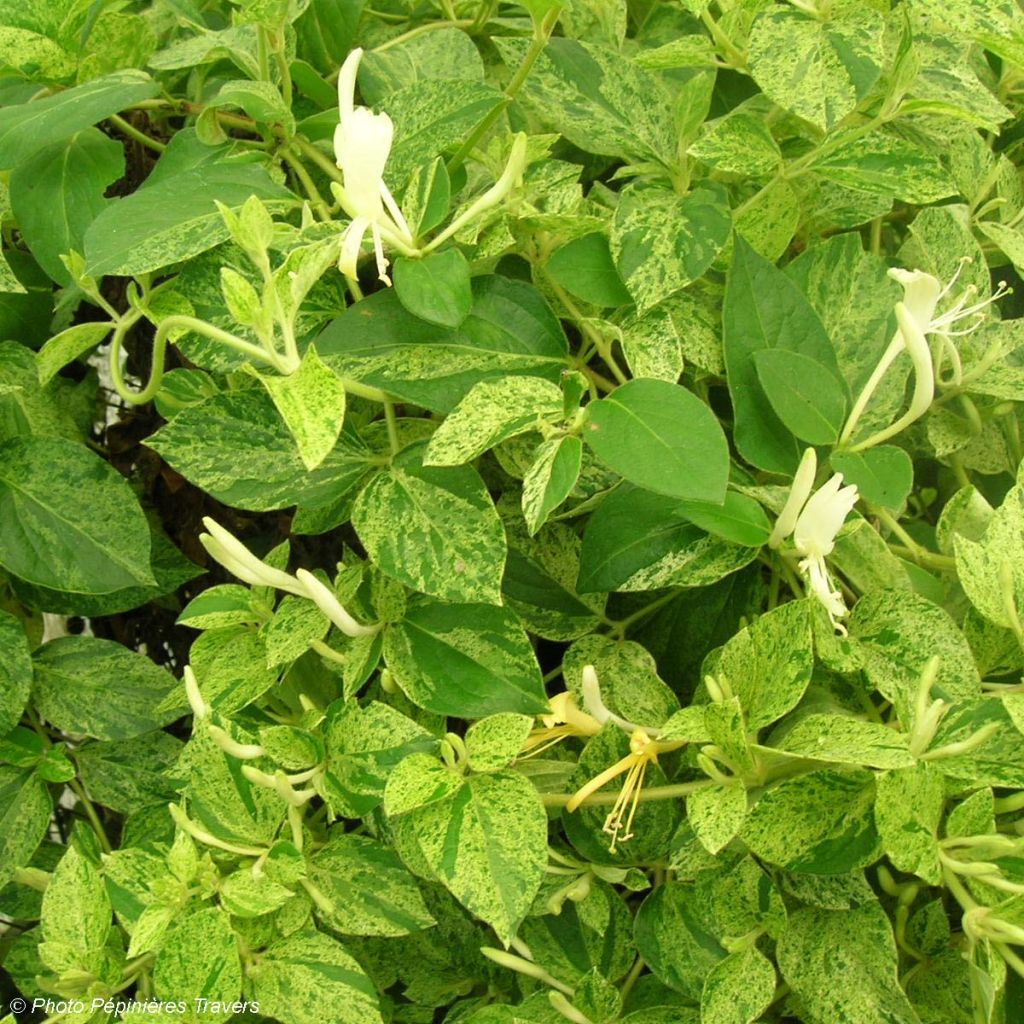
Lonicera japonica Mint Crisp
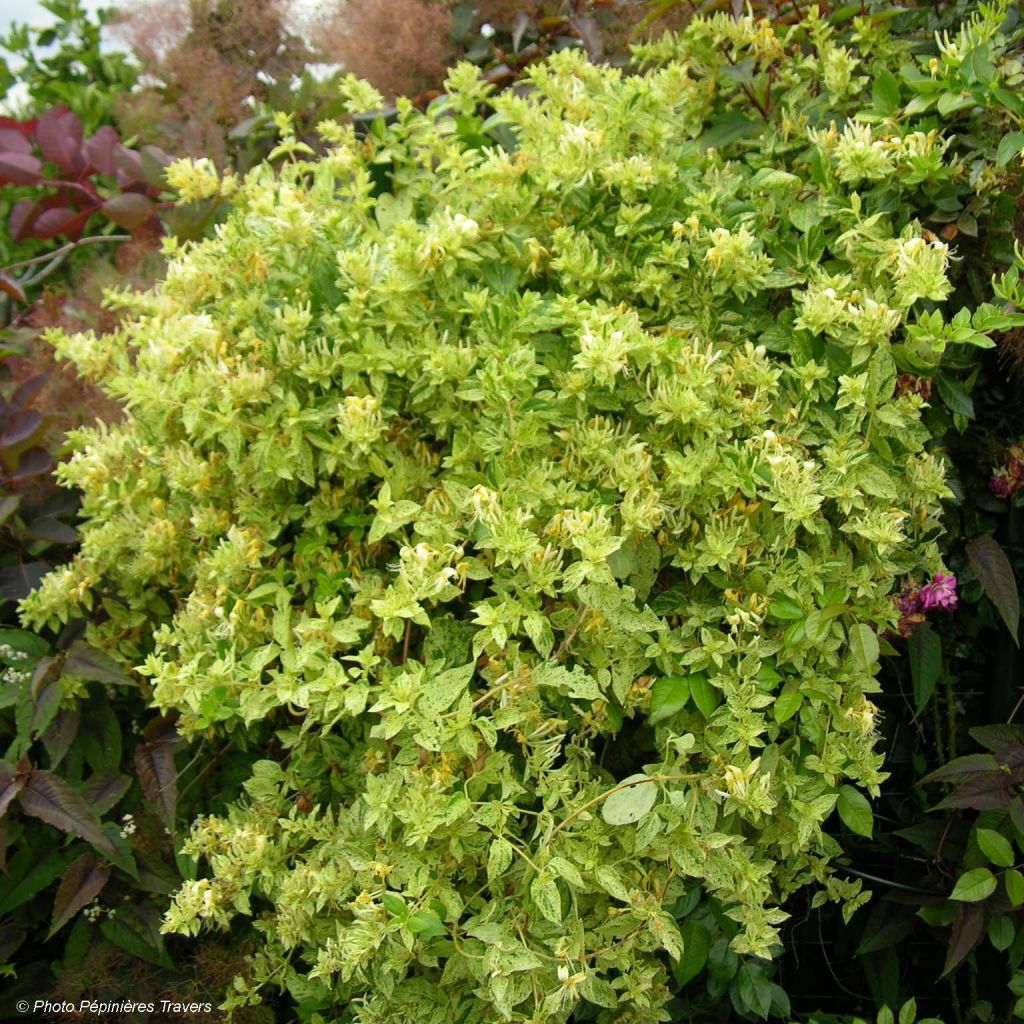
Lonicera japonica Mint Crisp
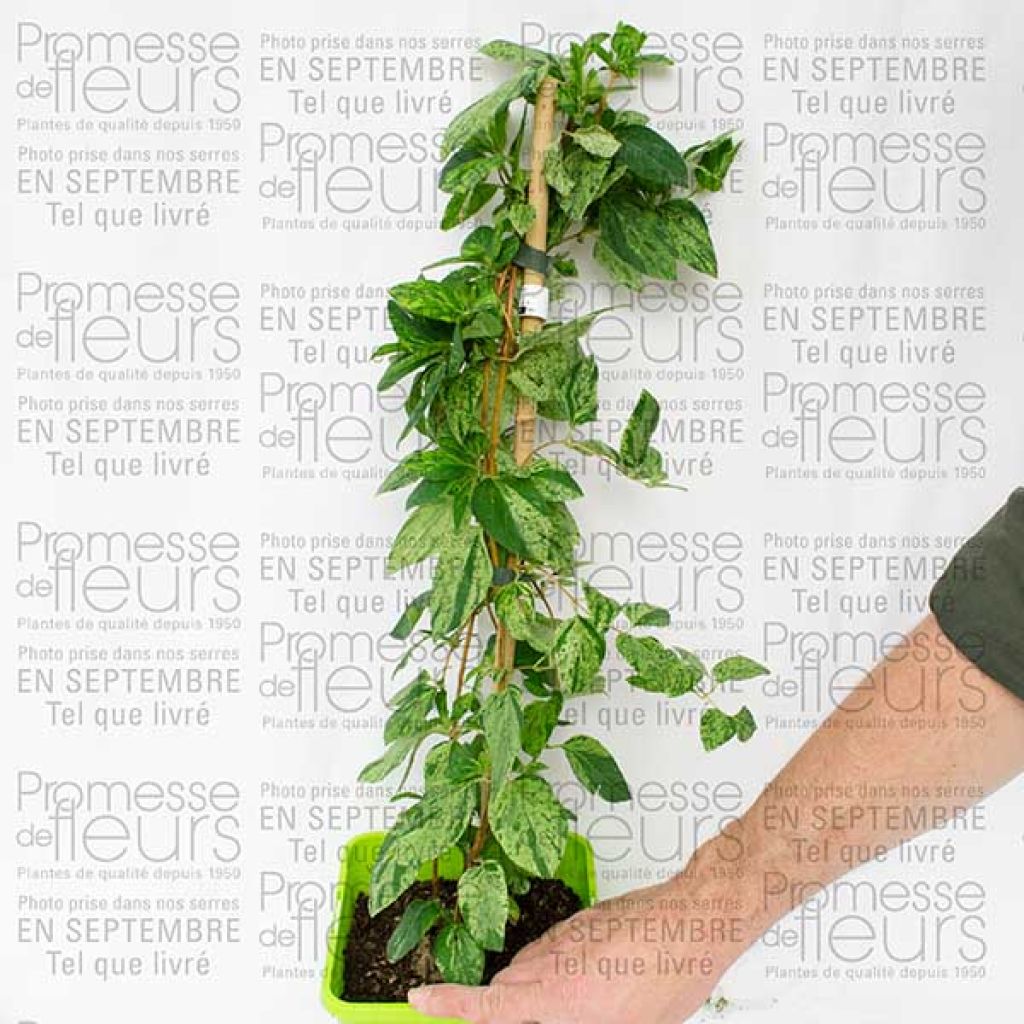
Lonicera japonica Mint Crisp
Lonicera japonica Mint Crisp
Lonicera japonica Mint Crisp
Japanese honeysuckle, golden-and-silver honeysuckle
Beautiful young plant, nothing to complain about. I followed the planting advice: planted in partial shade/shade.
SHINRA TENSEI, 04/10/2025
Back-to-school special offer!
Get €10 off for every €50 you spend! And get up to €40 off on a single order.
How does it work?
1. Shop your favourites
Add your favourite plants to your basket. For every €50 you spend (excluding delivery charges, store credit and the plastic-free option), you’ll receive a €10 voucher.
€50 spent = €10 voucher
€100 spent = €20 voucher
€150 spent = €30 voucher
€200 spent = €40 voucher
2. Place your order
Once your basket reaches one of the spending thresholds, place your order. You can even choose your delivery date!
3. Receive your voucher
As soon as your order has been shipped, you’ll receive an email containing your personal voucher code and its value.
4. Use it on your next order
Your voucher is valid for 90 days from the date you receive it. It can be used once only, on a new order worth at least the value of the voucher, excluding delivery charges.
Please note: Vouchers can be combined with other offers, but cannot be split or refunded.
Why not try an alternative variety in stock?
View all →
Available in 2 sizes
Available in 2 sizes
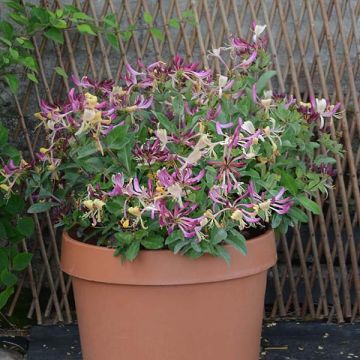
Available in 2 sizes
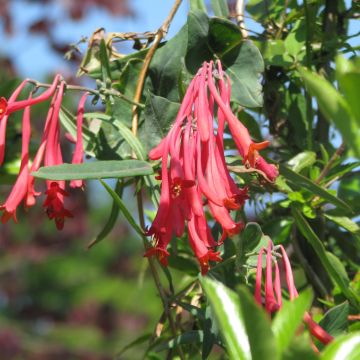
Available in 1 sizes
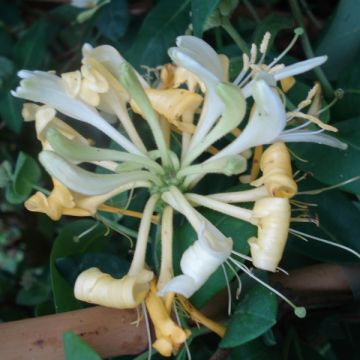
Available in 1 sizes
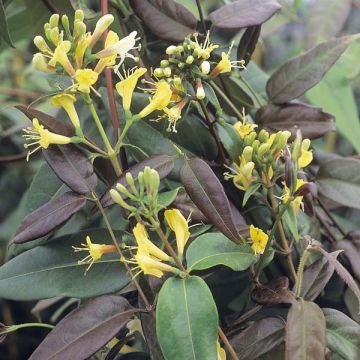
Available in 1 sizes
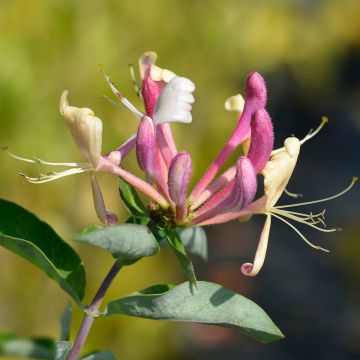
Available in 1 sizes
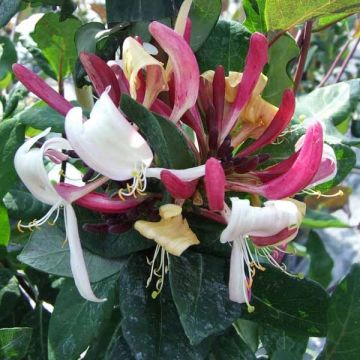
Available in 1 sizes
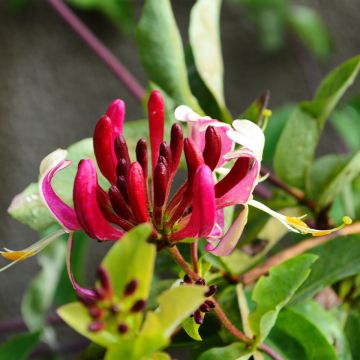
Available in 1 sizes
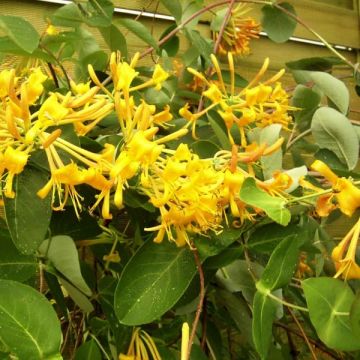
Available in 1 sizes
This plant carries a 12 months recovery warranty
More information
We guarantee the quality of our plants for a full growing cycle, and will replace at our expense any plant that fails to recover under normal climatic and planting conditions.

Would this plant suit my garden?
Set up your Plantfit profile →
Description
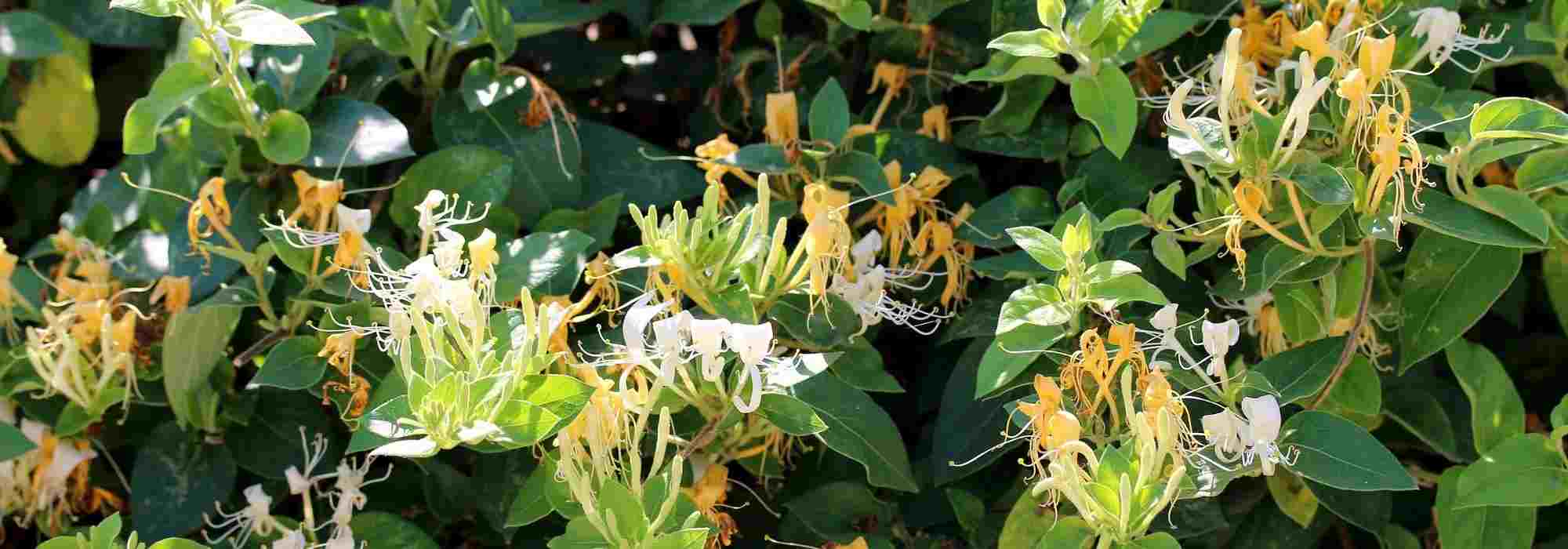
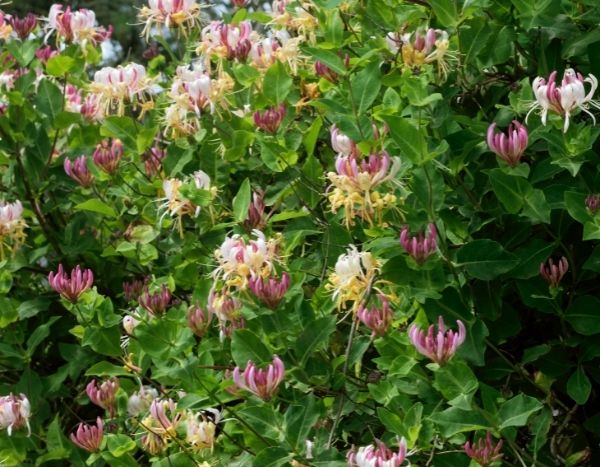
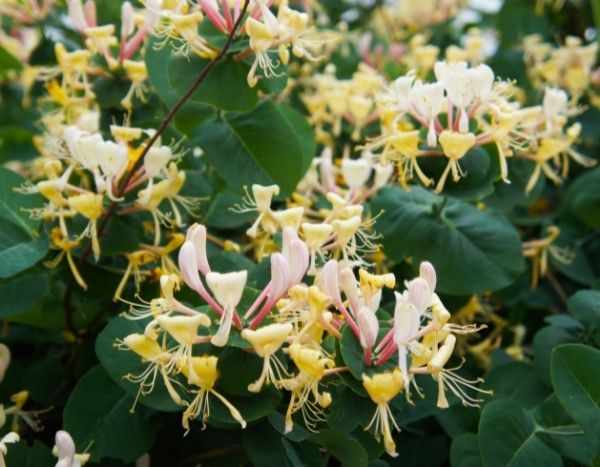
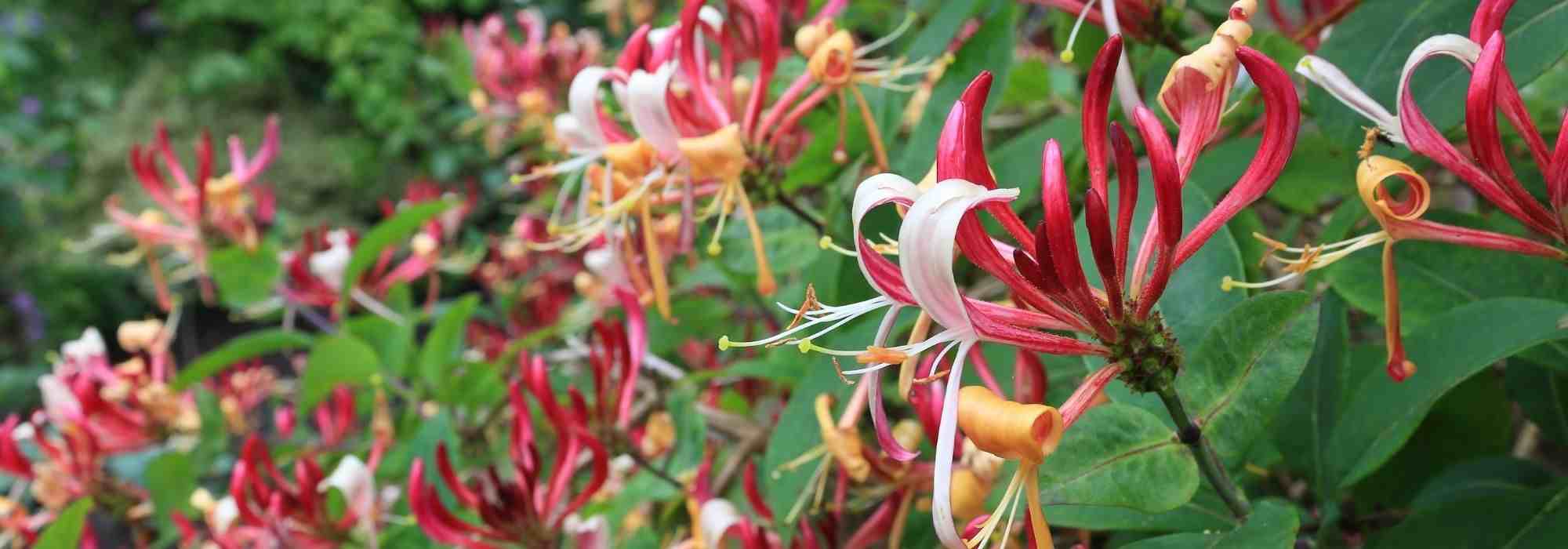
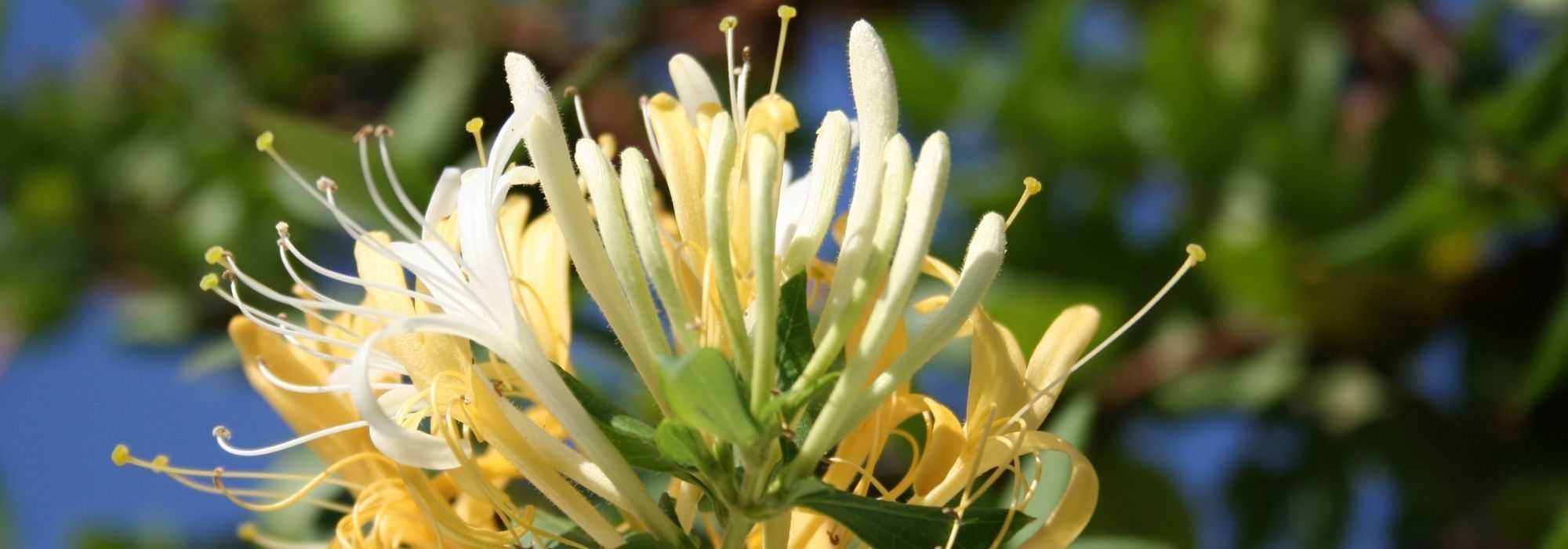
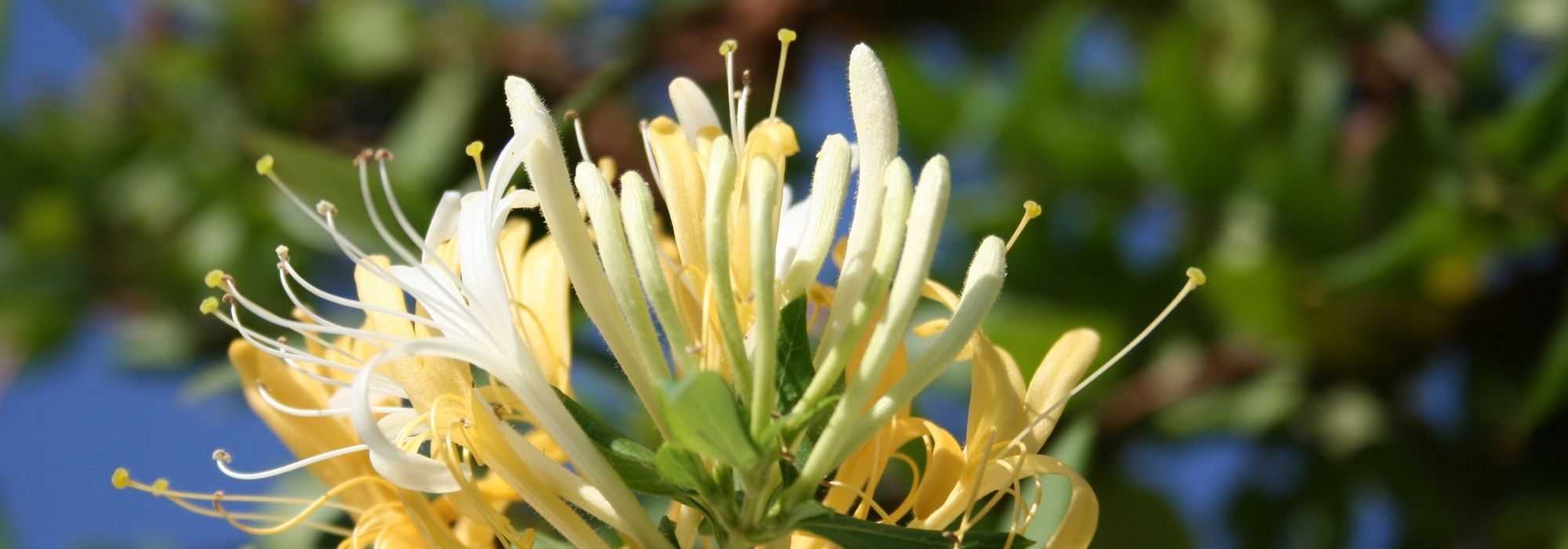
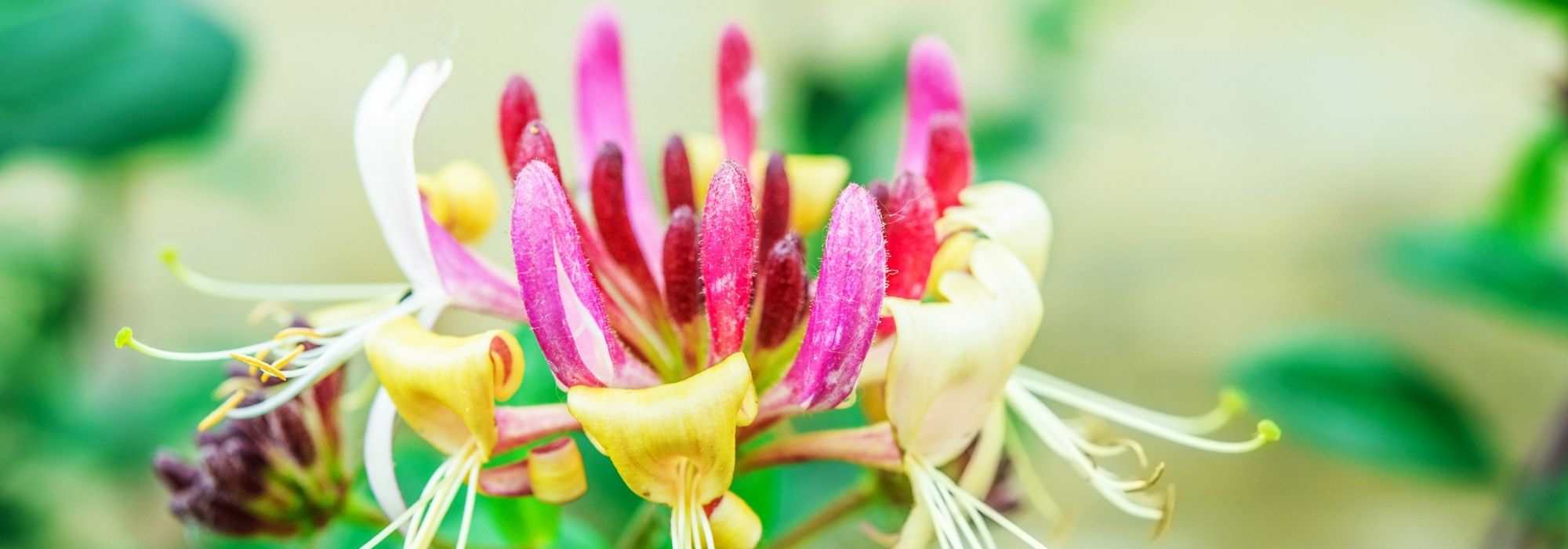
Lonicera Japonica Mint Crisp or Honeysuckle is a rare decorative climbing plant that has the main advantage of emitting a pleasant fragrance. From June to September, this honeysuckle has pretty yellow flowers arranged in pairs at the base of the leaves. The decorative flowers are highly fragrant and measure up to 4 cm (2in) long.
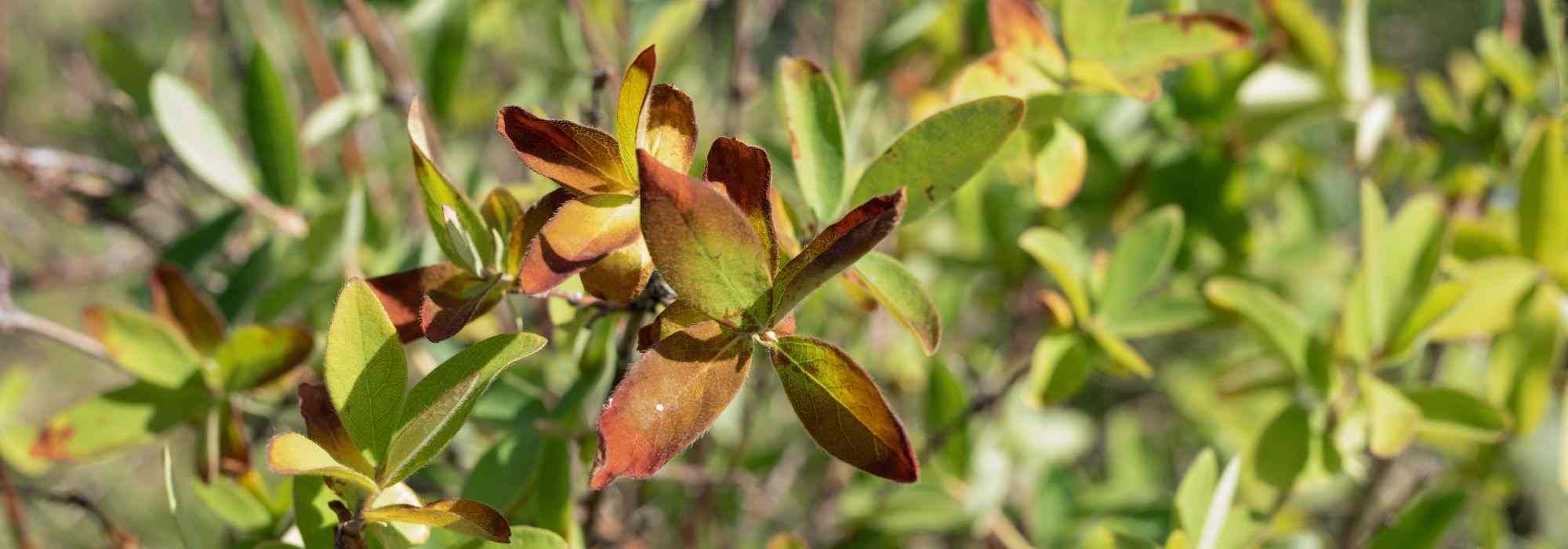
They are then replaced by decorative translucent red berries. These berries are toxic. The foliage is variegated with green and yellow. It is a semi-evergreen foliage composed of leaves that are 8 cm (3in) long and fragrant. Lonicera Mint Crisp can reach a height of 3 m (10ft) at maturity.
Originally from Europe and Asia, this honeysuckle is very hardy. It can be grown on any support as it clings by itself, whether to cover a wall or as groundcover. It can also be grown in flower beds and even in containers for balconies and patios, allowing it to cascade over the edge.
Our advice: Plant it near your patio to fully enjoy its intoxicating fragrance, which is more pronounced in the morning and evening.
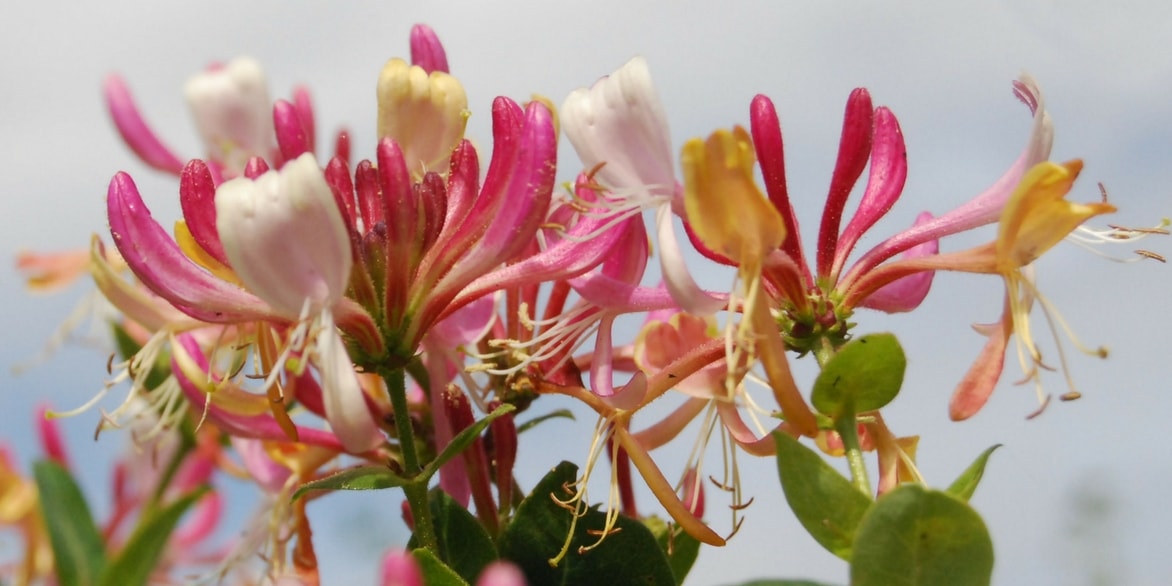
Lonicera japonica Mint Crisp in pictures
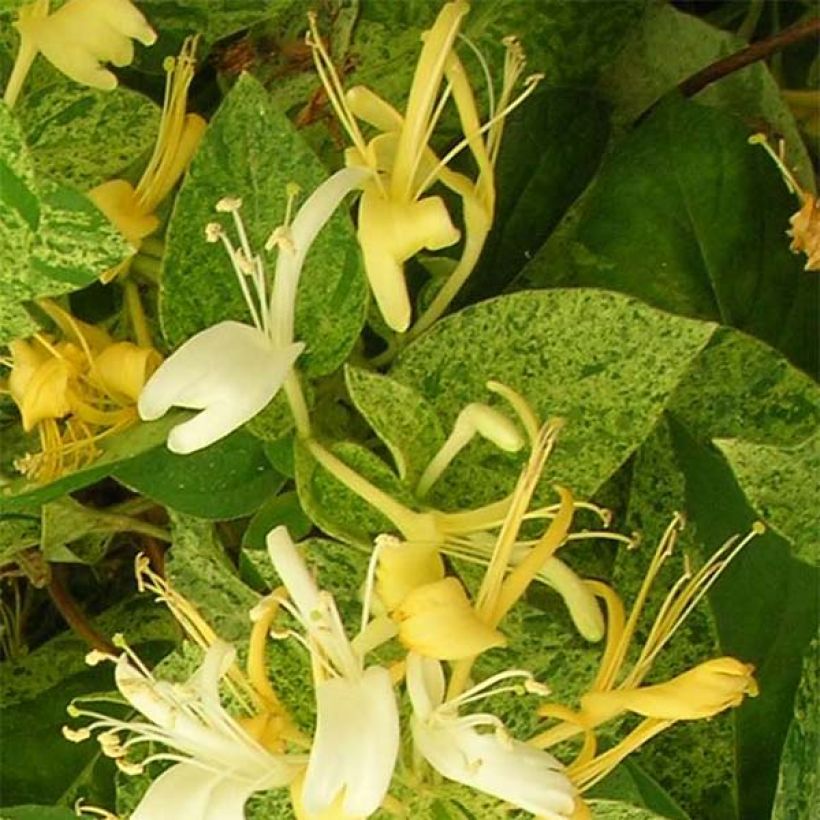
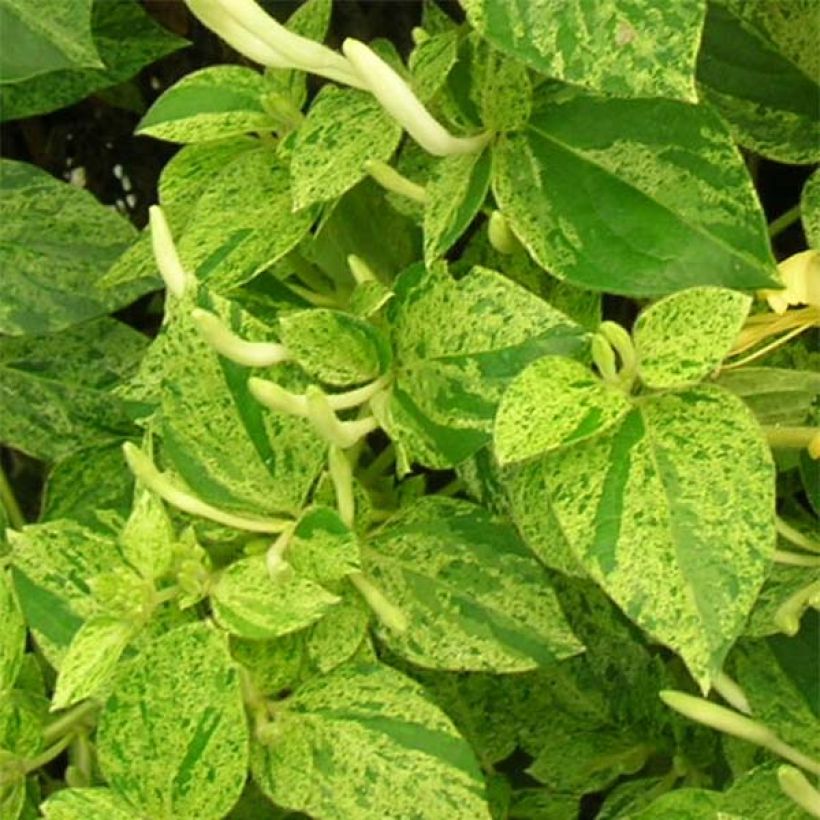
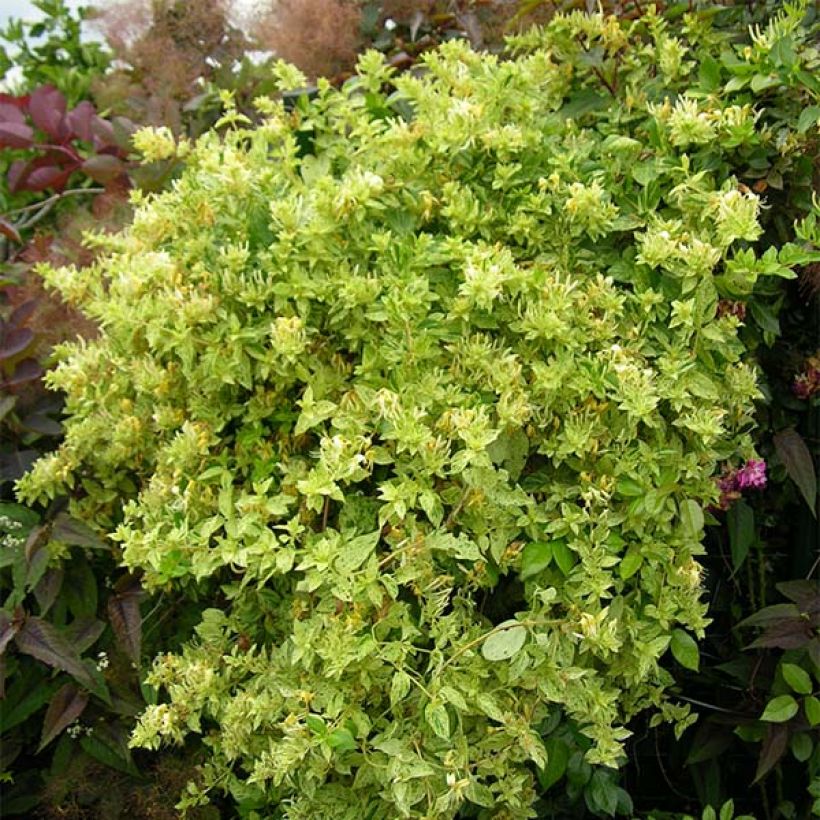
Plant habit
Flowering
Foliage
Botanical data
Lonicera
japonica
Mint Crisp
Caprifoliaceae
Japanese honeysuckle, golden-and-silver honeysuckle
Cultivar or hybrid
Planting and care
Lonicera Mint Crisp thrives in both sun and partial shade. It is a climbing plant that likes to have its roots in the shade and its head in the sun. It is undemanding when it comes to soil type and prefers a damp and well-drained soil. Be careful of excessive watering, as it can cause the leaves to turn yellow. When planting in a pot, mix ericaceous soil, compost, and garden soil. During the growing season, you can prune branches that compromise its symmetry. It is also possible to heavily prune an older plant to completely renew its structure. This restoration process can be done over one or two years.
Planting period
Intended location
Care
Planting & care advice
-
, onOrder confirmed
Reply from on Promesse de fleurs
Recently viewed products
Haven't found what you were looking for?
Hardiness is the lowest winter temperature a plant can endure without suffering serious damage or even dying. However, hardiness is affected by location (a sheltered area, such as a patio), protection (winter cover) and soil type (hardiness is improved by well-drained soil).

The flowering period indicated on our website applies to countries and regions located in USDA zone 8 (France, the United Kingdom, Ireland, the Netherlands, etc.)
It will vary according to where you live:- In zones 9 to 10 (Italy, Spain, Greece, etc.), flowering will occur about 2 to 4 weeks earlier.
- In zones 6 to 7 (Germany, Poland, Slovenia, and lower mountainous regions), flowering will be delayed by 2 to 3 weeks.
- In zone 5 (Central Europe, Scandinavia), blooming will be delayed by 3 to 5 weeks.
In temperate climates, pruning of spring-flowering shrubs (forsythia, spireas, etc.) should be done just after flowering.
Pruning of summer-flowering shrubs (Indian Lilac, Perovskia, etc.) can be done in winter or spring.
In cold regions as well as with frost-sensitive plants, avoid pruning too early when severe frosts may still occur.
The planting period indicated on our website applies to countries and regions located in USDA zone 8 (France, United Kingdom, Ireland, Netherlands).
It will vary according to where you live:
- In Mediterranean zones (Marseille, Madrid, Milan, etc.), autumn and winter are the best planting periods.
- In continental zones (Strasbourg, Munich, Vienna, etc.), delay planting by 2 to 3 weeks in spring and bring it forward by 2 to 4 weeks in autumn.
- In mountainous regions (the Alps, Pyrenees, Carpathians, etc.), it is best to plant in late spring (May-June) or late summer (August-September).
The harvesting period indicated on our website applies to countries and regions in USDA zone 8 (France, England, Ireland, the Netherlands).
In colder areas (Scandinavia, Poland, Austria...) fruit and vegetable harvests are likely to be delayed by 3-4 weeks.
In warmer areas (Italy, Spain, Greece, etc.), harvesting will probably take place earlier, depending on weather conditions.
The sowing periods indicated on our website apply to countries and regions within USDA Zone 8 (France, UK, Ireland, Netherlands).
In colder areas (Scandinavia, Poland, Austria...), delay any outdoor sowing by 3-4 weeks, or sow under glass.
In warmer climes (Italy, Spain, Greece, etc.), bring outdoor sowing forward by a few weeks.
Shipping country and language
Your country of residence may be:
Your country of residence is:
For a better user experience on our website, you can select:
Your shipping country:
-
 Austria
-
 Belgium
-
 Bosnia & Herzegovina
-
 Bulgaria
-
 Croatia
-
 Cyprus
-
 Czechia
-
 Denmark
-
 Estonia
-
 Finland
-
 France
-
 Germany
-
 Greece
-
 Hungary
-
 Iceland
-
 Ireland
-
 Italy
Italy
-
 Latvia
-
 Liechtenstein
-
 Lithuania
-
 Luxembourg
-
 Malta
Malta
-
 Netherlands
-
 Poland
-
 Portugal
-
 Romania
-
 Serbia
-
 Slovakia
-
 Slovenia
-
 Spain
Spain
-
 Sweden
-
 Switzerland
Language:
-
French
-
 English
-
Spanish
-
Italian
-
German
-
Portuguese
-
Dutch
-
Finnish
My Account
Hello
My wish lists
My cart
Log in / Register
Existing customer?
This form is protected by reCAPTCHA - the Google Privacy Policy and Terms of Service apply.
New customer?
Create an account to track your orders, access our customer service and, if you wish, make the most of our upcoming offers.