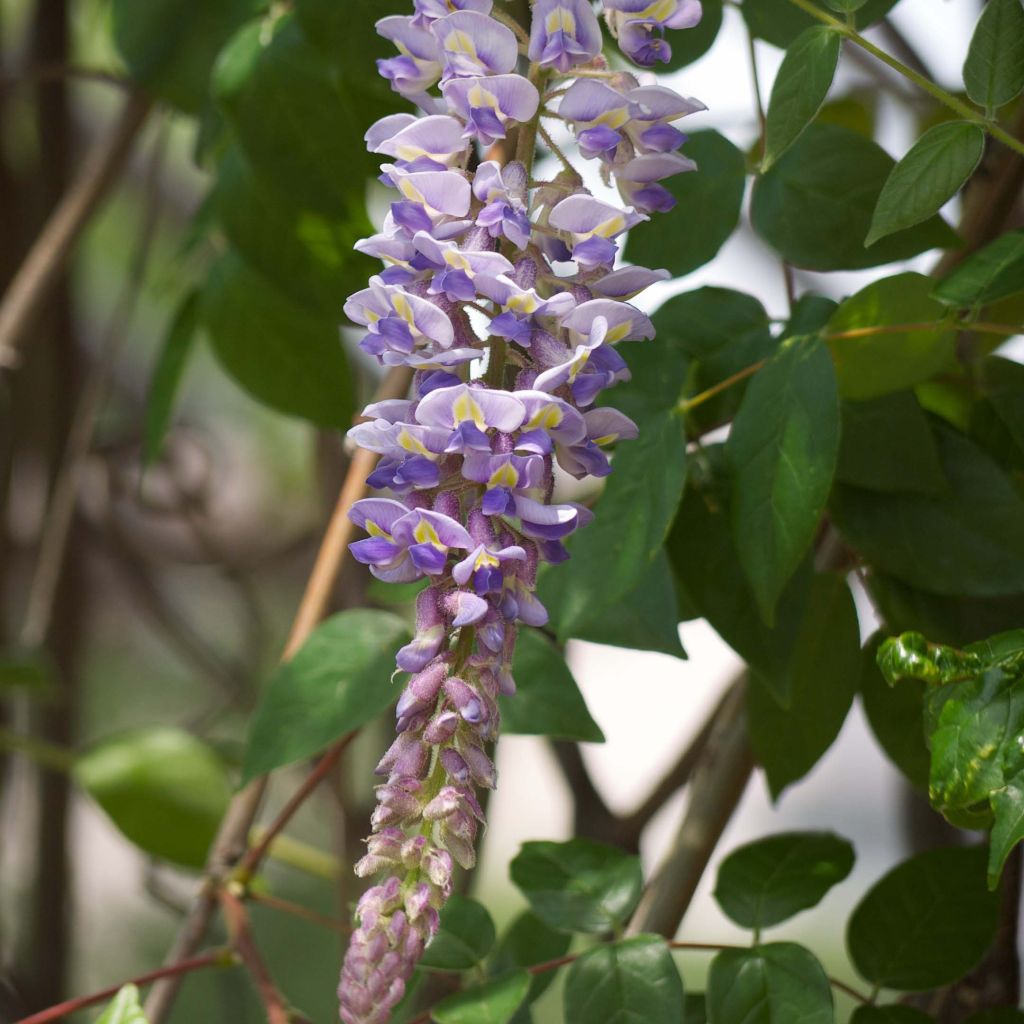
Wisteria macrostachya
Wisteria macrostachya
Wisteria macrostachya
Kentucky Wisteria, Blue Moon Wisteria
Back-to-school special offer!
Get €10 off for every €50 you spend! And get up to €40 off on a single order.
How does it work?
1. Shop your favourites
Add your favourite plants to your basket. For every €50 you spend (excluding delivery charges, store credit and the plastic-free option), you’ll receive a €10 voucher.
€50 spent = €10 voucher
€100 spent = €20 voucher
€150 spent = €30 voucher
€200 spent = €40 voucher
2. Place your order
Once your basket reaches one of the spending thresholds, place your order. You can even choose your delivery date!
3. Receive your voucher
As soon as your order has been shipped, you’ll receive an email containing your personal voucher code and its value.
4. Use it on your next order
Your voucher is valid for 90 days from the date you receive it. It can be used once only, on a new order worth at least the value of the voucher, excluding delivery charges.
Please note: Vouchers can be combined with other offers, but cannot be split or refunded.
Why not try an alternative variety in stock?
View all →
Available in 0 sizes
Available in 2 sizes
Available in 0 sizes

Available in 0 sizes
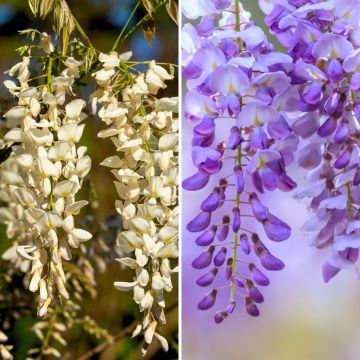
Available in 0 sizes
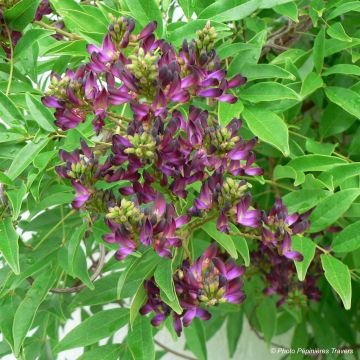
Available in 1 sizes

Available in 0 sizes
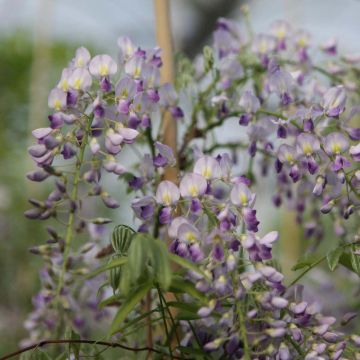
Available in 1 sizes
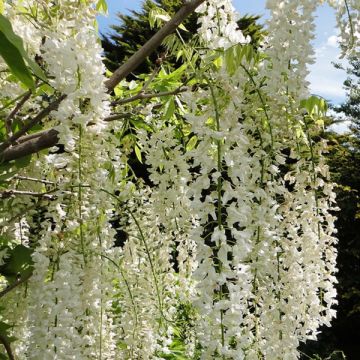
Available in 3 sizes

Available in 2 sizes
This plant carries a 12 months recovery warranty
More information
We guarantee the quality of our plants for a full growing cycle, and will replace at our expense any plant that fails to recover under normal climatic and planting conditions.
Would this plant suit my garden?
Set up your Plantfit profile →
Description
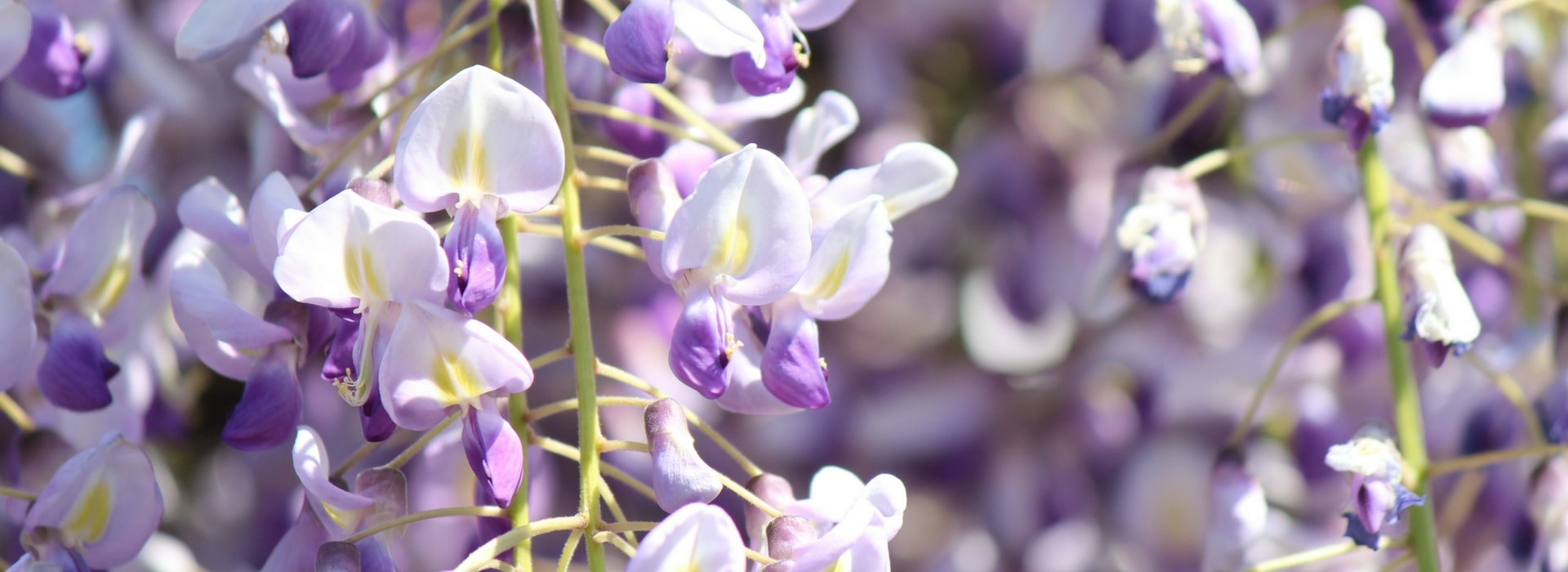
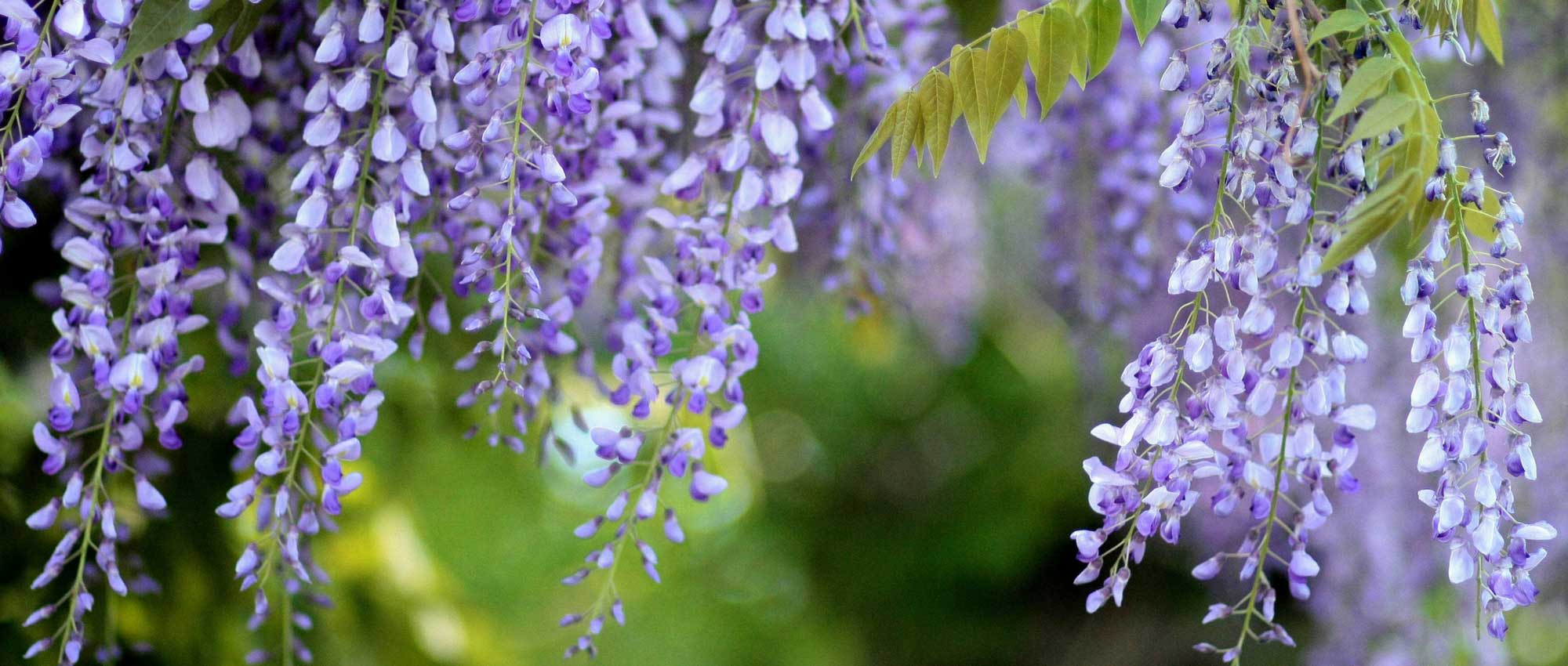
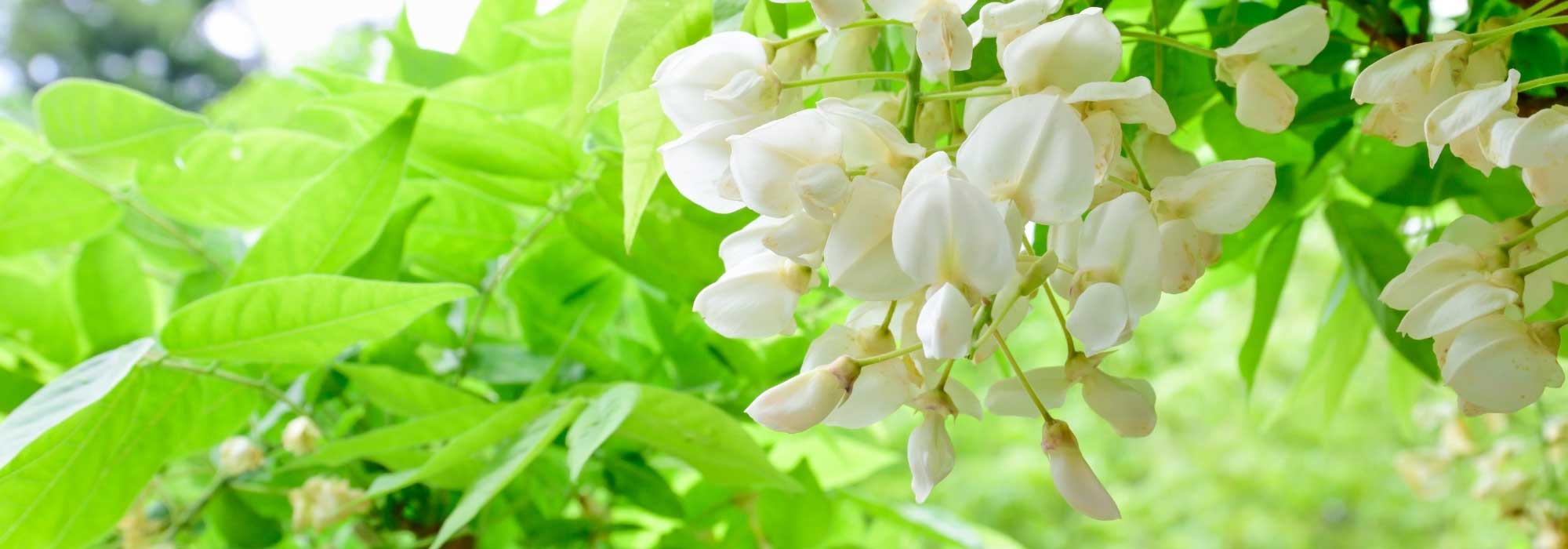
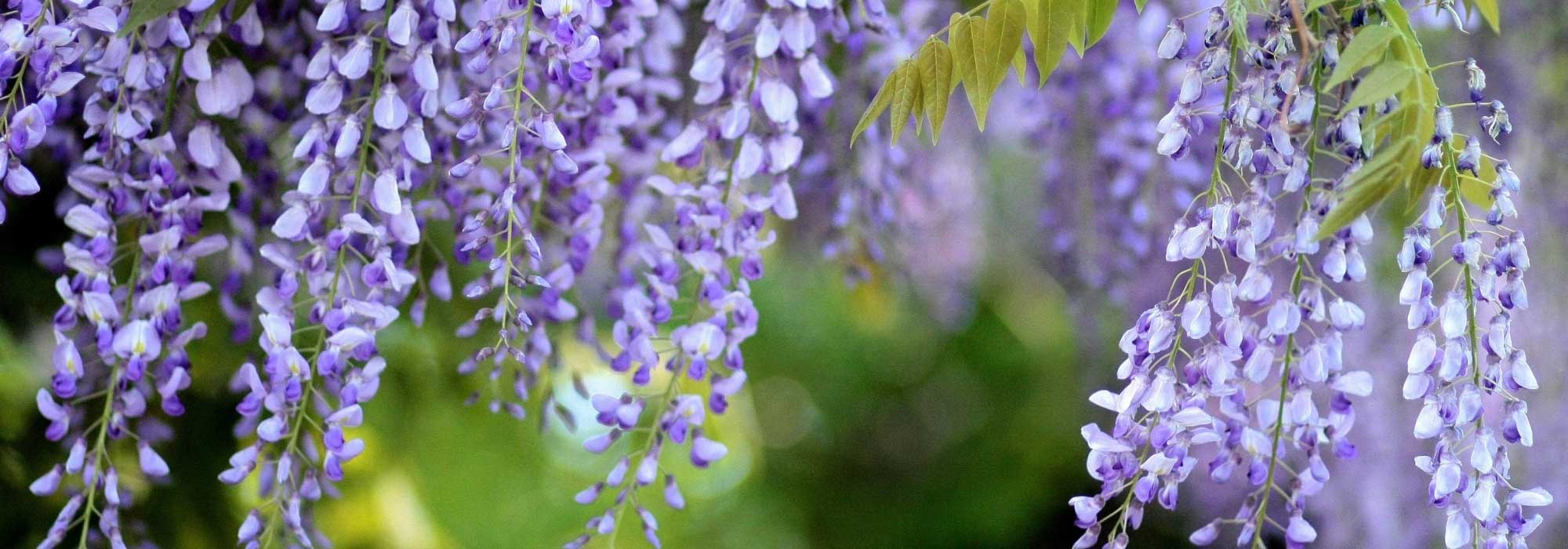
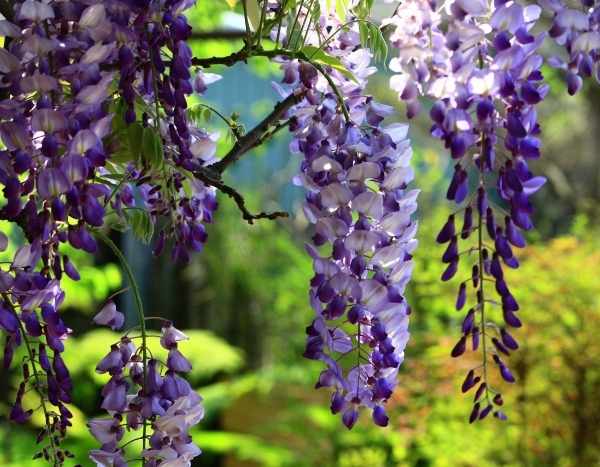
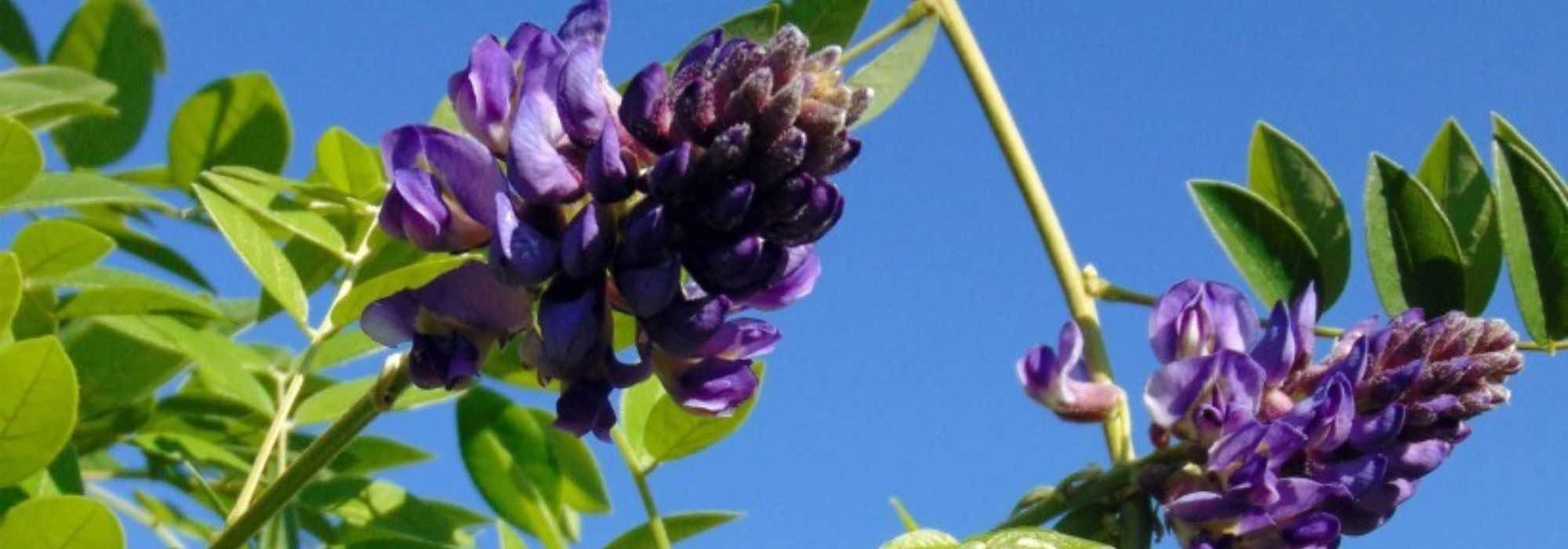
Wisteria macrostachya, the Kentucky wisteria, is a highly attractive ornamental climber, valued for its less vigorous growth than Asian species and its repeat flowering in long clusters. This climber develops its foliage before the first clusters of flowers appear, towards the end of May. Reaching 25 cm in length, or even more, they consist of dozens of flowers ranging from mauve-blue to violet, depending on the plant. It flowers again in September, or sometimes even during the summer, increasing the ornamental appeal of this species. Nectar-rich, the flowers are, however, only lightly fragrant. Well suited to moist or even wet soils, whether ordinary or poor, it dislikes chalky conditions. Growing in full sun, it is highly resistant to frost and will enhance a pergola or arbour.
Wisterias are members of the large Fabaceae family, formerly known as Leguminosae. With nearly 800 genera, this botanical family includes food crops such as broad beans, peas and French beans, as well as wild or ornamental plants, shrubs such as brooms, trees (Gleditsia, Albizia...) and climbers, such as sweet pea, or Lathyrus latifolius. The genus Wisteria comprises only 7 to 9 recognised species, originating from North America and the Far East. The species macrostachya is now considered a subspecies of species frutescens (and is therefore named Wisteria frutescens subsp. macrostachya), brought back from Carolina (present-day United States) in 1724 by an English naturalist. W. Frutescens grows wild across a large area stretching from Texas to Florida and northwards to Kentucky, hence its common name. It is found in moist or distinctly wet areas, such as woodland edges or stream banks. Although wet, these sites are generally well drained. It is a twining plant that climbs by wrapping itself around its support in an anti-clockwise direction. It can then reach 10 m in length and flowers on young wood, bearing clusters 15 to 25 cm long.
The subspecies macrostachya has similar characteristics, with clusters that are slightly longer than those of the type species. Its growth is relatively moderate compared with other species, making it easier to grow in the garden and reducing the risk of it becoming invasive. Capable of reaching 10 m in good conditions, it more commonly reaches 5 to 8 m in height, with a spread of 3 to 4 m. Its attractive foliage consists of alternate, compound, odd-pinnate leaves, usually bearing 8 to 14 opposite lateral leaflets along a rachis and one terminal leaflet. The leaves are 15 to 30 cm long and 8 to 15 cm wide, giving the plant considerable presence and a distinctly exotic appearance. Deciduous, they emerge in spring before flowering, which does not begin until towards the end of May. Long clusters of 25 cm or more then extend towards the ground, adding clear architectural interest to this climber. They consist of dozens of papilionaceous flowers typical of the family, lightly fragrant, with a mainly bluish colour often shaded with mauve or violet. Nectar-rich, they attract bumblebees and honey bees, which should therefore be taken into account when choosing the planting site. The main flowering period in May-June is generally followed by a second flush in September. However, by regularly pruning off faded inflorescences, it is possible to enjoy several further flushes during the summer, significantly extending the flowering season of this wisteria.
Wisteria frutescens subsp. macrostachya is an outstanding species in more than one respect, and can be planted alongside other earlier-flowering species, such as Wisteria venusta 'Okayama', with mauve-purple flowers in April-May and even more moderate growth. Choose plants of comparable vigour to prevent one or the other from taking over. Passiflora coerulea is a good candidate, with its bluish passion flowers followed by highly decorative orange fruit. Trumpet vines are also capable of holding their own and will provide remarkable vivid colours. If there is no trellis or pergola, you can also train your wisteria up a tree, choosing a mature specimen with sufficiently strong branches. A spectacular effect is guaranteed!
Plant habit
Flowering
Foliage
Safety measures
Botanical data
Wisteria
macrostachya
Fabaceae
Kentucky Wisteria, Blue Moon Wisteria
Wisteria frutescens subsp. macrostachya, Wisteria frutescens var. backhousiana
North America
ingestion
Cette plante est toxique si elle est ingérée volontairement ou involontairement.
Ne la plantez pas là où de jeunes enfants peuvent évoluer, et lavez-vous les mains après l'avoir manipulée.
Pensez à conserver l'étiquette de la plante, à la photographier ou à noter son nom, afin de faciliter le travail des professionnels de santé.
Davantage d'informations sur https://plantes-risque.info
Planting and care
Wisteria macrostachya is a very interesting Kentucky wisteria because it grows well in moist to wet soils. In addition, like other Fabaceae, its roots host bacteria capable of fixing atmospheric nitrogen in the soil, enabling it to grow in poor soil, provided it is not too dry. Excess nitrogen or nitrogen fertilisation also greatly reduces flowering. As it is sensitive to lime, it needs neutral to slightly acidic soil. Choose a sunny position and, above all, allow enough space for it to develop properly. Provide a sturdy support, as its weight will increase considerably with age. Water regularly during the first two years, then during dry periods. Very hardy, it withstands frost below -25 °C.
Planting period
Intended location
Care
Planting & care advice



This item has not been reviewed yet - be the first to leave a review about it.
Recently viewed products
Haven't found what you were looking for?
Hardiness is the lowest winter temperature a plant can endure without suffering serious damage or even dying. However, hardiness is affected by location (a sheltered area, such as a patio), protection (winter cover) and soil type (hardiness is improved by well-drained soil).

The flowering period indicated on our website applies to countries and regions located in USDA zone 8 (France, the United Kingdom, Ireland, the Netherlands, etc.)
It will vary according to where you live:- In zones 9 to 10 (Italy, Spain, Greece, etc.), flowering will occur about 2 to 4 weeks earlier.
- In zones 6 to 7 (Germany, Poland, Slovenia, and lower mountainous regions), flowering will be delayed by 2 to 3 weeks.
- In zone 5 (Central Europe, Scandinavia), blooming will be delayed by 3 to 5 weeks.
In temperate climates, pruning of spring-flowering shrubs (forsythia, spireas, etc.) should be done just after flowering.
Pruning of summer-flowering shrubs (Indian Lilac, Perovskia, etc.) can be done in winter or spring.
In cold regions as well as with frost-sensitive plants, avoid pruning too early when severe frosts may still occur.
The planting period indicated on our website applies to countries and regions located in USDA zone 8 (France, United Kingdom, Ireland, Netherlands).
It will vary according to where you live:
- In Mediterranean zones (Marseille, Madrid, Milan, etc.), autumn and winter are the best planting periods.
- In continental zones (Strasbourg, Munich, Vienna, etc.), delay planting by 2 to 3 weeks in spring and bring it forward by 2 to 4 weeks in autumn.
- In mountainous regions (the Alps, Pyrenees, Carpathians, etc.), it is best to plant in late spring (May-June) or late summer (August-September).
The harvesting period indicated on our website applies to countries and regions in USDA zone 8 (France, England, Ireland, the Netherlands).
In colder areas (Scandinavia, Poland, Austria...) fruit and vegetable harvests are likely to be delayed by 3-4 weeks.
In warmer areas (Italy, Spain, Greece, etc.), harvesting will probably take place earlier, depending on weather conditions.
The sowing periods indicated on our website apply to countries and regions within USDA Zone 8 (France, UK, Ireland, Netherlands).
In colder areas (Scandinavia, Poland, Austria...), delay any outdoor sowing by 3-4 weeks, or sow under glass.
In warmer climes (Italy, Spain, Greece, etc.), bring outdoor sowing forward by a few weeks.
Shipping country and language
Your country of residence may be:
Your country of residence is:
For a better user experience on our website, you can select:
Your shipping country:
-
 Austria
-
 Belgium
-
 Bosnia & Herzegovina
-
 Bulgaria
-
 Croatia
-
 Cyprus
-
 Czechia
-
 Denmark
-
 Estonia
-
 Finland
-
 France
-
 Germany
-
 Greece
-
 Hungary
-
 Iceland
-
 Ireland
-
 Italy
Italy
-
 Latvia
-
 Liechtenstein
-
 Lithuania
-
 Luxembourg
-
 Malta
Malta
-
 Netherlands
-
 Poland
-
 Portugal
-
 Romania
-
 Serbia
-
 Slovakia
-
 Slovenia
-
 Spain
Spain
-
 Sweden
-
 Switzerland
Language:
-
French
-
 English
-
Spanish
-
Italian
-
German
-
Portuguese
-
Dutch
-
Finnish
My Account
Hello
My wish lists
My cart
Log in / Register
Existing customer?
This form is protected by reCAPTCHA - the Google Privacy Policy and Terms of Service apply.
New customer?
Create an account to track your orders, access our customer service and, if you wish, make the most of our upcoming offers.