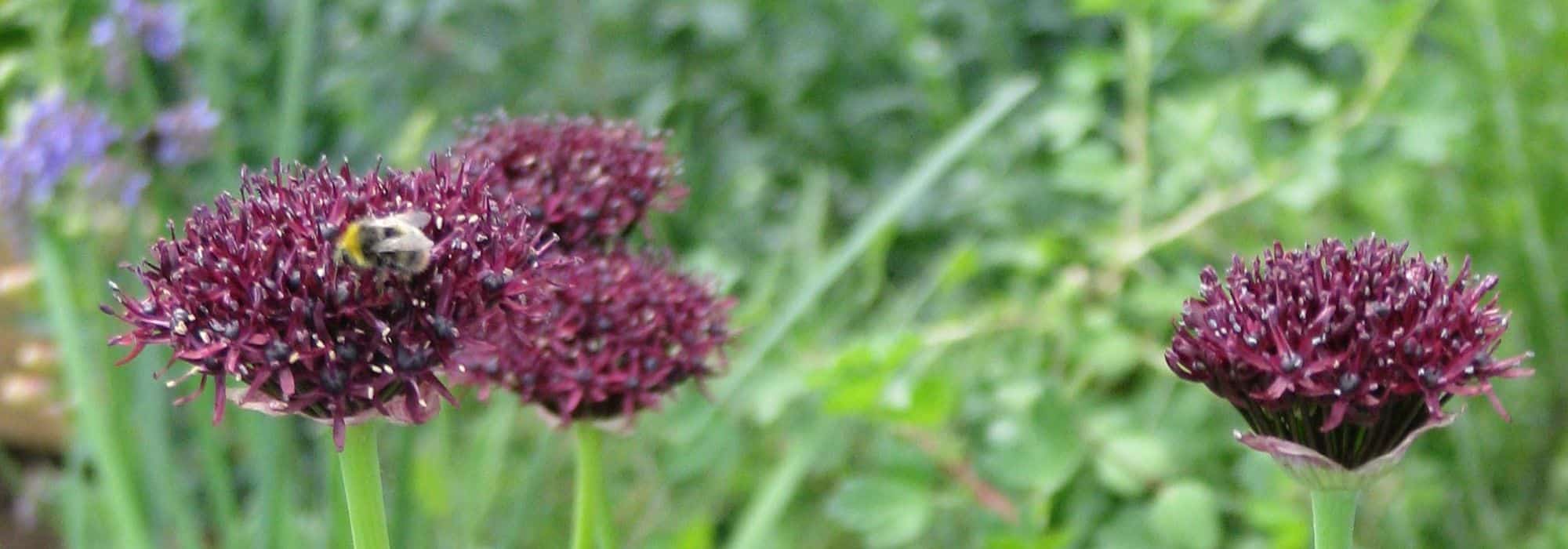
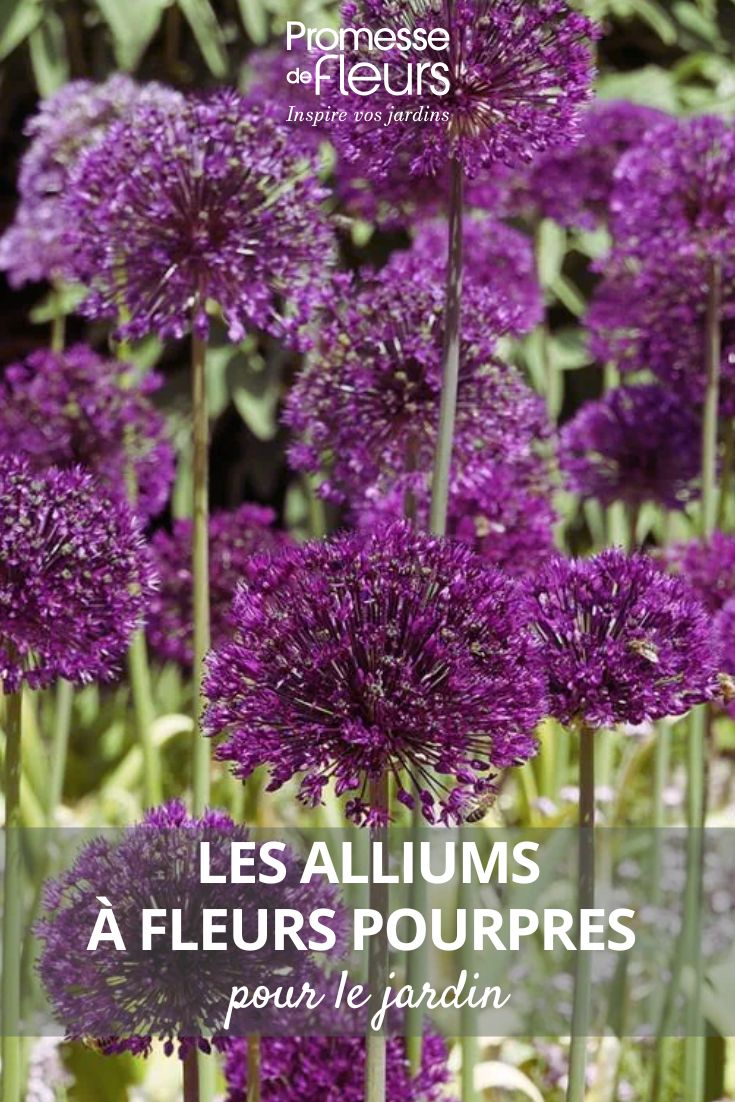
Alliums or ornamental garlics with purple flowers
to brighten the garden
Contents
In a border, purple alliums are among those spring bulbs that add colour without requiring much maintenance. Their purple, globe-shaped flowers, appear above foliage of perennials like punctuation marks, able to add depth to a somewhat sedate scene or to punctuate a border in full sun. Discover how to choose your purple-flowering ornamental garlic bulbs, where and when to plant them and which combinations to adopt to enjoy long-lasting, natural flowering in garden or in pots.
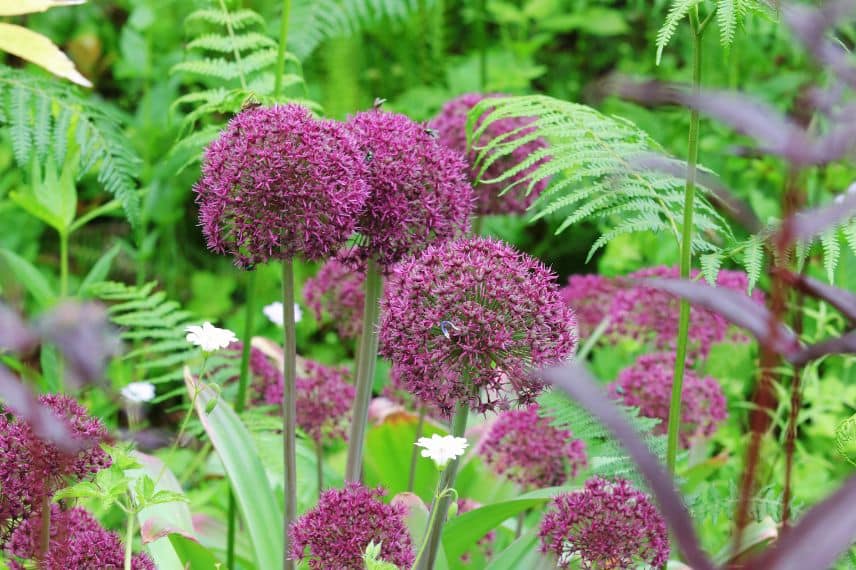
Why choose alliums with purple flowers?
Purple plays a balancing role in the garden, linking cool shades such as blue or silver with warmer tones like pink or burgundy. Purple-flowered alliums also provide structure, thanks to their tall stems and spherical umbels that punctuate a border, a contemporary bed, a naturalistic scene or a rockery. In a restrained composition, they enliven grey, variegated or chartreuse foliage; in a more intense palette, they harmonise pinks, reds and burgundies while retaining lightness.
Allium Ostara
Most beautiful Alliums with purple flowers
Choosing a purple-flowering allium is primarily about the effect it creates in the garden. Whether planted in the ground or in a pot, you will need to choose the ideal variety according to stem height, umbel size and flowering time.
For purple spheres that structure the scene
To punctuate a bed with large, highly visible “big balls”, aim for alliums with tall stems, around 80 to 120 cm, and wide umbels. Allium ‘Purple Sensation’ works very well to establish a regular rhythm, while Allium ‘Summer Drummer’ and Allium ‘Foreclock’ are suitable when you want more imposing spheres. For a more attractive result, plant in small groups rather than scattering a few bulbs throughout the bed.
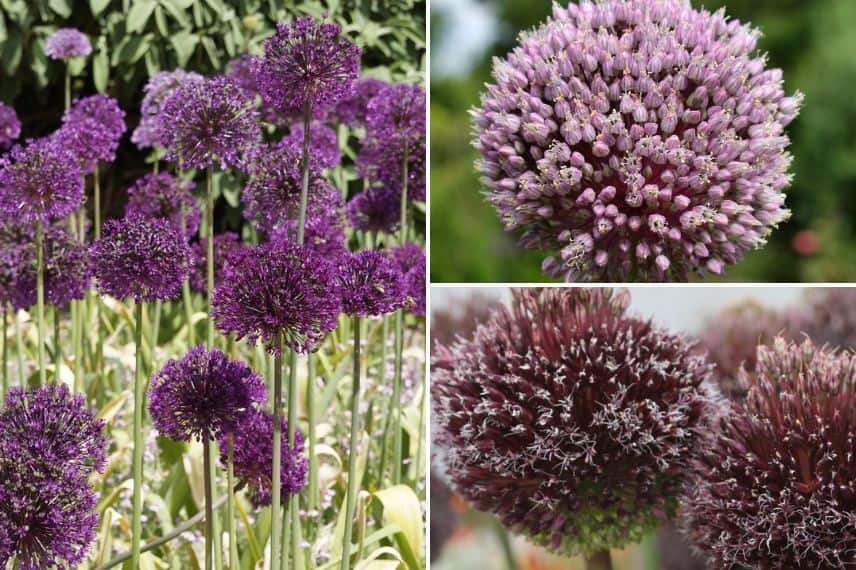
Allium ‘Purple Sensation’, Allium ‘Summer Drummer’ and Allium ‘Foreclock’
For a lighter, meadow-like effect
If you want a softer, more natural result, choose a finer allium, around 60 to 90 cm, with smaller heads that are easy to repeat. Allium ‘Early Emperor’ is ideal for this use, as it slips between grasses and soft perennials, and creates a discreet but regular punctuation when planted in series.
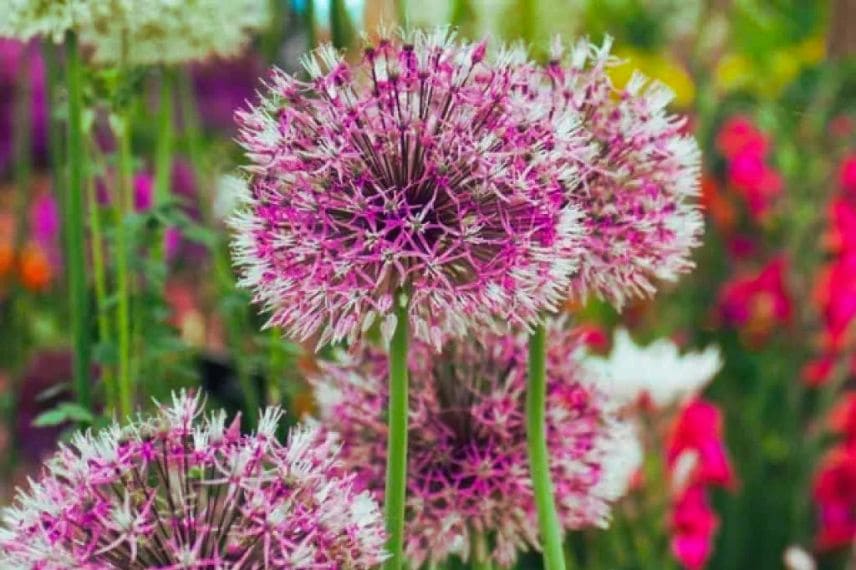
Allium ‘Early Emperor’
For very dark purples, almost burgundy
To strengthen a dark palette or contrast with silver foliage, favour red-purple shades. Allium atropurpureum, measuring around 60 to 90 cm, brings a deep tone that pairs well with pale pink blooms. Allium ‘Red Mohican’, at similar heights, introduces a red-dominant, more intense purple without unbalancing the composition.
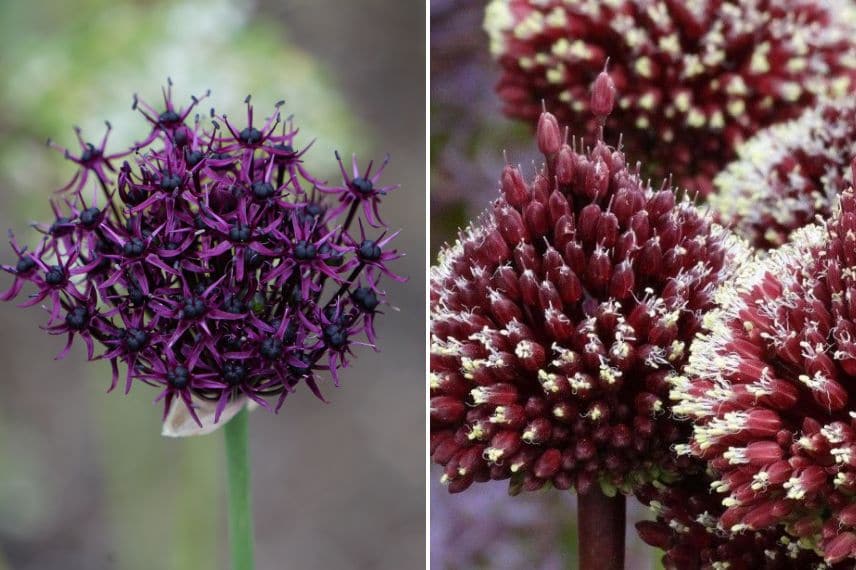
Allium atropurpureum and Allium ‘Red Mohican’
For rockeries, low borders and containers
At the front, in a rockery or in a pot, opt for a more compact form, often around 20 to 40 cm stem height. Allium ‘Ostara’ or ‘Red Giant’ fit this role: place them at edge of path, between stones, or in a container, provided you favour a very free-draining substrate and a sunny position.
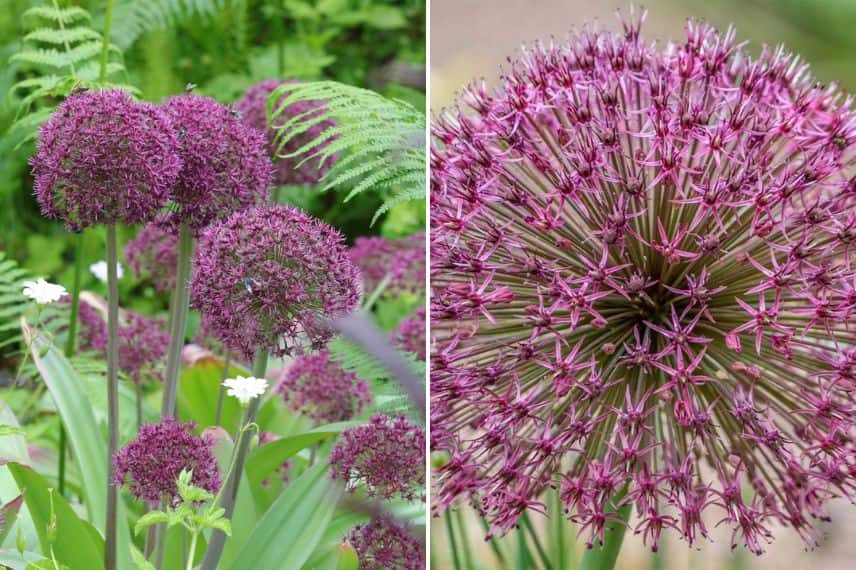
Allium ‘Ostara’ and ‘Red Giant’
Create attractive flower beds with purple alliums
In a border, purple alliums add a splash of colour. However, foliage will start to yellow after flowering, while the flower stems remain very decorative. Our advice: plant bulbs among perennials that spread at ground level, able to take over in spring and so conceal that foliage. For example, a hardy geranium ‘Rozanne’, a Nepeta ‘Kit cat’, an Alchemilla or silvery foliage such as that of a Stachys ‘Silver Carpet’ fill the space without competing with the bulbs.
In a sunny scheme with a more contemporary feel, the purple spheres of ornamental onions show up especially well above grasses. Clumps of Stipa ‘Pennata’ or Pennisetum add movement, retain an elegant silhouette over time and suit free-draining soil, which suits alliums. Purple then works as a visual marker, especially if you pair it with a few perennials with violet flowers or darker foliage, without seeking an overly strict harmony.
In a cottage-style border, purple alliums blend easily when paired with light perennials, such as Gaura lindheimeri, Achillea and Salvia nemorosa ‘Amethyst’. Add one or two fine grasses, such as Stipa tenuissima ‘Pony tails’, to lighten the scene.
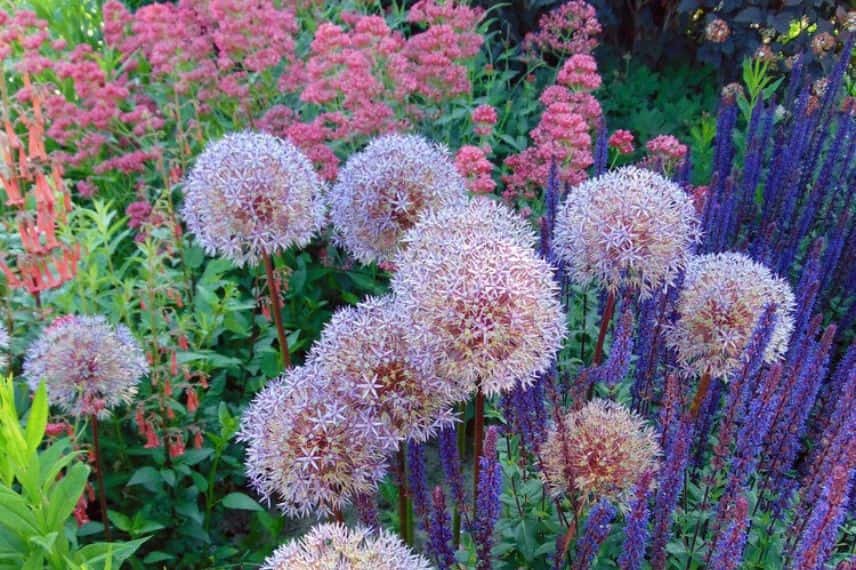
An example of a planting combination in the garden: Alliums, Salvia nemorosa, red valerian and Penstemon
Plant purple allium bulbs for regular flowering
Success with purple alliums starts at planting: place bulbs in full sun in well-drained soil, as excess water in winter is their main enemy. Ideal planting period for allium bulbs is September to November, before frosts.
-
Depth : bury bulbs at 6 to 10 cm deep, with point facing upwards.
-
Spacing : leave 15 to 25 cm between bulbs so stems remain upright and umbels stand out well.
-
Heavy soil : lighten and drain by planting bulbs on a small mound or by mixing garden soil with coarse sand, gravel and potting compost.
-
In a pot : choose a deep container, with a draining layer of clay pebbles at the bottom, and water sparingly in spring.
To learn more, also read our article on planting alliums.
You can also watch our video :
Caring for ornamental alliums throughout the seasons
In spring, moderate watering is sufficient in open ground, especially if soil is well drained. In pots, water requires closer monitoring, as growing medium dries out faster. When stems rise, you generally do not need to intervene, except in exposed, windy spots where light support (a stake) prevents scapes from flopping.
After flowering, allow foliage to yellow and complete its cycle, as it is the foliage that replenishes the bulb for the following year. You can cut back spent stems if you want a tidier border, or conversely keep a few dried heads for their graphic interest.
In well-drained soil and a suitable position, alliums often come back year after year, and you can increase density in an area over time by lifting and replanting bulbs.
- Subscribe!
- Contents
This form is protected by reCAPTCHA - the Google Privacy Policy and Terms of Service apply.

































Comments