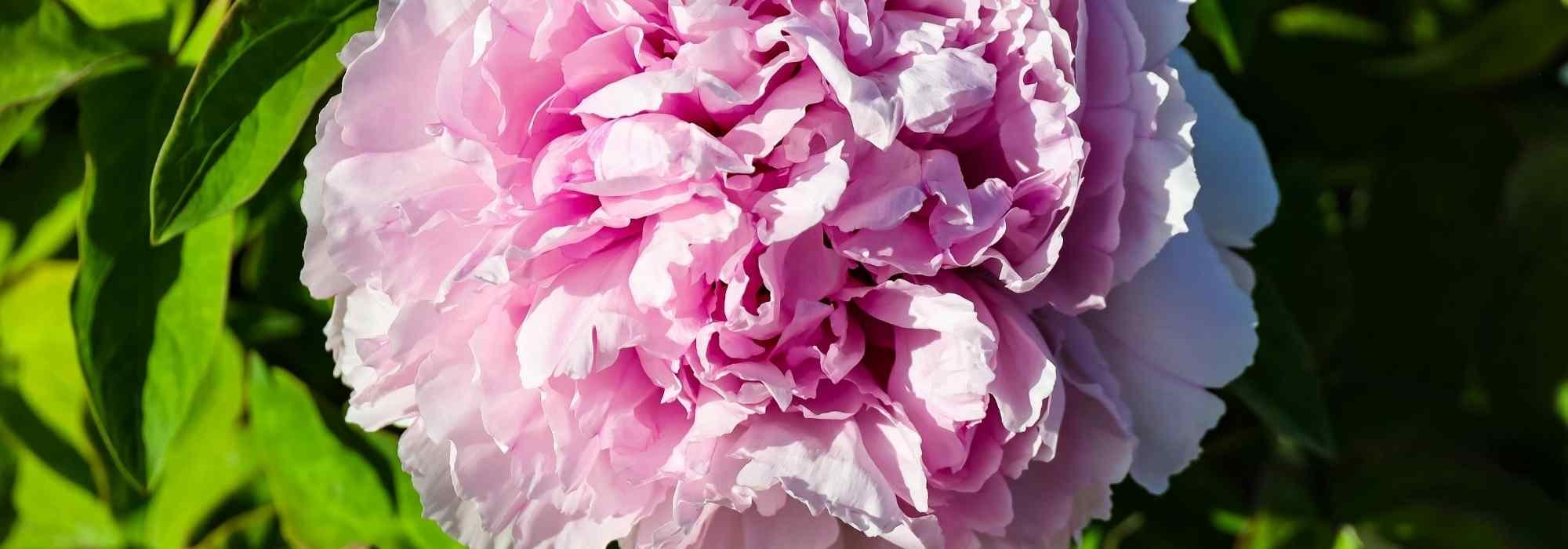
My shrub peony is not flowering. Why?
Causes and solutions for absence of flowering in Paeonia suffruticosa
Contents
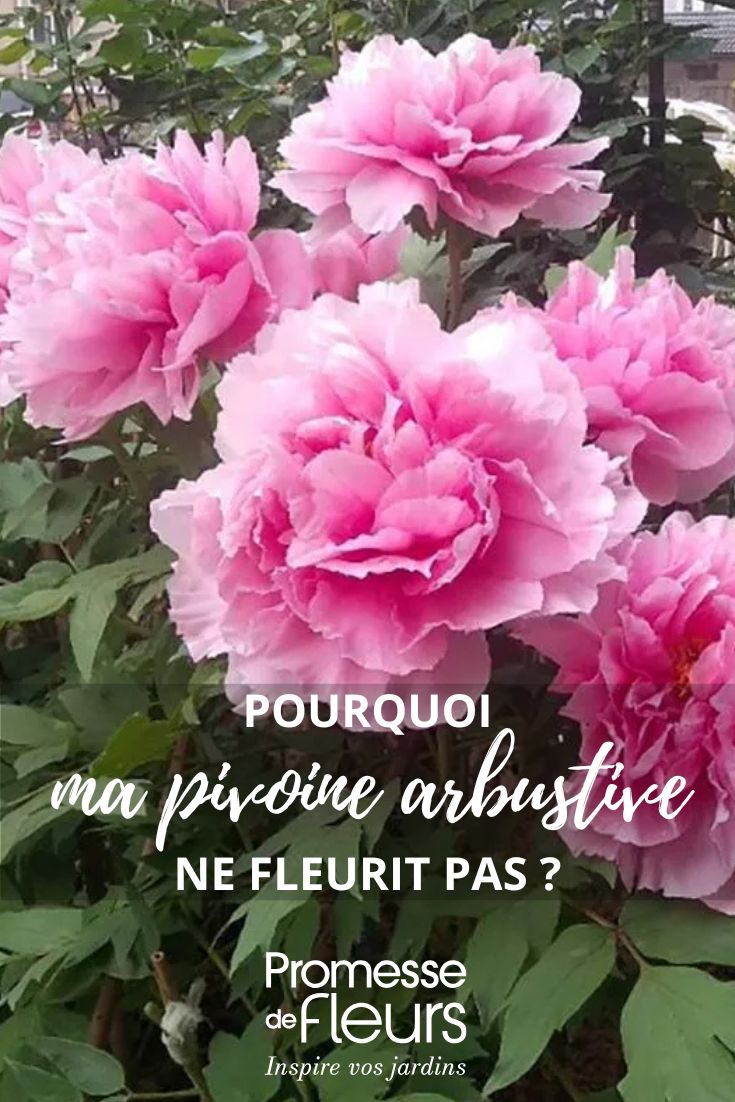
Tree peony (Paeonia suffruticosa) is a garden wonder, celebrated for its spectacular flowers and exceptional longevity. Unlike herbaceous peony (Paeonia lactiflora and hybrids), its woody stems persist throughout winter, forming a true small shrub. It is precisely this woody nature that gives it specific cultivation requirements and makes a lack of flowers particularly frustrating for gardeners. Because the causes of a lack of flowers are never down to chance!
Discover how to methodically diagnose the reasons why your tree peony refuses to give you its splendid flowers. And above all learn how to provide it with the solutions needed to ensure successful flowering.

Distinguishing shrub peony from herbaceous peony for good flowering
Before examining the reasons for lack of flowering, it is essential to distinguish clearly tree peony (Paeonia suffruticosa) from its cousin, herbaceous peony (Paeonia lactiflora). This distinction is not merely botanical. It directly affects growing conditions and, consequently, the potential causes of poor flowering.
Tree peony is a true small shrub with deciduous foliage, characterised by woody stems, that is, made of wood, which persist and remain above ground in winter. It can reach, at maturity, a height of 1.50 to 2.50 metres. Floral and vegetative buds form on this old wood, which makes the species particularly sensitive to inappropriate pruning or late frosts that can destroy those buds. It grows slowly but can live for several decades, even up to a century.
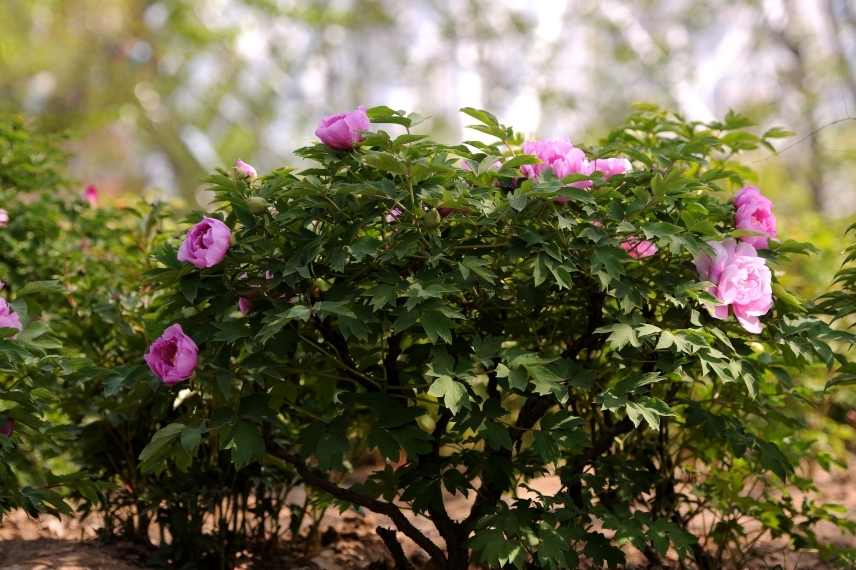
Tree peony is a true small shrub with deciduous foliage, characterised by woody stems
À l’inverse, la pivoine herbacée est une plante vivace dont la partie aérienne disparaît complètement en automne pour redémarrer, à partir de la souche, au printemps. Les bourgeons se trouvent au niveau du sol, et leur bonne installation est intimement liée à une profondeur de plantation très précise. La pivoine herbacée bénéficie d’une rusticité exceptionnelle, au-delà de -30°C.
Read also
Peonies: planting, pruning and careMy peony isn't flowering because it's too young.
One of the main causes of a tree peony’s lack of flowering is time. Your tree peony is simply too young to reach flowering maturity, as it naturally takes much longer to establish than other plants.
After planting, it’s perfectly normal to see no flowers, or very few, during the first two to three years. The plant’s energy is devoted to forming a strong root system and to establishing its woody framework. Flowering takes a back seat… The same applies after transplanting or moving. If you have recently moved a tree peony, expect a pause in flowering of at least one to two years, while it recovers from stress and rebuilds its reserves.
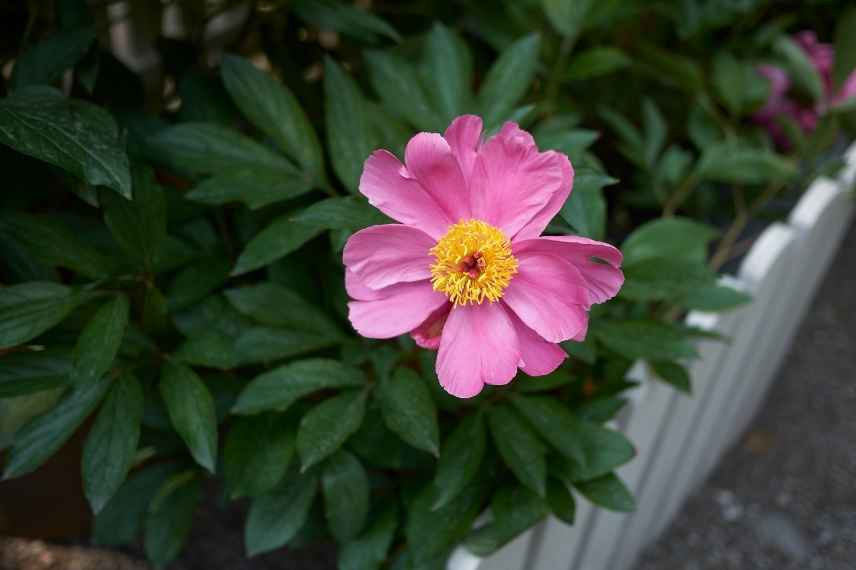
it’s perfectly normal to see no flowers, or very few, during the first two to three years.
What to do? Simply be patient and ensure your tree peony benefits from the best growing conditions to encourage vigorous growth.
My peony is not flowering because it was not planted in the right place.
Once time factor is ruled out, planting problems are often first suspects. Problems usually relate to planting depth or location.
Planting depth
Most shrub peonies are sold grafted onto herbaceous peony roots to aid initial growth. Unlike herbaceous peonies, for which eyes must be level with soil, shrub peonies have opposite requirement. If graft union, recognisable by swelling between root and stem, is not buried deep enough, shrub peony may struggle to produce its own roots above the graft. It will remain dependent on herbaceous rootstock, which can affect vigour and ability to form its own shrub.
That is why graft union should be buried 5 to 10 cm below soil surface. This encourages plant to become self-sufficient and to develop robust shrub peony characteristics.
What to do? If planting is too shallow, carefully lift plant in spring and replant at correct depth. But expect to wait again and to endure another period without flowering.
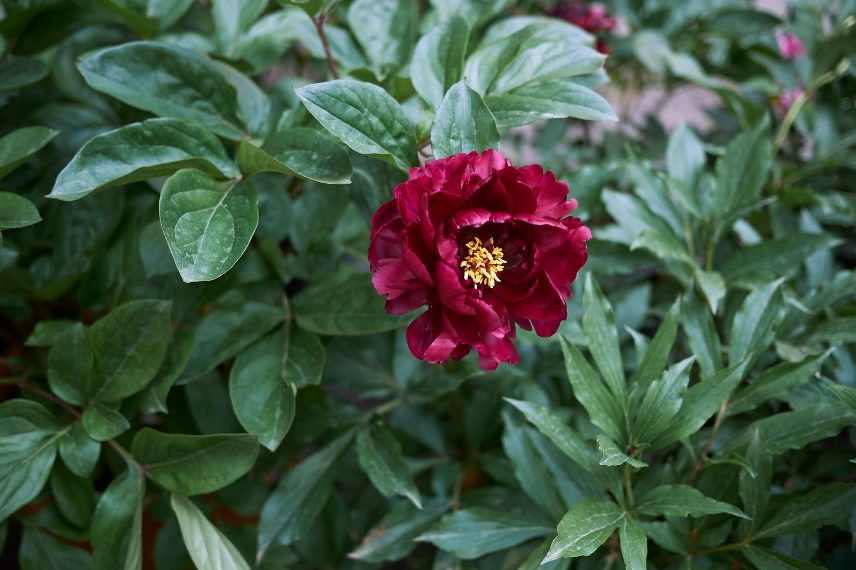
graft union of shrub peony should be buried 5 to 10 cm below soil surface
Light exposure
Shrub peony needs plenty of light but dislikes excessive heat.
- An overly shaded position is most common cause of lack of flowers. Plant becomes leggy, produces lots of foliage at expense of flowers, and buds do not form properly. Shrub peony requires at least six hours of sun a day for abundant flowering
- In very hot regions, afternoon sun can scorch flowers and foliage. In addition, strong winds can break lignified stems, especially under weight of flowers, or damage early buds.
What to do? Move plant, ideally in spring, to a sunnier spot. If issue is increasing shade from neighbouring trees, prune them back to let light through.
My peony is not flowering because it was not planted in suitable conditions.
Growing conditions and maintenance play a major role in flowering, especially regarding soil. Inappropriate soil weakens plant and inhibits flowering:
- Poorly drained soil: shrub peonies dislike waterlogged conditions. Heavy, compact, poorly drained soil causes rot of fleshy roots and encourages fungal diseases, such as botrytis, which attack flower buds directly.
- Nitrogen imbalance: Over-fertilisation with nitrogen (first number in N-P-K) promotes luxuriant foliage at expense of flowers. Plant becomes “too green” to flower.
What to do? Ensure soil is deep, rich in humus and, above all, very well drained. If soil is heavy clay, incorporate coarse sand and compost. Fertilise sparingly in spring, favouring a fertiliser low in nitrogen but rich in phosphorus and potassium (P and K), which promote flowering and resilience.
My peony is not flowering because it was (badly) pruned
Pruning is critical for shrub peony, whose flower buds form on persistent wood. Unlike herbaceous peony, whose foliage is cut back to ground level in autumn, shrub peony requires only light tidy pruning. Cutting old wood that bears next year’s flower buds destroys any chance of flowering. Only remove dead or broken wood, or branches that unbalance the shrub, ideally at end of winter once new buds are visible
What to do? Prune only very lightly, removing only dead wood. That said, shrub peony can do perfectly well without pruning — this may be the better option if you’re unsure.
My peony is not flowering because it was hit by late frosts.
Herbaceous peony is exceptionally hardy. By contrast, tree peony has an early bud burst period. If severe frosts occur once young shoots and flower buds have already formed, they can be scorched and die, cancelling flowering for the year.
What to do? If late frost is likely after bud burst period, protect young shoots with a winter fleece overnight.
My peony is not flowering because it is diseased or being attacked by pests.
Although shrub peony is generally robust, some diseases can target floral organs.
- botrytis or grey mould: In cool, damp weather, this fungal disease can cause young shoots and flower buds to rot before opening.
- aphids can attack tender young shoots and weaken plants.
What to do? Ensure good air circulation by avoiding overcrowding and providing good drainage for your peony. If fungal attack occurs, remove and destroy affected parts and apply an appropriate fungicidal treatment such as bouillie bordelaise. As for aphids, sometimes a strong jet of water or a spray of water and black soap is enough to get rid of them.
- Subscribe!
- Contents
This form is protected by reCAPTCHA - the Google Privacy Policy and Terms of Service apply.

































Comments