Things to avoid doing in the garden in autumn to protect biodiversity
And our advice
Contents
Autumn often makes us want to tidy the whole garden before winter! Rake up the leaves, cut back faded plants, prune shrubs or neaten up the beds… But if we give in too much to these urges, our overly tidy garden could deprive many animals of food and shelter to see them through the winter… Beneficial insects, birds, hedgehogs and small wildlife make good use of the fallen leaves from our trees, dry stems, seeds and quiet corners. Discover a few simple habits to help prepare the garden for winter while preserving biodiversity.

Avoid clearing up all the fallen leaves
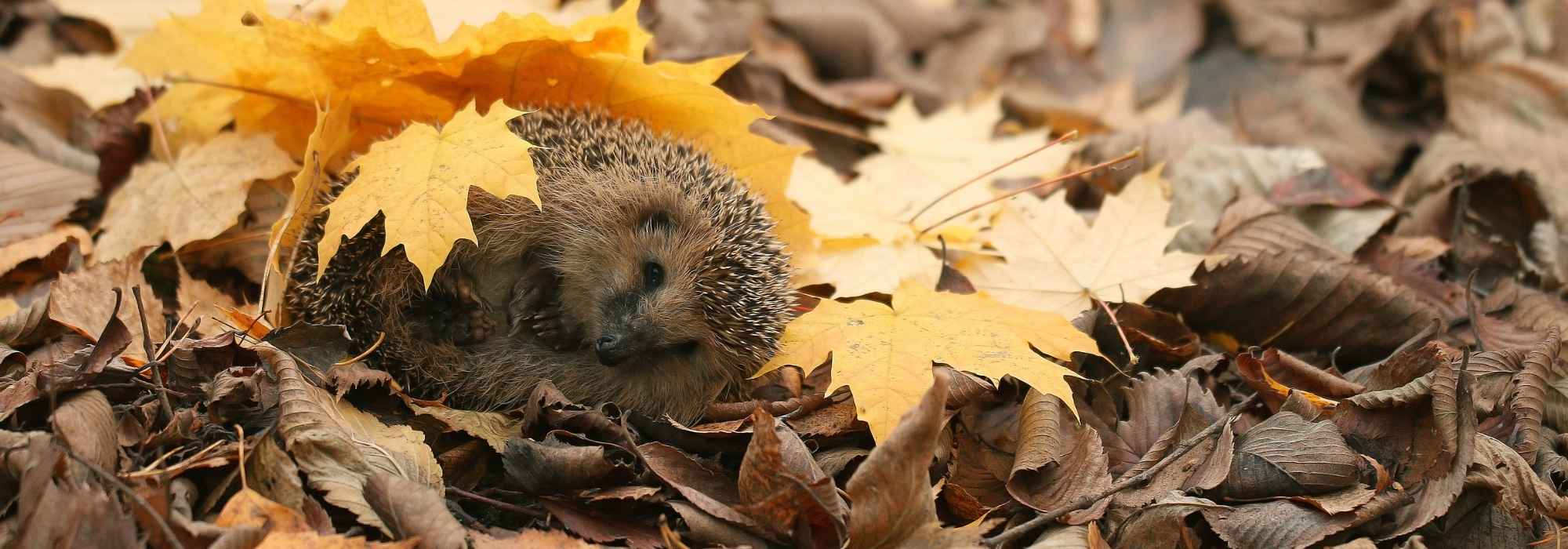
In autumn, we often get an urge to reach for the rake as soon as the first leaves begin to carpet the ground. Yet, systematically clearing away all the fallen leaves deprives the garden of a valuable natural cover and many animals of shelter for the winter. Beneath a carpet of leaves, insects, larvae and earthworms remain protected from the cold and bad weather. Hedgehogs can also use piles of leaves to line their nests, while toads, frogs and other small animals appreciate these cool, damp and peaceful areas where they can hide. It is therefore best to leave a few piles of fallen leaves here and there, in quiet spots around the garden.
On bare areas of soil, you can also use fallen leaves as mulch. They protect the soil from heavy rain, limit the formation of a surface crust and thereby reduce surface compaction and run-off. As they decompose, they also feed the soil, encourage its biological activity and contribute to the formation of humus. In beds, beneath a hedge, at the foot of shrubs or in a little-used corner of the garden, it is therefore better to keep some of them.
Of course, this does not mean leaving leaves to build up everywhere. A thick layer can smother the lawn, and wet leaves quickly become slippery on paths and patios. In these areas, you can rake them up… But rather than removing them, it is better to move them to the beds or place them beneath hedges, where they will continue to provide valuable benefits for the soil and biodiversity. Why not make some leaf mould while you are at it?

Don’t cut back all faded plants as a matter of course
In autumn, we are often tempted to cut back all the perennials and remove the faded flowers to keep our beds looking neat and tidy. However, systematically cutting back all the dry stems deprives many insects of shelter and birds of seeds they can feed on in autumn and winter.
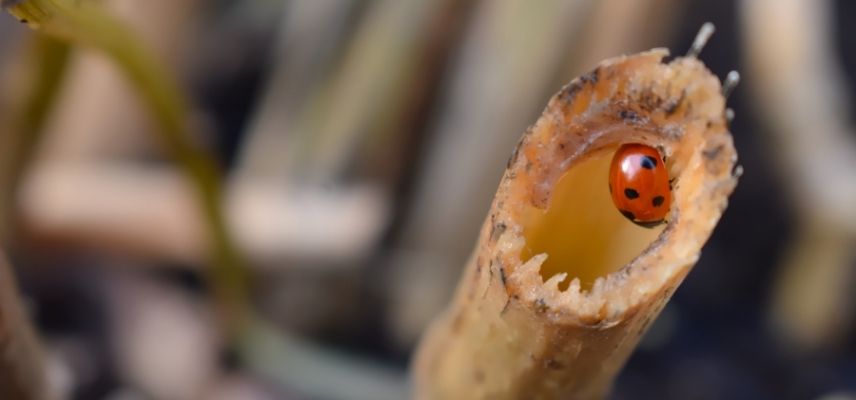
Some hollow or pith-filled stems, for example, provide a refuge or breeding site for small solitary bees. Other beneficial garden insects, such as ladybirds and lacewings, also make use of dry vegetation and the nooks and crannies it creates to shelter through the colder months. Leaving some of the stems in place until spring therefore helps to maintain these natural refuges in our beds.
Plants that have gone to seed are useful too. The dry heads of echinaceas, rudbeckias and sunflowers can attract seed-eating birds. Leaving some faded plants standing therefore preserves valuable food sources in the heart of winter.
And it is not only wildlife that benefits. For some slightly tender plants, dry foliage left in place also helps to protect the crown from the cold. This is particularly true of gauras, agapanthuses, kniphofias, phormiums and cannas grown in the open ground in regions with mild winters. There is therefore no need to rush to cut everything back: it is better to wait until the end of winter or the beginning of spring to tidy these plants, possibly after reinforcing their protection with a mulch.
Finally, this slight untidiness is not necessarily unattractive: covered in frost or dew, the dry silhouettes of perennials and grasses add structure to the beds. You can simply remove any diseased, broken or collapsed parts.
Avoid heavy pruning in autumn
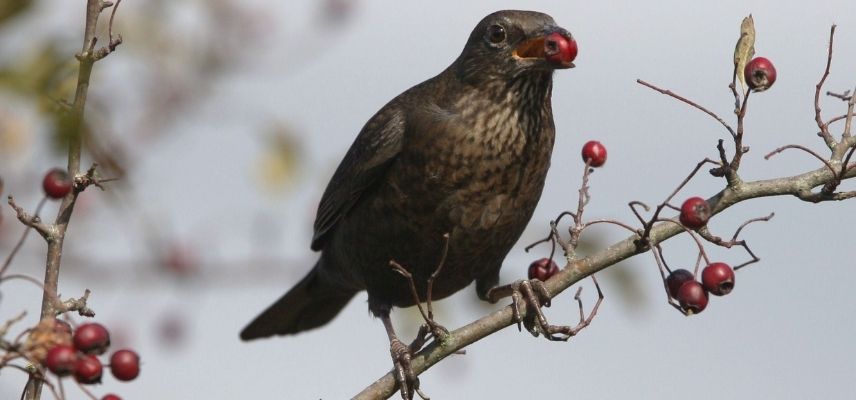
In autumn, we can feel the urge to reach for the secateurs too. We shorten a hedge here, reshape a shrub there… Yet pruning too severely can deprive wildlife of shelter and food just as winter approaches. Dense hedges provide birds with good protection from wind, bad weather and predators. The berry-laden branches of hawthorn, dog roses, cotoneasters, pyracanthas and holly also provide a valuable food source for birds when other sources of food start to become scarce during the colder months.
That does not mean putting the secateurs away at the back of the shed for good! The right time to prune depends above all on the species, its flowering period and its growth habit. Spring-flowering shrubs are generally pruned after flowering, while many summer-flowering shrubs are better pruned at the end of winter or the beginning of spring. In autumn, it is therefore best to avoid pruning on autopilot and check the requirements of each species. If necessary, simply remove dead, broken or genuinely obstructive branches.
Do not dig the soil deeply
With the return of the rain, autumn is not necessarily the best time to dig the soil deeply. Wet soil is more easily compacted underfoot and beneath tools, and deep digging can disrupt the different layers where earthworms, fungi, micro-organisms and other small soil dwellers live.
Another problem is that bare soil left after digging receives the autumn rain directly. On some soils, this encourages compaction, run-off and the formation of a surface crust.
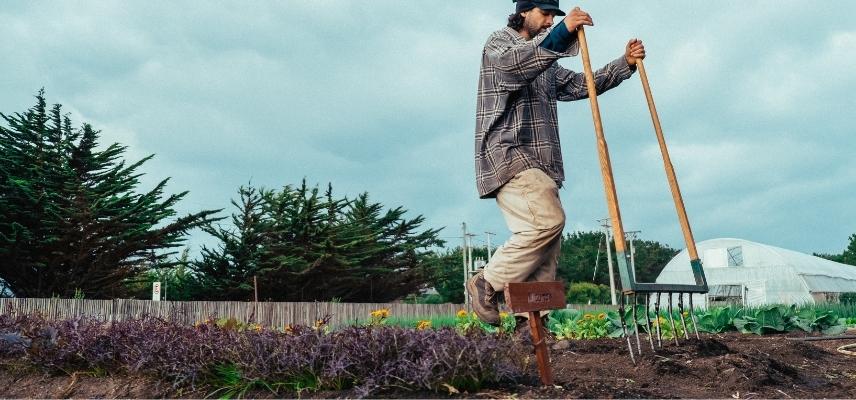
If a bed needs loosening before winter, it is therefore better to work when the soil is neither waterlogged nor sticky, without necessarily turning it over. A pass with a broadfork or digging fork is often enough to loosen the soil while preserving more of its structure. You can then make the most of the season’s resources and cover it with fallen leaves, mature compost or an organic mulch, which will protect it during the cold months.
Do not remove all the piles of branches and wood.
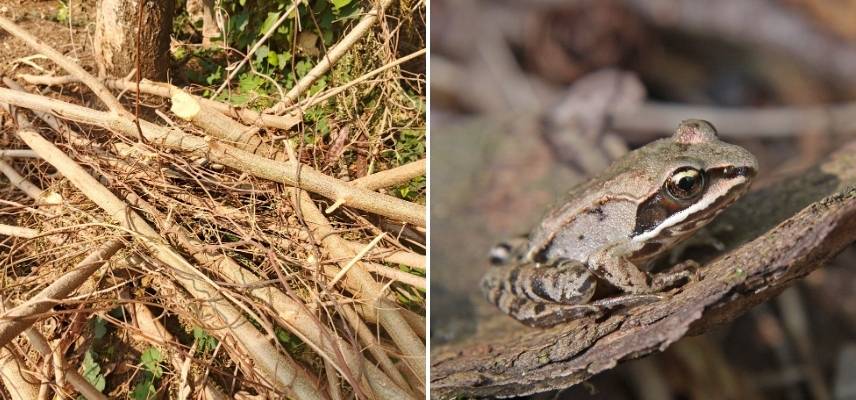
In autumn, strong winds and the fall of a few branches naturally provide dead wood in the garden. Rather than clearing everything away, you can keep a few branches and pieces of wood in a quiet corner: they quickly become valuable refuges for biodiversity.
Under a hedge or at the back of the garden, a small woodpile can shelter insects, spiders, woodlice and other invertebrates. Toads, newts and hedgehogs can also make use of these quiet places to hide or find shelter as winter approaches. Over time, fungi and decomposer organisms also colonise the dead wood and contribute to its natural recycling.
Do not clean the pond thoroughly before winter
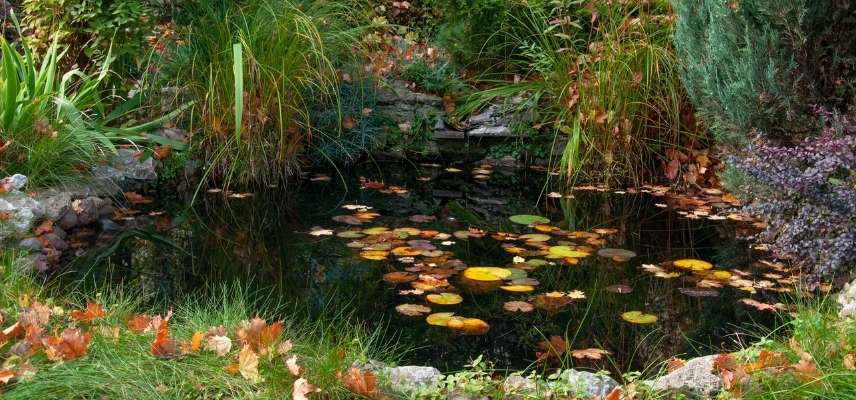
In autumn, you may be tempted to tidy up the pond before the first frosts. Removing fallen leaves from the surface, yes; completely emptying the pond, disturbing the silt or removing all the vegetation, much less so…
At this time of year, frogs, toads, newts, aquatic insect larvae and other small inhabitants begin looking for quiet areas in which to spend the winter. Some find shelter among submerged vegetation, beneath stones, among roots or in the silt at the bottom. Over-zealous cleaning can therefore disturb these shelters just when the wildlife needs them most.
It is better to intervene gently: remove excess dead leaves before they decompose in the water, possibly clear a few surface debris, but leave part of the vegetation and the bottom undisturbed. If the pond contains aquatic plants, also avoid cutting everything back in one go. A pond that is a little less immaculate in autumn often remains much more lively throughout the winter.
A balanced pond does not, in any case, need to be emptied regularly. Major intervention is only justified in the event of a genuine problem, such as a heavy build-up of silt, pollution or work on the pond’s waterproofing. In autumn, the watchword is simple: a little care, but no major clean-up.
- Subscribe!
- Contents
This form is protected by reCAPTCHA - the Google Privacy Policy and Terms of Service apply.

































Comments