Kitchen garden: what to do with young vegetable plants that have suffered from the heatwave?
Our tips to revive your vegetable patch after heatwaves
Contents
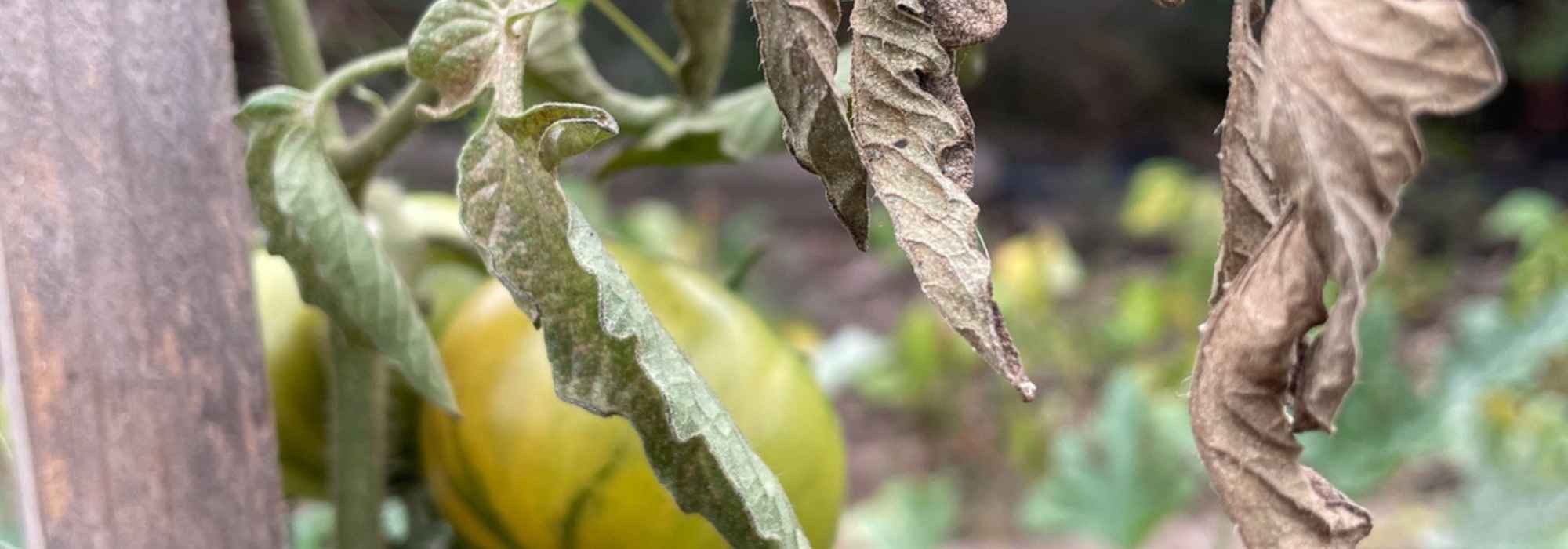
Tomatoes with scorched or dry leaves, lettuces that have bolted to seed, spindly beans with tiny, already dry pods, squashes with pendulous leaves… With successive heatwaves, vegetable patch presents a sorry sight. Faced with this disheartening scene, gardener is at a loss: pull everything up to start again from scratch or try to save what can be saved? Bear in mind that a vegetable plant battered by heatwaves is not necessarily dead; discover our tips on what to do with these struggling vegetables.

Step one: take a meticulous inventory of your vegetable patch
Recurrent summer heatwaves and drought leave a deep mark on vegetable gardens. When temperatures reach or even exceed 40 °C for several days, and nights remain warm, plants suffer from heat and water stress. Such stress causes a real upheaval in their metabolism. Each species reacts differently, depending on its tolerance to heat and lack of water.
That’s why, before making an irreversible decision, it is essential to carry out a precise diagnosis of the condition of your vegetable plants. Plant by plant, plot by plot, vegetable by vegetable. Indeed, some young plants that appear completely dried out may still have a root system deeply anchored in the soil. For others, however, hope is gone… It’s better to remove them rather than risk them rotting or attracting pests. If those plants are free from cryptogamic diseases such as downy mildew, they can go to the compost. That way, they won’t be entirely lost and will return to the soil…
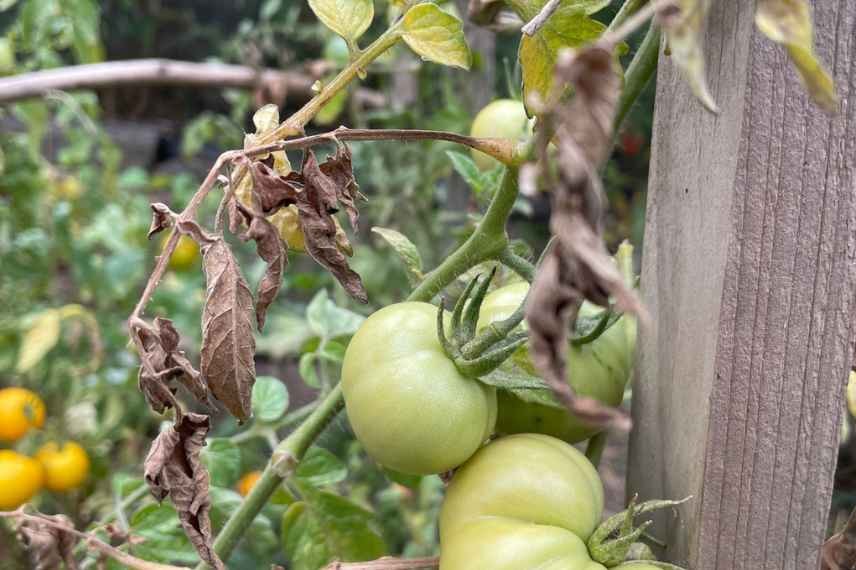
Dry foliage does not mean young plant is dead
How should you assess summer crops, you may ask? Several indicators can help gauge extent of damage:
- Presence of apical buds, even well hidden but green and supple, is a good sign. There is hope of recovery, even if all foliage has been scorched by the sun’s rays
- Condition of the collar is also crucial. If it is soft, rotten, completely dry, or eaten by pests, there’s little to be done. Conversely, if it is healthy, one can hope the plant will regrow
- By gently pulling the plant, you’ll also get an idea of its condition. If it comes away without resistance, that’s not a good sign! Roots have completely disappeared, literally burned by the heat or devoured by pests. Conversely, if the plant resists, the root system is still alive
- A young plant covered with still-green fruit that do not ripen has often halted its growth to ensure survival. But it is not dead for all that. If temperatures return to normal, the fruits, even smaller than their normal size, may still have time to ripen.
Actions to apply to the main vegetables in the vegetable garden
Once diagnosis is complete, time for action! And you will not intervene in the same way on different vegetable crops, each having distinct post-heatwave needs.
Managing nightshades
Tomatoes, peppers, aubergines and chillies are summer stars in the vegetable patch. But they are also extremely sensitive to temperature fluctuations and extreme heat. Above 35 °C, pollination stops abruptly, flowers drop off and foliage literally burns if not shaded. That is why it is important to act to save what can still be saved, namely any fruit not yet ripe. Two interventions are necessary, but must be carried out without excess:
- Prune, but sparingly! In an ordinary summer, gardeners tend to prune to channel vigour in tomatoes and other nightshades. In the post-heatwave period it is a little different. Only remove leaves that are completely dried out and necrotic, useless for photosynthesis but still transpiring. You can also remove suckers that exhaust the plant and, above all, the last flower buds that will not have time to set fruit. The main mistake would be to remove almost all foliage in order to speed up fruit ripening. On the contrary, it is essential to leave foliage, even imperfect, which will act as a thermal shield and prevent fruits from burning.
- Water gently! After a long dry spell, gardeners may be heavy-handed. They drench their tomatoes and other peppers with water. This is a mistake. Simply because, after successive heatwaves, soil becomes so dry that it turns impermeable. As a result, water runs off and does not penetrate the soil. Moreover, a sudden watering on parched roots causes fruit to split, especially tomatoes. Therefore, after a heatwave it is preferable to water moderately but frequently, always at the base to avoid wetting the foliage. That way water can penetrate more easily. Also, do not hesitate to renew mulch to a depth of about 10 cm.
Managing cucurbits
Courgettes and various squashes, pumpkins and red kuri squashes, melons and cucumbers also suffer from heatwaves. And it is very visible. Their large leaves transpire heavily, so they wilt during the day. Do not panic! This is a simple defence mechanism against extreme heat and, by the following morning, leaves usually regain a normal appearance, provided they are watered. After heatwaves, cucurbit foliage also shows white or yellowish spots from sunscald, but as long as the heart of the plant is healthy and green, this is not serious.
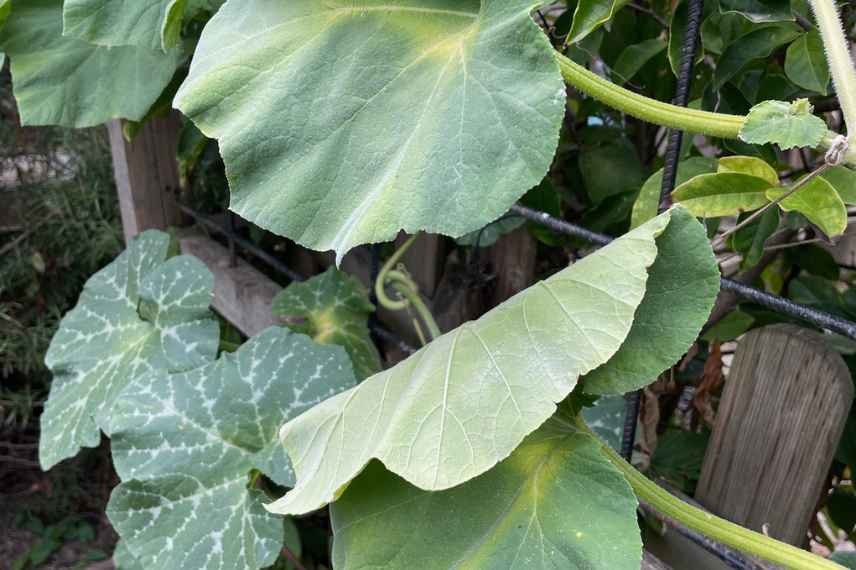
After a heatwave, it is essential to remove yellowed leaves that touch the soil
After a heatwave, it is essential to remove yellowed leaves that touch the soil, because they are ideal entry points for powdery mildew, which often thrives on plants weakened by drought. For squashes and melons, do not hesitate to air-layer a few secondary nodes into fresh soil enriched with well-rotted compost to allow the young plant to compensate for a root system likely weakened by drought.
The delicate case of leafy vegetables
It is mainly salads that pay the heaviest price to heatwaves. Under thermal stress they trigger a survival process by bolting, becoming tough and bitter. In that case there is little to be done: pull them up. And if you have hens, they will relish these greens. You will also free up space to sow or transplant autumn salads. You can also take the opportunity to sow lamb’s lettuce or rocket.
As for beans (even if they are not leafy vegetables strictly speaking but Fabaceae), all is not lost! Remove damaged foliage and pods that are completely scorched and dry, hoe soil around the young plants, water deeply and replace a layer of mulch. As soon as temperatures return to more reasonable levels, plants will flower again and you can obtain a late harvest.
And if you live in a region with a mild climate, you can still try resowing. You may obtain a fine autumn harvest.
Also look after soil to save root system
Admittedly, during heatwaves, the above-ground parts of vegetable plants suffer most, exhausted and scorched by the sun’s rays. But the root system is not spared because it must cope with compact, hard soil where microbial life slows or dies, and where oxygen becomes scarce. Admittedly, with mulch, damage is less, but the soil still suffers. And if your soil has remained bare all summer, a surface crust will inevitably have formed, sealing the soil. Water runs off instead of soaking into the soil. It is therefore essential to reactivate this soil to bring it back to life.
First, you can carry out a light hoeing to break the surface crust and restore some porosity to the soil. Avoid deep spading, however, which would only disturb microbes still alive, likely sheltering deeper down. If your soil is really compact, give it a small pass with a broadfork® or a digging fork.
Once this hoeing is done, apply a good layer of mulch. As you’ve probably used up your stock of dry lawn clippings, favour straw or RCW (ramial chipped wood).
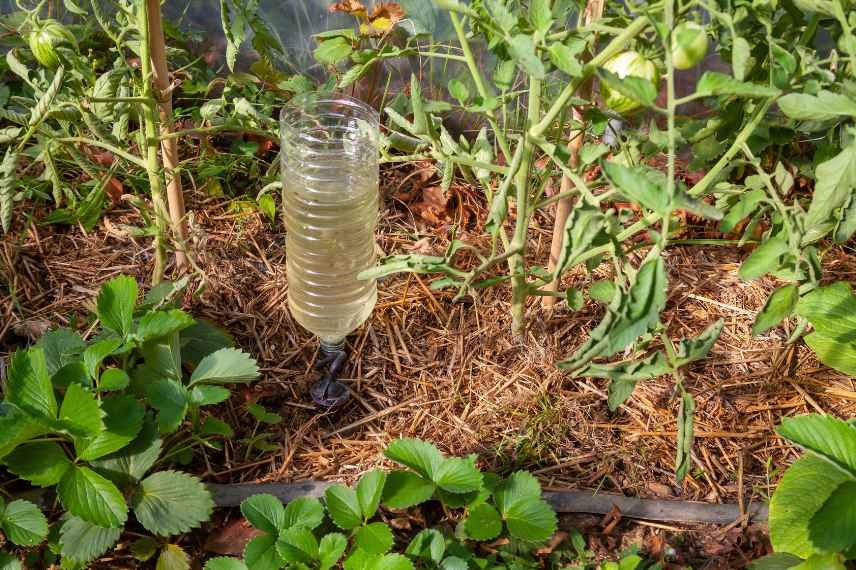
Putting down a good layer of mulch after a heatwave is essential
On areas left bare by uprooted vegetable plants, to stimulate soil microbial life, don’t hesitate to spread a thin layer of mature compost. You can also do this at the base of plants weakened by heatwaves, which will thus benefit from a quickly released nutritional boost — and without risk of burning roots.
Finally, forget fertilisers, which would be totally counterproductive: fertilising a stressed plant will exhaust it further. At a push, you can water with a weak dose of comfrey or nettle manure to stimulate soil microbes and wake exhausted soil. But be sparing!
Think about autumn crops
After a disastrous summer in your vegetable garden, it’s essential to turn the page. Admittedly harvests were poor, but think of autumn. The soil is still warm, a few storm showers have filled your water butts, you’ve done what you could to try to bring the soil back to life, so time for autumn and winter crops. You can now sow or plant kale, broccoli, Brussels sprouts, turnips, winter spinach, winter lettuces… and other tasty vegetables. They will benefit from cooler nights to establish themselves before the first frosts.
And if you feel your soil is really too tired for another vegetable crop, above all don’t leave it nude. Sow green manures immediately such as phacelia, winter vetch, rye, clover. These plants will aerate and structure the soil, feed the soil, provide shelter for microfauna and prevent proliferation of adventive weeds.
And above all, start anticipating summers to come that are likely to become even hotter over the years by rethinking the way you garden. Shading the vegetable garden will become indispensable, as will water management through installing drip systems, micro-porous hoses, ‘oyas, or the systematic collection of greywater.
- Subscribe!
- Contents
This form is protected by reCAPTCHA - the Google Privacy Policy and Terms of Service apply.

































Comments