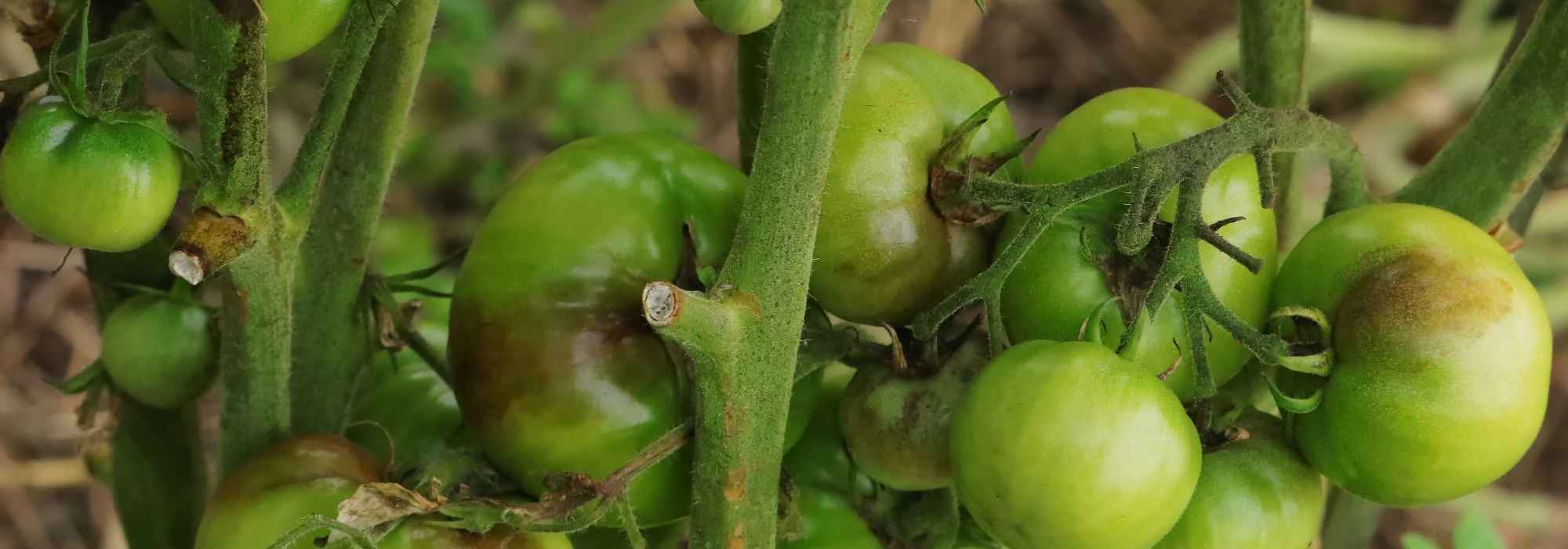
Why are my tomatoes no longer ripening after a heatwave?
All our advice
Contents
In the vegetable garden, growing tomatoes is always a source of pride for a gardener. What could be more beautiful and more delicious than lovely tomatoes, deep red (or yellow, or green…), that brighten the vegetable garden in the heart of summer? But with climate change, summers are getting hotter, heatwaves are becoming increasingly frequent and vegetables suffer. Gardeners go from despair to bewilderment when faced with tomatoes that seem stalled in their growth. How can you explain that your trusses of tomatoes are stalling and stubbornly staying green despite optimal sunlight? Why does the sun, so present and so useful for ripening fruiting vegetables, not redden your tomatoes?
We will try to explain these mechanisms that prevent your tomatoes from showing their best colours.

Dormancy in response to heat stress
Imagine standing motionless in the middle of your vegetable patch while the thermometer has been hovering around 40 °C for several days… You would hardly be up for any activity and would have only one objective: survive by drawing on your reserves. Up to a point. That’s a bit what your tomato plants go through in summers of very high temperatures or repeated heatwaves.
Indeed, when a heatwave strikes your vegetable patch, tomatoes tend to stop or delay their ripening. In practice, fruits have reached their normal size, are firmly attached to the stems but remain stubbornly green. This phenomenon is not the result of disease. And it’s nothing to do with you as gardener. Faced with excessive temperatures that exceed the plant’s comfort thresholds, the tomato plant initiates a genuine survival mechanism.
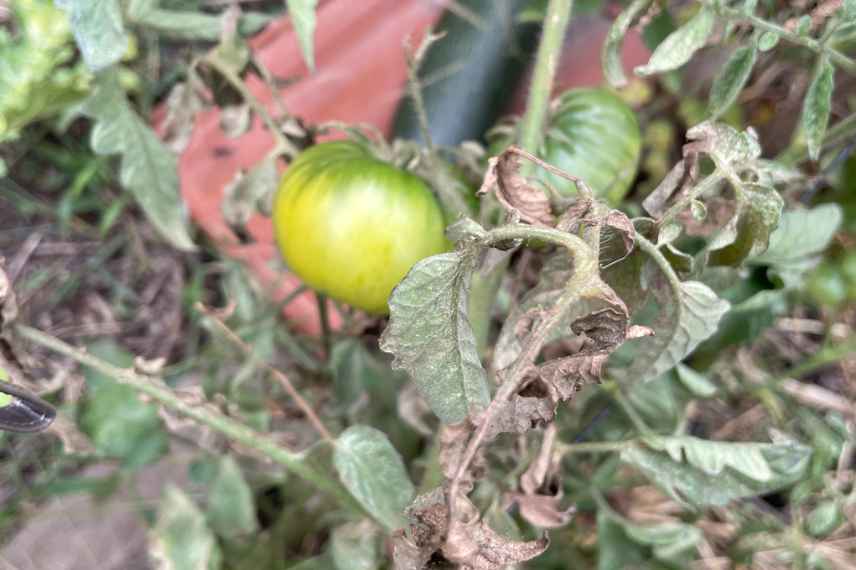
During a heatwave, tomatoes stop growing and do not turn red
Instead of wasting its nutrient and energy reserves on forming and colouring its fruits and, incidentally, making them sweeter, the tomato plant focuses all its energy on its essential functions. So it mainly seeks to limit evapotranspiration and to preserve its tissues, which must remain as hydrated as possible. Fruit ripening is therefore put on hold. Tomatoes take a forced pause in their natural cycle. Rather than fruiting to reproduce, they devote all their energy to survival.
Inhibition of pigment synthesis
Let’s now look at a more scientific reason, which we will try to explain as clearly as possible. Tomato flesh contains many pigments that directly affect its colour. Thus, most tomatoes are red simply because they are rich in lycopene, a red pigment very abundant in the flesh of ripe tomatoes — and a powerful antioxidant. For a tomato to change from bright green to deep red, it must synthesise this pigment using enzymes. However, these enzymes are very sensitive to heat and have a limited thermal tolerance. To function optimally and do their job, the ideal temperature is 20–25°C.
Once temperatures exceed 30–32°C for a prolonged period, these enzymes are inhibited. And lycopene synthesis stops. So your tomatoes remain green, at least as long as temperatures stay too high.
In contrast, gardeners who like to grow diversity by planting yellow- or orange-fruited tomatoes, such as varieties ‘Ananas’ or ‘Orange Queen’, may be surprised to see their tomatoes ripen normally while red tomatoes remain green. Quite simply because these tomato varieties contain little lycopene but a lot of beta-carotin, the pigment responsible for their yellow‑orange colour. This pigment tolerates heat much better than lycopene, so yellow- or orange-fruited varieties ripen despite high temperatures.
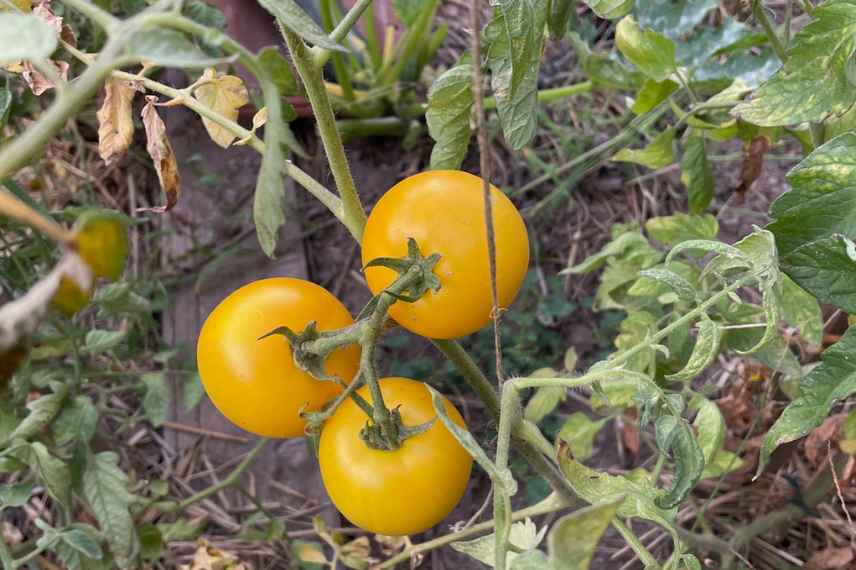
Because of pigments, yellow tomatoes ripen more easily during heatwaves
Impact of dehydration
Beyond mere pigment production, intense summer heat profoundly alters plant metabolism. Indeed, a young tomato plant exposed for a prolonged period to intense heat will burn its sugars and nutrients in an attempt to regulate its temperature. Consequently, it uses far more energy, and this excess consumption comes at the expense of fruit, especially when fruit are nearing the end of development. As a result, they fail to ripen.
Moreover, roots also suffer the consequences of intense heat, they cannot absorb water and soil minerals properly or sufficiently to compensate for massive evaporation from leaves. So, to limit water loss by evapotranspiration, they close their stomata, that is their pores. The logical consequence is clear: photosynthesis does not occur. So fruit wait for cooler days to resume their development.
Mistake to avoid...
During heatwaves, some gardeners think they are doing the right thing by removing foliage from their tomato plants. Simply because they imagine that tomatoes, stripped of their foliage and exposed to sunlight, will ripen faster. It may seem understandable but proves to be totally counterproductive. It is a mistake that will even make ripening problems worse. Why ?
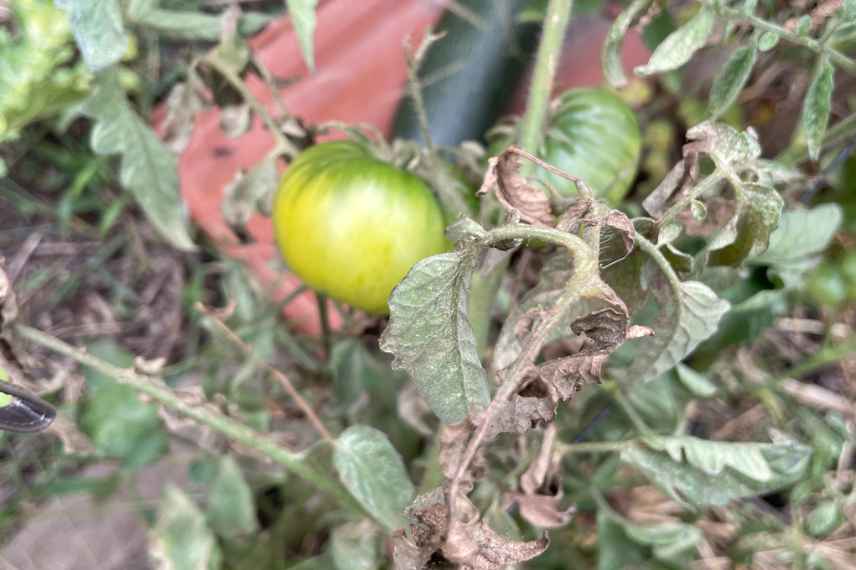
It is recommended to leave foliage, even when dry, on tomato plants during heatwaves
Leaves act as a thermal barrier because they directly shade fruit clusters. This foliage prevents tomato skin from burning and pulp from overheating. Indeed, a tomato exposed full-on to solar radiation reaching 40 °C or more will suffer true burns characterised by necrosis or white-to-orange spots. These burns permanently block any chance of ripening. So keeping foliage, even if also suffering from heat and drought, helps protect fruit epidermis from direct sunlight. And it gives time for better days to come…
- Subscribe!
- Contents
This form is protected by reCAPTCHA - the Google Privacy Policy and Terms of Service apply.

































Comments