
How to create wildlife shelters with garden waste in autumn?
5 ideas for providing shelter for small wildlife
Contents
In autumn, the garden suddenly produces an impressive amount of material: wheelbarrow-loads of fallen leaves, twigs, pruned branches, dry stems, pieces of wood… Before filling the trailer or green-waste bags, it is worth looking at this little haul differently, because a large part of this “waste” can be used to create refuges for garden wildlife. A few such materials, carefully arranged in a quiet spot, are often enough to provide hiding places, overwintering sites and shelter from bad weather and the fast-approaching winter.

Build a large pile of leaves to shelter small wildlife
Dead leaves are probably the easiest material to collect in autumn and the most useful for the smaller inhabitants of our gardens. Gathered into piles in a quiet corner, beneath a hedge, at the foot of shrubs or at the edge of a border, they provide shelter for hedgehogs, toads, frogs, ground beetles, woodlice and other small invertebrates. Hedgehogs can also use them to line their hibernation nests.
To make this refuge genuinely useful, it is better to create a sufficiently deep pile rather than a simple layer of scattered leaves. Mix the leaves with a few twigs or small branches to limit compaction and retain pockets of air inside. Slightly damp leaves are ideal, but avoid completely waterlogged and compacted heaps, which decompose quickly and provide fewer cavities and hiding places for small creatures.
Choose a quiet spot above all, where the pile can remain in place for several months. Once it has been set up, avoid turning it, moving it or taking leaves from it, as animals may already have taken refuge there. It is therefore better to plan another supply for mulching borders and leave this little corner undisturbed.

Stack the branches to create hiding places
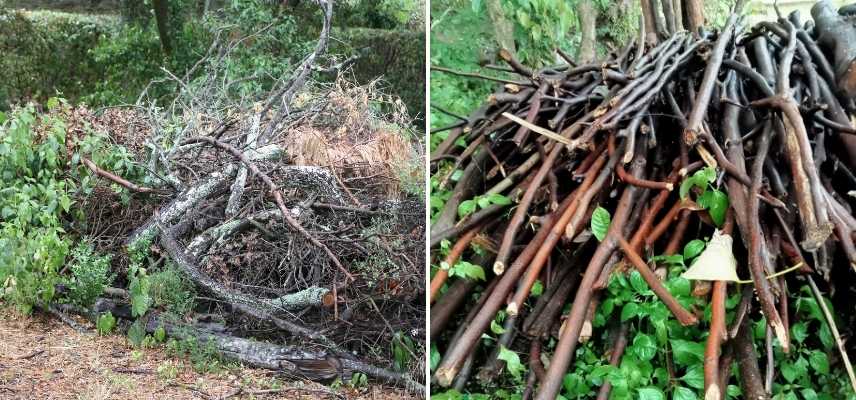
Prunings from shrubs, twigs and branches collected in autumn can also become very useful. Stacked in a quiet corner, they create a multitude of cavities where insects, spiders, woodlice, toads, newts and sometimes a few small mammals can shelter.
Start by placing the thickest branches at the base, then add the thinner twigs on top, without trying to make the pile too compact. It is precisely the irregularity of the whole that makes it valuable: the gaps between the pieces of wood provide hiding places of different sizes. Place this pile at the foot of a hedge, behind a bed or in a little-used corner of the garden, preferably sheltered from the wind.
In winter, this woodpile provides shelter for many small animals and insects seeking protection from the cold. Then, over the months and seasons, the wood begins to decompose and gradually attracts fungi, saproxylic insects (which depend on dead wood) and other organisms that contribute to its natural recycling. A good reason to leave this refuge in place for several seasons!
And with a bit of luck, you may, like me, have the joy of spotting a mother hedgehog in spring, accompanied by her young, emerging from this woodpile. A lovely encounter that makes you want to leave a few piles of leaves and branches lying around the garden!
Leave dead wood on the ground
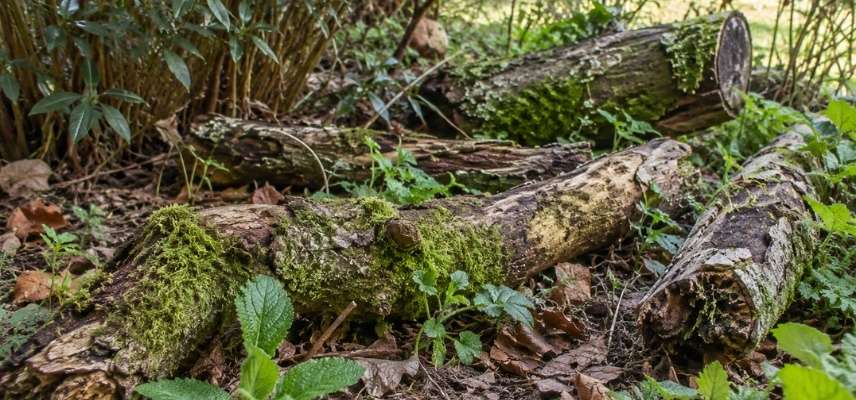
Large branches, logs and pieces of wood collected after pruning or a fallen branch can simply be kept in the garden. Placed directly on the soil, dead wood gradually becomes a refuge for woodlice, ground beetles, spiders, centipedes and many other small organisms. The cool, damp areas that form underneath can also be appreciated by some amphibians, such as toads and newts.
Place a few pieces in a quiet spot, preferably in shade or partial shade, under a hedge or behind a border. There is no need to build anything: contact with the soil is enough to encourage moisture, the ageing of the wood and its gradual colonisation by fungi, insects and decomposer organisms.
Over time, the wood cracks, the bark lifts and new cavities appear. This decomposition process is precisely what makes it valuable: an old, slightly mossy and worm-eaten piece of wood often provides both shelter and food for garden biodiversity.
Read also
How to rewild your garden?Tie dry stems into bundles for insects.
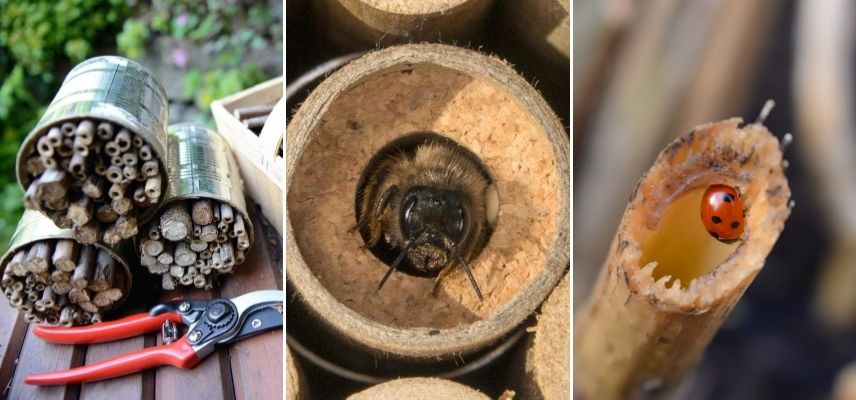
Dry stems from perennials can also find a second use after pruning. Some are hollow, while others contain soft pith: these cavities can provide shelter or nesting sites for certain solitary bees and other small insects such as ladybirds.
After cutting, gather the stems into small bundles. Place them in a spot sheltered from the rain, beneath a roof overhang, in an open shed, against a fence or incorporated into a hedge. Arrange them horizontally or at a slight angle to prevent water from pooling inside. Also try to vary the diameters and textures, as this will provide different hiding opportunities for the insects found in the garden. You can even reuse an empty tin can to stack and hold these stems in place (see our photo below).
Some solitary bees lay their eggs inside hollow or soft-pith stems. Their larvae grow there in shelter, nourished by the stores of pollen and nectar left by their mother. They then develop into adult bees, which may emerge from the stems several months later, depending on the species. So avoid removing or shredding the bundles too quickly in spring, even if they appear to be uninhabited!
→ For further reading, do also take a look at our article “Welcoming garden insects: 7 shelters to build yourself”.
Creating a dead hedge with prunings
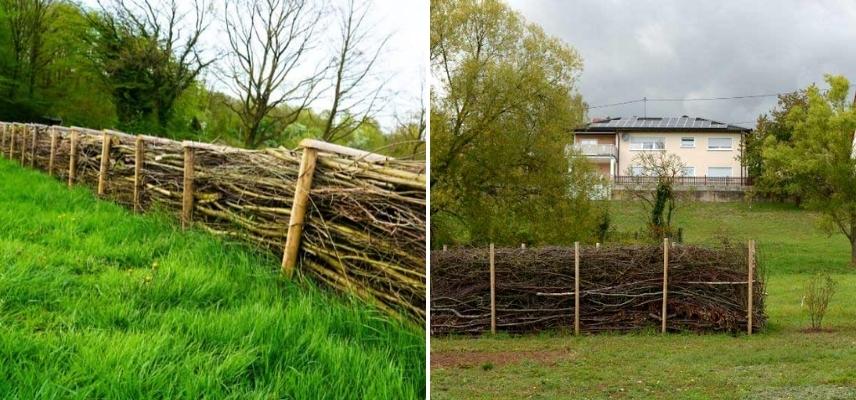
If autumn pruning starts to pile up, a dead hedge is a good way to reuse it without shredding or removing everything. The principle is to stack branches, smaller branches and twigs between two rows of stakes, forming a long, open structure.
This installation creates numerous gaps where insects, spiders, woodlice and other small animals can take refuge. Depending on its position and the garden, it can also provide occasional shelter for amphibians or small mammals. As it ages, the woody material settles and begins to decompose, making the hedge increasingly valuable to organisms that feed on dead wood: fungi, mosses and saproxylic insects.
Install it preferably along the edge of a plot, at the back of the garden or alongside an existing hedge, where it can remain for several years without obstructing access. Then add new prunings on top as the seasons go by: the structure will renew itself naturally, without requiring much care.
→ For further reading, also see our article: “How to create a dead hedge?”
- Subscribe!
- Contents
This form is protected by reCAPTCHA - the Google Privacy Policy and Terms of Service apply.


































Comments