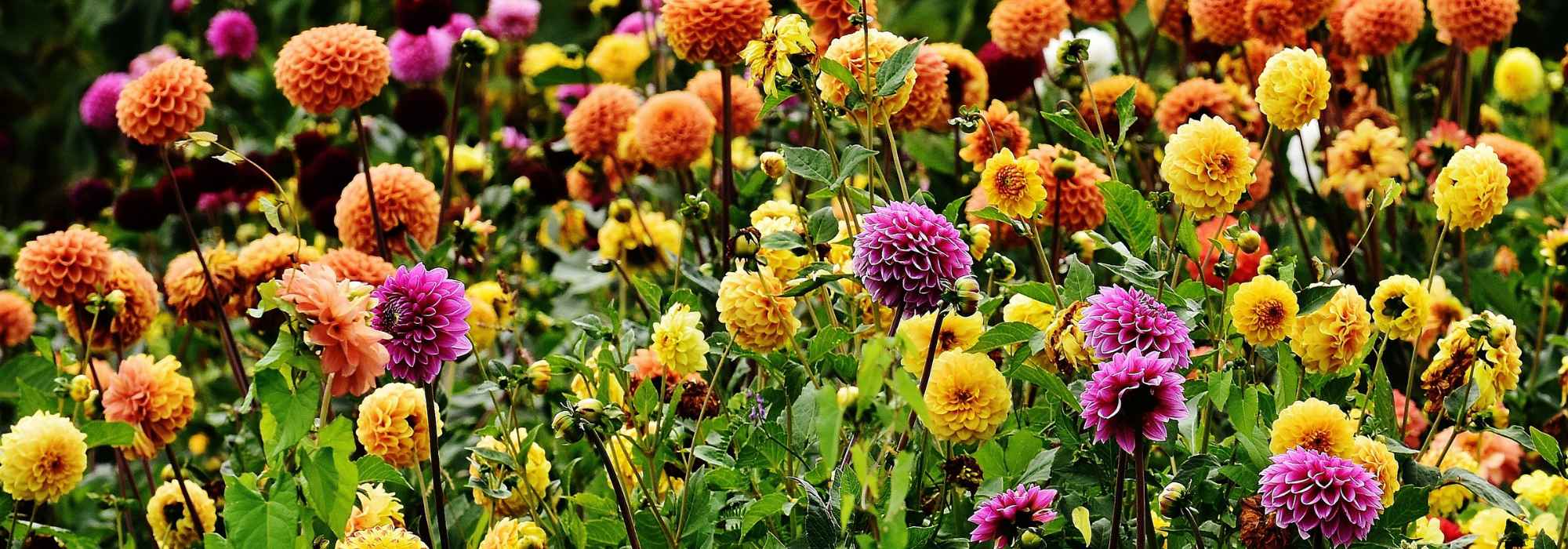
Can dahlia tubers be left in the ground over winter?
Is it essential to overwinter dahlias, which are tender by nature?
Contents
Leaving dahlia tubers in the ground over winter is perfectly possible, provided frosts are mild or infrequent and the soil is very well drained. In regions with cold, wet winters, it is best to lift them and store them under cover, otherwise the tuberous roots may rot. How you overwinter your dahlias depends on the climate, the soil and the winter protection you can put in place.

The essentials of overwintering dahlias in the ground
|
Read also
Dahlia: planting, care and growing tipsWhy are dahlia tubers sensitive to cold?
Unlike daffodils, tulips and hyacinths, which have true bulbs, dahlias have tuberous roots. This is a major difference. True bulbs have a protective tunic, with nutrient reserves concentrated in their fleshy scales. As a result, bulbs left in the ground can withstand winter frost without any problems.
By contrast, dahlias, which originate from the sunny high plateaux of Central America, have no natural mechanism to cope with frozen, waterlogged soil for long periods. Their fleshy, water-filled tuberous roots freeze as soon as temperatures reach -2 to -5 °C. The cells then burst, causing the bulbs to die. What’s more, wet winters turn cold ground into damp traps where the fungi responsible for rot quickly develop.
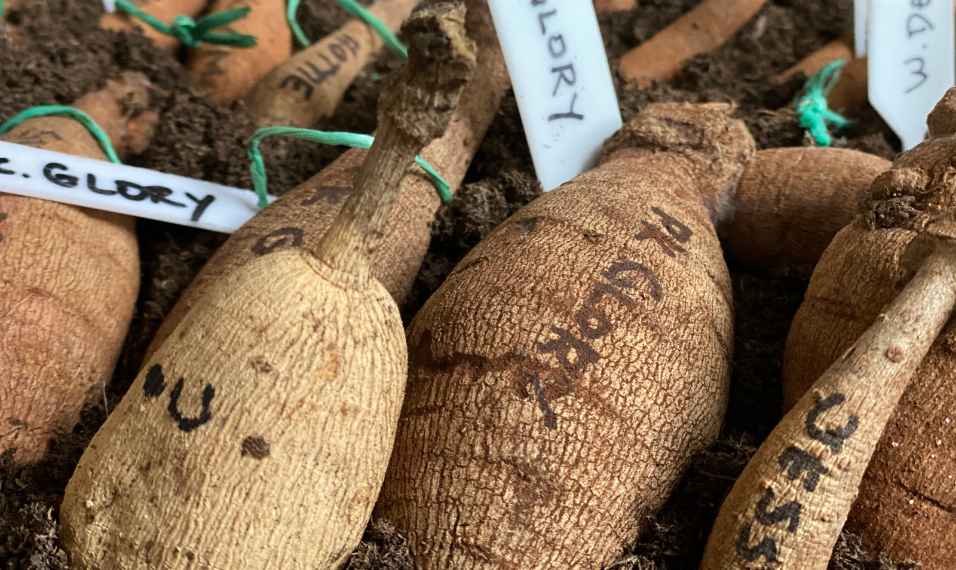
Dahlias have no natural mechanism to cope with frozen, waterlogged soil for long periods.
Under what conditions can dahlias be left in the ground?
In summary, dahlias can overwinter in the ground in a well-drained bed in a sheltered spot. So, you need to consider both frost and how your soil behaves.
A few light, exceptional frosts lasting only a short time will not damage the crown. But if the cold lasts long enough for the ground to freeze down to the tubers, the crown may be lost. If temperatures regularly fall below −5 °C at night and the cold spell continues, we recommend lifting the dahlias.
It is essential to check the soil in your beds after a spell of rain. Soil can remain moist while still draining away excess water. However, if puddles persist or the soil stays sticky and waterlogged for several days after rain, the tubers may rot even during a mild winter. In the same garden, a slightly raised border may be suitable, while a sunken bed where water runs off the paths will mean you need to lift the dahlias.
| Conditions in the garden | What should you do with the dahlias? |
| Light, infrequent frosts; soil that drains away excess water | Dahlias can stay in the ground under a thick mulch |
| Mild winter, but soil often waterlogged | Lift the dahlias and store them somewhere cool and frost-free |
| Severe, prolonged frosts, even in light soil | Lift the tubers before the first frosts |
| Uncertain microclimate; several plants of the same variety | Leave a few plants under mulch and lift the others to assess their hardiness |
Our advice: If you have only one plant of a variety you particularly value, we recommend lifting it and keeping it somewhere frost-free. If, however, you have several plants of the same variety, lift some and leave the others in the ground. This is the best way to see how the tubers fare in your soil, even though weather conditions can vary from one year to the next.
How do you protect dahlias left in the ground?
From November onwards, after the first frost has blackened the foliage, cut the stems back to 10-15 cm above ground level with secateurs and cover the crown with mulch about 15 cm deep. Make sure you spread the mulch wide enough to cover the whole area beneath which the tubers are growing.
You can use several types of mulch, as long as they are completely dry: straw, dead leaves, ramial chipped wood, dry ferns, flax shives…
Lay the mulch without compacting it, and place a durable label near the base of the plant before covering it. This will stop you planting or digging in that spot in spring, before new shoots make the clump visible.
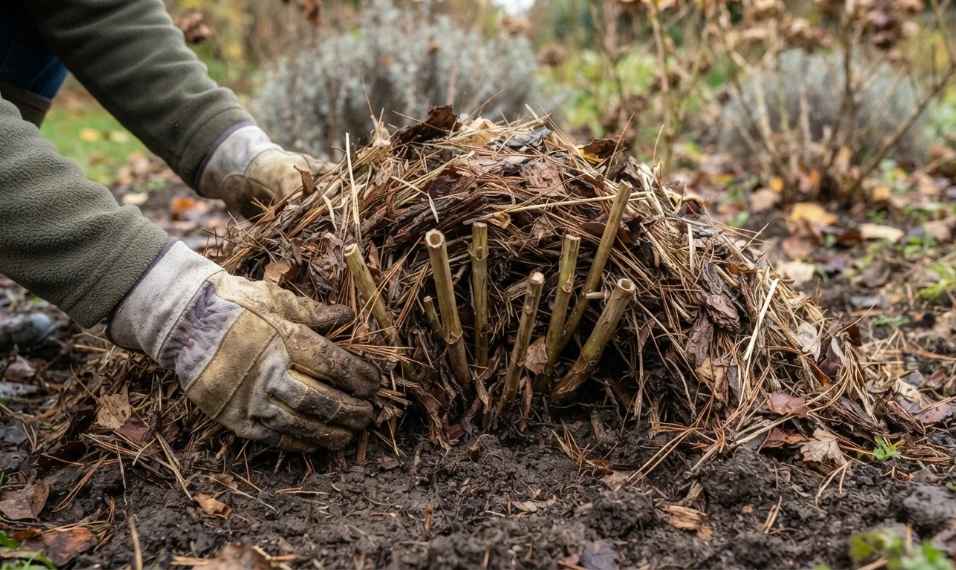
To protect dahlias left in the ground, lay mulch at least 15 cm deep (AI-generated image)
In windy areas, it is advisable to place dead branches on top of the mulch to stop it blowing away. In areas that may be rainy, it is best to place ridge tiles, a large upturned pot, a perforated waterproof tarpaulin or fleece on top of the mulch… to prevent the rain from soaking the mulch too thoroughly, while allowing some air to circulate. In any case, check regularly that the mulch is not waterlogged or sodden, as this could cause the tubers to rot. If it is, replace it to see the plants through the rest of winter.
When should you lift dahlias and how should you store them?
Dahlias should be lifted at the end of the growing season, usually after the first light frost, before a hard frost reaches the soil around the tubers. If the foliage has finished its growing cycle and a prolonged cold spell is forecast, get on with it before all the leaves have turned black. If possible, choose a day when the soil crumbles easily:
- Cut the stems back to about 15 cm above ground level.
- Push a garden fork into the ground about 25–30 cm from the base, then gently lift the clump with a levering motion to avoid damaging the fleshy tubers. The tubers sometimes spread well beyond the visible stems. Inserting the fork too close to the base can cut into them.
- Shake off most of the soil, remove any damaged parts of the tubers, then label the clumps before putting them in the same crate.
- If the soil remains stuck in wet clumps, leave it to dry slightly under cover in a dry, well-ventilated place before removing it by hand. The aim is to free the crown without scraping the tubers.
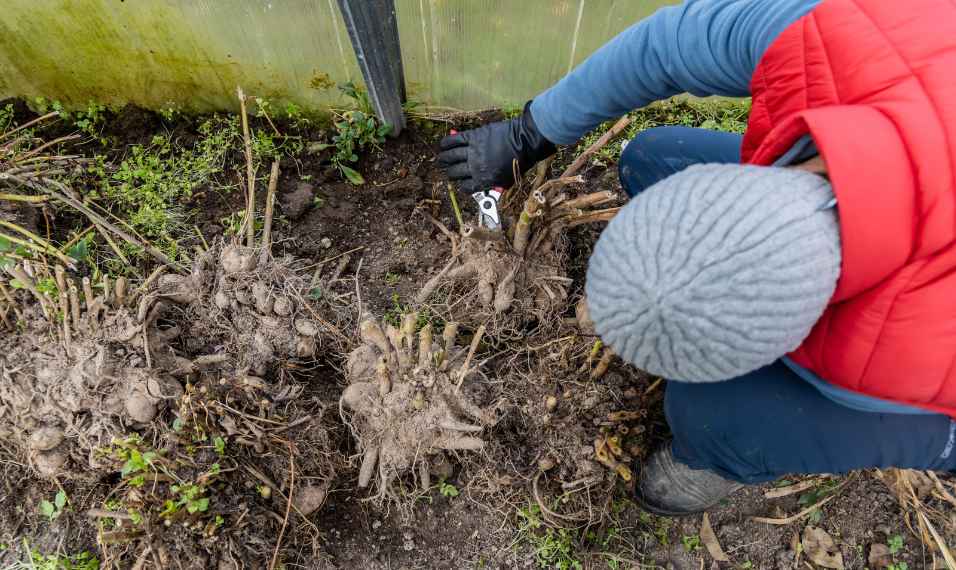
Dahlias should be lifted at the end of the growing season, usually after the first light frost.
Crates of tubers should be stored in a cool, well-ventilated, frost-free place, preferably in the dark, at a temperature of between 5 and 10 °C. Sand or newspaper can be placed between the tubers to protect them.
Check dahlia tubers regularly while they are in storage over winter. Remove any soft or rotten tubers before they damage those they are touching. Keep healthy clumps intact until spring if you plan to divide them.
What should you do in spring to help dahlias get established?
Whether your dahlias have remained in the ground or have been lifted, there are a few things to do when spring arrives.
How can you encourage dahlias left in the ground to start growing again?
First, as soon as the soil warms up and there is no longer any risk of severe frost, remove the protection and pull back the mulch. If shoots are emerging and late frost is forecast, protect them overnight with fleece. Check the young stems as soon as they appear, especially after rain. Above all, keep an eye out for slugs, which love young dahlia shoots.
If the dahlias are still nowhere to be seen, mark their position before tidying the bed. Clear away debris by hand around the base, without using a hand fork that could damage the shoots.
What should you do with dahlias stored out of the ground?
For tubers kept in crates, wait until the risk of frost has passed and the soil has warmed up before replanting. Take the opportunity to inspect the crown. Keep the firm parts bearing buds and remove any that have rotted. You can also start the crowns off in pots under cover to encourage them to get growing sooner, then plant them outside when conditions allow.
Frequently asked questions about overwintering dahlias
Can you leave a dahlia in its pot over winter?
Yes, a dahlia can spend the winter in its pot if you move the container to a frost-free place. If the pot is too heavy to move and winters are mild where you live, shelter it from the rain, insulate its sides and mulch the surface. If prolonged frosts are common, it is safer to lift the rootstock from the pot and bring it indoors. Do not water it at all during the winter.
Can you leave dahlias in the ground for several years in a row?
Yes, a dahlia rootstock can stay in the same place for several years if it gets through winter without freezing or rotting. If the clump takes up too much space or produces too many crowded stems, lift it in spring and divide it when the buds become visible.
Why hasn’t my dahlia left in the ground come back in spring?
Cold soil can delay a dahlia’s regrowth. If the soil has warmed up and nearby dahlias have already started growing, first look for remnants of shoots that have been nibbled. If there is no sign of regrowth, gently brush away a little soil at the edge of the rootstock. Soft tubers that crumble under your fingers indicate rot.
Are voles and field mice likely to eat dahlias left in the ground?
Yes, this is one of the main risks of leaving dahlias in the ground over winter. Voles and field mice particularly enjoy dahlias’ fleshy tubers and can eat them all during the winter. In areas with large rodent populations, it is therefore strongly advisable to lift and store them under cover to avoid any nasty surprises in spring.
- Subscribe!
- Contents
This form is protected by reCAPTCHA - the Google Privacy Policy and Terms of Service apply.

































Comments