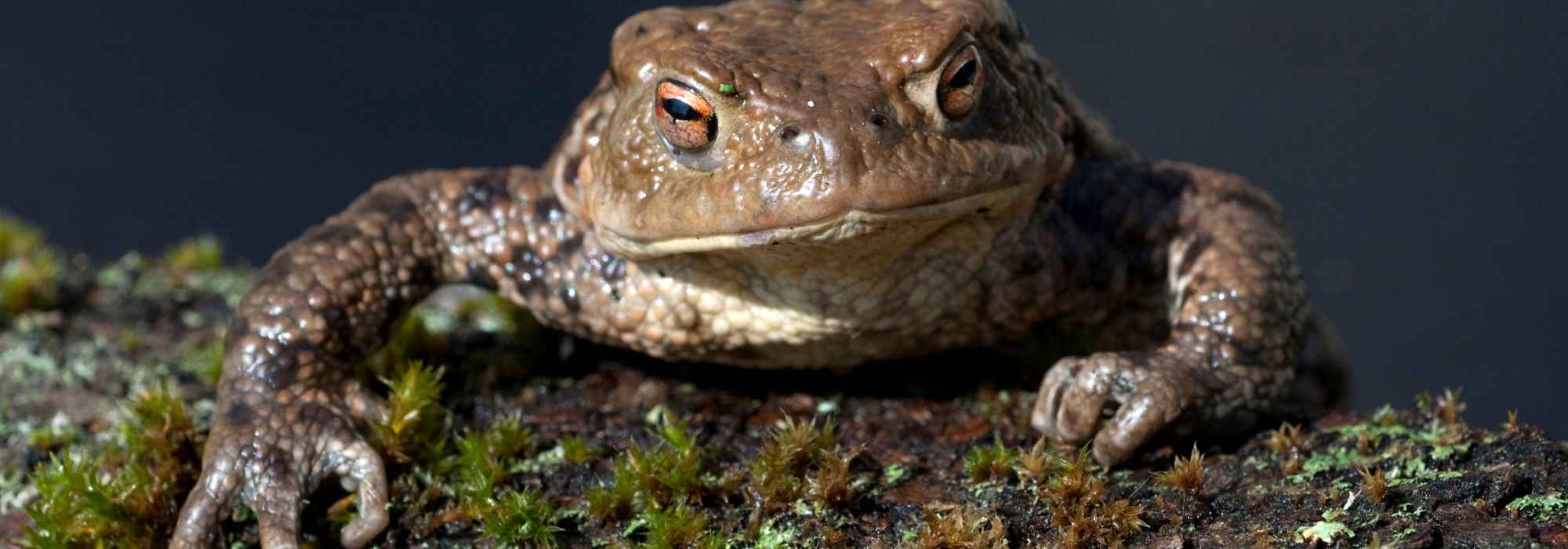
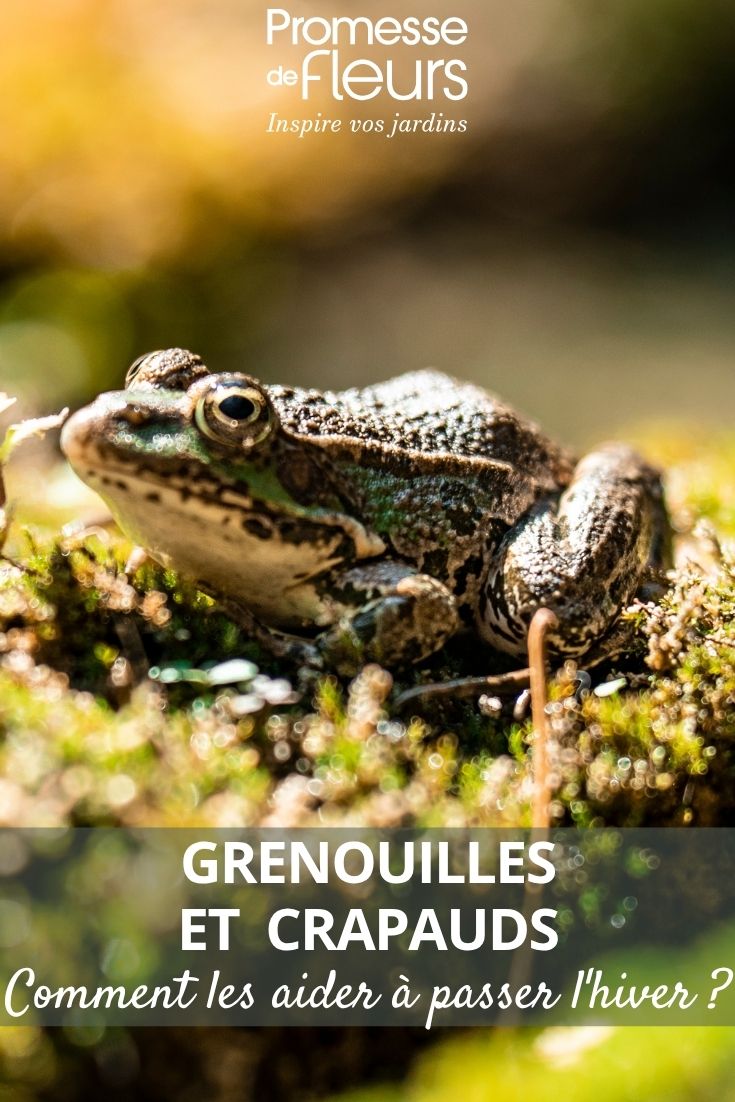
How to help frogs and toads through the winter?
Our tips for helping amphibians hibernate in the best possible conditions
Contents
As autumn approaches, temperatures drop dramatically. While mammals maintain their body temperature, amphibians, cold-blooded animals, have to struggle. Quite simply because their metabolism depends entirely on the outside temperature. That is why, when the mercury falls, the heart rate and breathing of frogs and toads slow down, plunging these animals into a state of torpor. They hibernate and must prevent their bodies from freezing. Most rely on physical protection to get through this period. This is where you can help by adapting your garden to help them survive the winter.

What physiological changes do amphibians undergo in winter?
Physiologically speaking, the transition into winter causes major changes in amphibians.
A decidedly slower pace of life
When the cold sets in, their brains detect the drop in temperature and react immediately: hormone production stops and the period of winter dormancy can begin. A period specifically known as “brumation” when it concerns cold-blooded animals. The difference is that their metabolism adapts and slows down without frogs and toads entering the deep sleep associated with marmots.
In practical terms, their heart rate and respiratory frequency slow down dramatically to reduce energy expenditure to an absolute minimum, while the digestive system comes to a complete halt. To prevent their cells from being destroyed by frost, the livers of many species release glucose or glycerol into the bloodstream. It is rather like their bodies creating their own natural antifreeze. The skin also changes its permeability to maximise the absorption of the small amount of oxygen available in the soil or water. Indeed, as a reminder, amphibians breathe through their skin.
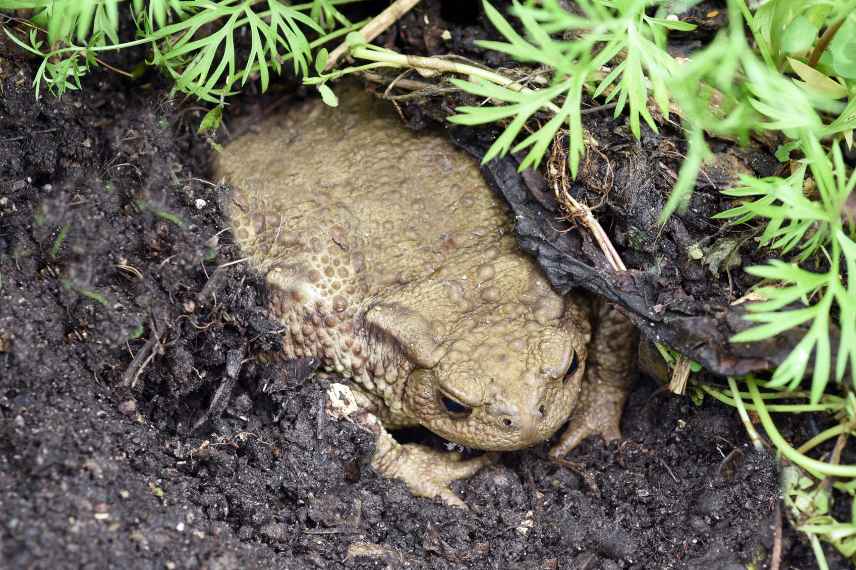
The common toad overwinters below ground, in a frost-free area.
Overwintering on land or in water
Amphibians therefore live at a slower pace, which enables them to survive for several months without feeding. Each amphibian adapts according to its usual way of life. Aquatic frogs such as the edible frog (Pelophylax esculenta), very common around ponds and other bodies of water, sink to the bottom of pools and bury themselves beneath the mud. Terrestrial frogs, on the other hand, adapt in different ways: the common frog (Rana temporaria) sinks into the water or spends the winter hidden on land, while the agile frog (Rana dalmatina) seeks refuge solely on dry land. As for the common toad, it also stays on land in winter. Generally, they burrow into the soil to find a frost-free area.
How can you help aquatic frogs?
For green frogs and other aquatic frogs, the bottom of ponds provides an ideal refuge in which to spend the winter. These amphibians burrow into the mud and absorb oxygen dissolved in the water directly through their skin. Quite reasonably, if you have a pond, you may be wondering what you can do for green frogs…
It all starts in autumn with cleaning the pond. But be careful: both too much and too little cleaning can be harmful. You need to remove the plant debris that has settled on the bottom, as it can ferment and deprive the medium of oxygen. However, you should not dredge the bottom too intensively, as this could remove the sediments where the frogs shelter. So, remove the leaves that have settled on the bottom by hand before the first frosts, but leave a little mud on the bottom.
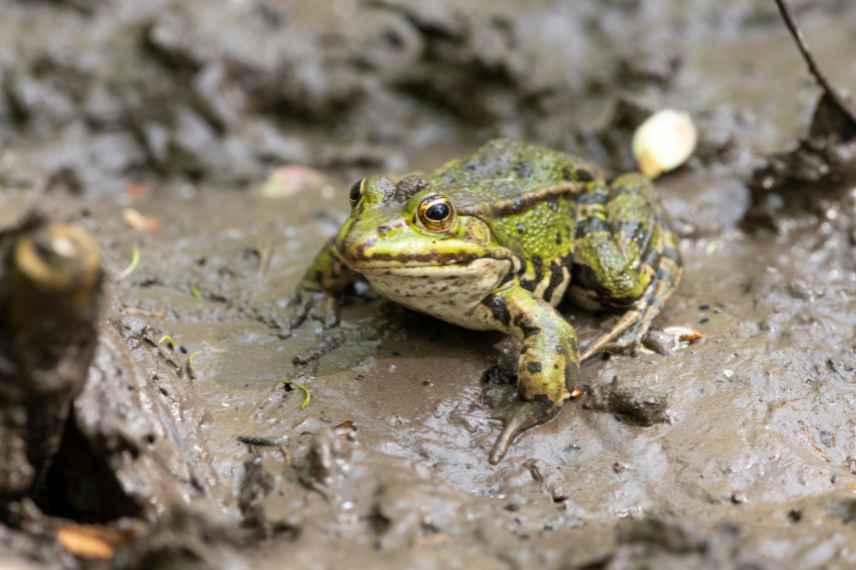
The green frog (Pelophylax esculenta), very common around ponds and pools, burrows into the bottom of ponds to bury itself beneath the mud.
Next, to provide them with the best possible conditions for overwintering, the ideal depth of water is 80 cm to 1 m. This prevents the water from freezing at depth and gives the frogs enough water to survive. Provided that gas exchange takes place properly! This is why, when a layer of ice forms on the surface, it is advisable to break it. Otherwise, toxic gases produced by the decomposition of plant material would remain in the water and the oxygen would not be replenished. However, we would advise against hitting the ice to break it, to avoid shock waves. Simply place a saucepan of boiling water on the surface. Alternatively, placing a bundle of wood, a floating ball or a commercially available anti-frost bell system is enough to prevent a layer of ice forming on the surface.
How to support terrestrial amphibians?
A large proportion of amphibians, such as the common toad and common frog, spend the winter on dry land in your garden. They need dark, damp, frost-free shelters in which to overwinter. It is relatively easy to provide them with these shelters in a quiet corner of the garden. Simply pile up natural materials, which will also provide shelter for dormant insects and possibly small mammals:
- A pile of dead wood is ideal because it provides warmth and moisture as the wood decomposes. Simply stack a few logs, branches and pieces of bark along a hedge… possibly covering them with a good layer of fallen leaves held in place by a filament
- Dry-stone walls are also an effective solution, as the gaps between the stones allow amphibians to burrow underground while benefiting from the warmth of the sun stored during the day and released at night.
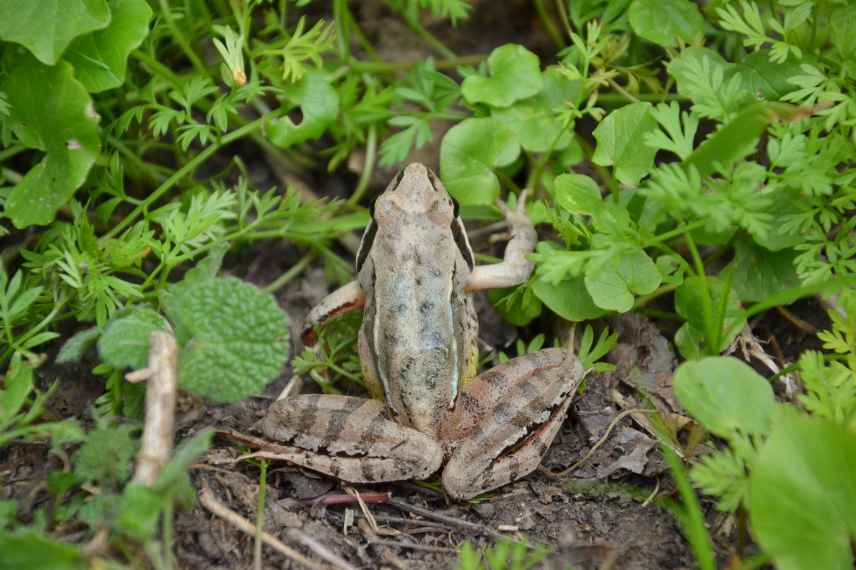
The agile frog spends the winter buried in the soil.
Read also
Toad, a useful animal to preserveWhat about making an hibernaculum?
What’s that, you ask? An hibernaculum is an artificial structure that mimics the natural cavities where toads and terrestrial frogs burrow. And it can be made from reclaimed materials!
Construction steps:
- Choose a quiet, partially shaded and slightly raised spot.
- Dig a pit approximately 50 to 80cm deep and covering 2m².
- Line the bottom of the pit with broken roof tiles, hollow bricks, broken terracotta pots, stones…
- Lay fine-mesh wire over it to prevent soil from blocking the gaps.
- Fill the pit with twigs and dead leaves, then cover them with a layer of topsoil.
- Make several small openings at ground level to make it easier for amphibians to enter the shelter.
A few extra little touches…
Beyond creating shelters, helping toads and frogs through winter involves a few simple garden care tasks:
- Avoid chemical products, as amphibians’ skin is highly permeable.
- Take great care when clearing scrub or raking, and when turning the compost in autumn.
- Seal anything that could act as a trap: water inspection chambers, basement vents, empty flower pots…
- Subscribe!
- Contents
This form is protected by reCAPTCHA - the Google Privacy Policy and Terms of Service apply.

































Comments