
Should faded perennials be pruned before winter?
Our advice on avoiding pruning mistakes in autumn
Contents
Not all faded perennials should be pruned before winter. While some benefit from a little autumn tidy-up, others are best left with their dry stems and foliage until spring. The choice depends on the species, the condition of the plant and the climate. Find out which perennials to cut back, which to leave in place and why.

Everything you need to know about pruning perennials before winter
|
Why leave faded perennials in place over winter?
Leaving perennial stems and foliage in place in autumn has several advantages. A less tidy garden can cope better with winter while providing resources for small wildlife.
Protecting the crowns from the cold
As they collapse, the stems and dry leaves form a natural protective barrier against the cold, rather like an insulating winter mulch. Temperature fluctuations at soil level will therefore have less impact on the root system and the plant’s crown. This is particularly useful for certain perennials that are relatively sensitive to cold, such as gauras and penstemons.
Helping perennials replenish their reserves
Admittedly, yellowing stems and leaves no longer nourish the plant. But as they decompose over the winter months, they return to the soil the minerals absorbed during the growth cycle. The plant is therefore nourished for spring, with minerals that are perfectly suited to it.
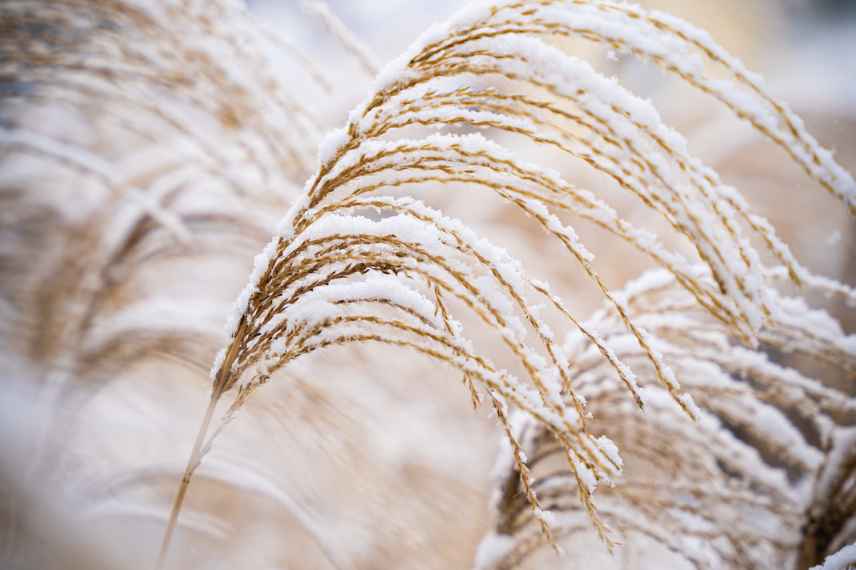
Not cutting back grasses in winter helps preserve refuges for small wildlife and extends the interest of beds.
Preserving biodiversity and visual appeal
Hollow or dry stems can shelter insects such as certain solitary bees, lacewings and small parasitoid larvae during winter. The seeds of coneflowers, rudbeckias and other perennials are also a food source for certain birds, such as blue tits and European goldfinches.
Finally, the spikelets of grasses and the flowerheads of yarrows and coneflowers are highly decorative, especially when covered in frost.
Which perennials should you not prune before winter?
It is preferable to leave the foliage and stems of perennials with ornamental fruit, cold-sensitive species and evergreen plants in place. Pruning can wait until the end of winter:
- Coneflowers, rudbeckias, eryngiums and autumn stonecrops retain their architectural stems and flowerheads. Asters and yarrow can also be left in place if their above-ground parts are healthy.
- Gauras and penstemons should be left until the end of the severe frosts, as their old stems protect the base of the plants. In cold regions, suitable mulching can provide additional protection.
- Deciduous grasses such as miscanthus and moor grasses should also be cut back at the end of winter, before new shoots start to grow. Pruning increases the risk of water getting into the leaves.
- Evergreen perennials such as elephant’s ears, heucheras and barrenworts… do not need to be cut back in autumn. Simply remove damaged leaves.
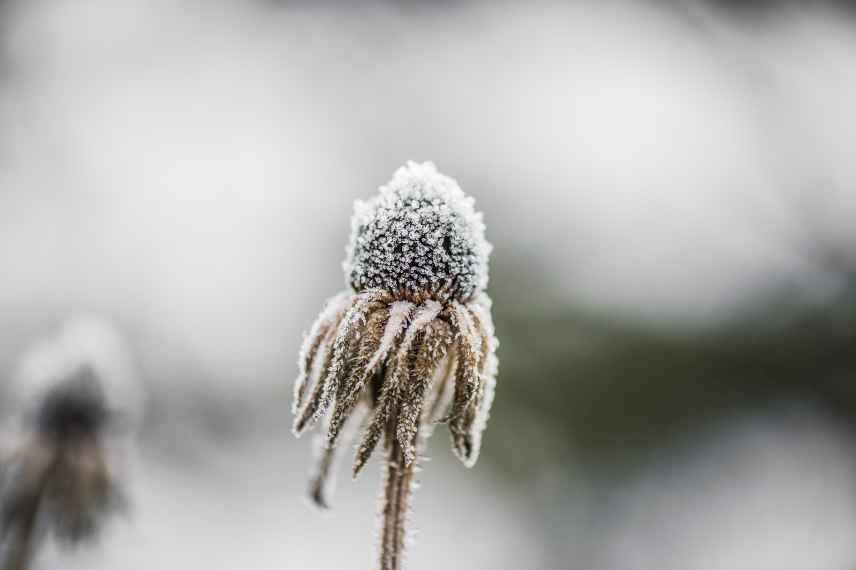
Coneflowers produce ornamental flowers in winter, which also provide food for some birds.
Read also
Care of perennial plantsWhich perennials can be pruned in autumn?
Some perennials are pruned in autumn, mainly to remove diseased, damaged or rotten parts. This pruning prevents decomposing debris from building up around the crowns and helps reduce the risk of disease:
- Herbaceous peonies are a good example. Once their foliage has completely died back, usually in late autumn, you can cut the stems back close to the ground. This cleaning is particularly recommended to reduce the risk of diseases such as botrytis.
- Hostas often develop soft foliage in autumn, after the first frosts. These leaves can be removed as they decompose.
- Garden phlox and bergamots are prone to powdery mildew. It is therefore preferable to remove diseased parts rather than leave them in place.
- Delphiniums can be cut back in autumn, once their foliage has completely died back, usually after the first frosts. Excess moisture at the base can be harmful.
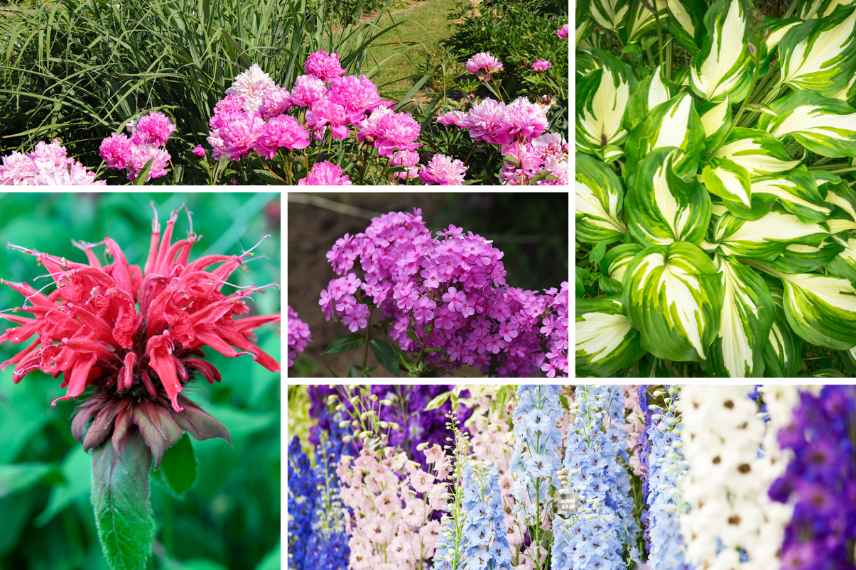
Herbaceous peonies, hostas, bergamots, garden phlox and delphiniums can be pruned in autumn.
And what about irises? Should they be pruned in autumn? Not necessarily. Their still-green leaves contribute to the plant’s functioning. However, yellowing, dry or diseased leaves should be removed.
Which perennials should be pruned in autumn? Which perennials should be left as they are?
The right time to prune depends mainly on the type of foliage, the plant’s hardiness and its state of health. In a cold region or a very damp garden, you will need to adjust pruning and winter protection.
| Perennials | When to prune? | Specific advice |
| Yarrow | Late winter | Keep the dried umbels |
| Deciduous agapanthus | Autumn or late winter | Remove dead leaves and protect the crown in cold regions |
| Michaelmas daisy | Late winter | Keep healthy stems and seeds |
| Elephant’s ears | Quick tidy-up | Keep healthy foliage |
| Delphinium | In autumn | Cut back after the foliage has completely dried |
| Coneflower and rudbeckia | Late winter | Keep the seeds and dry stems |
| Gaura | In spring | Wait until the severe frosts are over |
| Daylily | Autumn or late winter | Remove dead foliage |
| Heuchera | Quick tidy-up | Keep healthy foliage |
| Hosta | Autumn or late winter | Remove decomposing leaves |
| Miscanthus and moor grass | Late winter | Cut back before new shoots appear |
| Bergamot | In autumn if the foliage is diseased, otherwise in late winter | Watch out for powdery mildew |
| Penstemon | In spring | Wait until the severe frosts are over |
| Herbaceous peony | In autumn | Cut back after the foliage has dried |
| Autumn stonecrop | Late winter | Keep the decorative flowerheads |
How to prune before and after winter?
For autumn pruning, wait until the foliage has completely died back, and leave the foliage that is still green, as it helps replenish the plant’s nutrient reserves. Using clean, disinfected and well-sharpened secateurs, cut the dry stems back to a few centimetres above the ground, taking care not to damage the base of the plant. Take this opportunity to remove any diseased or rotten parts, and avoid allowing damp debris to build up around the crowns.
For late-winter pruning, which applies to most deciduous perennials, prune between February and April, depending on the region, before or at the beginning of new growth. With clean, disinfected secateurs, cut the old stems close to the base, taking care not to damage the young buds. Deciduous grasses can be cut back to around 10 to 20 cm above the ground, depending on their growth. For evergreen grasses, simply remove the dead leaves.

Coneflowers and autumn stonecrops are best pruned in late winter.
Healthy plant debris can go into the compost, while anything showing signs of disease should be taken to the local recycling centre. You can also leave a few dry stems in a quiet corner of the garden for beneficial insects, which may find shelter there.
FAQ: Your Questions About Pruning Perennials
Can perennials be pruned after the first frosts?
Yes, hardy herbaceous perennials can be pruned after the first frosts, once their foliage has completely died back. However, it is better to postpone pruning frost-sensitive species until spring and retain any parts that are still green.
Will perennials grow back if they are cut right down in autumn?
Hardy herbaceous perennials generally grow back in spring after being cut back in autumn, provided that their crowns are not damaged. This is no reason to cut back every plant: evergreen perennials and less hardy species may not tolerate severe pruning well.
Should faded flowers be cut off perennials in autumn?
It is not essential. Leaving faded flowers in place allows you to enjoy some decorative seedheads and their seeds. However, removing the flowers before the seeds form can be useful for limiting self-sowing in species that spread abundantly by seed.
Can the dry stems of perennials be left until April?
Yes, the dry, healthy stems of many perennials can be left in place until April. However, keep an eye out for new shoots so that you do not damage them when clearing away the old growth, and intervene earlier if the old vegetation becomes too untidy.
Can the base of perennials be mulched after they have been pruned?
Yes, a light organic mulch made from well-dried fallen leaves or ramial chipped wood effectively protects freshly cut-back crowns during periods of occasional frost.
What should you do with prunings from diseased perennials?
You must dispose of them at a recycling centre or burn them if local legislation permits. Never put them in the compost to prevent the spread of disease spores.
- Subscribe!
- Contents
This form is protected by reCAPTCHA - the Google Privacy Policy and Terms of Service apply.


































Comments