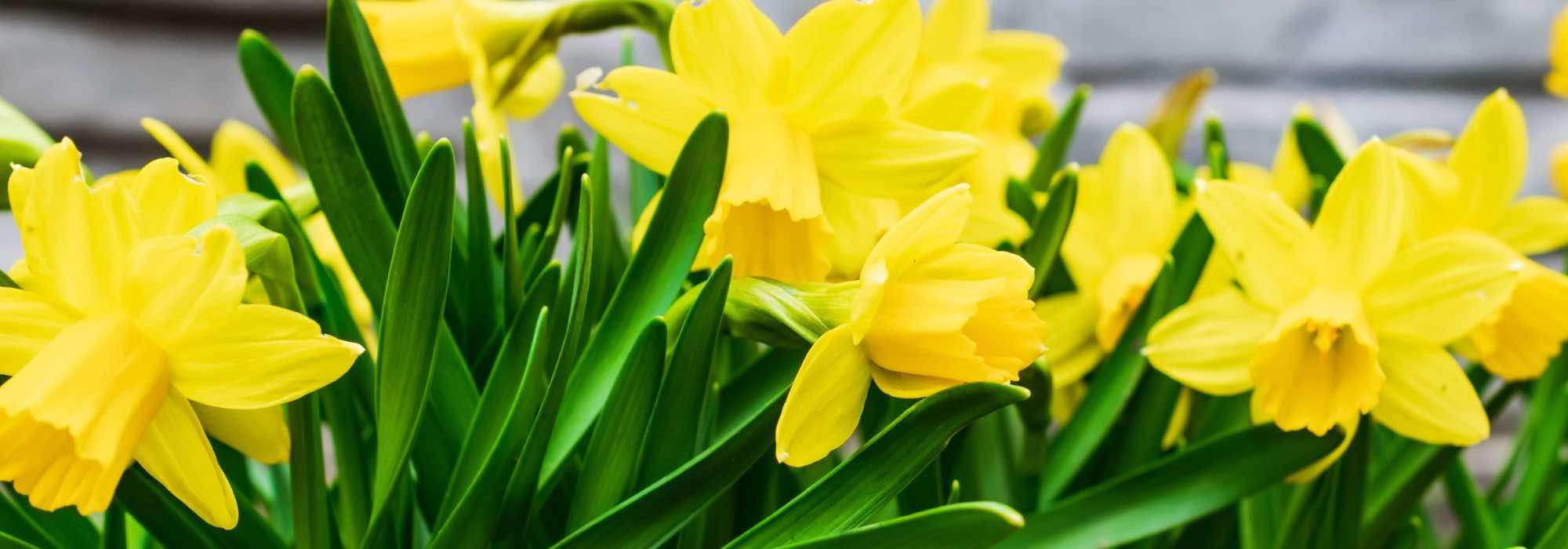
Why aren't my daffodils flowering?
Reasons Why Daffodils Fail to Flower
Contents
Renowned for being very easy to grow, daffodils or narcissi brighten gardens and balconies with their yellow, orange or white flowers from spring onwards, sometimes even from winter. Some also appeal to gardeners with their fragrance. These bulbous plants are vigorous perennials that reappear every year after winter. They offer a wide range of choice, as there are around a hundred species and thousands of varieties. Daffodils produce trumpet-shaped flowers among a clump of fine, elongated leaves. They grow easily in full sun or partial shade, in all types of soil, even heavy clay, with a few exceptions. If your daffodils are failing to flower, this may be due to various reasons: bulbs that no longer have enough nutrient reserves, planting or care mistakes, unfavourable weather, small animals passing through… Find out why your daffodils are not flowering and the solutions available to help you enjoy them to the full.

Planting mistakes
Choosing the bulbs
Choosing daffodil bulbs is very important, because the daffodils rely on the nutrients stored in the bulb to flower. So, if you plant damaged, mouldy or unhealthy bulbs, you may well not see your daffodils flower next spring. A healthy daffodil bulb is firm, hard and not crumbly, with no white mould, and is not too small.
Solution: choose your bulbs carefully before planting them.
When should you plant them?
Daffodil bulbs are planted in autumn, from September to November, or even December. Planting them in autumn gives them time to establish well in the ground and put on their best display the following spring. The earlier the bulbs are planted in autumn, the earlier they will flower in spring.
Solution: plant the bulbs at the ideal time: in autumn.
Where should you plant them?
Daffodils are planted in full sun or partial shade. A position that is too shady may prevent them from flowering. These plants grow in any type of well-drained soil, or in heavy clay soil, with the exception of Narcissus tazetta and Narcissus triandrus, as well as small varieties, which prefer well-drained soil.
Solution: choose a position in full sun or shade and provide the type of soil best suited to the variety you are planting.
How should you plant them?
The bulb consists of a bud shaped like a point and a flatter part from which the roots emerge. Plant the bulb with the pointed end facing upwards. Dig a hole 10 to 15 cm deep, or three times the size of the bulb. Place the bulb in the hole the right way up and cover it with soil. Firm the soil to remove any air pockets and water. Leave 10 cm between each bulb so that they can develop properly.
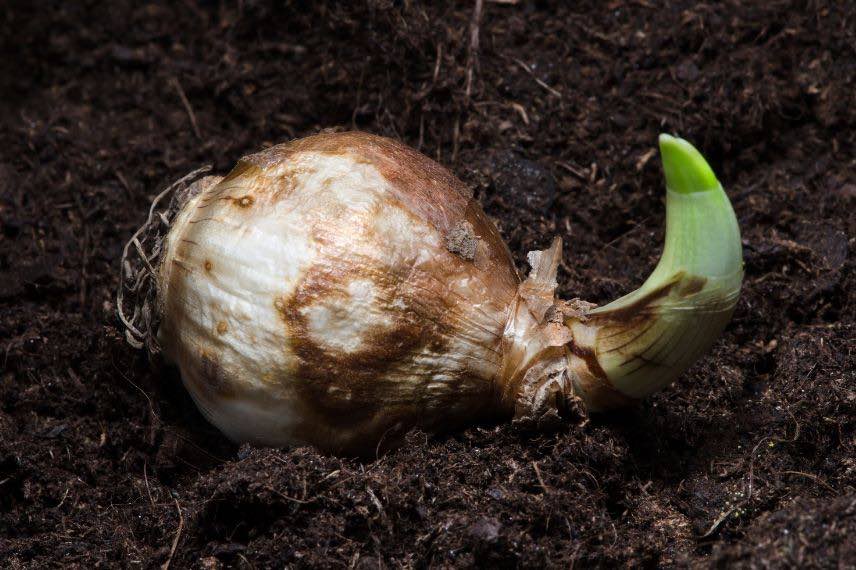
Plant the swollen base facing downwards and the pointed end facing upwards
Care mistakes
Watering
Bulbs mainly need watering during flowering and afterwards, as this is when they replenish their reserves and water contributes to this regeneration. During their dormant period, from summer to winter, bulbs do not need watering.
Solution: remember to water during flowering and afterwards.
Fertiliser
If you want to help narcissus bulbs replenish their reserves, you can feed them with a fertiliser rich in potash and low in nitrogen during flowering and just afterwards.
Cutting back faded flowers and leaves
After flowering, it is advisable to cut off the flower stems so as not to unnecessarily deplete the bulb’s reserves. As for the leaves, you should wait until they have faded and dried before cutting them, as they are important for replenishing the bulb’s reserves.
Solution: do not cut off faded leaves before they are completely dry.
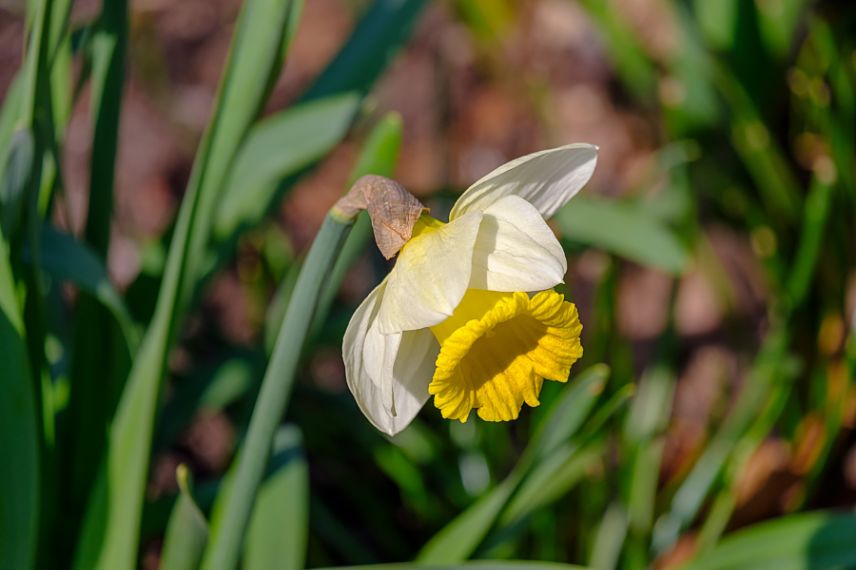
Always wait until the foliage has turned yellow before cutting it back
Dividing bulbs
Bulbs multiply by producing offsets, which are small bulbs. To avoid depleting the bulbs’ reserves, it is also advisable to divide narcissus bulbs regularly.
Solution: remember to divide your bulbs every 3 or 4 years. This should be done during the plant’s dormant period, in summer.
Replenishing the bulbs’ reserves
To flower well, daffodil bulbs need sufficient nutrient reserves. If they have not received enough water after flowering, or if you have cut the leaves back too early, before they were completely dry, this may prevent the bulb from flowering.
Storing bulbs
There is no need to lift the bulbs to shelter them from the cold, as daffodils are hardy plants. Leave them in the ground throughout the winter, especially as they need this cold period to flower well in spring.
Crop rotation
Check from time to time that your bulbs are not depleted or old, as this could explain why they are not flowering or are producing only leaves. If this is the case, replace old or depleted bulbs with new ones.
Other possible reasons
The weather
Narcissi are hardy plants that need a period of cold in order to flower the following spring. If the winter has not been cold enough in your area this year, this may be the reason why your narcissi have failed to flower.
Pests
As narcissus bulbs are toxic, rodents do not eat them. Slugs sometimes nibble the flower petals. But the most dangerous pest is the narcissus bulb fly (Merodon equestris). This small, hairy fly resembles a tiny bumblebee and feeds on the pollen of narcissi, on which it may lay its eggs. When they hatch, the larvae burrow into the bulb and devour it, preventing flowering.
Solution: Mulch around the base of narcissi in autumn to deter narcissus bulb flies from laying their eggs. To deal with slugs, see our article on 7 ways to control slugs naturally.
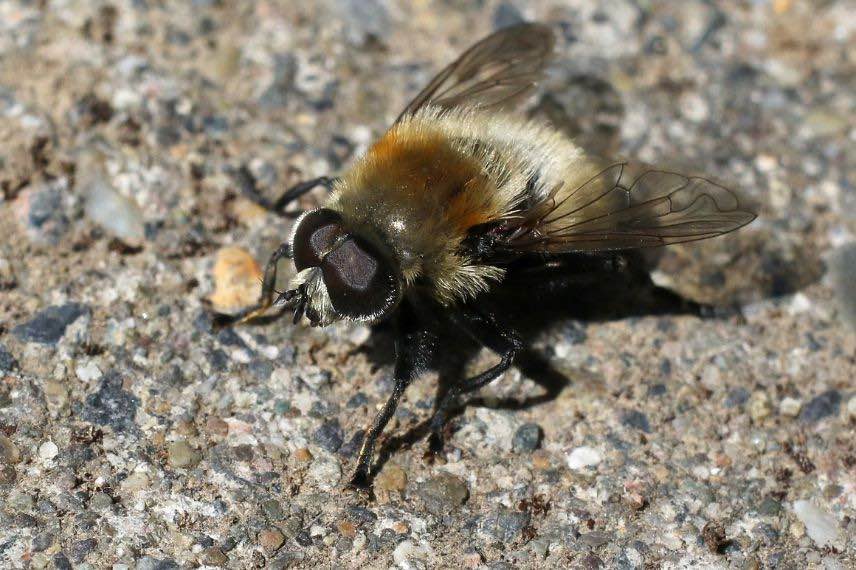
The narcissus bulb fly
Diseases
Narcissi are plants that are rarely affected by disease. In overly wet soil, however, they may be affected by cryptogamic diseases that cause the bulbs to rot.
Further reading
Discover our complete guide to growing and planting daffodils, as well as our advice on planting daffodils, and browse our full range of daffodils.
- Subscribe!
- Contents
This form is protected by reCAPTCHA - the Google Privacy Policy and Terms of Service apply.


































Comments