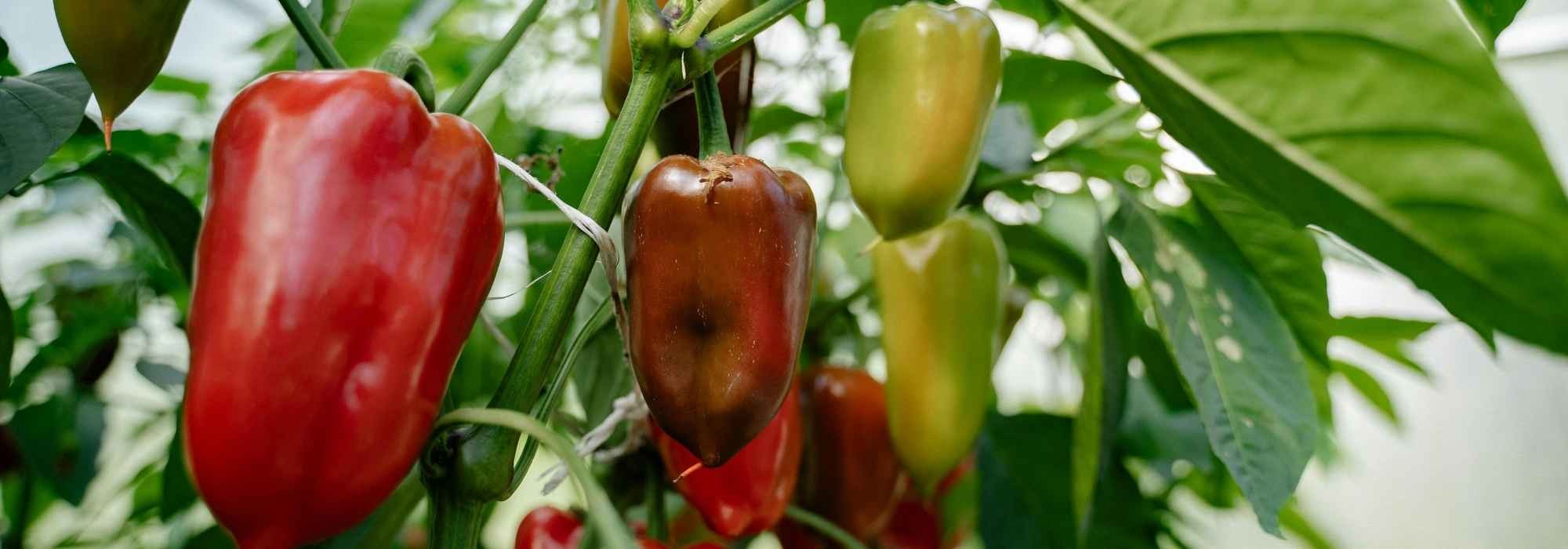
Why aren’t my peppers producing fruit?
Tips to help your pepper flowers develop into colourful fruit
Contents
Growing peppers in your vegetable garden or even on your balcony is always a promise of enjoying colourful, crunchy and flavoursome fruit. Yet reality can sometimes be quite different: your pepper plants have lovely foliage and plenty of flowers, but they fail to set, so there is not a single fruit in sight. Inevitably, as a gardener, you are left oscillating between frustration and confusion. Discover all the mistakes that explain why your pepper plants are not producing fruit.
Pepper, a demanding fruiting vegetable
Sweet pepper (Capsicum annuum), like its cousin the chilli pepper, is a vegetable from the nightshade family and a demanding plant that requires a subtle balance between nutrient inputs, climatic conditions, watering and pollinator activity. It is a tropical plant and therefore needs warmth, ideally between 20 and 28 °C, to develop properly. It also needs rich, well-drained, friable soil and regular watering to keep the soil moist but not waterlogged.
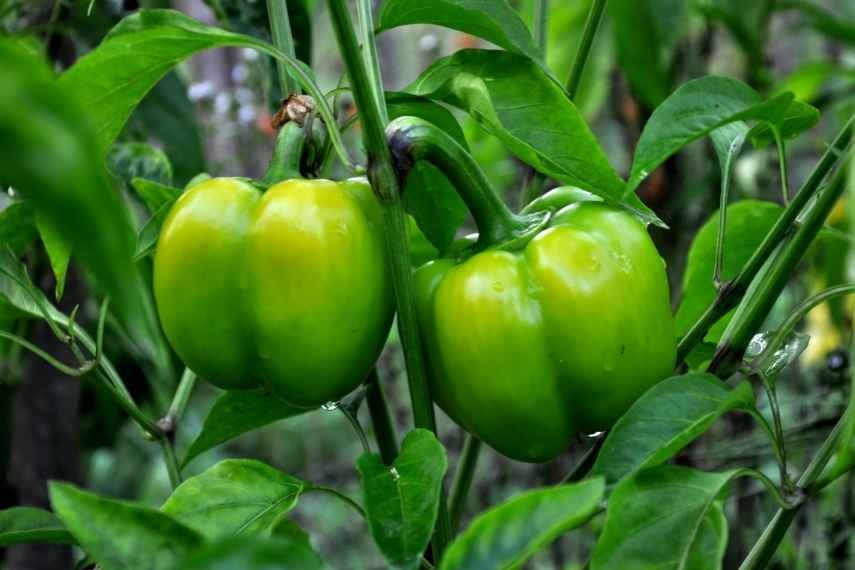
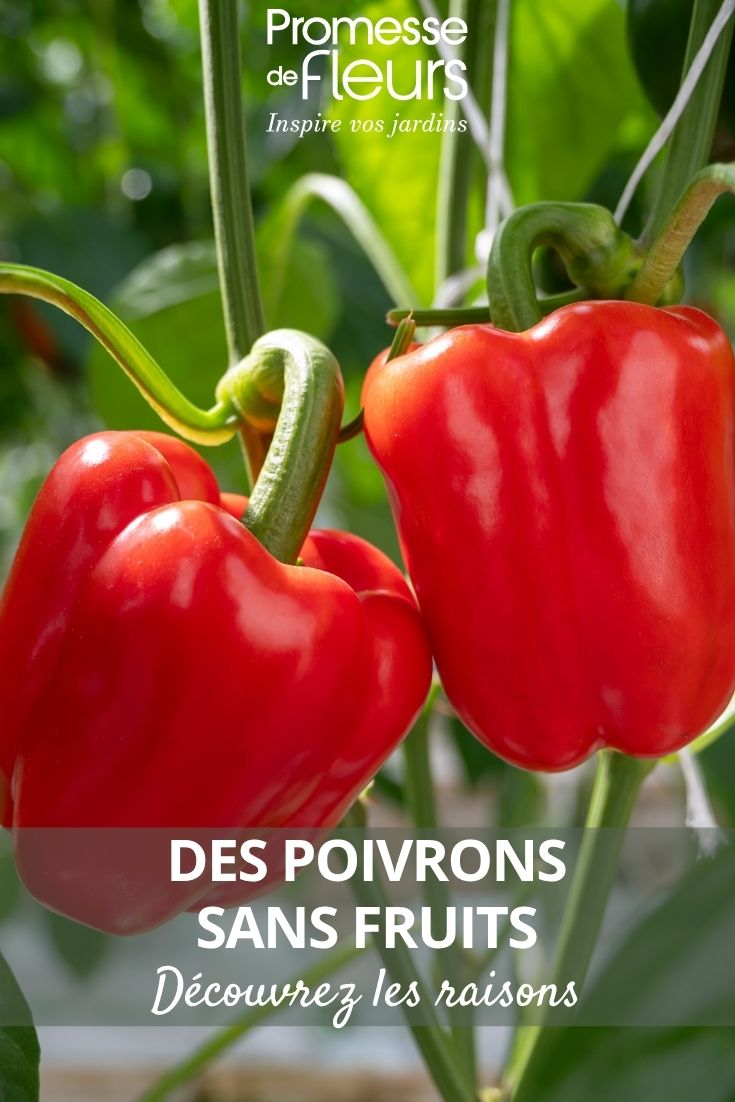
Sweet pepper is a demanding fruit vegetable.
When one of these parameters goes awry, the plant reacts through a natural defence mechanism: it aborts its flowers. And you will get no fruit! So, to produce colourful fruit, it is essential to follow the plant’s physiological and environmental needs to the letter.
Over-fertilisation with nitrogen
One of the most common causes of a lack of fruit on pepper plants lies in the composition of the soil, and more particularly in incorrect fertilisation. Indeed, in trying to do the right thing, gardeners often instinctively apply fertiliser to stimulate the growth of their pepper plants. Unfortunately, they do not always choose the most suitable fertiliser.
Indeed, if the chosen fertiliser is rich in nitrogen (the N in the NPK formula!), it is the vegetation that will develop, often at the expense of the flowers, and therefore the fruit. The pepper plants will certainly produce beautiful, lush green foliage and strong stems, but no fruit! This is normal, as nitrogen encourages the plant to grow upwards and outwards. Applying a nitrogen-rich fertiliser also sends the plant the wrong signal. As a result, it devotes all its energy to producing leaves. For example, nettle liquid feed is known to be a fertiliser that is very rich in nitrogen, whereas comfrey liquid feed is rich in potassium and phosphorus.
What should you do?
To correct this imbalance, you must stop applying nitrogen fertilisers as soon as the first flowers appear and choose formulas rich in phosphorus and potassium, essential nutrients that specifically stimulate flowering and fruit formation. So, to enable your pepper plants to grow, start by applying nettle liquid feed, then, as soon as the first flowers open, switch to comfrey liquid feed. A special fertiliser for tomatoes and fruiting vegetables is also suitable, as it has an appropriate formula.
The vagaries of the weather
Originating in the tropical and subtropical regions of Central and South America, sweet pepper is a plant that has a vital need for warmth and sunshine. However, climate disruption and its consequences in the vegetable garden can hinder good fruit production. In particular, successive heatwaves and the resulting drought can plunge sweet pepper plants into a form of heat stress.
Indeed, for the fertilisation of the flowers to take place, sweet pepper must benefit from ideal temperatures of between 20 and 28 °C during the day, with temperatures not falling below 15 °C at night. When the thermometer goes haywire and remains above 35 °C for a prolonged period, the plant suffers genuine heat shock. As a result, the pollen loses its fertility, dries out and becomes incapable of fertilising the female ovule. Conversely, temperatures that are too cool during the summer, particularly at night, block nutrient assimilation and slow the plant’s growth.
Faced with this heat stress, sweet pepper prioritises its survival, sacrificing its flowers to ensure its continued viability. The flowers turn yellow at the base, become detached and fall to the ground.
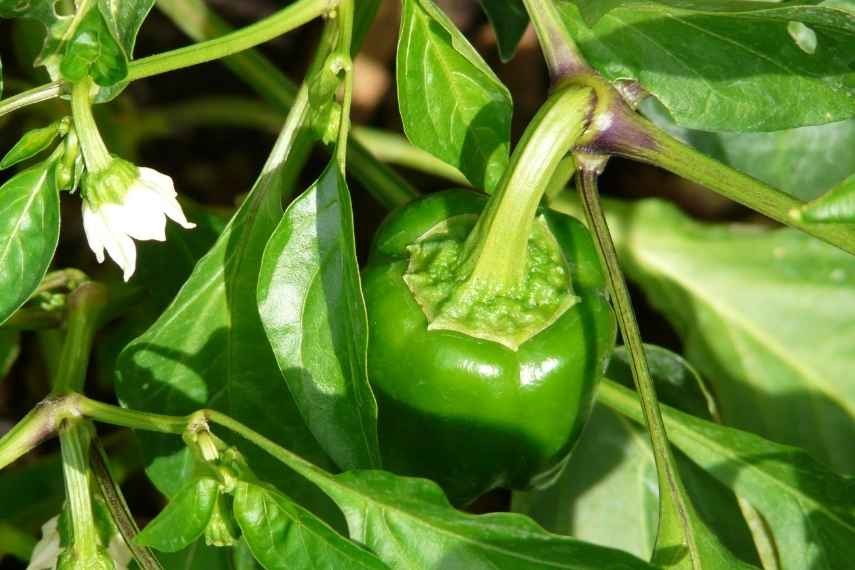
During periods of intense heat, a sweet pepper plant may sacrifice its flowers to ensure its survival
What can you do?
During heatwaves or periods of intense heat, the best solution is to shade your sweet pepper plants with shade cloth or a parasol during the hottest hours of the day. In periods of intense heat, regular watering and applying mulch help to maintain moisture and prevent water stress from compounding heat stress. Otherwise, all you need to do is be patient. Once temperatures return to normal, sweet pepper will produce new flowers.
To counter low temperatures in certain regions, growing under glass is recommended.
Watering mistakes
Insufficient or irregular watering can also explain a lack of flowers and fruit, as the root system is stressed, alternating between too little and too much water. As a result, the pepper plant panics and stops growing, once again in order to survive. The flowers then abort.
In addition, a lack of water prevents calcium from circulating properly. This vital nutrient causes blossom end rot when deficient, producing that familiar black patch which destroys the developing fruit from the bottom upwards. Conversely, constantly waterlogged conditions or poorly drained soil suffocates the roots. Deprived of oxygen, they rot, can no longer feed the plant and cause the same symptoms of flower drop.
What should you do?
The secret lies in regular, thorough but sufficiently spaced watering, allowing the roots to establish themselves deeply so that they can withstand any periods of drought. You should also take care to water only at the base of the plant, without wetting the foliage, and maintain an organic mulch to keep the soil cool while preventing excessive evaporation. During a heatwave, watering should naturally be increased and carried out more frequently.
Poor pollination
Your pepper plants are enjoying ideal warmth, are watered regularly and receive correctly dosed feeds at the right time. Yet the fruits still fail to appear. The problem may simply be pollination. A mechanical problem, in a way!
Pepper is an autogamous plant, which means that it has hermaphrodite flowers capable of self-fertilisation. Each flower contains both male and female organs. For the pollen to fall onto the female ovule, pepper needs the intervention of the wind, the wing vibrations of pollinating insects such as bumblebees visiting the flowers, or the movement of other insects such as beetles. When peppers are grown in open ground in a vegetable garden, nature normally does its job. However, in an enclosed greenhouse, on a balcony in a city centre or beneath insect-proof fleece, wind and insects are much less present. In the absence of air movement or vibrations, the pollen is not transported and the flower fades without setting fruit.
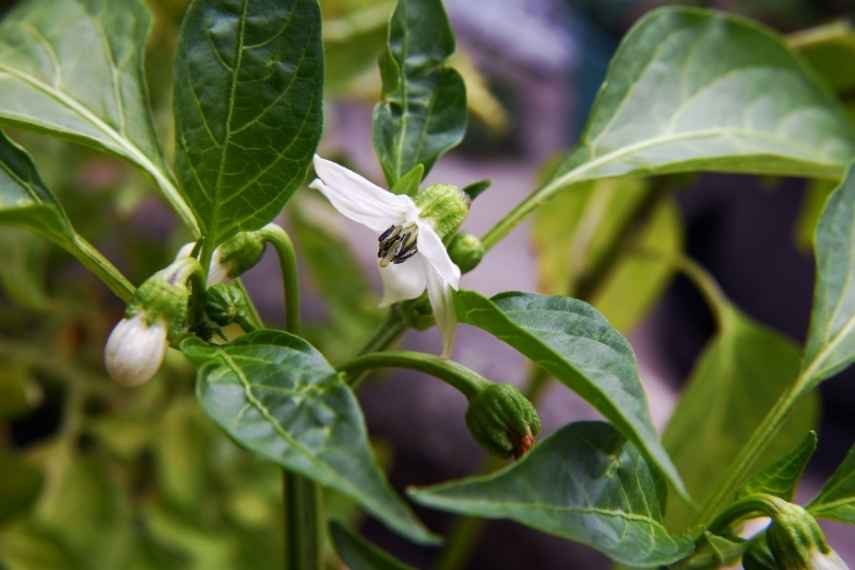
Sometimes pollination of hermaphrodite flowers is not optimal
What can you do?
To remedy this, one simple action is all that is needed: gently shake the flowering stems in the middle of the day, when the air is dry, to release the pollen and ensure that it falls onto the stigma. Another solution is to attract pollinators by planting nectar-rich flowers close by, on your balcony or at the entrances to the greenhouse.
An unsuitable aspect
Light is essential for photosynthesis. And peppers are particularly demanding in this respect! To initiate flowering and successfully develop their fruit, they require at least six to eight hours of direct sunlight a day. If your peppers are planted in shade or even partial shade, their ability to produce fruit is considerably reduced. When light is insufficient, the pepper’s metabolism slows down: it produces fewer sugars, which are essential for feeding the young ovaries after pollination. Once again, the plant makes a survival choice and sacrifices its potential fruit.
What should you do?
When planting, remember to plant your peppers in the brightest and sunniest spot in the vegetable garden. Also, leave enough space between them to prevent them from shading one another. And if the sun’s rays prove too fierce, for example during heatwaves, shade your peppers during the hottest part of the day.
A container that is too small
Sweet peppers grow very well in pots on a balcony, terrace, in a courtyard or on a patio. Yet it is precisely in this type of growing situation that a lack of fruit is most common. And this is no coincidence! Sweet peppers have a taproot system that is moderately extensive and needs enough growing medium to develop fully and draw on the resources required for fruiting. If the pot you choose is too small and not deep enough, the roots grow round and round, become starved of oxygen and quickly become root-bound. In short, they start circling. The sweet pepper plant becomes stressed and consequently sacrifices its flowers.
What can you do?
To ensure abundant harvests in pots, you must choose containers with a minimum capacity of 10 to 15 litres per plant, with good drainage holes in the bottom. If you reuse the same pots year after year, remember to renew the growing medium thoroughly each season.
Choosing varieties
Sometimes, the lack of fruit is not due to any growing mistake, but simply to the choice of varieties. If you are growing several varieties of peppers, bear in mind that they do not all develop at the same rate. Some early cultivars produce their first fruits as early as the beginning of summer, while later varieties, particularly some large, square peppers, need a much longer period of vegetative growth before entering the fruiting phase. So, while some varieties are already showing their first fruits, others often shed their flowers. This is usually a perfectly normal phenomenon. The very first flower buds formed by the young plant are frequently rejected by the plant, which is still concentrating its energy on vegetative growth.
What should you do?
Be patient! And make sure you know the varieties you have bought.
- Subscribe!
- Contents
This form is protected by reCAPTCHA - the Google Privacy Policy and Terms of Service apply.

































Comments