Horse chestnut leaf miner: a pest to be wary of?
Found throughout the territory, this insect weakens horse chestnut trees.
Contents
Over the past twenty years, climate change has greatly encouraged the arrival of pest insects that had previously been absent from certain regions. At the same time, the increase in international trade has also contributed to the infestation of our plants by insects that were previously unknown or uncommon in our territory. The horse chestnut leaf miner (Cameraria ohridella) belongs to this latter category of insects. Discovered in 1984 in the Balkans, it quickly spread throughout Europe, crossing the French border in 2000 via Alsace. Today, its presence has been confirmed across almost 100% of the territory, in both urban and rural areas.
Learn how to identify this moth, whose larvae mine the foliage of horse chestnuts, and discover how to control it effectively and naturally in order to limit its spread.
Further reading: Horse chestnut: planting, growing and care

Horse Chestnut Leaf Miner: A Portrait of a Particularly Invasive Insect
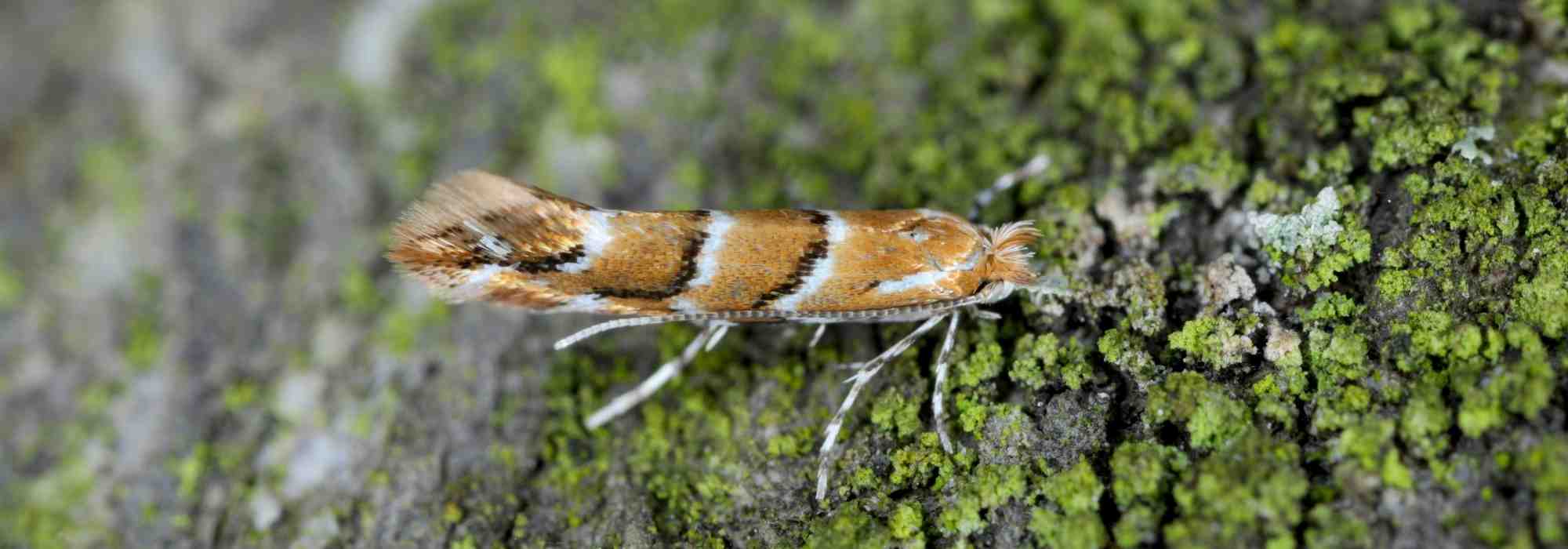
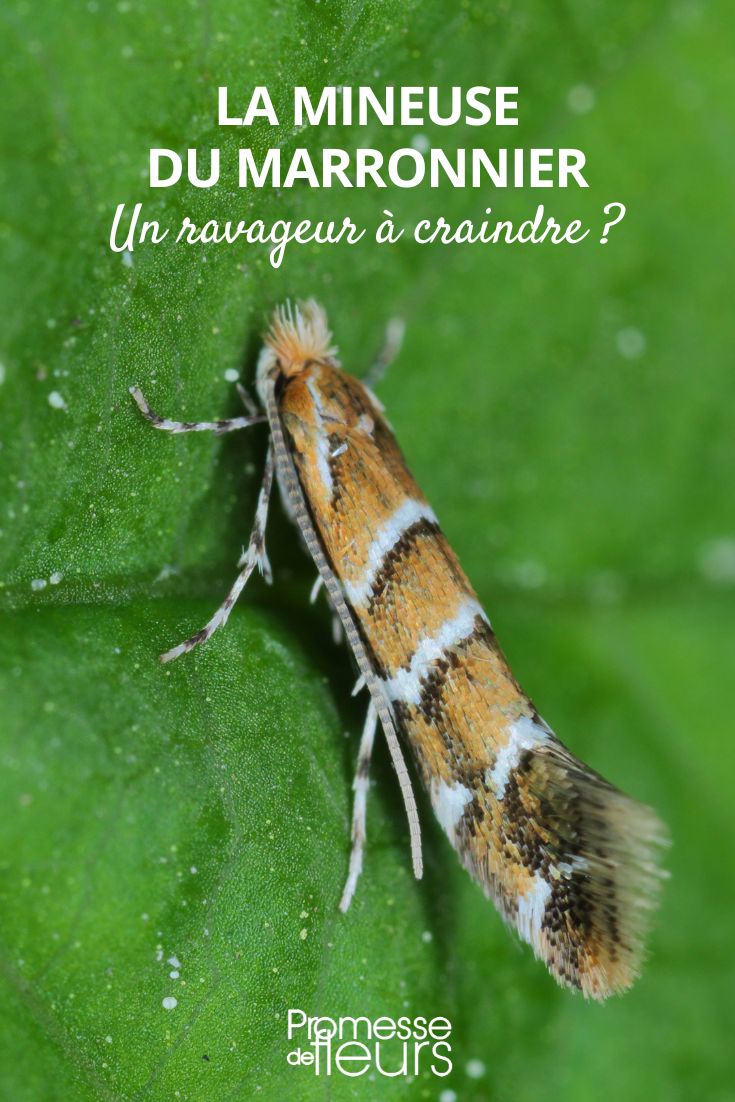
Cameraria ohridella. Behind this Latin name lies the horse chestnut leaf miner, sometimes called the horse chestnut moth. It is a moth belonging to the Gracillariidae family. Let us start with the adult moth: measuring 3 to 5 mm long, it has an ochre-brown body. Its forewings display silver striations, while its hindwings are narrower and fringed. Because of its size, it goes unnoticed, making it difficult to spot.
Yet, it is widespread across the territory, moving rapidly from one tree to another, both in urban areas and in the countryside. According to studies, the horse chestnut leaf miner is thought to spread at a rate of 50 to 58 km per year. However, this spread appears to be slower in regions with a lower population density or in mountainous areas. In cities, on the other hand, infestations spread much more rapidly.
According to observations made throughout Europe, the horse chestnut leaf miner could be a vector of horse chestnut bacterial canker disease (Pseudomonas syringae).
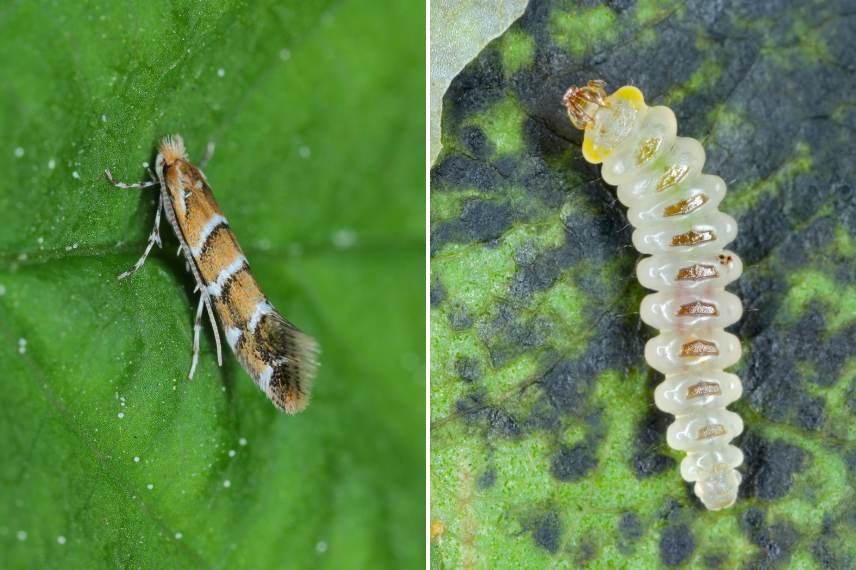
Adult and larva of Cameraria ohridella
Read also
Diseases and Pests of the Horse ChestnutWhat is the life cycle of the horse chestnut leaf miner?
With the climatic conditions in our country, the horse chestnut leaf miner has around 3 generations per year, with a life cycle lasting approximately 7 to 11 weeks, which explains its rapid spread. Depending on the region, as soon as temperatures reach 12 °C for at least 48 hours, the first adults emerge in spring, between the end of March and mid-April. Born to reproduce, adults of the first generation live for around 30 days, while the later generations live slightly less long.
Mating takes place on the trunks of trees and is repeated throughout the moths’ short lives. Once fertilised, the female lays between 20 and 100 tiny eggs directly on the leaves of their host plant, namely horse chestnut trees. The eggs cluster along the veins. The larvae hatch after 3 weeks of incubation. From then on, the infestation is under way.
The caterpillars then burrow into the cuticle, between the epidermal layers of the leaves, where they excavate galleries known as mines, 1 to 2 mm long. They feed on the parenchyma inside them. As they develop, the mines widen and may merge to cover the entire leaf. The larvae grow inside their mines for 20 to 45 days, depending on the generation, before pupating inside the mine. The second generation generally emerges in July, and the third in August. The cycle then continues with each generation.
The final pupa remains in the leaf as it falls to the ground. It spends the winter there undisturbed before emerging in spring.
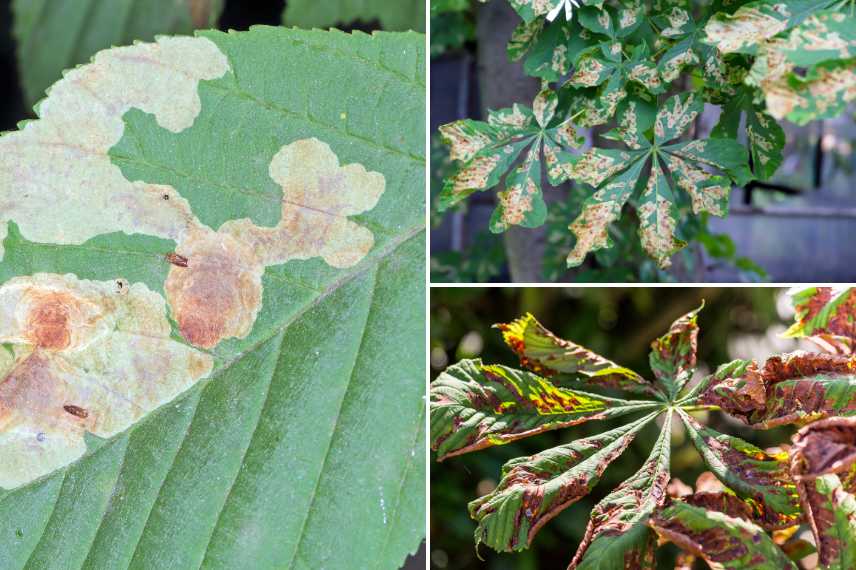
Different stages of horse chestnut leaf miner infestation on the foliage
What damage does it cause?
More specifically, a leaf miner infestation can be identified by the rusty-coloured mines that appear on the leaves. Fine at first, these mines lengthen and widen, sometimes joining up if several larvae share a leaf. Eventually, the leaves turn completely brown and the canopy takes on a rusty colour in midsummer. Photosynthesis is then no longer effective, and horse chestnuts tend to weaken and become more sensitive to pathogens. The yellowing leaves fall prematurely in midsummer. This leaf fall may seem serious, but leaf miner infestations appear to have purely aesthetic consequences. The vigour of horse chestnuts does not seem to be affected, and no horse chestnut has died as a result of a leaf miner infestation.
Even so, there are repercussions for flowering and fruiting. In the longer term, scientists still do not know what lasting effects infestations may cause over several consecutive years.
As for the trees targeted, these are mainly the horse chestnut (Aesculus hippocastanum), the most common horse chestnuts in our territory. All varieties can be affected, including Aesculus hippocastanum ‘Hampton Court Gold’, with young yellow shoots that turn green, Aesculus hippocastanum ‘Memmingeri’, with a very regular habit, and Aesculus hippocastanum ‘Umbraculifera’, which is smaller.
Horse chestnuts belonging to the species Aesculus pavia or flava can also be affected. The palmate foliage of the ornamental horse chestnut with red flowers (Aesculus pavia ‘Humilis’) can therefore be affected by leaf miners, as can the variety ‘Koehnei’, with its upright pink panicles, or the yellow buckeye (Aesculus flava).
By contrast, red-flowered horse chestnuts (Aesculus x carnea) are targeted far less often.
Two other tree species can also be affected by horse chestnut leaf miners. The sycamore (Acer pseudoplatanus) and the Norway maple (Acer platanoides) can occasionally be attacked if they grow near horse chestnuts.
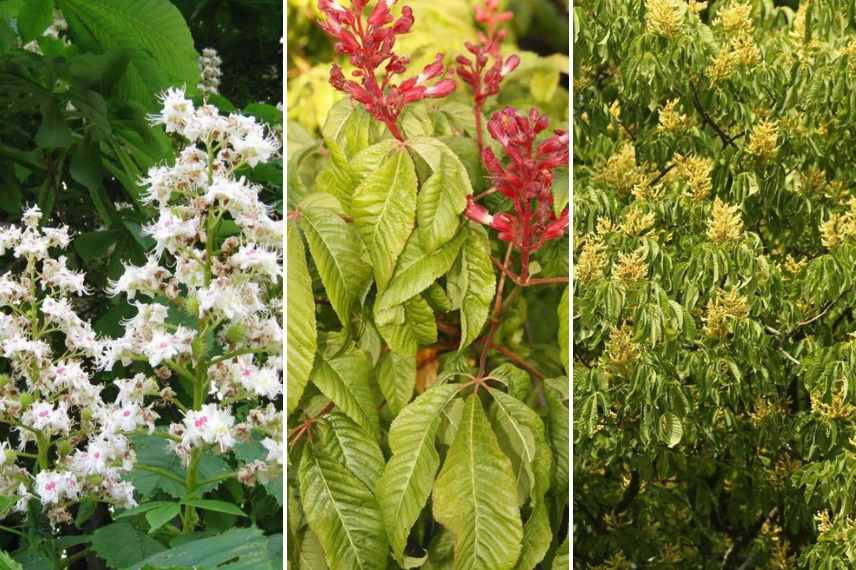
Three horse chestnut species are particularly targeted by leaf miners: the horse chestnut, the ornamental horse chestnut with red flowers and the yellow buckeye
Read also
Welcoming Blue Tits to the GardenHow can you control this pest naturally?
Controlling horse chestnut leaf miner is considered difficult. This is primarily because the action of natural enemies, particularly parasitic wasps, is insufficient to regulate populations. In addition, this leaf miner spreads very rapidly, especially in areas heavily planted with horse chestnut trees or in urban environments.
There are chemical insecticides available, but many local authorities refuse to use them because of their impact on the environment. This leaves preventive control, which helps to limit the damage without eradicating the insect in question.
In your garden, if you have a horse chestnut tree, there is one measure that can genuinely reduce populations: collecting fallen leaves in autumn. The final generation enters diapause over winter and survives in the fallen leaves on the ground. The leaves must be collected thoroughly, not only beneath the tree but also in the surrounding areas. This will greatly reduce the infestation the following spring.
Alternatively, for a garden, the pheromone trap specifically designed for horse chestnut leaf miner is relatively effective at capturing males, thereby limiting reproduction. These pheromone capsules for horse chestnut leaf miner are placed in a specific trap during the different mating flight periods, from the end of March to August-September.
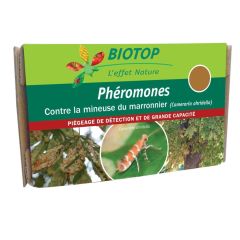
Phéromones spéciales Mineuse du marronnier Cameraria ohridella Biotop - 2 capsules
Finally, it is always essential to maintain good diversity in your garden. Horse chestnut leaf miners have several bird predators, particularly great tits and blue tits. Earwigs (Forficula auricula) also occasionally feed on the larvae. Another predator, the grasshopper known as the delicate bush cricket (Meconemus meridionalis), is quite active in controlling horse chestnut leaf miner. It is therefore essential to grow nectar-rich plants, plant hedges made up of flowering shrubs with berries, and install bird feeders and nest boxes, as well as insect shelters.
- Subscribe!
- Contents
This form is protected by reCAPTCHA - the Google Privacy Policy and Terms of Service apply.

































Comments