Why and how to create different spaces in the garden?
Tips for dividing your garden into several areas
Contents
Dividing your garden into different areas offers several advantages. Creating a variety of atmospheres, giving each space a purpose, creating surprises, making the garden feel larger, filtering the wind… dividing your plot into several zones is part of the creative process and should be considered beforehand, taking time to think it through. Gardeners wishing to organise and structure their garden have numerous options for doing so in a way that is both practical and attractive. This is where permanent structures and plants come into play: they are valuable allies, each offering its own advantages. I suggest taking a brief look at some of the elements to consider when structuring your garden into several zones.
Why divide a garden into several spaces?
For several years now (and the pandemic has accentuated this trend), the garden has become a favoured space, and more and more people have embarked on the adventure.
- However, although gardening involves planting plants on your land, a garden design project does not stop there. Planting schemes are organised into beds and borders, but to create a successful garden, it is best to take a more holistic approach, which means thinking about the different spaces, how they are arranged and the various routes through them. The garden then becomes a true extension of the house. Like the house, it can be divided into different ‘rooms’, which may be themed garden rooms guided, for example, by a search for a particular style or colour scheme, or result from the desire to give each area a specific function (terrace, kitchen garden, flowering meadow, composting area, car parking space, garden shed, bin storage…). While some of these areas are naturally attractive, others deserve to be hidden so that they do not detract from the garden’s overall appearance.
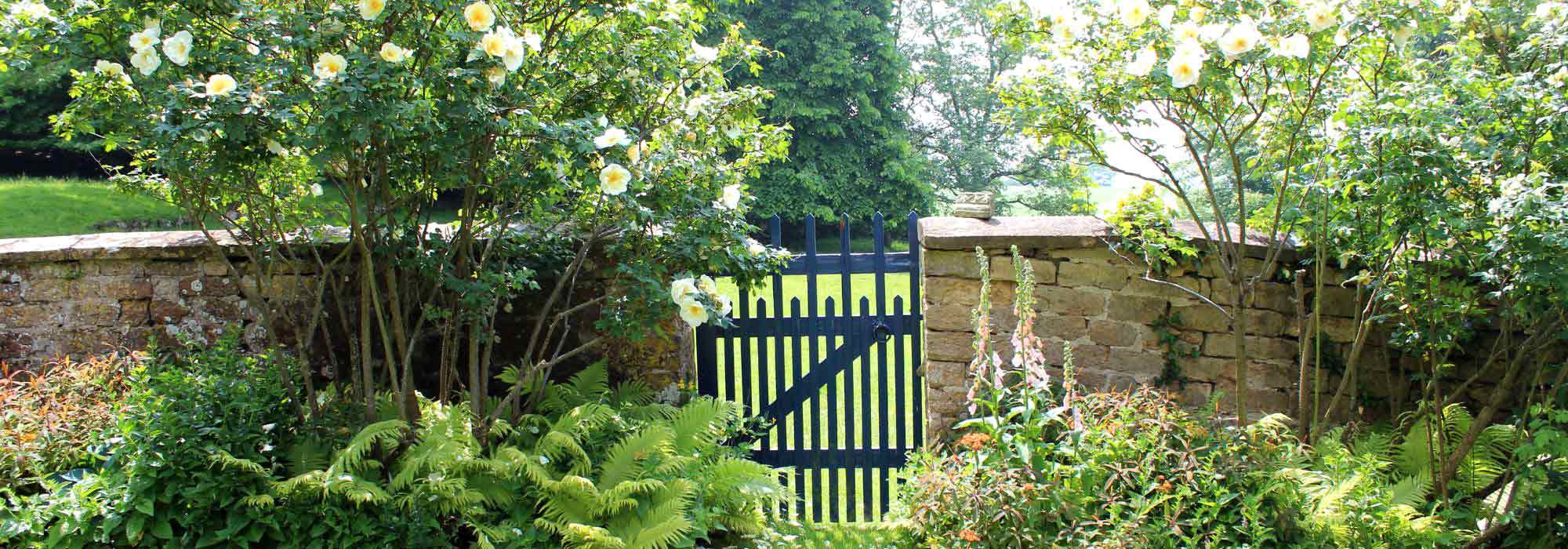
- Furthermore, dividing up a garden means that you do not see everything at once. Concealed by a hedge or structure, the next area can be glimpsed without being revealed, thereby arousing the visitor’s curiosity and encouraging them to go further. By creating these elements of surprise, the garden can offer several atmospheres and moods, and this also has the effect of making it appear larger than it really is. This can be particularly useful when designing a small garden or when you have to make the most of a long, narrow plot.
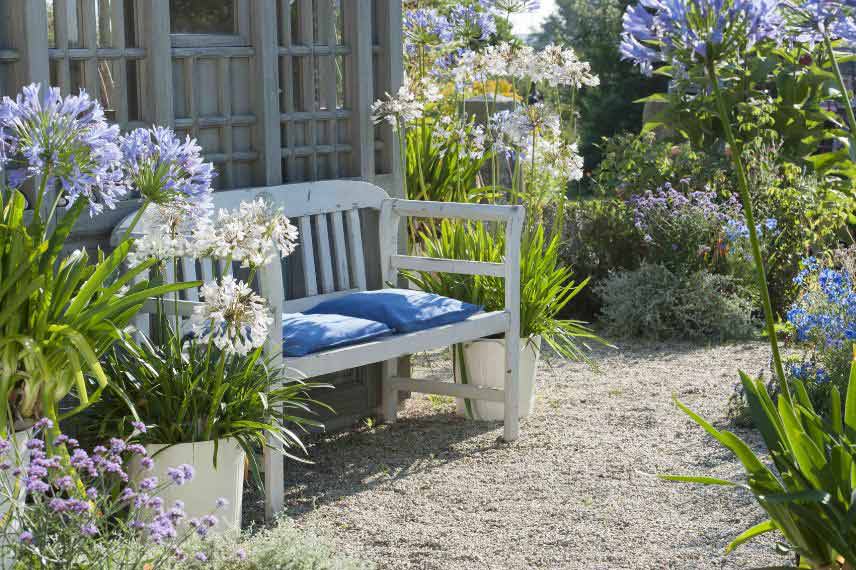
In addition to being pleasing to the eye, each area of the garden can have a specific function
Read also
Taking on a large gardenHow do you create different zones?
- Once you have defined the areas you want to prioritise (a vegetable garden for fresh vegetables, a terrace for sociable moments outdoors, a chicken run, a swimming pool…) and know how much space each will occupy, you need to think about how to link them together. This involves planning the circulation routes, in other words, how you can get from one area to another. Straight paths can create attractive vistas and draw the eye towards a focal point (a tree, a statue, a pot, a panorama…). Curving paths have a more romantic feel and can, on the contrary, break up this perspective by concealing what lies beyond. Take care, however, not to choose curves that are too tight and/or too numerous, as they can make mowing feel like a gymkhana challenge!
- When landscaping a sloping garden, creating terraces (or restanques) and steps is sometimes unavoidable, which contributes to the idea of dividing the garden into separate areas.
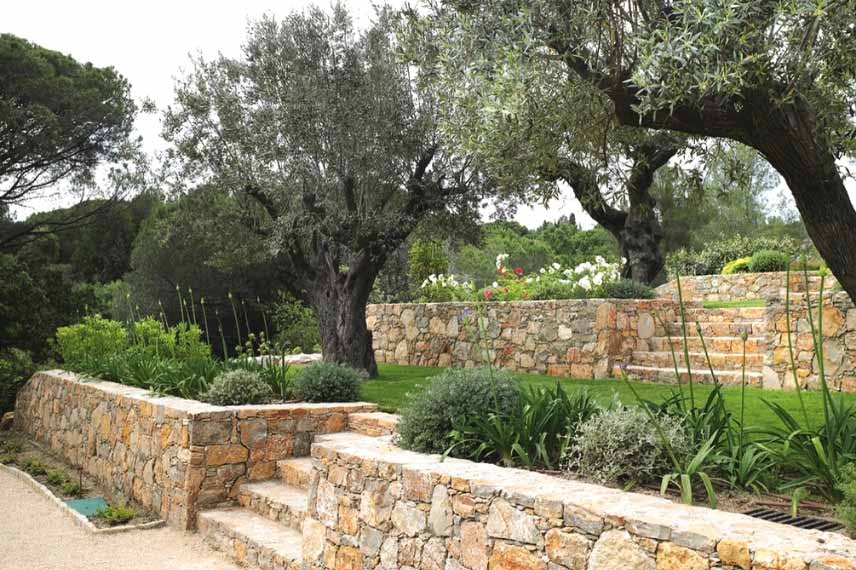
- Designing a flat garden, on the other hand, encourages you to create artificial levels (bringing in soil to create changes in level, lowering certain areas to create a more sheltered and intimate space, inserting vertical elements…).
- Finally, it is important to take particular care over ways to define these areas and mark their entrance. Boundaries can take the form of plant hedges: some completely block the view, either permanently or only seasonally, while others allow the eye to pass through, enabling you to enjoy an attractive view and incorporate the surrounding landscape as though it were part of your garden, while also making it look larger. Another solution is to use fixed structures and non-plant materials, which does not prevent you from pairing them with plants.
Separate and link areas with structures
Depending on the materials used, these structures can prove very long-lasting. They can be used on their own or combined with plants, which make them look less artificial and give them extra character.
Walls and low walls
Walls can be used, among other things, to support different soil levels or define spaces (see the garden as a whole).
Built with mortar, they can be quite high and thus effectively enclose the garden. Rather than leaving them bare, make the most of them by draping them with climbing plants. Dressed in this way, their presence is softened and the boundaries of the garden become blurred, which can make it appear larger. Some plants, such as ivy, trumpet vine, climbing hydrangea or Virginia creeper, attach themselves to this support. Climbing roses, jasmine, honeysuckle and wisteria, on the other hand, need a structure to cling to, sometimes with a little help from the gardener. To provide suitable support, you can use simple metal wires or wooden trellises. Well-positioned walls also offer an ideal area for training fruit trees, without taking up much ground space.
Built from dry stone, walls have undeniable charm, enhanced even further when you plant them up. The tops and crevices can accommodate many plants, brightening the structure with their flowering.
Gabions
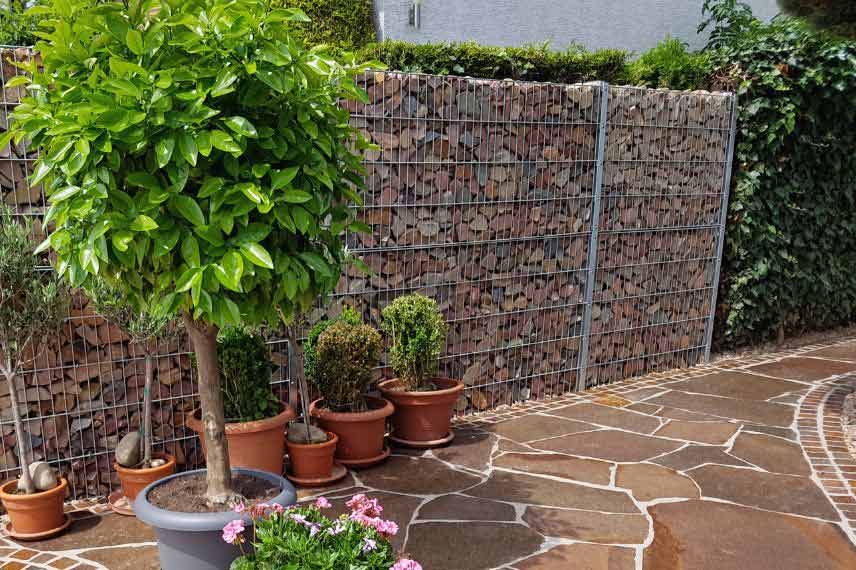
Gabions are structures that are increasingly popular. These metal “cages”, filled with stones, pebbles or any other material of your choice, nevertheless have a very contemporary look, which does not suit every garden style. Similar to certain walls in terms of their use, they are easier to install and can also be planted up.
Wooden or stone beams
Used to support a terraced bank or terrace, large wooden or stone beams, installed vertically or horizontally, bring a warm touch to the garden. To break up the rhythm, soften the lines by planting creeping and trailing shrubs along the upper part of the retaining structure, interspersed with perennials. As well as their decorative role, these plants create a kind of natural barrier that makes changes in level safer.
These elements can also be laid flat and buried up to ground level, thereby marking out a space, a passage or a path.
Pergolas, arches and arbours
Pergolas, arbours, gazebos and other arches are excellent ways of creating vertical features. They can serve a practical purpose, such as a pergola providing shade over a terrace or seating area. Topped with a shade sail or reed screening, they mark out a protected area where you can eat and relax away from the heat of the sun. Installing climbing plants allows you to enjoy beautiful flowering, decorative foliage and even fruit (kiwifruit, grapes, passion fruit…). Arches are particularly effective at marking the transition from one space to another. Framed by hedges, for example, they invite you to continue along the path and form a kind of more or less mysterious gateway, especially when draped with climbing plants. This is also an opportunity to create beautiful combinations, such as a climbing rose with a clematis, or a spring-flowering climber paired with a climber with autumn interest to enhance different seasons.
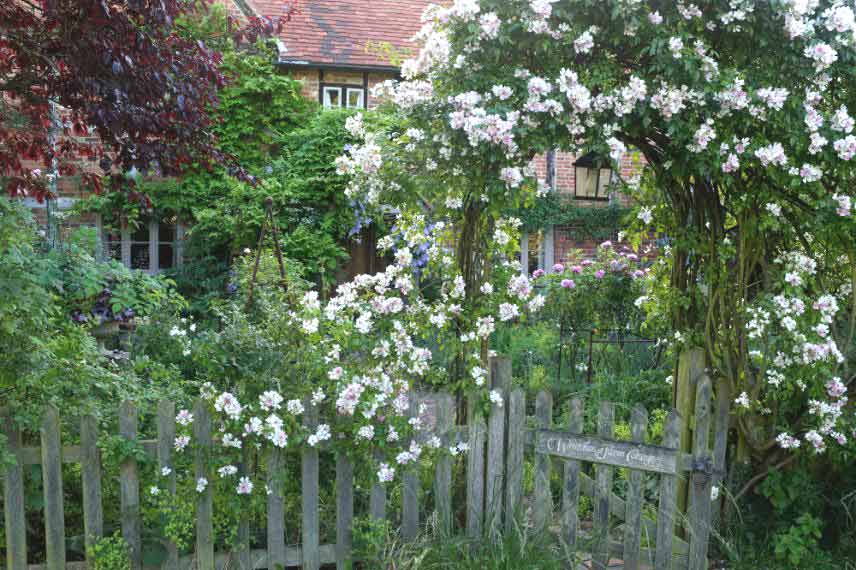
Fences and trellises
A simple wire fence or an ornate trellis can be used to divide 2 areas of the garden. Whether securing the area around a swimming pool, separating the vegetable garden or chicken run to reduce the risk of intrusions, or enclosing the garden, they are highly versatile and can represent a modest investment. Some also have considerable aesthetic appeal, while others are best concealed by using climbing plants once again. This type of structure suits many plants (whether self-clinging or needing something to twine around), but pay attention to their position in relation to the prevailing winds. Their surfaces can create considerable wind resistance and, in strong gusts, may be destroyed within minutes.
Barriers
Wooden barriers bring a slightly rural, bucolic or more ‘ranch-like’ feel to your garden. You can easily make them from commercially available posts and boards, or even simply recover materials from the garden, such as trunks and branches left over from pruning. Left “bare”, barriers allow the eye to pass through while defining an area without enclosing it. Enhanced with climbing plants, they become more poetic. Of course, more long-lasting versions are available in concrete, and the choice ultimately comes down to personal taste and budget.
Read also
Designing a city gardenCreate garden divisions with plants
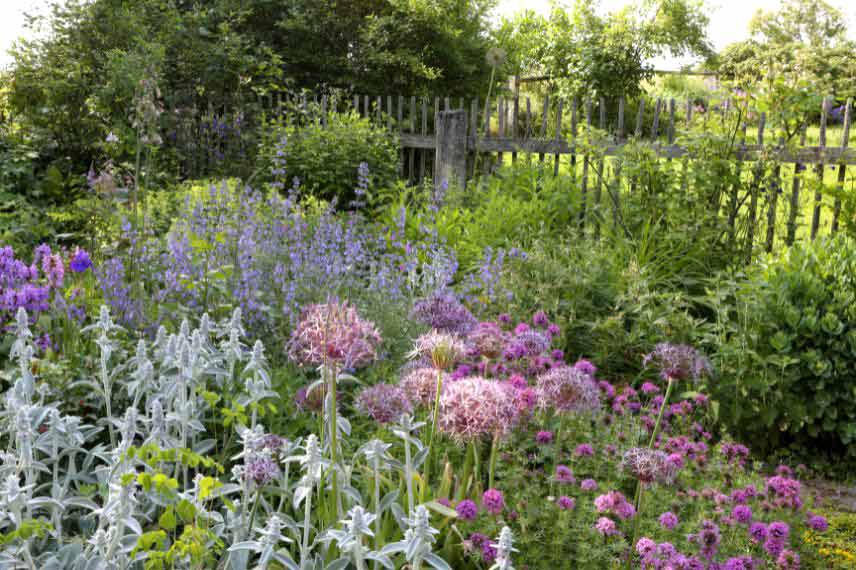
A hedge is a classic and familiar way of enclosing an area, but the effect is completely different depending on the type of plants you choose.
- Evergreen, semi-evergreen or marcescent shrubs have several advantages. They give structure to the garden, effectively filter the wind and provide a certain degree of privacy all year round. Photinia, Elaeagnus, privet, hornbeam and many conifers are often used. Clipped into neat squares, they also convey a certain sense of formality.
- More changeable, flowering, fragrant and country hedges are best left untrimmed. This allows you to enjoy their flowering, fruiting or foliage, which mark the changing seasons.
- To create separation without blocking the view, you can use small-growing shrubs, some of which also tolerate pruning very well: certain berberis, spindle trees, shrubby honeysuckles and shrubby potentillas are good candidates. You could also consider certain roses, although they are less attractive in the colder months. All these plants can also be used to frame a path or walkway.
- In the same vein, certain perennials can serve this purpose and create low hedges. Choosing evergreen perennials (wormwood, Carex, Euphorbia, Heuchera, lavender, small Phormium and heathers) ensures that a certain amount of structure is retained in winter.
- The style of your garden (as well as your soil, climate and aspect, of course) should also play a role in the type of plants you choose. In a Japanese- or Asian-inspired garden, for example, bamboo is appropriate, whereas it might seem more surprising in a naturalistic garden. So make sure you maintain a certain coherence, or deliberately create clearly distinct areas, each imbued with its own particular atmosphere, which can only be discovered by venturing into it.
- Subscribe!
- Contents
This form is protected by reCAPTCHA - the Google Privacy Policy and Terms of Service apply.
![[title]Designing Different Garden Spaces[/title]
[dropcap]W[/dropcap]hen it comes to {glossary}landscaping{/glossary}, creating distinct areas in your garden can enhance its beauty and functionality. Whether you want a cosy {glossary}patio{/glossary} for relaxing, a vibrant {glossary}flower bed{/glossary} for colour, or a productive {glossary}vegetable patch{/glossary}, each space can serve a unique purpose. By carefully planning and {glossary}planting{/glossary} the right {glossary}species{/glossary}, you can transform your outdoor space into a harmonious oasis.](https://en.promessedefleurs.eu/blogwp/wp-content/uploads/2022/07/amenager-differents-espaces-au-jardin.jpg "[title]Designing Different Garden Spaces[/title]
Creating distinct areas in the garden allows for a variety of experiences and activities. From a cosy reading nook to a vibrant flower bed, each space can be tailored to suit your needs and preferences. Here are some ideas to inspire you in planning your garden layout:
[subtitle]1. Relaxation Area[/subtitle]
Transform a corner of your garden into a tranquil retreat with comfortable seating, surrounded by fragrant {glossary}flowers{/glossary} and lush greenery. Add a small table for your morning coffee or evening drinks.
[subtitle]2. Herb Garden[/subtitle]
Dedicate a sunny spot to growing a selection of {glossary}herbs{/glossary} such as {glossary}rosemary{/glossary}, {glossary}thyme{/glossary}, and {glossary}mint{/glossary}. Not only will they enhance your culinary creations, but they will also add beauty and fragrance to your garden.
[subtitle]3. Vegetable Patch[/subtitle]
Grow your own fresh produce in a dedicated {glossary}vegetable{/glossary} garden. From juicy tomatoes to crunchy {glossary}carrots{/glossary}, there's nothing quite like harvesting your own organic vegetables.
[subtitle]4. Water Feature[/subtitle]
Introduce a sense of tranquillity with a {glossary}water feature{/glossary} such as a {glossary}pond{/glossary} or a {glossary}fountain{/glossary}. The sound of running water can create a peaceful ambiance in your garden.
[subtitle]5. Play Area[/subtitle]
If you have children or grandchildren, consider setting up a play area with a swing set, sandbox, or even a mini vegetable garden for them to tend to. It's a great way to involve them in gardening from a young age.
By designing different garden spaces, you can make the most of your outdoor area and create a harmonious environment that reflects your personality and lifestyle.")

































Comments