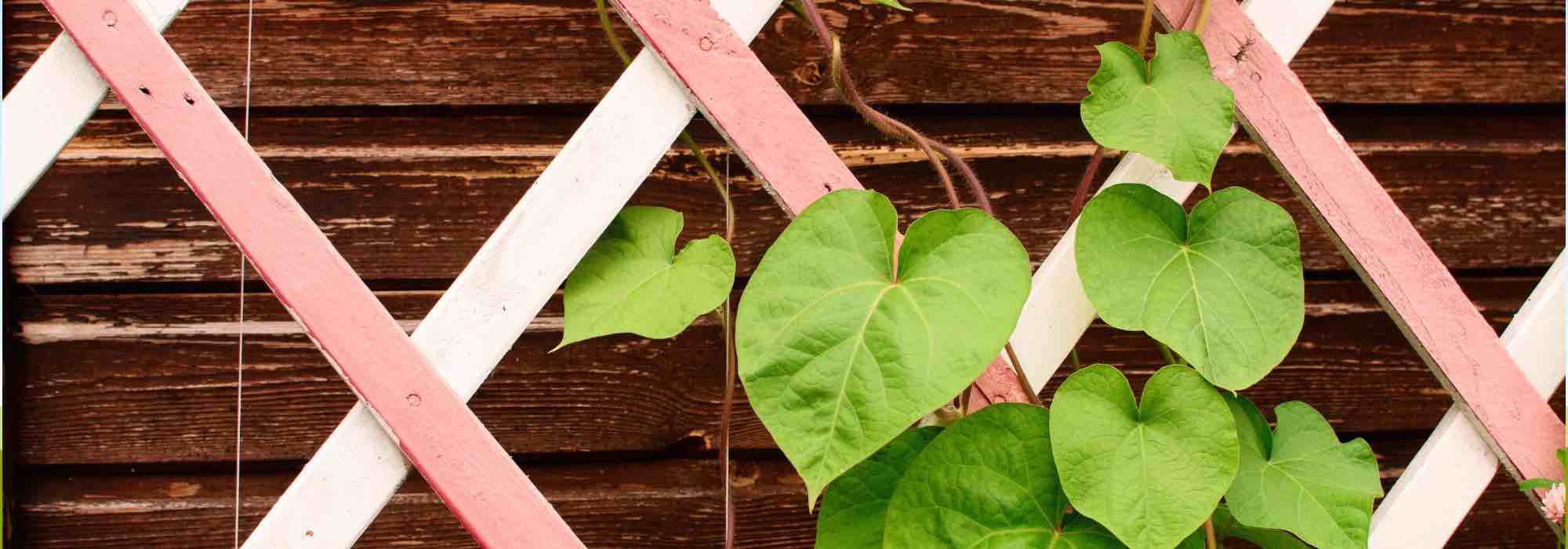
Plant stakes and supports: everything you need to know to choose them correctly
Our guide
Contents
Choosing supports and stakes for your plants is like choosing the best friend for your favourite plant! Stakes and supports provide physical support for ornamental plants, helping to keep their growth upright, prevent them from collapsing and improve their overall appearance in the garden. Whether for climbing plants, long-stemmed flowers or plants with heavy flowers, or for delicate varieties requiring additional support, choosing the right stakes and supports is essential to ensure their health and optimal development.
The aim of this article is to help gardeners understand the different options for stakes and supports available on the market and choose those best suited to their specific needs. Whether you are growing climbing roses, sweet peas or clematis, there is a suitable solution for every type of ornamental plant.

Bamboo and wooden stakes
Bamboo supports
Bamboo supports are among the simplest and most economical options for supporting ornamental plants. Bamboo is a naturally strong and durable material, providing sturdy support while blending harmoniously into the garden landscape. These supports are available in a variety of sizes, making them suitable for a wide range of plants, from small annuals to small climbing plants.
Bamboo is also naturally resistant to many insects and diseases, making it long-lasting without chemical treatment. It is fairly flexible and can be easily adjusted or moved. Perfect for plants that need light support.
The main advantage of bamboo supports is how easy they are to use. They are lightweight and easy to handle, making them simple to install in the soil without damaging plant roots. They are suitable for plants with single stems or an upright habit.
Ornamental plants such as sweet peas, dahlias, delphiniums and sunflowers benefit from this type of support. For the best results, push the supports into the soil to a suitable depth, taking care to space them evenly so that the plant is supported evenly.
Bamboo supports can split and become brittle when exposed to damp conditions. Replace them as soon as necessary.
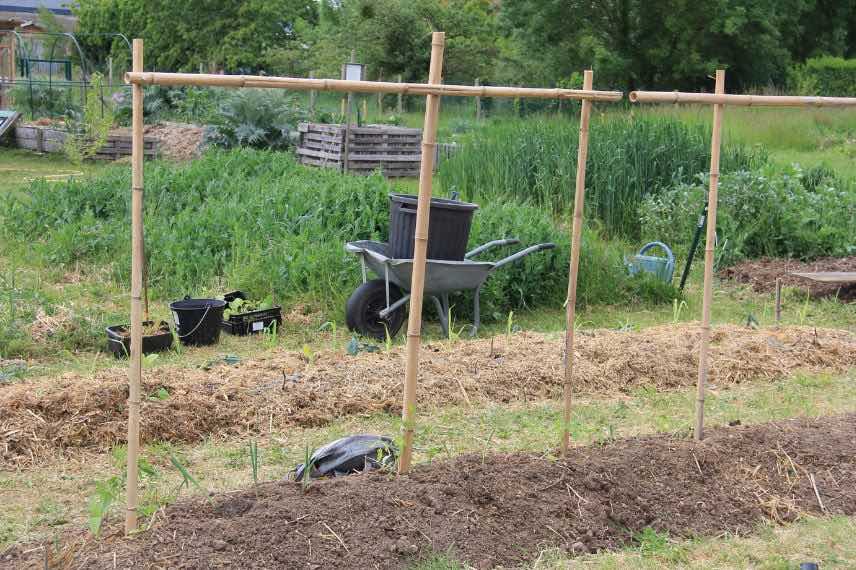
Bamboo supports can be used on their own or assembled together
Wooden supports
Wooden supports offer a rustic appearance. Wood is strong and can be cut to the desired size. It is available in a variety of species, allowing gardeners to choose the one that best suits their style and needs.
Wooden supports are well suited to large, robust plants, as they can support more weight than bamboo. They are available in different sections; the larger the diameter, the more effort is needed to push them into the ground.
They are often made from treated wood to withstand bad weather and insect attacks, making them more durable in difficult outdoor conditions.
They are well suited to young trees that need strong anchoring against the wind, as well as more robust climbing plants such as climbing roses and certain grape varieties.
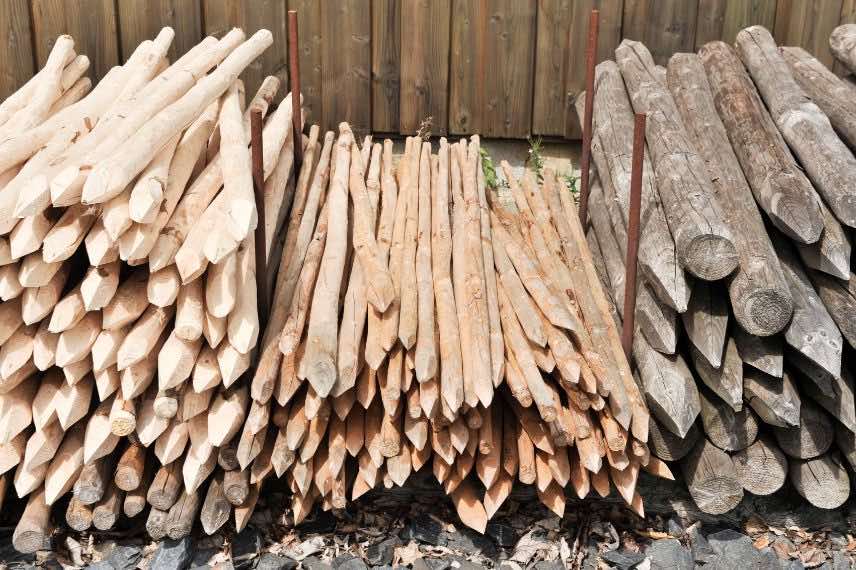
Different sizes and species of wood for wooden supports
Read also
Should trees be staked?Metal and wooden trellises and training kits
Wooden trellises
Wooden trellises add a warm, natural touch to the garden. They blend harmoniously into the outdoor environment and create a rustic, welcoming atmosphere. Wood is a durable material which, if properly treated or chosen for its weather resistance, such as cedar or acacia, can last for many years. Wooden trellises are also highly adaptable and can be painted or stained.
They are ideal for climbing plants such as climbing roses, jasmine and clematis. These plants benefit from the solid structure of a wooden trellis, which gives them something to cling to and climb.
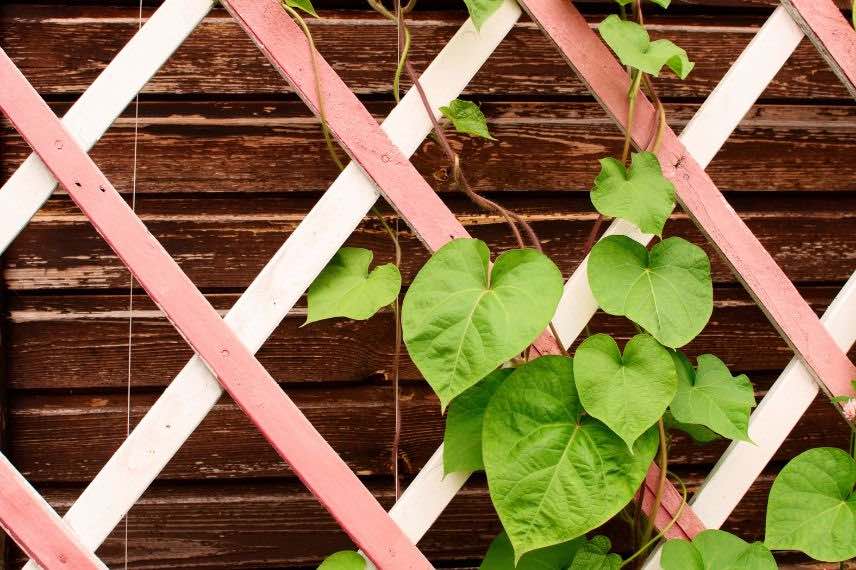
Wooden trellises can be painted
Metal trellises
Metal trellises offer exceptional strength and durability. They withstand bad weather, corrosion and insect attacks. They are available in a wide range of styles.
Metal trellises are particularly suitable for vigorous climbing plants such as certain grape varieties, passion flower and kiwis. They can easily support the weight of these plants without bending or breaking. What is more, metal trellises are perfect for contemporary-style gardens or for anyone looking for a long-term support solution requiring little maintenance.
Plant-training kits
Plant-training kits consist of stainless-steel cables that can be tensioned as required against a wall using wall plugs, nuts and coach screws. They are particularly strong as well as highly versatile, and can even support a plant as vigorous and robust as wisteria.
Arches and arbours
Arches and arbours are decorative and functional features that provide elegant support for climbing plants in the garden. These structures add a touch of charm and vertical interest to the landscape while providing ideal support for climbing plants that make vigorous growth.
Arches are often used to mark a passage through the garden, while arbours can create shaded and sheltered areas. Whatever their function, these structures offer plants solid and reliable support, while creating attractive focal points in the landscape.
Installing arches and arbours may require a certain level of skill and effort, particularly for larger and more complex structures. It is essential to anchor them firmly in the soil to prevent them from toppling over or being damaged by severe weather.
It is important to check the condition of the structure periodically to detect any signs of damage or corrosion.
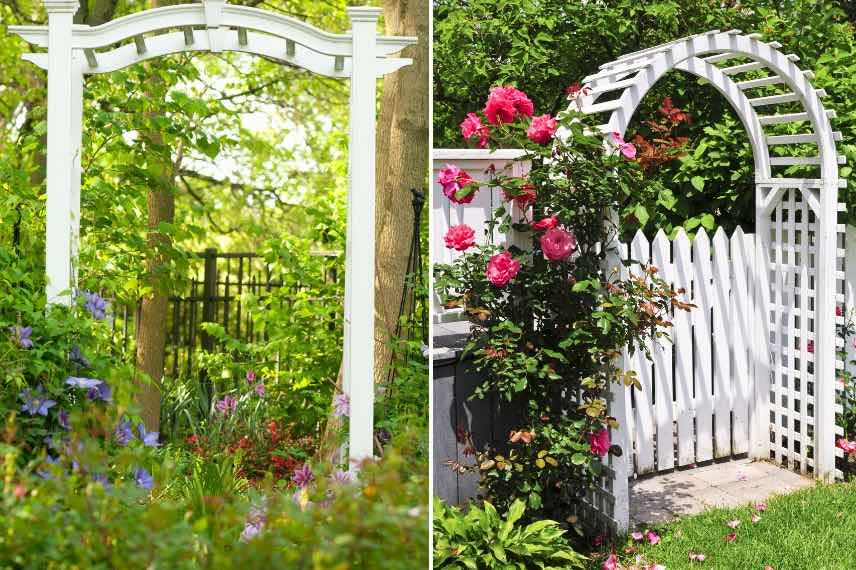
Arches mark a passage or entrance
Read also
How to support peonies?Ropes and nets
Planting circles
Plant support rings are circular or semi-circular structures made from metal or plastic. They provide effective support for plants with large, fairly heavy flowers, which tend to droop or spread out.
By placing them around plants from the beginning of their growth, plant support rings help maintain a compact, upright structure, thereby encouraging harmonious growth.
Plants such as dahlias, peonies and delphiniums benefit greatly from the support provided by plant support rings. These structures prevent them from drooping under the weight of their flowers or leaves, while allowing them to flourish fully.
Installing plant support rings is simple and generally only requires pushing them slightly into the soil around the plant to be supported. It is important to position them so that they surround the base of the plant evenly, leaving enough space for its future growth.
Types of ties to avoid damaging plants
When it comes to supporting ornamental plants, choosing the right ties is important to avoid damaging delicate stems or plant tissues. Different types of ties are available, each offering specific benefits in terms of flexibility, durability and gentleness towards plants.
- Garden string: String is a simple and affordable option for tying plants to supports, but it is not the most durable.
- Velcro ties: Velcro ties are ideal for plants that need their support adjusted regularly. They provide a secure hold while allowing easy removal for plant care.
- Adjustable garden ties: These ties have an adjustment mechanism that allows gardeners to easily alter the tension as the plants grow. They provide secure support while minimising the risk of constricting the stems.
- Plastic-coated metal ties: This is a more expensive option, but it is more durable than string and combines the strength of metal with the “gentleness” of rubber, which does not harm plants.
- Subscribe!
- Contents
This form is protected by reCAPTCHA - the Google Privacy Policy and Terms of Service apply.

































Comments