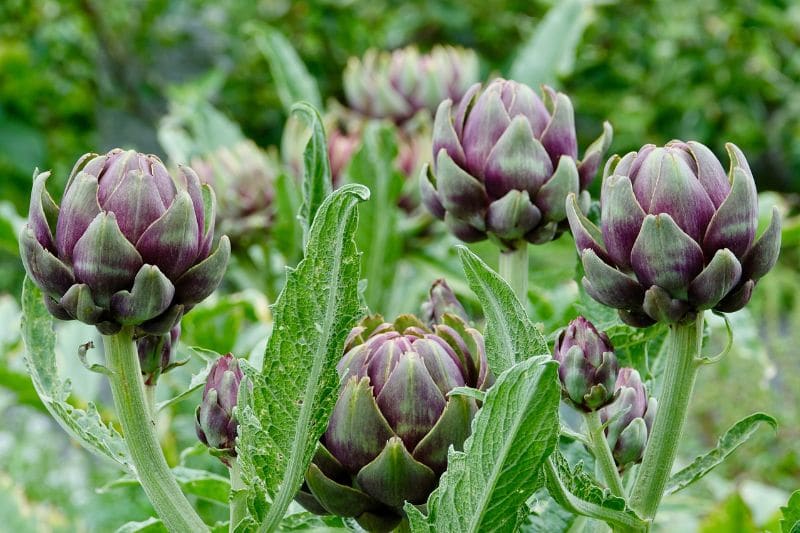
Artichoke, with its silvery foliage and pompom-like flowers, is a plant that brings real aesthetic value to a garden, as well as being an excellent vegetable when still in bud. Easy to grow in the vegetable garden, artichoke is also a perennial plant that can easily be propagated by division. This process, also known as separating offshoots, produces new young plants identical to the parent plant at little cost. In this tutorial, we will discover together when and how to divide an artichoke in the garden.
When should you divide artichoke plants?
The ideal time to divide an artichoke plant is right at the beginning of spring, depending on your département. In regions with a mild climate, division can be carried out from March onwards and until mid-April in the coldest regions of France. This is when the plant emerges from its winter dormancy and starts to develop new shoots, known as offshoots. These young offshoots are the starting point for your new artichoke plant. Preferably carry out the division in overcast weather to help the young plants establish.
Please note: separating offshoots (division) can also be carried out in autumn, around October, but the chances of successful establishment are somewhat uncertain depending on the following winter.
How do you divide artichoke plants?
1- Before setting off into your vegetable garden with your nose to the wind, first prepare your tools. You will need:
- a spade;
- gardening gloves;
- a clean, disinfected pair of secateurs to limit the spread of disease;
- some potting compost for the vegetable garden or well-rotted compost;
- and, of course, a parent artichoke plant;
- optional: a digging fork to prepare your soil.
2- Start by examining your artichoke plant to see where the parent plant is and where the offshoots around it are located.
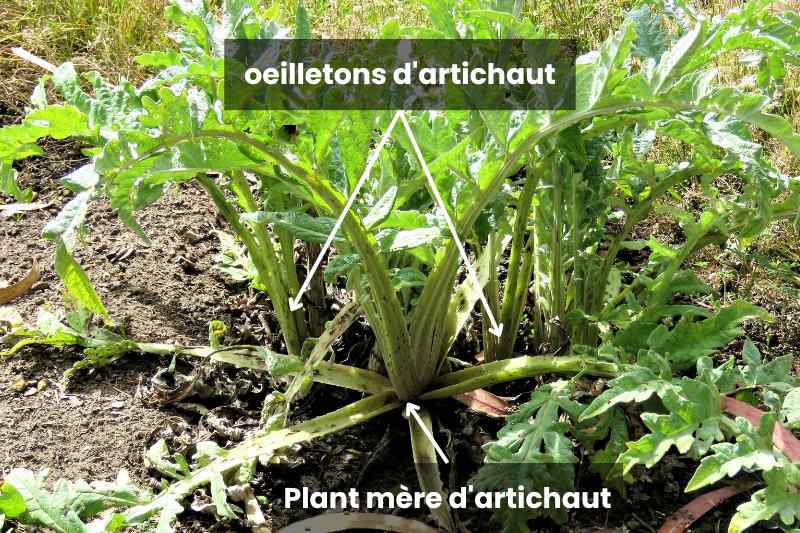
3- Using your secateurs, cut the large leaves of the offshoot back by two-thirds, while retaining the young leaves that are still developing. This will prevent the plant from becoming exhausted by transplanting and will make it easier to remove the young plant.
4- Next, using the spade, dig around the plant until you reach the crown, which is the base of the plant from which the offshoots emerge.
5- Using the spade or a knife, carefully separate each offshoot from the main crown. Position your spade between the offshoot and the parent plant and push the tool vertically into the soil. Make sure you leave a few roots on the young shoot. This step is known as splitting.
6- Carefully lift the young plant out of the soil.
7- Remove any damaged foliage and trim the roots neatly.
How should you replant and care for young artichoke plants?
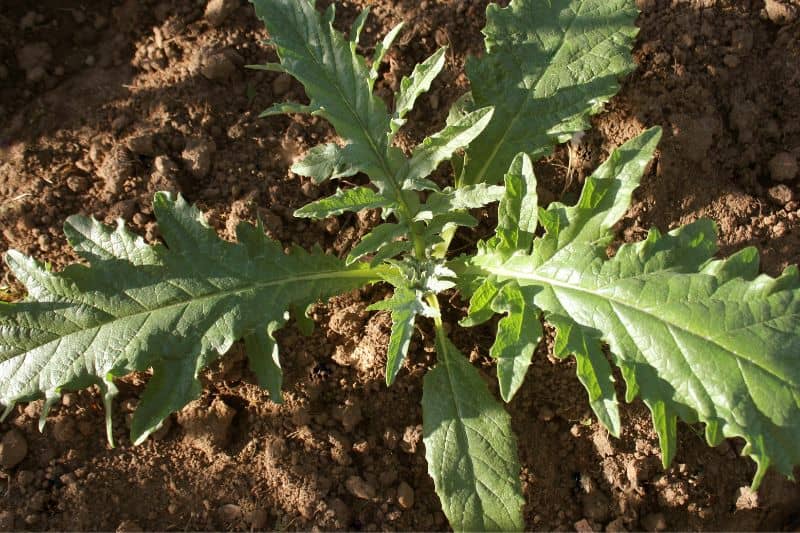
Now that you have your young artichoke plants, it is time to replant them. Choose a sunny position sheltered from strong winds. Artichoke prefers rich, well-drained, slightly alkaline soil.
1- Using an organic digging fork or a spade, work the soil to loosen it deeply.
2- Dig holes large enough, generally three times the size of the rootball, to accommodate the roots of each offshoot, also known as a "split". As a general rule, it is recommended that offshoots are planted approximately 1 to 1.5 metres apart.
3- Place each split in its planting hole, then backfill the hole with a mixture of two-thirds garden soil and one-third potting compost or well-rotted compost to encourage establishment and production, as artichoke is a hungry plant!
4- Firm the soil well around the young plant. You can also earth up around the base.
5- After planting, water generously to help the plant establish and eliminate air pockets.
6- Continue watering regularly during the first few weeks. Artichoke is a plant that likes water, but take care to avoid excess moisture, which could cause the roots to rot.
Tips:
- Apply mulch around your young artichoke plant to retain moisture in the soil and protect the roots from the cold.
- In spring, you can add well-rotted compost around the base of your artichoke plants to encourage flower development.
- In winter, in cold regions, remember to protect your artichoke plant with fleece or a mulch of dead leaves. Discover all our advice on how to protect artichoke from the cold.
Further reading
- Find out everything you need to know in our article on artichoke: planting, sowing, growing and care.
- Discover our full range of artichoke plants.


































Comments