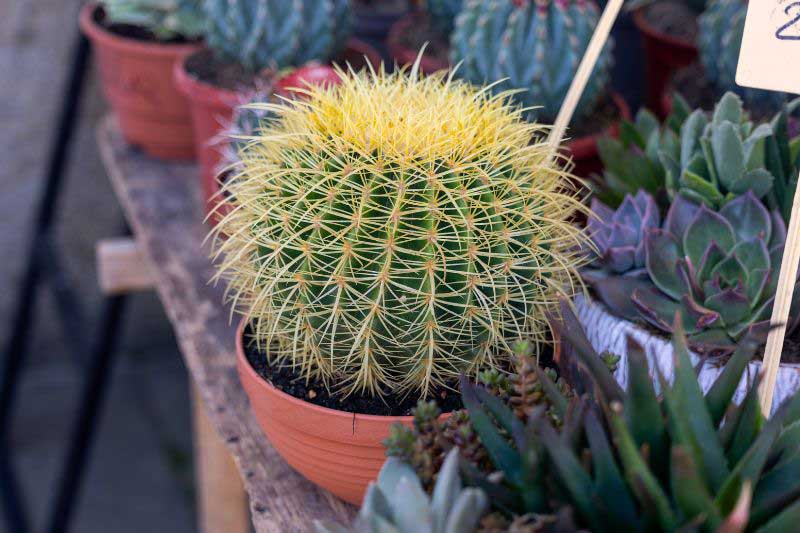
With its rounded shape and numerous yellow spines, Echinocactus grusonii, also known as golden barrel cactus, is a cactus prized for its ornamental appearance. Easy to grow, like other cacti it prefers free-draining growing media and moderate watering. It does not need repotting often, but when its pot becomes too small or the growing medium has deteriorated, repotting can provide it with better growing conditions.
Discover all the steps for successfully repotting your Echinocactus: when to repot it, which pot and growing medium to choose, and above all how to do it without injuring yourself on the spines.
When should you repot Echinocactus?
Spring is the best time to repot Echinocactus grusonii. During this season, the plant gradually emerges from its winter dormancy and can adapt more easily to its new container.
Golden barrel cactus grows slowly and can remain in the same pot for several years. Ideally, repot it every 2 to 3 years.
Several signs may indicate that it is time to repot it:
- the roots are emerging through the drainage holes;
- the pot has become too small for the plant;
- the growing medium is compacted;
- the cactus has become unstable in its pot;
- the growing medium dries out very quickly after watering.
A recently purchased Echinocactus can also be repotted if its container is too small or if the growing medium does not seem suitable.
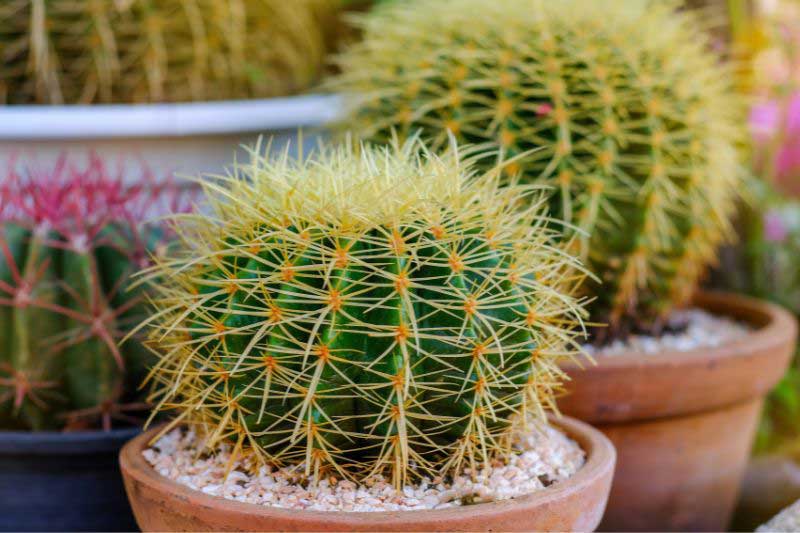
Which pot and growing medium should you choose?
When repotting an Echinocactus, choose a pot that is slightly larger than the previous one. An excessively large container retains more moisture and increases the risk of overwatering.
Above all, the pot must have drainage holes to allow excess water to escape. A terracotta pot can be useful because it is porous and helps moisture evaporate.
For the growing medium, choose a specialist compost for cacti and succulents that is sufficiently light and free-draining. You can also prepare your own mix with potting compost and mineral materials such as coarse sand, pouzzolana or perlite. The aim is to obtain a growing medium that does not remain damp for too long.
Equipment needed
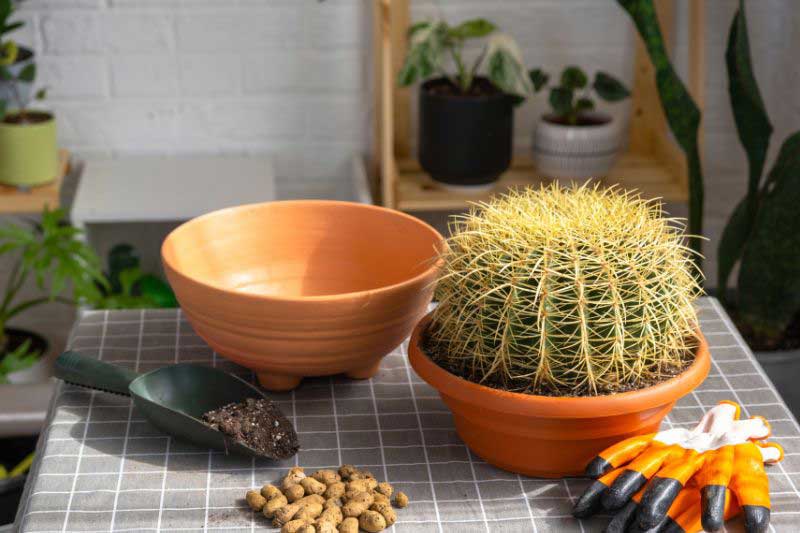
Before starting, prepare all the equipment you need for repotting. You will need:
- a new pot with drainage holes;
- cactus growing medium;
- thick gloves;
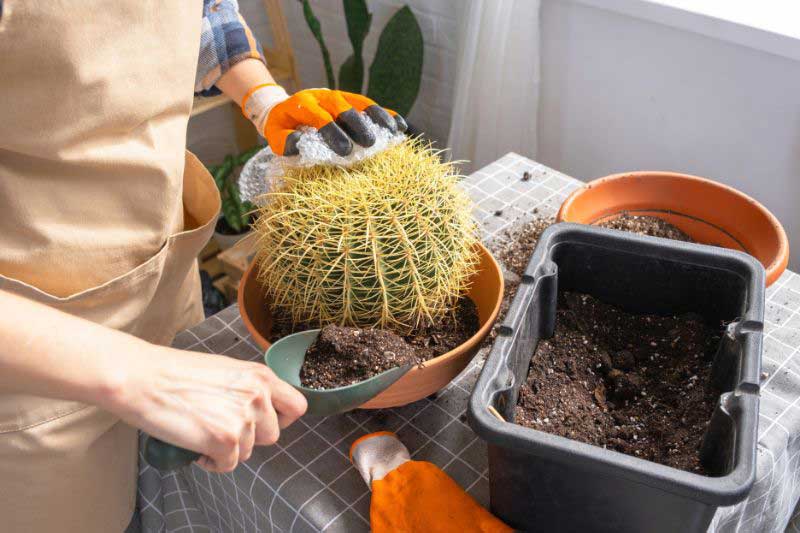
- newspaper, a thick cloth or bubble wrap for handling the cactus;
- a small spade or hand trowel;
- a container for collecting the old growing medium.
Golden barrel cactus has particularly sharp spines, so never handle the cactus with bare hands. For a large specimen, it is best to work with two people.
How to repot Echinocactus step by step
Repotting Echinocactus grusonii is fairly straightforward, provided you handle the plant carefully.
- Prepare the new pot: add a drainage layer to the bottom of the pot, such as clay pebbles, gravel or broken terracotta, followed by a first layer of cactus growing medium.
- Wrap the cactus in a layer of bubble wrap, newspaper or cloth to avoid injuring yourself on the spines.
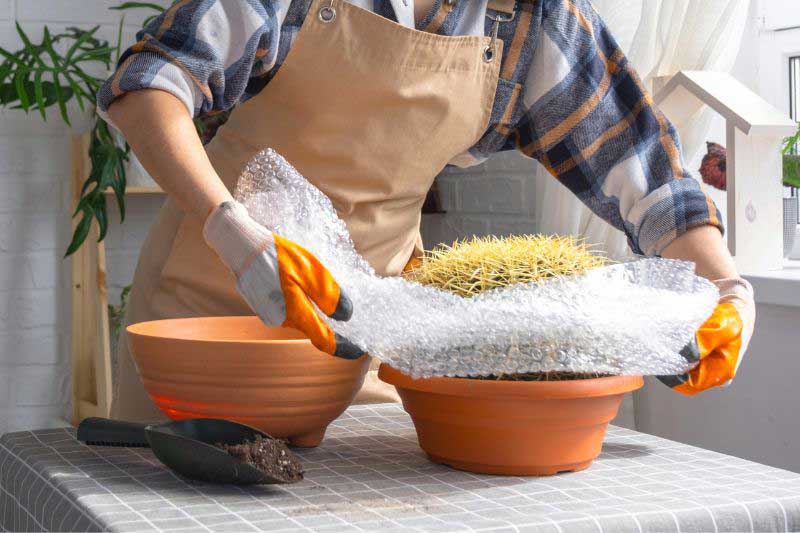
- Then remove it from its pot by lifting it carefully.
- Examine the roots: remove any old growing medium that comes away easily and check the condition of the roots. If any are soft or damaged, remove the affected parts.
- Place Echinocactus in its new pot: position it in the centre, at the same depth as in its previous container.
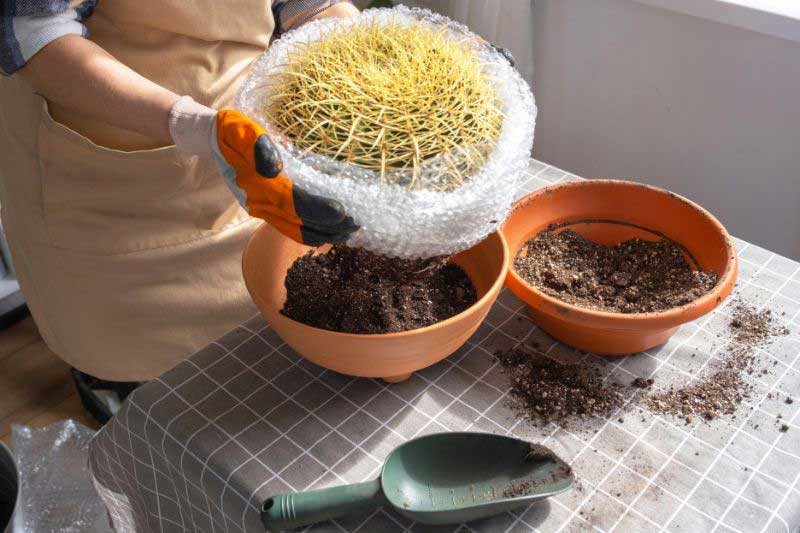
- Add the growing medium: gradually fill the spaces around the rootball without compacting the compost too much. Check that the cactus is upright and that its base is not buried too deeply.
After repotting, do not water immediately. If the roots have been handled, give any small wounds time to dry before resuming watering.
How should you care for it after repotting?
After repotting, place Echinocactus in a bright position. If it was previously kept in shade or partial shade, however, avoid exposing it suddenly to strong sunlight.
Wait a few days before watering for the first time. Afterwards, always allow the growing medium to dry out completely between waterings. Golden barrel cactus copes better with an occasional lack of water than with excess moisture.
When growth resumes, you can use a fertiliser suitable for cacti sparingly, following the manufacturer’s recommendations.
Mistakes to avoid
Repotting golden barrel cactus is fairly simple, but there are some mistakes to avoid:
- Choosing a pot that is too large: choose a container slightly larger than the previous one to limit stagnant moisture.
- Using a growing medium that is too rich or compact: Echinocactus needs a light, very free-draining mix.
- Watering immediately after repotting: first allow any root wounds to dry and heal.
- Burying the base of the cactus: maintain the original planting level and keep the root collar clear.
- Exposing the cactus suddenly to sunlight: after repotting, avoid sudden changes in position.
- Handling the cactus without protection: always use thick gloves and suitable protection to avoid injuries caused by the spines.

































Comments