Propagation by cuttings of many plants is often done at the end of summer on what is called semi-ripe wood, or in spring on herbaceous plants. In autumn, it’s not too late to get pruning shears and pots out, because some species are still suitable! Discover which plants are likely to take and how to succeed with autumn woody cuttings.
When to take cuttings in autumn?
Autumn woody cuttings are carried out from late September to late November, depending on your local climate. The fresher a cutting is, the more warmth it will need. Semi-ripe cuttings taken at the end of summer require temperatures of 12–15°C, whereas fully woody cuttings can develop roots at lower temperatures. The aim is to take shoots that are not yet completely hardened and dry (as they are in winter). The plant is entering dormancy, which favours rooting without risk of desiccation.
Here are some indicators to choose the right moment:
- Leaves are starting to fall or change colour.
- Wood snaps with a slight crack when bent.
- Avoid periods of frost or heavy rain.

Which woody plants to favour?
Autumn woody cuttings are particularly suitable for deciduous shrubs and some small trees. Avoid conifers, Mediterranean plants such as lavender or rosemary, and evergreen shrubs (laurel, holly).
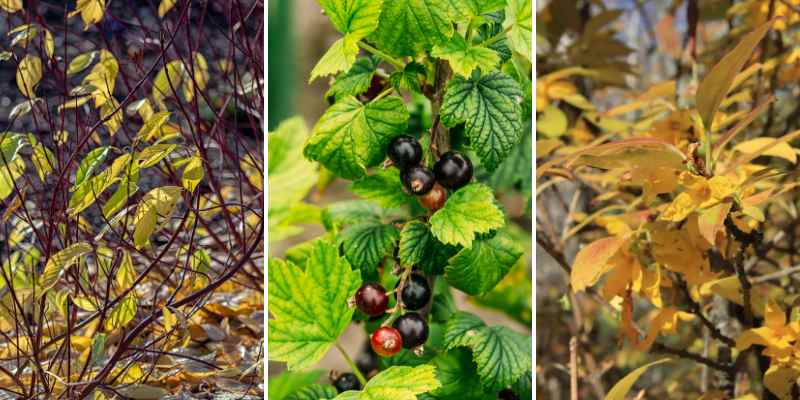
The best chances of success are with the following shrubs/climbers:
- Roses (not grafted), choosing current-year shoots without flowers
- Currants: cuttings 20–25 cm
- Blackcurrants: cuttings 20–25 cm
- Dogwoods (Cornus): cuttings 15–20 cm, rooting in 2–3 months
- Viburnum (Viburnum): cuttings 15–20 cm
- Forsythia: very easy with rapid rooting
- Deutzia: take straight shoots
- Buddleia: cuttings 20–30 cm
- Weigela: choose shoots without dead wood
- Lonicera (honeysuckle): cuttings 20 cm
How to do it?
Required equipment
- Clean, disinfected pruning shears
- Deep pots or trays (deep growing trays), filled with a light mix (2/3 potting compost + 1/3 sand or perlite)
- Label stick or pencil
- Cold frame, cloche or plastic cover
- Labels to identify varieties
Steps
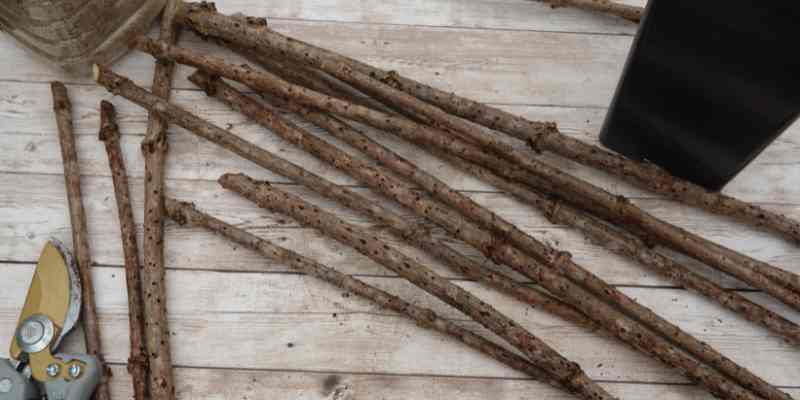
- Take the cuttings: choose healthy, disease-free shoots from the current year.
- Cut lengths of 15–25 cm (depending on species), cutting just below a node and on the slant to increase rooting surface. The bud or node is a latent bud; it is where natural growth hormones are most concentrated, and where roots will form more readily.
- Remove remaining leaves to limit evaporation.
- Prepare the substrate: fill pots or trays with the potting mix.
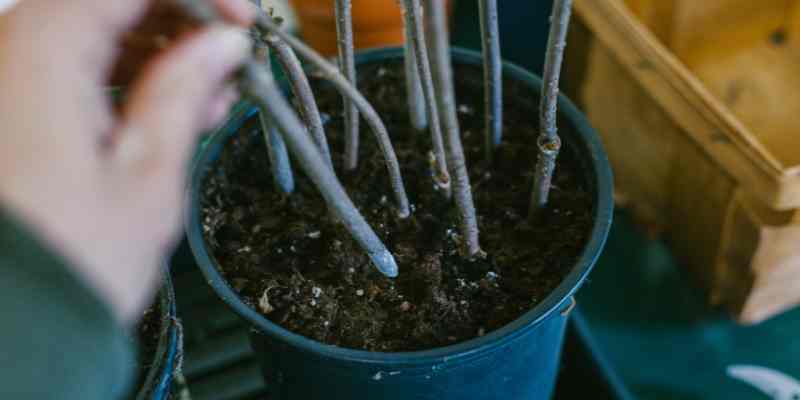
- Make a hole with a pencil or stick to avoid damaging the base of the cutting.
- Plant the cutting to about one third of its length, ensuring at least one node is buried (this is where roots will form). Space cuttings 5–10 cm apart if using a tray.
- Water lightly to moisten the substrate without waterlogging. Use a spray bottle to avoid displacing the cuttings.
- Label
- Keep substrate slightly moist throughout the rooting period.
- Place pots or trays in a sheltered spot (cold frame, cloche, or against a north-facing wall to avoid sudden temperature changes). If temperatures fall below -5°C, protect cuttings with fleece or a layer of straw.
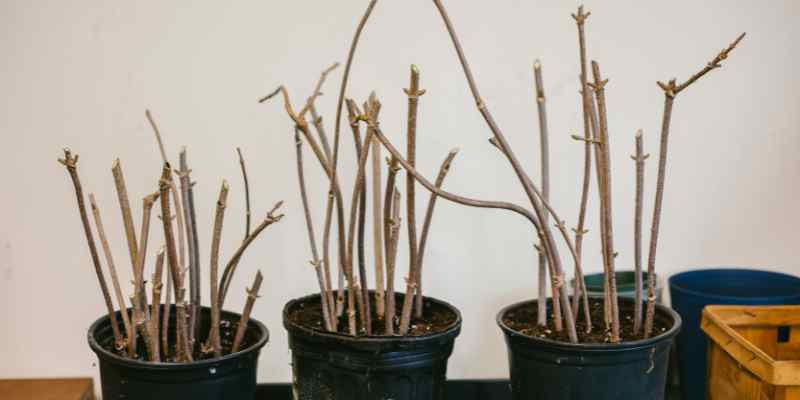
- Autumn woody cuttings generally take 2–3 months to root. You can check root formation by gently pulling on a cutting: if it resists, that’s a good sign!
- In the following spring, when buds begin to swell, you can pot up rooted cuttings into individual pots or transplant them into the ground.
- Alternative: another option is to plant cuttings directly outdoors in a trench filled with sand and potting compost. This method is ideal if you have many cuttings and well-drained soil. Choose a well-protected site.
Mistakes to avoid
- Using shoots that are too young or too old: wood should be neither too green nor too hard.
- Planting in the wrong orientation!: cut the top end of the shoot on a slant as a clear marker, and the base at right angles, or lay cuttings out in the correct orientation on a work surface. This distinction is particularly useful on leafless shoots, where it is harder to spot top from bottom.
- Forgetting to label: without labels you risk confusing varieties in spring.
- Overwatering: waterlogged substrate encourages fungal disease and rot.
- Avoid potting mixes that are too rich in organic matter, which can also encourage rot.
Key points to remember
✅ Ideal period: late September to late November.
✅ Suitable plants: roses, currants, forsythia, elder, etc.
✅ Essential equipment: disinfected pruning shears, potting compost/sand mix, labels.
✅ Mistakes to avoid: wood too young/too old, waterlogged substrate, wrong planting orientation.



































Comments