After summer, it is time to start planting again, along with creating new beds. Autumn, with its rainfall and still-mild temperatures, is ideal for getting plants established and dividing certain perennials. You can also simply enlarge a bed that has become too small or was poorly sized in the first place. How can you go about it properly without making things complicated?
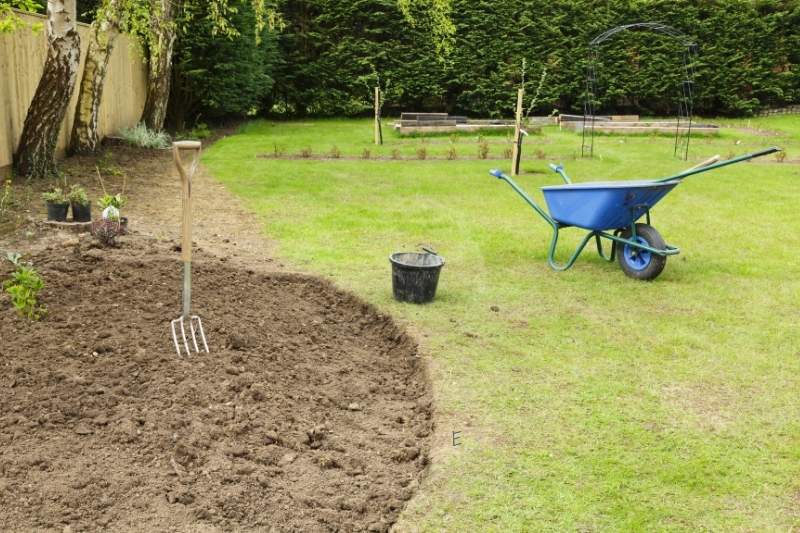
Why change a bed and which new shape should you choose?
When you realise that a bed was too small, there are several reasons for wanting to create a new, larger shape:
- Enlarge it proportionally on all sides, adding, for example, 50cm to 1m all the way around. You retain the original shape while making it more generous, because what matters is giving more substance to a bed that looked adrift or was no longer suited to its surroundings. This is sometimes the case with mixed borders that were originally created too small;
- Realise that the original shape was not harmonious: perhaps you created a round bed that you no longer like, or a bed whose edges have gradually been nibbled away by the lawn;
- Want to join two beds together, because planting a tree or shrub, or creating a pathway, has altered the layout;
- You can also enlarge the area on just one of the two sides or at the front, to create a sunnier area or, conversely, a shadier one, and introduce a few different plants there.
Beds are either ellipsoidal, or ovoid (organic and curved), or straight and geometric (square, rectangular or strip-shaped).
Enlarging a rectangular bed is easy to plan, as you would generally choose a proportional increase. Island-shaped or round beds around a tree are also easy to rework. Curved shapes are less straightforward to enlarge, but starting with an ovoid bed, you can imagine a different shape and visually transform the original design.
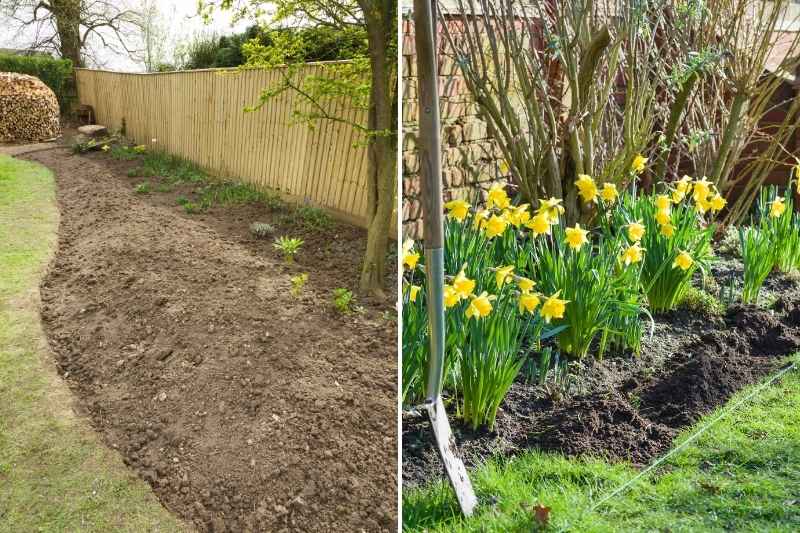
Choose the right time
Always wait until the soil is wetter, as this will make digging and stripping much easier, since the enlarged area is usually taken from an established lawn. This will depend on the year, given the varying intensity of summer drought and soil that has become too hard to work, which often means postponing the job until October. Autumn rainfall helps to loosen the soil or, if the bed is being extended into the lawn, to remove the turf in sections.
The technique for enlarging a bed
There are several techniques, as you can either plant straight away or simply prepare the ground for planting later, in spring, when planting shrubs or perennials that are sensitive to frost, for example.
Five steps are important when enlarging a bed. Here is how to proceed if you want to plant immediately:
1- Mark out the new area
- Using a garden hose or a thick rope, mark out the outline. This makes it easier to visualise the new shape you want. For rectangular beds, a string line is enough to draw a perfectly straight line.
- Check the shape of this extension from several sides of the bed. It must work coherently with the existing bed, so adjust any curve if necessary. This step is particularly important for curved beds, so that you can allow for the passage of the lawnmower (avoid acute angles).
- Once you have refined and finalised the shape, mark it out with a little flour.
2- Strip the ground
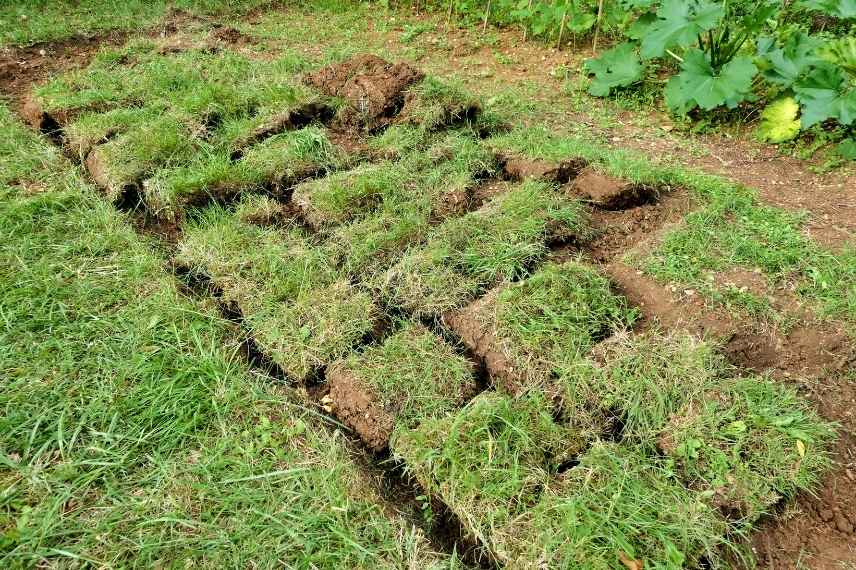
The most physically demanding stage has arrived. You need to cut out squares of turf when the bed is being enlarged into the lawn. A spade or trenching spade will help you work neatly.
- Start by stripping the edges: you can then see them more clearly and, if necessary, still correct the outline. Work to a depth of 3 to 5cm, no more. The removed turf “scalps” can be turned over and used on the vegetable garden, or added to the compost.
- If the area is not covered with grass but is being taken from a patch where weeds are growing, you will need to weed it.
3- Loosen and level the soil
- Dig over the cleared area to the depth of a spade to aerate the soil, removing large roots and weeds.
- Add garden soil mixed with good-quality potting compost to increase the volume of soil. For this, the rest of the bed should also be raised slightly, which is always preferable.
- At this stage, adding compost, fertiliser or well-rotted manure is also worthwhile. It will enrich soil that is often poor where it has been taken from the lawn, and properly prepare it for planting. Lightly incorporate mature compost with a claw, at a rate of 3-4 handfuls per m².
- Level the surface with a rake, distributing the soil evenly, especially where it meets the old bed.
- Make a shallow trench all around the bed. This will be maintained to keep the edge neat; continue it around the original bed to ensure a cohesive appearance. This applies only to a bed without a hard edging.
4- Plant in harmony
- Start by placing the shrubs and perennials you have bought or lifted, perhaps some of them, on the prepared area. They will form the extension of the bed. There should be harmony between the colours of the foliage and flowers and those in the original bed. Step back to observe the effect and reposition a few plants if necessary.
- Pay close attention to the aspect, which may be different in the new bed, with more shade or, on the contrary, more sun.
- For a more natural look, lift two or three plants from the original bed and replant them along the edge of the bed. Avoid planting them one behind the other; stagger them instead. This will bring the whole planting together and avoid the artificial effect of two adjoining beds.
- Prepare the planting holes, then plant according to the type of plant (see our advice in How to plant a shrub, How to plant a perennial, How to plant a bare-root shrub).
5- Water and mulch
- Water thoroughly (even in rainy weather), creating a watering basin around shrubs and smaller shrubs and at the base of perennials and grasses.
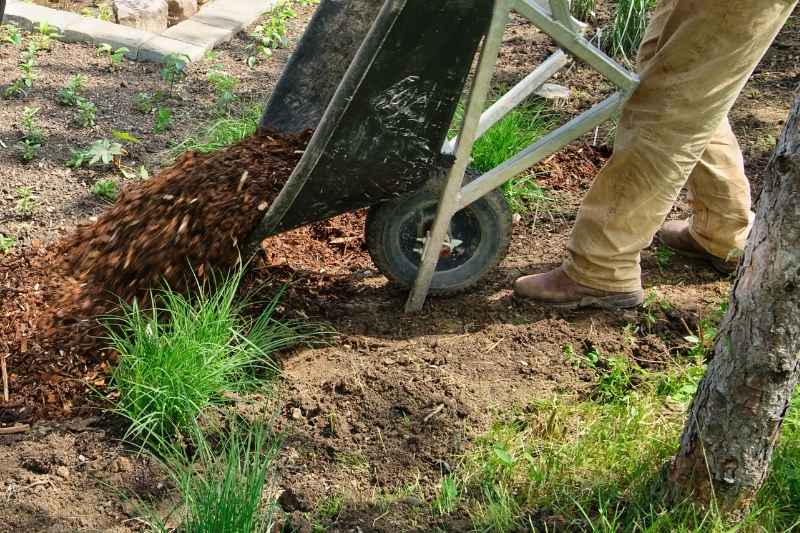
- Mulch the whole area by spreading a 5 to 7cm layer of mulch (ideally a mixture of ramial chipped wood, bark and fallen leaves) over the entire bed, both old and new. The mulch will visually unify the area while limiting weed growth and maintaining the moisture needed for plants to establish at this time of year.
Ingrid explains this landscaping process, with images, in the tutorial How to easily create a flower bed on a lawn.
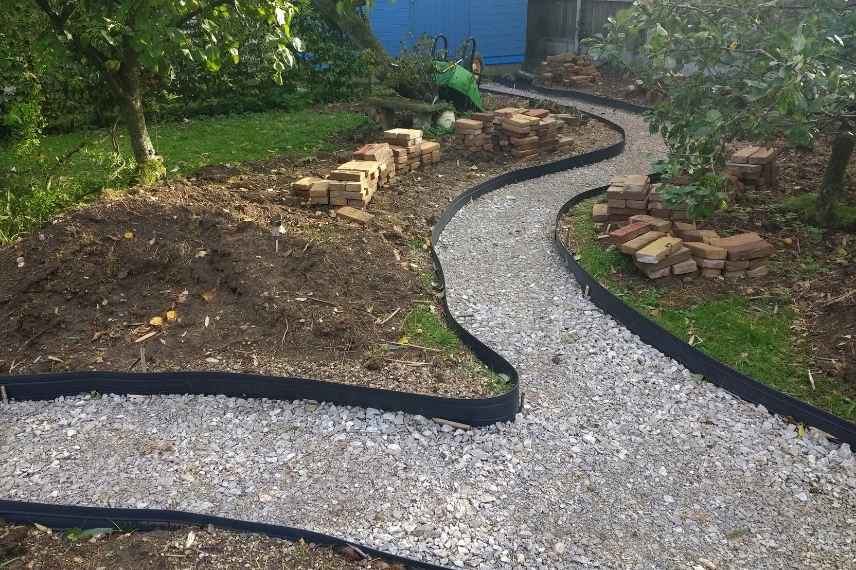
Of course, if an existing bed is edged with materials, use the same material again if possible, in the same colours, to create continuity around the enlarged bed.

































Comments