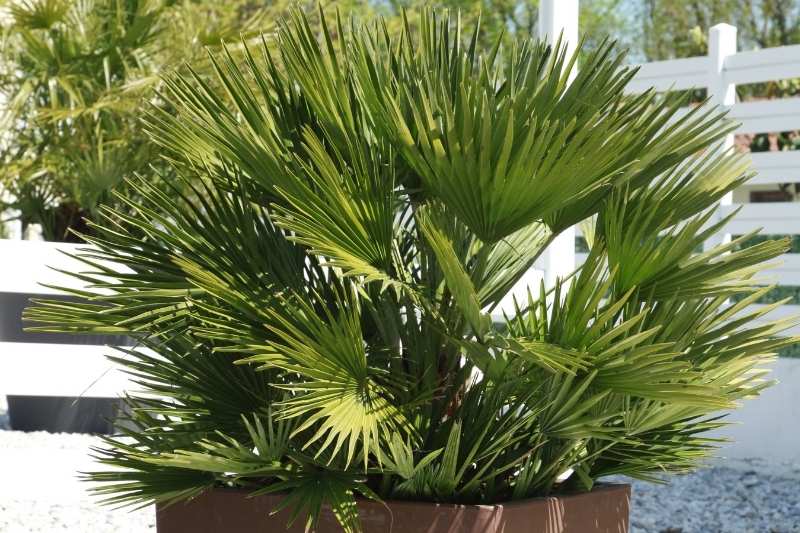
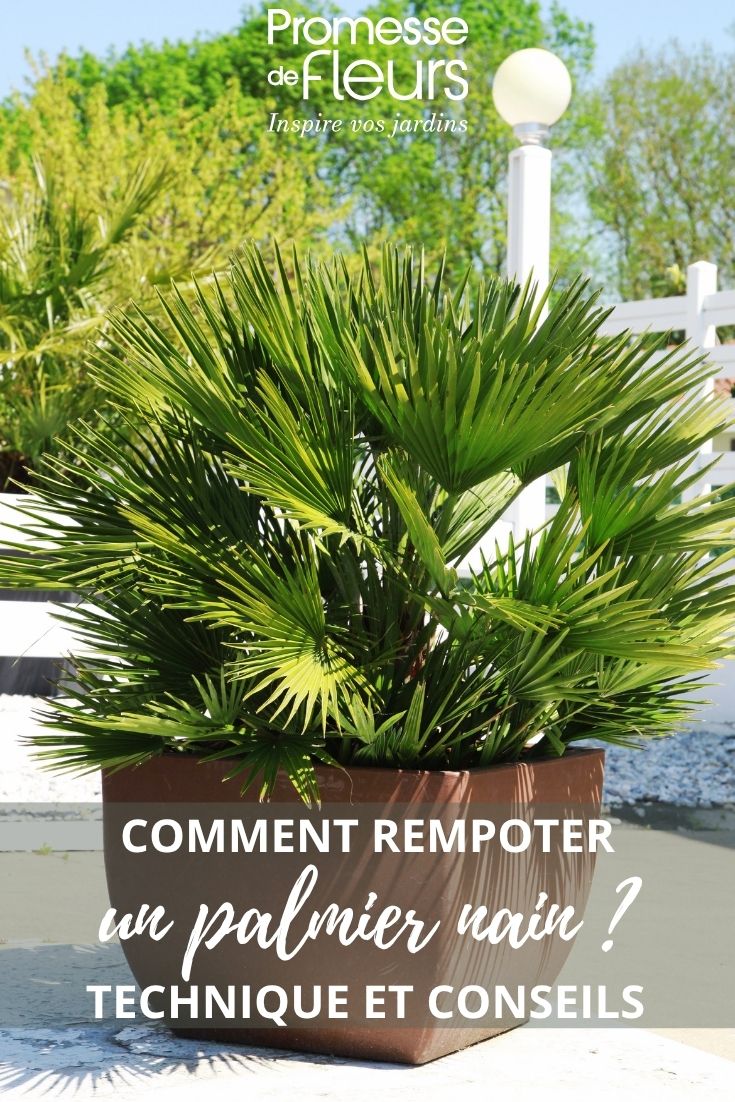
With its fan-shaped fronds and Mediterranean appearance, the dwarf fan palm, Chamaerops humilis, grows very well in a pot on a patio or balcony. However, even though it grows slowly, its roots eventually fill all the available space. When the pot becomes too small or the growing medium becomes depleted, repotting in spring gives it more room and the right conditions to continue growing. Here is when to repot a dwarf fan palm and how to do it, step by step.
When should you repot a dwarf fan palm?
The best time to repot your dwarf fan palm is in spring, when temperatures rise and Chamaerops humilis starts growing again. The palm then has the whole growing season to develop new roots in its new pot.
In general, repotting every two or three years is enough. Your palm will also give you clear signs that it needs repotting:
- its roots are growing out through the drainage holes,
- its rootball seems very compact,
- water runs through the pot almost immediately,
- the palm is clearly too cramped.
Good to know: after buying the plant, it may also be a good idea to repot it if it is growing in very peaty potting compost that stays wet for a long time, or if the pot is too small.
Which pot should you choose for repotting a dwarf fan palm?
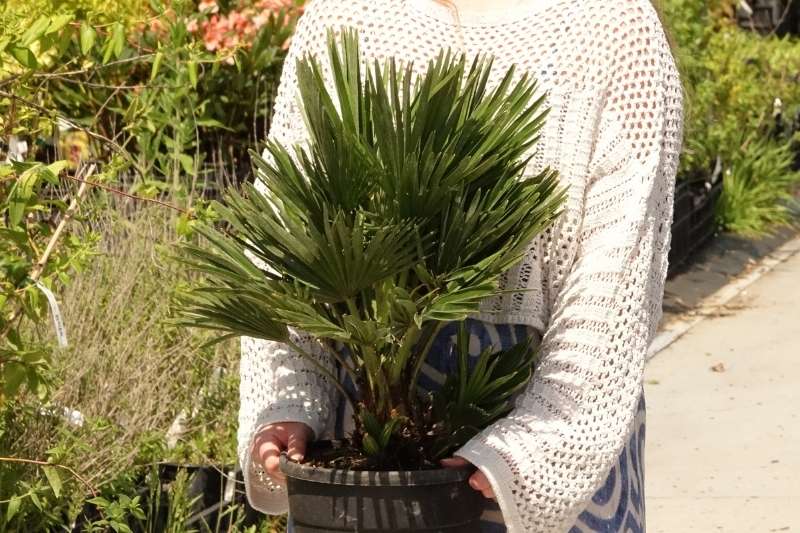
For your Chamaerops humilis, choose a stable pot (generally a wide one), with drainage holes in the bottom. Although plastic can be suitable, we recommend choosing terracotta pots: this porous material helps excess water evaporate and is generally heavier, making the pot more stable.
The new container should be only slightly wider than the old one. An oversized pot holds more wet growing medium around the roots and increases the risk of root rot.
Which growing medium should you use to repot a dwarf fan palm?
Dwarf fan palms like well-drained soil, but they also appreciate a growing medium that can retain a little moisture and nutrients.
Use a good potting compost for Mediterranean plants, or a good-quality planting compost that is sufficiently rich and free-draining. If the mixture seems heavy or compact, add a little pozzolana, coarse horticultural sand or fine gravel.
Remember to place a few centimetres of clay pebbles in the bottom of the pot before adding the growing medium, to improve water drainage.
What equipment do you need for repotting?
- a pot with drainage holes, slightly larger than the previous one;
- potting compost for Mediterranean plants or good-quality planting compost;
- if needed: pozzolana, coarse horticultural sand or fine gravel;
- clay pebbles for the bottom of the pot;
- gloves to protect your hands;
- clean secateurs if any damaged roots need removing.
How do you repot Chamaerops humilis step by step?
- Allow the growing medium to dry out for a few days before repotting: the rootball will be easier to remove and the roots will be less fragile.
- Carefully lay the pot on its side, then slide out the rootball without pulling on the foliage. If it resists, gently tap the sides of the container.
- Remove some of the old potting compost with your fingers, without trying to expose all the roots.
- Take the opportunity to examine the root system and cut away any dead, soft or damaged roots with a clean tool.
- In the new pot with drainage holes, place a layer of clay pebbles in the bottom, then add a little free-draining growing medium.
- Then place the rootball in the centre of the new pot.
- Firm the growing medium gently with your fingers, just enough to stabilise the plant. Leave a few centimetres clear below the rim of the pot: you will be glad of the extra space when you water it next time.
- Finish with a thorough watering, until water runs out through the drainage holes. This first watering helps the fresh growing medium settle properly around the roots.
How do you care for a dwarf fan palm after repotting?
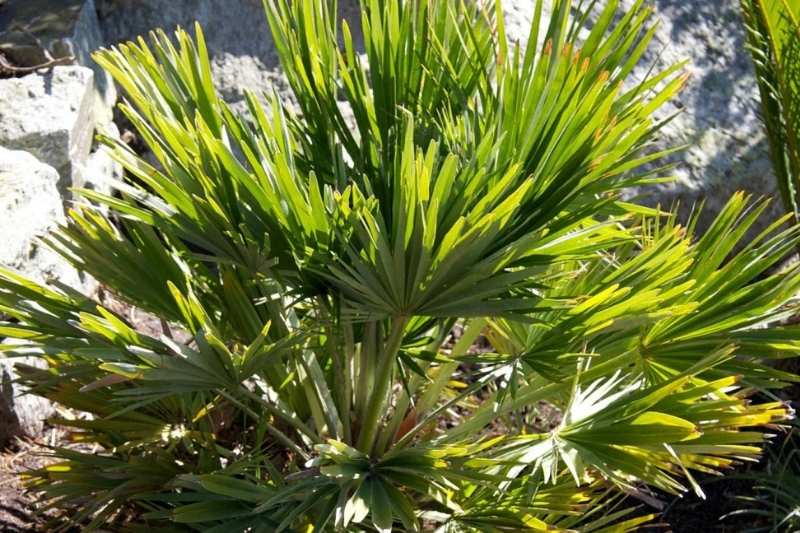
- After repotting, pay particular attention to the moisture level of the growing medium during the first few weeks. Water when the surface starts to dry out, without allowing the rootball to dry out completely or remain waterlogged.
- Place the palm in a bright spot sheltered from strong winds while it settles in.
- Wait around 6 to 8 weeks before resuming feeding. Then, during the growing season, apply a liquid fertiliser for Mediterranean plants or container plants about once a month, following the dosage indicated on the packaging.

































Comments