
Hemerocallis Gentle Shepherd - Daylily

Hemerocallis Gentle Shepherd - Daylily

Hemerocallis Gentle Shepherd - Daylily

Hemerocallis Gentle Shepherd - Daylily

Hemerocallis Gentle Shepherd - Daylily
View more pictures
Hide images

Sébastien G.
Hemerocallis Gentle Shepherd - Daylily
Sébastien G. • BE
Hemerocallis Gentle Shepherd - Daylily
Hemerocallis Gentle Shepherd
Daylily
Bought as bare roots; we’ll see this summer if there is flowering.
LB, 29/03/2026
Back-to-school special offer!
Get €10 off for every €50 you spend! And get up to €40 off on a single order.
How does it work?
1. Shop your favourites
Add your favourite plants to your basket. For every €50 you spend (excluding delivery charges, store credit and the plastic-free option), you’ll receive a €10 voucher.
€50 spent = €10 voucher
€100 spent = €20 voucher
€150 spent = €30 voucher
€200 spent = €40 voucher
2. Place your order
Once your basket reaches one of the spending thresholds, place your order. You can even choose your delivery date!
3. Receive your voucher
As soon as your order has been shipped, you’ll receive an email containing your personal voucher code and its value.
4. Use it on your next order
Your voucher is valid for 90 days from the date you receive it. It can be used once only, on a new order worth at least the value of the voucher, excluding delivery charges.
Please note: Vouchers can be combined with other offers, but cannot be split or refunded.
Home or relay delivery (depending on size and destination)
Important: You may be charged customs duties by your country’s customs authorities upon delivery.
Schedule delivery date,
and select date in basket
This plant carries a 12 months recovery warranty
More information
We guarantee the quality of our plants for a full growing cycle, and will replace at our expense any plant that fails to recover under normal climatic and planting conditions.

Would this plant suit my garden?
Set up your Plantfit profile →
Description
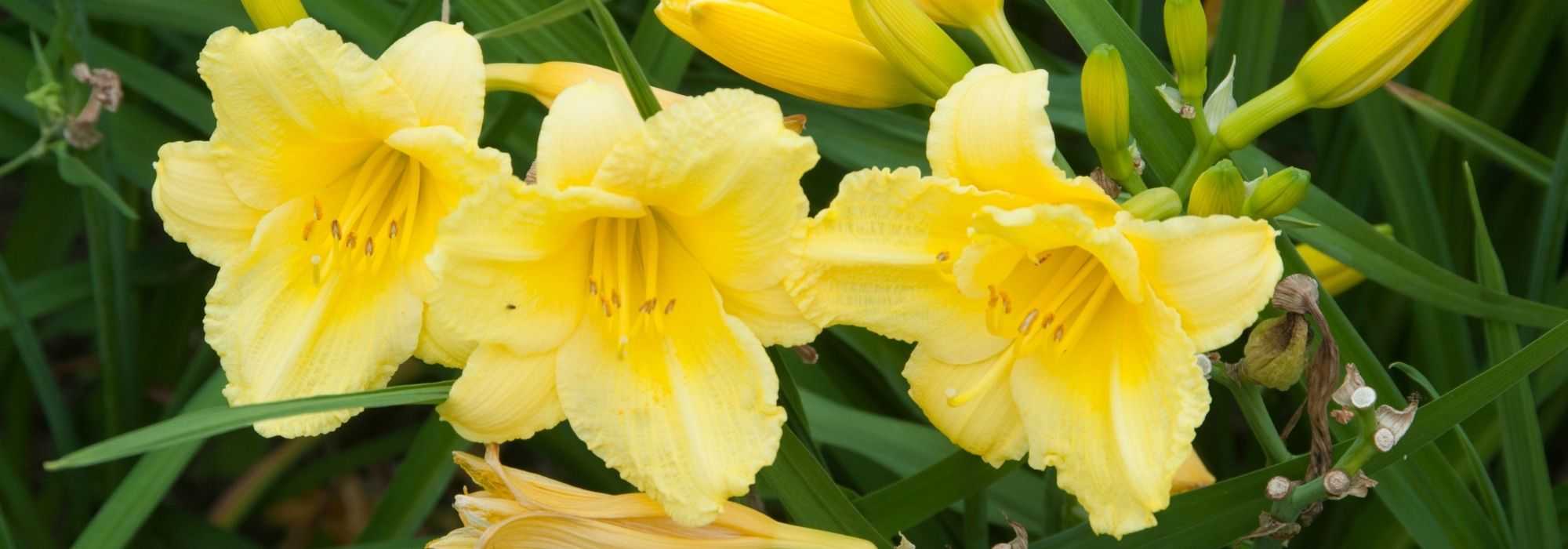
L'hémérocalle ‘Gentle Shepherd’ occupe une place à part parmi les variétés anciennes blanches : ses reflets crème à peine perceptibles confèrent à la fleur l’apparence du blanc pur, un coloris recherché depuis longtemps par les hybrideurs. Une gorge verte souligne l'élégance de la corolle. Cette floraison claire est facile à associer au jardin. Robuste, très rustique et fidèle, cette vivace forme une touffe généreuse, particulièrement florifère en sol riche et frais.
Cette hémérocalle appartient à la famille des Asphodélacées. C’est une vivace herbacée : ses feuilles naissent au niveau du sol et ses racines épaisses lui servent de réserves. Le genre Hemerocallis est originaire d’Asie tempérée. ‘Gentle Shepherd’ est un hybride horticole américain, obtenu par Elizabeth Yancey et enregistré en 1980. Il s’agit d’une variété diploïde, c’est-à-dire pourvue de deux jeux de chromosomes. Elle a reçu l’Honorable Mention de l’American Daylily Society en 1984, puis son Award of Merit en 1987. Son feuillage s'assemble en une touffe évasée de 45 à 60 cm de largeur. Les feuilles, longues, étroites et arquées, atteignent 60 à 65 cm de long. Elle est classée parmi les hémérocalles semi-persistantes : sous un climat doux, une partie des feuilles persiste l’hiver ; sous un climat plus froid, elles sèchent complètement. De la touffe montent des hampes nues et ramifiées qui atteignent 70 à 75 cm de hauteur. Solides, elles se passent de tuteur. La floraison de cette variété, plutôt hâtive, se déroule le plus souvent de juin à juillet. Les fleurs simples et presque circulaires mesurent 12 à 13 cm de diamètre. Chacune compte six pièces florales, légèrement ondulées sur les bords, d’un ivoire très pâle, s'ouvrant sur une gorge jaune-vert. La fleur s’ouvre le matin et se fane le soir, tandis que les boutons suivants prennent le relais pendant plusieurs semaines. Ce renouvellement quotidien explique le nom de « lis d’un jour » et celui du genre, formé à partir des mots grecs signifiant « jour » et « beauté ». La souche supporte des froids inférieurs à –25 °C et vit plusieurs décennies. Une plante bien enracinée peut supporter une courte période sèche grâce à ses racines charnues, mais le manque d’eau pendant la formation des boutons réduit significativement la floraison.
Dans un massif d’été, plantez cette variété 'Gentle Shepherd' parmi des vivaces aux fleurs légères ou dressées en épis. Elle s’associe bien avec l’hémérocalle ‘Black Stockings’, le phlox ‘Blue Paradise’, la sauge des bois ‘Caradonna’ et des lys blancs. Trois pieds d'hémérocalles suffisent pour obtenir, après quelques années, une large touffe fleurie en bordure d’une terrasse ou dans un grand massif.
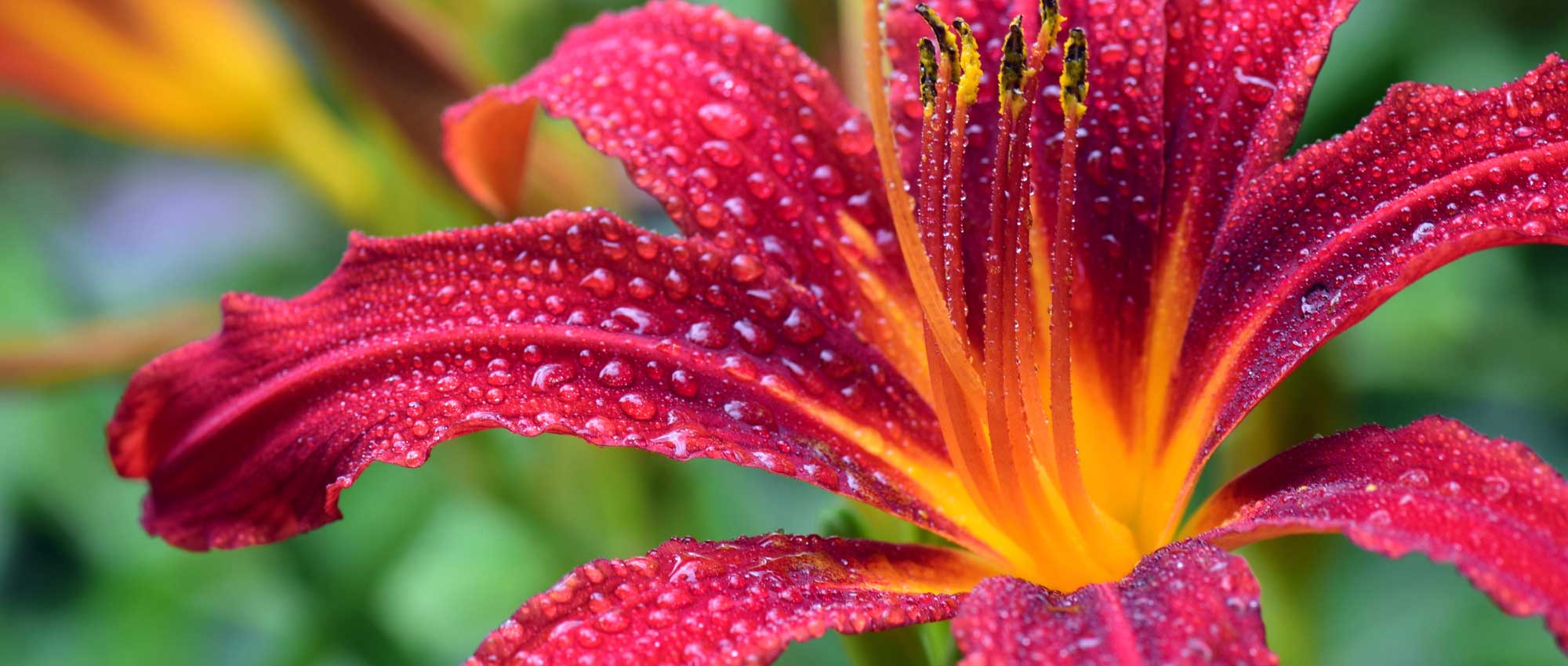
Hemerocallis Gentle Shepherd - Daylily in pictures


Flowering
Foliage
Plant habit
Botanical data
Hemerocallis
Gentle Shepherd
Asphodelaceae
Daylily
Cultivar or hybrid
Planting and care
Plant the Hemerocallis ‘Gentle Shepherd’ from February to April or September to November, outside periods of frost. In regions with cold winters or heavy clay soil, opt for spring. Full sun produces abundant flowering; light partial shade is preferable where the afternoons are scorching in summer. Loosen the soil deeply and incorporate well-rotted compost if it is poor. This perennial grows in clay or chalky soil, provided water drains away in winter. Place the collar at soil level. Water regularly during the first season, then especially in spring and during dry spells preceding flowering. Divide the clump every four to six years, in spring or after flowering, to rejuvenate the stump.
Planting period
Intended location
Care
Planting & care advice



-
, onOrder confirmed
Reply from on Promesse de fleurs
Recently viewed products
Haven't found what you were looking for?
Hardiness is the lowest winter temperature a plant can endure without suffering serious damage or even dying. However, hardiness is affected by location (a sheltered area, such as a patio), protection (winter cover) and soil type (hardiness is improved by well-drained soil).

The flowering period indicated on our website applies to countries and regions located in USDA zone 8 (France, the United Kingdom, Ireland, the Netherlands, etc.)
It will vary according to where you live:- In zones 9 to 10 (Italy, Spain, Greece, etc.), flowering will occur about 2 to 4 weeks earlier.
- In zones 6 to 7 (Germany, Poland, Slovenia, and lower mountainous regions), flowering will be delayed by 2 to 3 weeks.
- In zone 5 (Central Europe, Scandinavia), blooming will be delayed by 3 to 5 weeks.
In temperate climates, pruning of spring-flowering shrubs (forsythia, spireas, etc.) should be done just after flowering.
Pruning of summer-flowering shrubs (Indian Lilac, Perovskia, etc.) can be done in winter or spring.
In cold regions as well as with frost-sensitive plants, avoid pruning too early when severe frosts may still occur.
The planting period indicated on our website applies to countries and regions located in USDA zone 8 (France, United Kingdom, Ireland, Netherlands).
It will vary according to where you live:
- In Mediterranean zones (Marseille, Madrid, Milan, etc.), autumn and winter are the best planting periods.
- In continental zones (Strasbourg, Munich, Vienna, etc.), delay planting by 2 to 3 weeks in spring and bring it forward by 2 to 4 weeks in autumn.
- In mountainous regions (the Alps, Pyrenees, Carpathians, etc.), it is best to plant in late spring (May-June) or late summer (August-September).
The harvesting period indicated on our website applies to countries and regions in USDA zone 8 (France, England, Ireland, the Netherlands).
In colder areas (Scandinavia, Poland, Austria...) fruit and vegetable harvests are likely to be delayed by 3-4 weeks.
In warmer areas (Italy, Spain, Greece, etc.), harvesting will probably take place earlier, depending on weather conditions.
The sowing periods indicated on our website apply to countries and regions within USDA Zone 8 (France, UK, Ireland, Netherlands).
In colder areas (Scandinavia, Poland, Austria...), delay any outdoor sowing by 3-4 weeks, or sow under glass.
In warmer climes (Italy, Spain, Greece, etc.), bring outdoor sowing forward by a few weeks.
Shipping country and language
Your country of residence may be:
Your country of residence is:
For a better user experience on our website, you can select:
Your shipping country:
-
 Austria
-
 Belgium
-
 Bosnia & Herzegovina
-
 Bulgaria
-
 Croatia
-
 Cyprus
-
 Czechia
-
 Denmark
-
 Estonia
-
 Finland
-
 France
-
 Germany
-
 Greece
-
 Hungary
-
 Iceland
-
 Ireland
-
 Italy
-
 Latvia
-
 Liechtenstein
-
 Lithuania
-
 Luxembourg
-
 Malta
-
 Netherlands
-
 Poland
-
 Portugal
-
 Romania
-
 Serbia
-
 Slovakia
-
 Slovenia
-
 Spain
-
 Sweden
-
 Switzerland
Language:
-
French
-
 English
-
Spanish
-
Italian
-
German
-
Portuguese
-
Dutch
-
Finnish
My Account
Hello
My wish lists
My cart
Log in / Register
Existing customer?
This form is protected by reCAPTCHA - the Google Privacy Policy and Terms of Service apply.
New customer?
Create an account to track your orders, access our customer service and, if you wish, make the most of our upcoming offers.