Buxus Babylon Beauty - Boxwood

Buxus Babylon Beauty - Boxwood
Buxus Babylon Beauty - Boxwood
Buxus 'Her2010B04' BABYLON BEAUTY
Common Box, European Box, Boxwood
Back-to-school special offer!
Get €10 off for every €50 you spend! And get up to €40 off on a single order.
How does it work?
1. Shop your favourites
Add your favourite plants to your basket. For every €50 you spend (excluding delivery charges, store credit and the plastic-free option), you’ll receive a €10 voucher.
€50 spent = €10 voucher
€100 spent = €20 voucher
€150 spent = €30 voucher
€200 spent = €40 voucher
2. Place your order
Once your basket reaches one of the spending thresholds, place your order. You can even choose your delivery date!
3. Receive your voucher
As soon as your order has been shipped, you’ll receive an email containing your personal voucher code and its value.
4. Use it on your next order
Your voucher is valid for 90 days from the date you receive it. It can be used once only, on a new order worth at least the value of the voucher, excluding delivery charges.
Please note: Vouchers can be combined with other offers, but cannot be split or refunded.
Home or relay delivery (depending on size and destination)
Important: You may be charged customs duties by your country’s customs authorities upon delivery.
Schedule delivery date,
and select date in basket
This plant carries a 24 months recovery warranty
More information
We guarantee the quality of our plants for a full growing cycle, and will replace at our expense any plant that fails to recover under normal climatic and planting conditions.
Would this plant suit my garden?
Set up your Plantfit profile →
Description
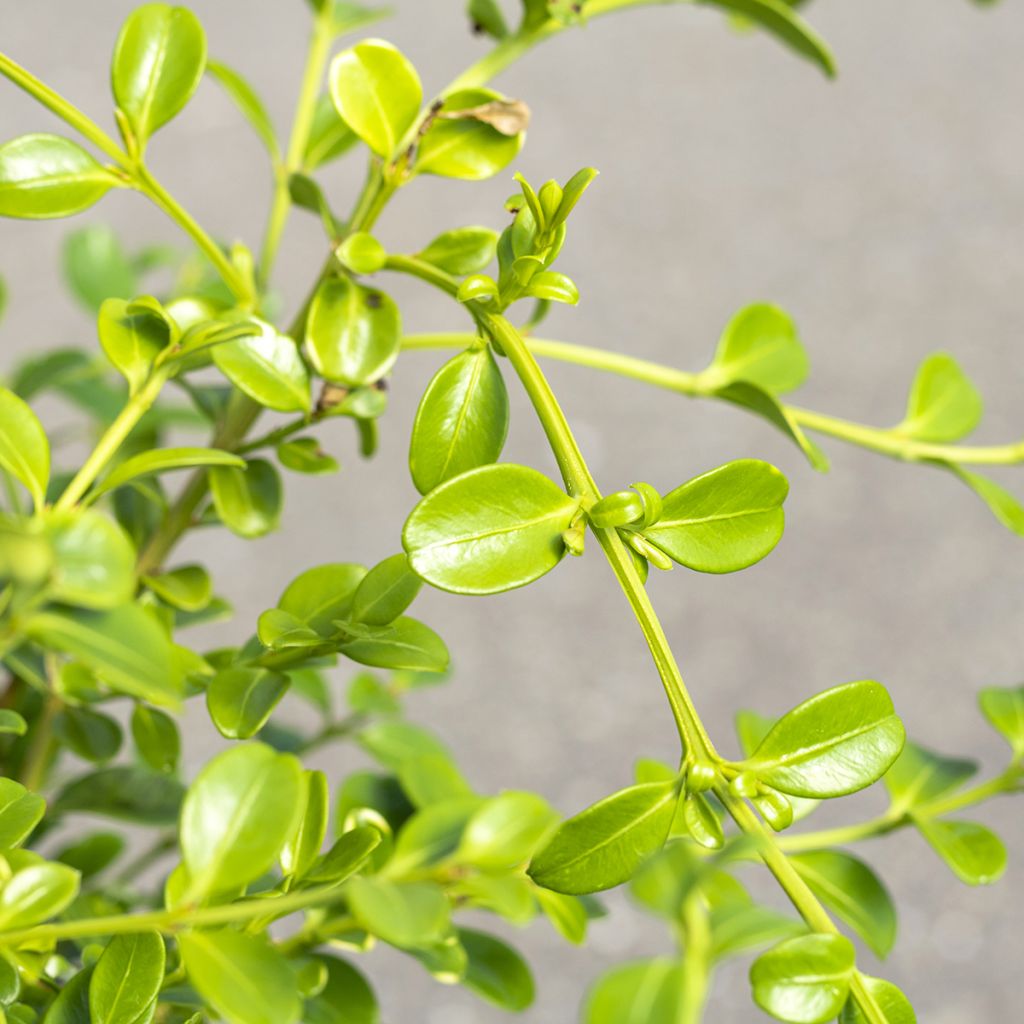
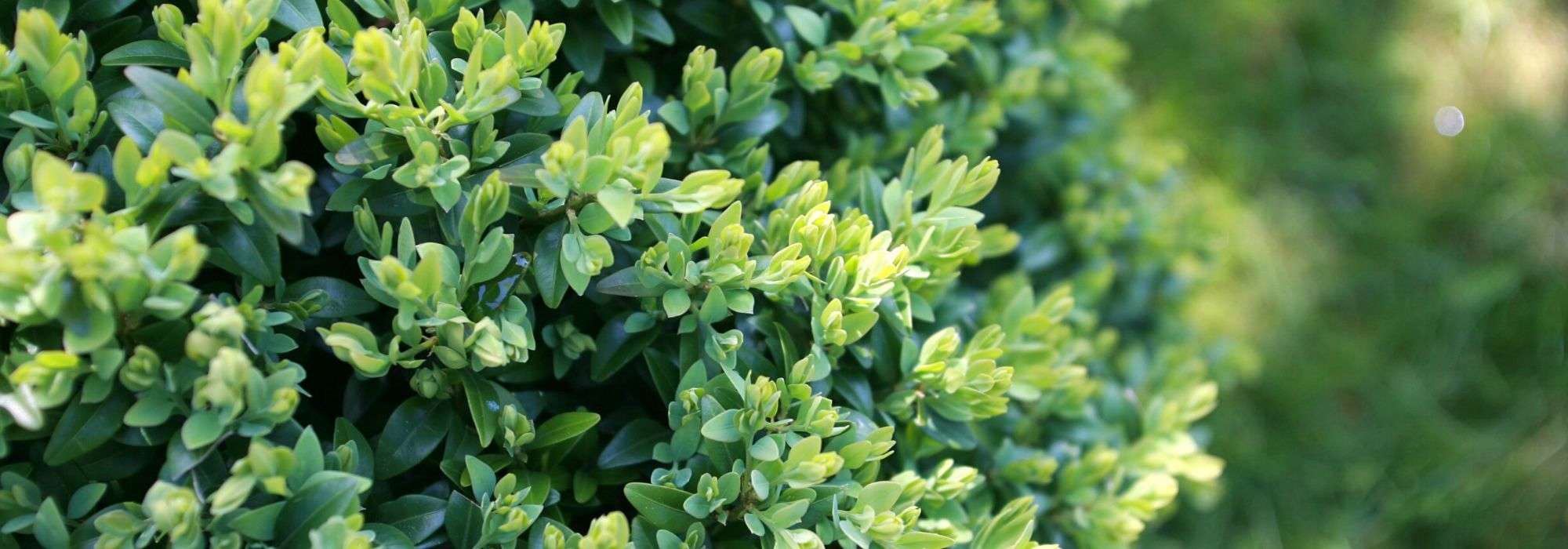
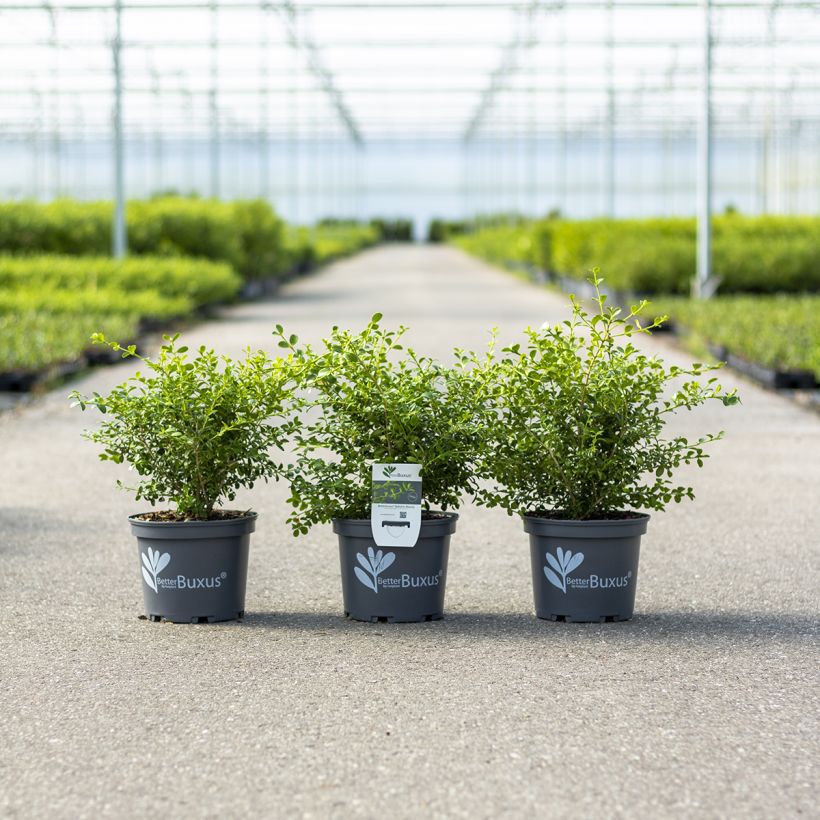
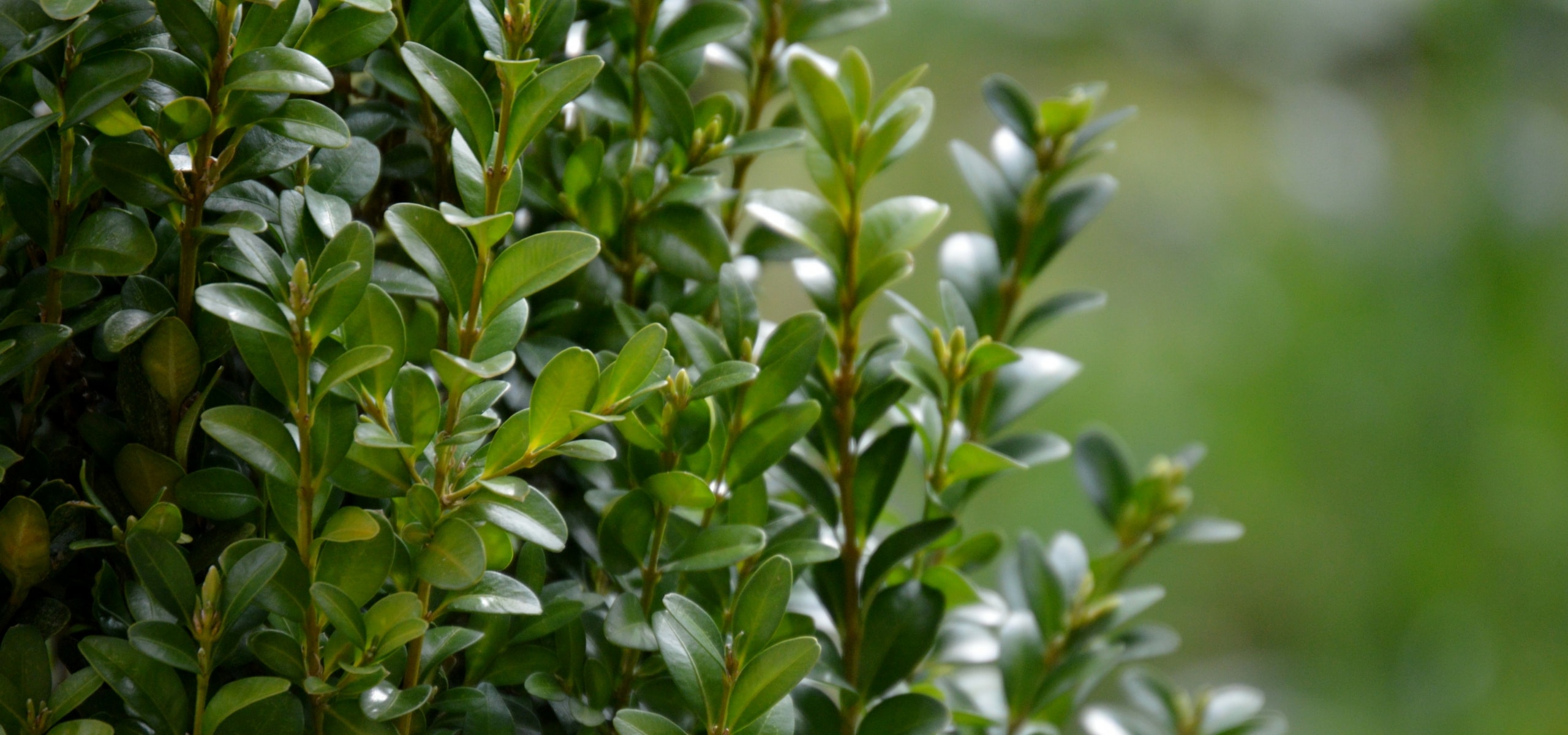
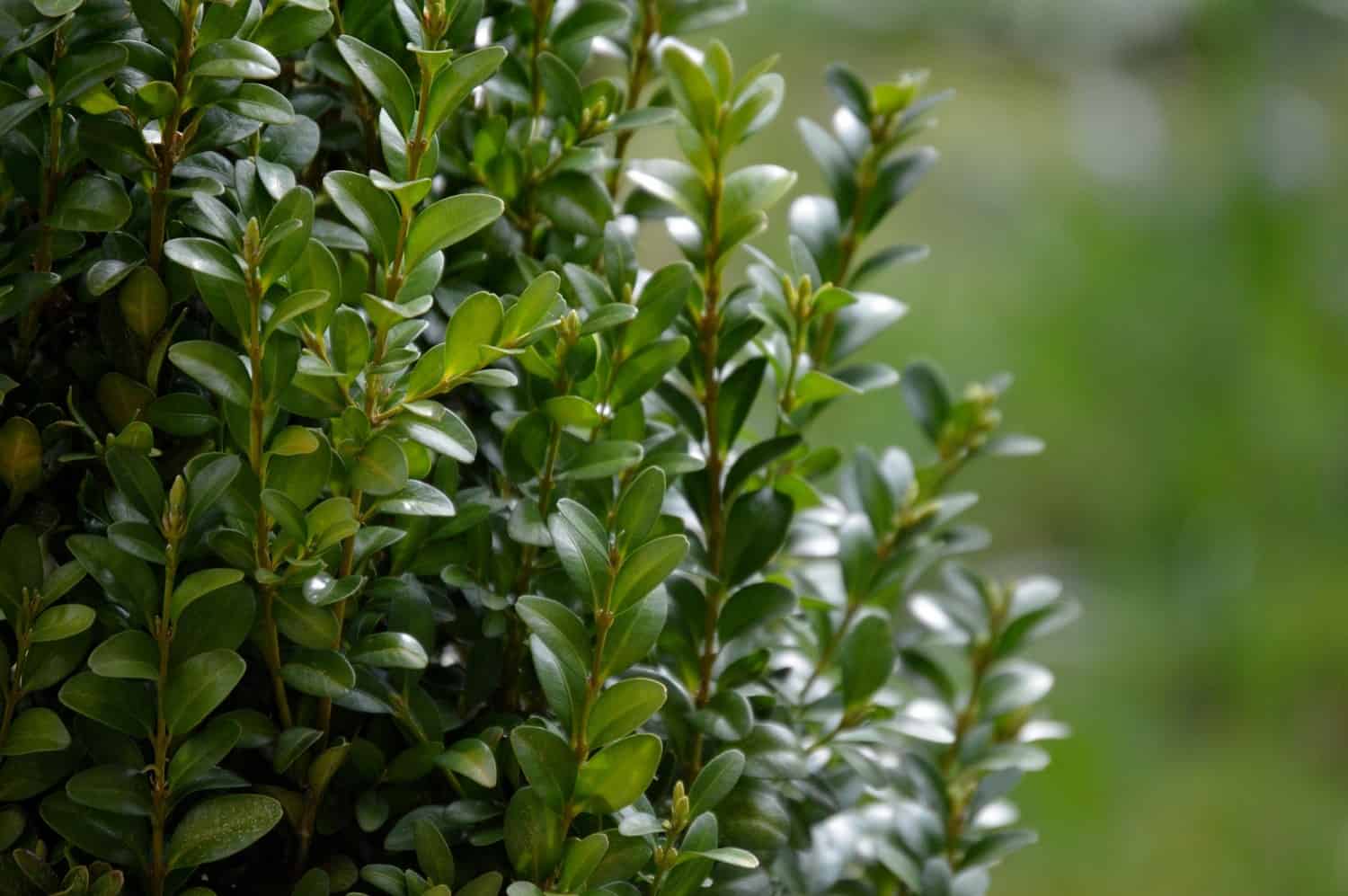
Buxus BetterBuxus® ‘Babylon Beauty’ is a hybrid boxwood selected for its low, naturally spreading habit, its small light green foliage and its resistance to boxwood diseases. Compact and regular, it forms impeccable borders and large groundcovers, but also lends itself to pot cultivation. Evergreen and undemanding, it maintains a neat appearance all year round, even in winter. It thrives in sun or partial shade, in any well-drained soil, even quite poor.
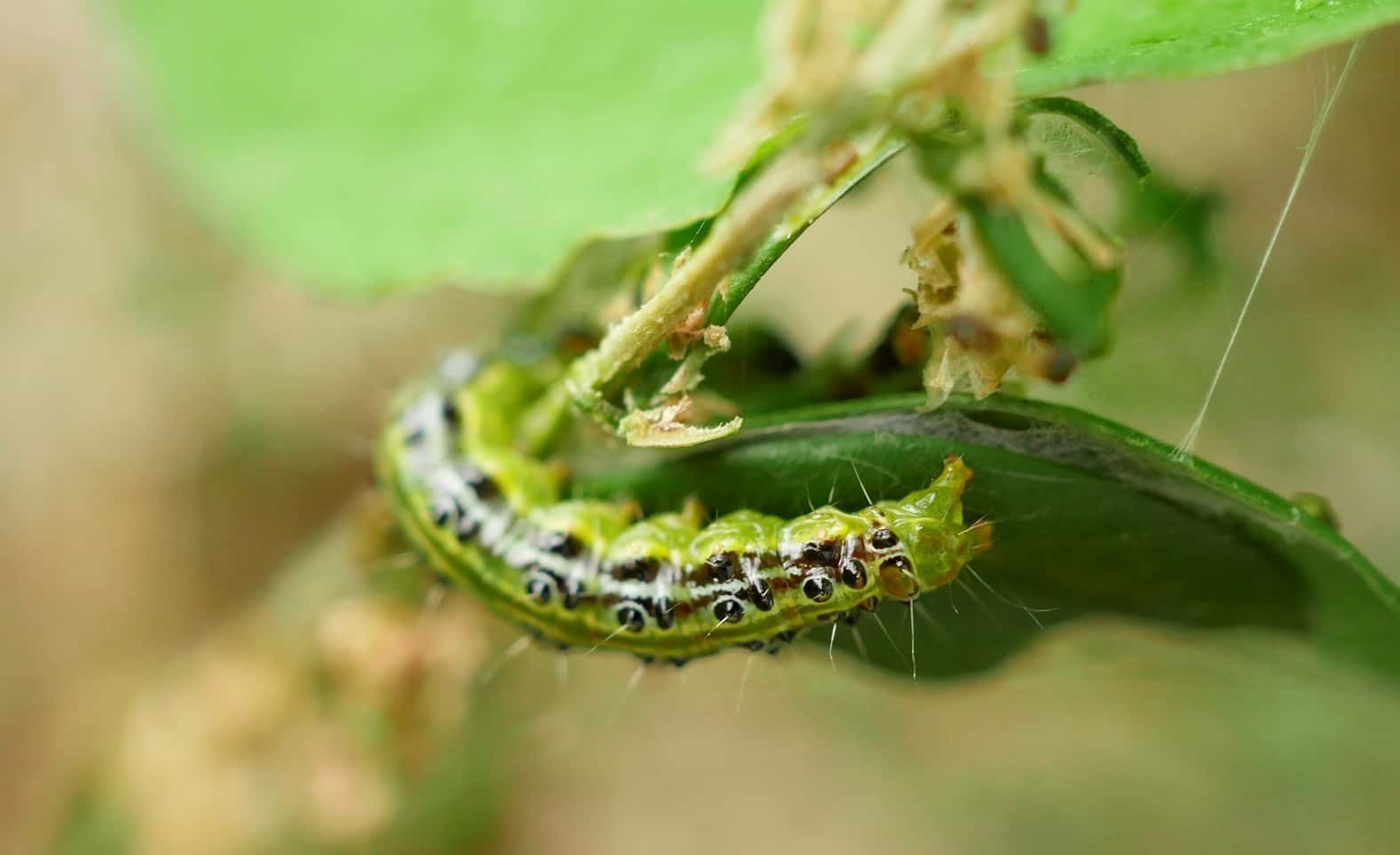
Buxus BetterBuxus/Better Boxwood Babylon Beauty (= Buxus ‘HER2010B04’, family Buxaceae) is a hybrid cultivar obtained in Belgium by Didier Hermans (Herplant BVBA) as part of a breeding programme conducted around 2009–2010, aimed particularly at resistance to boxwood decline caused by Calonectria pseudonaviculata.
It belongs to the series BetterBuxus® which brings together four complementary hybrids: Renaissance, Heritage, Babylon Beauty and Skylight, distinguished in Belgium by a Florall Gold Award in 2021.
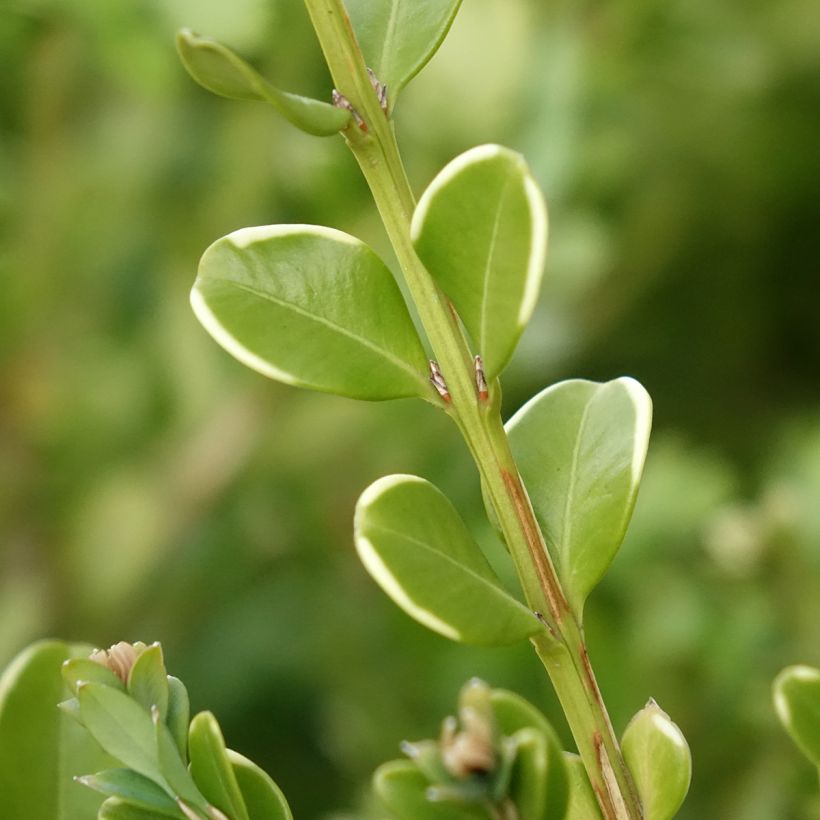
Babylon Beauty is characterised by a bushy, low and wider-than-tall habit, lighter foliage, smaller leaves, and an aptitude for a groundcover role. It is an evergreen shrub with quadrangular, slightly winged stems, opposite, simple, obovate leaves with an entire margin, smooth and semi-glossy; the very light young leaves darken at maturity. Its growth is moderate to fast. Each leaf measures on average 1.9cm long by 1.25cm wide. The root system is strong, fibrous and well-branched, adapted to poor soils. In open ground, the plant reaches on average 0.90m in height by 1.20 to 1.50m in spread at maturity. Hardy down to -25°C, this hybrid boxwood tolerates lime-rich soils. It does not sucker.
Low and architectural, Babylon Beauty is best used in ribbons or carpets at the base of taller silhouettes. Play with texture with Taxus baccata ‘Repandens’, a creeping yew that undulates at ground level. For a finer and very neat border, opt for Euonymus japonicus ‘Microphyllus Aureovariegatus’, with small, shiny, variegated leaves, which responds well to pruning. And for a touch of cool colour, slide in a creeping conifer like Juniperus horizontalis ‘Blue Chip’. A light annual pruning will be enough to maintain clean outlines in this arrangement.
Buxus Babylon Beauty - Boxwood in pictures
Plant habit
Flowering
Foliage
Botanical data
Buxus
'Her2010B04' BABYLON BEAUTY
Buxaceae
Common Box, European Box, Boxwood
Cultivar or hybrid, Southeast Asia
Planting and care
The easy-to-grow, hybrid boxwood 'Babylon Beauty' will thrive in any well-drained soil, slightly acidic, neutral or slightly chalky, even fairly poor and a little dry in summer. It adapts equally well to sunny and partially shaded positions. This plant requires virtually no maintenance. Water for the first few years after planting, especially during summer, while the plant becomes established. Hardy to -25 °C. For container cultivation, apply boxwood fertiliser once or twice a year.
Planting period
Intended location
Care
Planting & care advice
-
-
-
-

-

-

-

-

This item has not been reviewed yet - be the first to leave a review about it.
Recently viewed products
Haven't found what you were looking for?
Hardiness is the lowest winter temperature a plant can endure without suffering serious damage or even dying. However, hardiness is affected by location (a sheltered area, such as a patio), protection (winter cover) and soil type (hardiness is improved by well-drained soil).

The flowering period indicated on our website applies to countries and regions located in USDA zone 8 (France, the United Kingdom, Ireland, the Netherlands, etc.)
It will vary according to where you live:- In zones 9 to 10 (Italy, Spain, Greece, etc.), flowering will occur about 2 to 4 weeks earlier.
- In zones 6 to 7 (Germany, Poland, Slovenia, and lower mountainous regions), flowering will be delayed by 2 to 3 weeks.
- In zone 5 (Central Europe, Scandinavia), blooming will be delayed by 3 to 5 weeks.
In temperate climates, pruning of spring-flowering shrubs (forsythia, spireas, etc.) should be done just after flowering.
Pruning of summer-flowering shrubs (Indian Lilac, Perovskia, etc.) can be done in winter or spring.
In cold regions as well as with frost-sensitive plants, avoid pruning too early when severe frosts may still occur.
The planting period indicated on our website applies to countries and regions located in USDA zone 8 (France, United Kingdom, Ireland, Netherlands).
It will vary according to where you live:
- In Mediterranean zones (Marseille, Madrid, Milan, etc.), autumn and winter are the best planting periods.
- In continental zones (Strasbourg, Munich, Vienna, etc.), delay planting by 2 to 3 weeks in spring and bring it forward by 2 to 4 weeks in autumn.
- In mountainous regions (the Alps, Pyrenees, Carpathians, etc.), it is best to plant in late spring (May-June) or late summer (August-September).
The harvesting period indicated on our website applies to countries and regions in USDA zone 8 (France, England, Ireland, the Netherlands).
In colder areas (Scandinavia, Poland, Austria...) fruit and vegetable harvests are likely to be delayed by 3-4 weeks.
In warmer areas (Italy, Spain, Greece, etc.), harvesting will probably take place earlier, depending on weather conditions.
The sowing periods indicated on our website apply to countries and regions within USDA Zone 8 (France, UK, Ireland, Netherlands).
In colder areas (Scandinavia, Poland, Austria...), delay any outdoor sowing by 3-4 weeks, or sow under glass.
In warmer climes (Italy, Spain, Greece, etc.), bring outdoor sowing forward by a few weeks.
Shipping country and language
Your country of residence may be:
Your country of residence is:
For a better user experience on our website, you can select:
Your shipping country:
-
 Austria
-
 Belgium
-
 Bosnia & Herzegovina
-
 Bulgaria
-
 Croatia
-
 Cyprus
-
 Czechia
-
 Denmark
-
 Estonia
-
 Finland
-
 France
-
 Germany
-
 Greece
-
 Hungary
-
 Iceland
-
 Ireland
-
 Italy
Italy
-
 Latvia
-
 Liechtenstein
-
 Lithuania
-
 Luxembourg
-
 Malta
Malta
-
 Netherlands
-
 Poland
-
 Portugal
-
 Romania
-
 Serbia
-
 Slovakia
-
 Slovenia
-
 Spain
Spain
-
 Sweden
-
 Switzerland
Language:
-
French
-
 English
-
Spanish
-
Italian
-
German
-
Portuguese
-
Dutch
-
Finnish
My Account
Hello
My wish lists
My cart
Log in / Register
Existing customer?
This form is protected by reCAPTCHA - the Google Privacy Policy and Terms of Service apply.
New customer?
Create an account to track your orders, access our customer service and, if you wish, make the most of our upcoming offers.