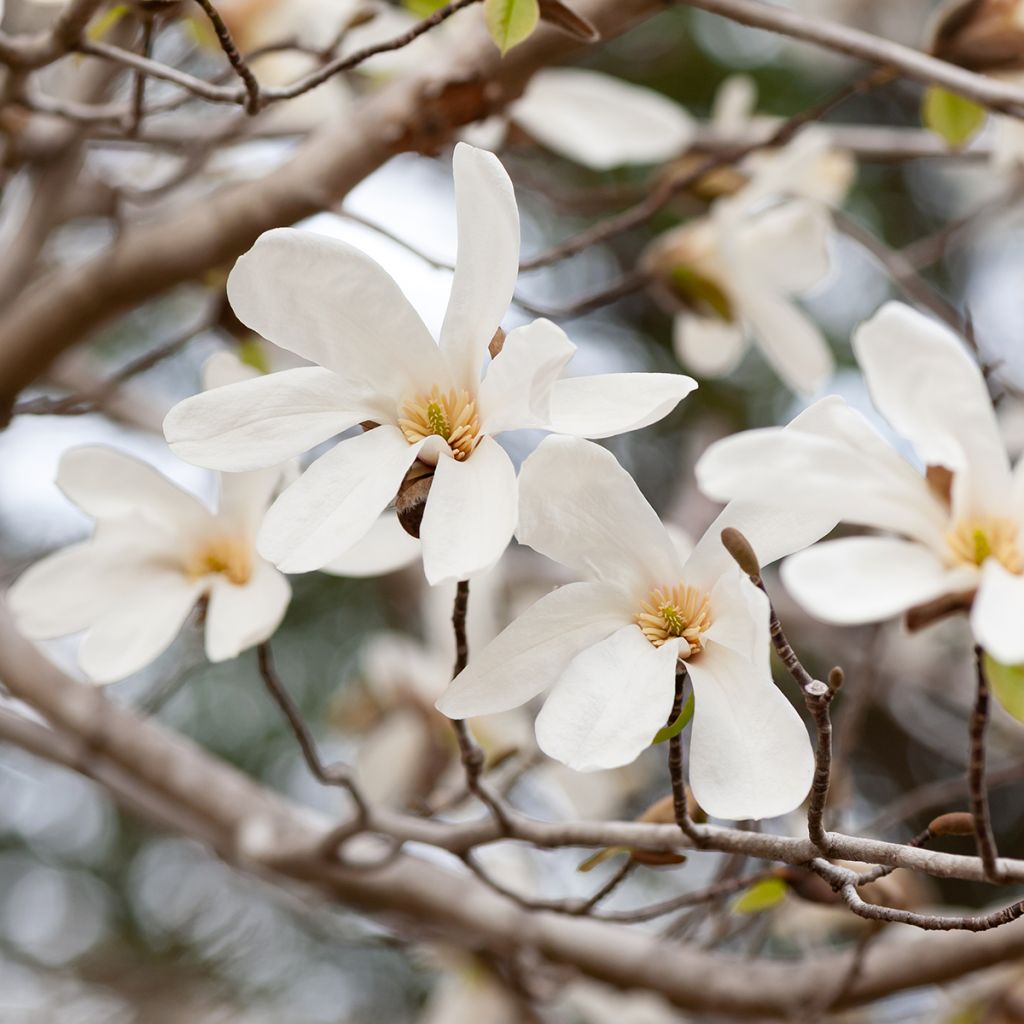
Magnolia kobus seeds
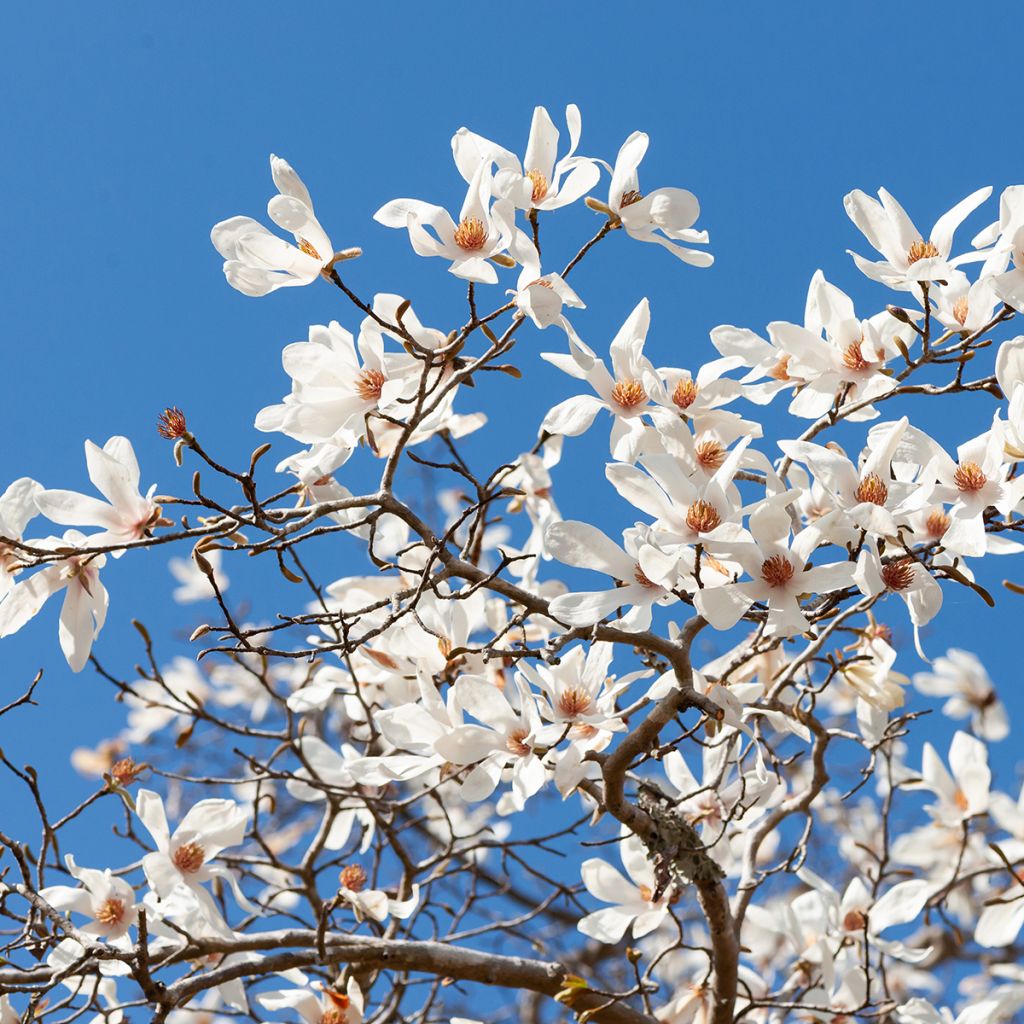
Magnolia kobus seeds
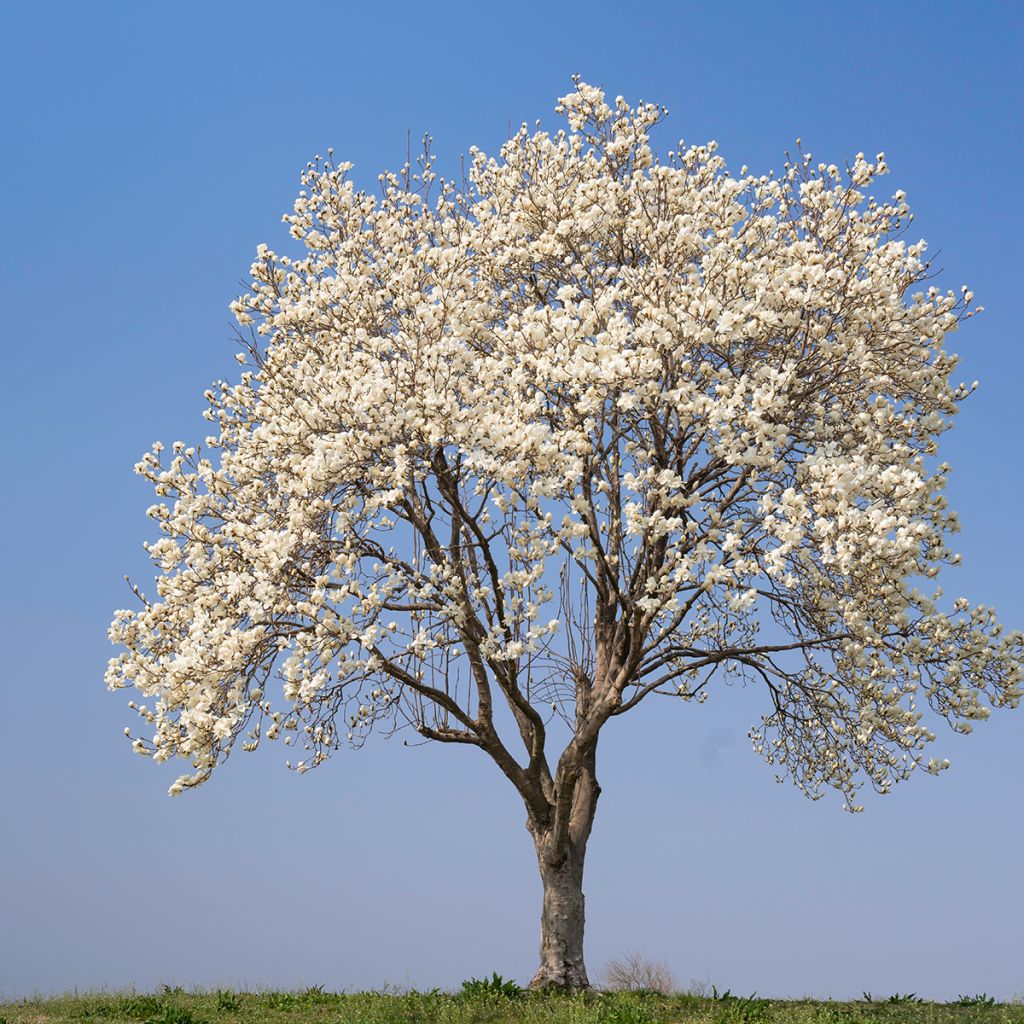
Magnolia kobus seeds
Magnolia kobus seeds
Magnolia kobus
Back-to-school special offer!
Get €10 off for every €50 you spend! And get up to €40 off on a single order.
How does it work?
1. Shop your favourites
Add your favourite plants to your basket. For every €50 you spend (excluding delivery charges, store credit and the plastic-free option), you’ll receive a €10 voucher.
€50 spent = €10 voucher
€100 spent = €20 voucher
€150 spent = €30 voucher
€200 spent = €40 voucher
2. Place your order
Once your basket reaches one of the spending thresholds, place your order. You can even choose your delivery date!
3. Receive your voucher
As soon as your order has been shipped, you’ll receive an email containing your personal voucher code and its value.
4. Use it on your next order
Your voucher is valid for 90 days from the date you receive it. It can be used once only, on a new order worth at least the value of the voucher, excluding delivery charges.
Please note: Vouchers can be combined with other offers, but cannot be split or refunded.
Home or relay delivery (depending on size and destination)
Important: You may be charged customs duties by your country’s customs authorities upon delivery.
Schedule delivery date
and select date in basket
This plant carries a 6 months recovery warranty
More information
We guarantee the quality of our plants for a full growing cycle, and will replace at our expense any plant that fails to recover under normal climatic and planting conditions.
Would this plant suit my garden?
Set up your Plantfit profile →
Description
Magnolia kobus is a charming deciduous species from the Far East, forming a large shrub, or sometimes a small tree, initially pyramidal in shape, then with a more open habit. Early in spring, it produces beautiful white flowers before the leaves, creating a striking focal point in the garden. These are followed by pinkish fruits, which are equally decorative. They contain red seeds, which can be propagated. This species has the valuable characteristic of tolerating chalky soils, and as this Magnolia is also very hardy, it can be planted in almost any garden.
Magnolia is the main genus of the Magnoliaceae family, which has only one other member, Liriodendron, or Tulip Tree, a very beautiful tree with tulip-like flowers. There are over a hundred species of Magnolias, trees and shrubs of very ancient origin in the evolutionary history of plants, as evidenced by their primitive flowers composed of tepals: sepals and petals look the same and are not differentiated as in more "modern" plants. This does not prevent them from being among the most beautiful flowering woody plants.
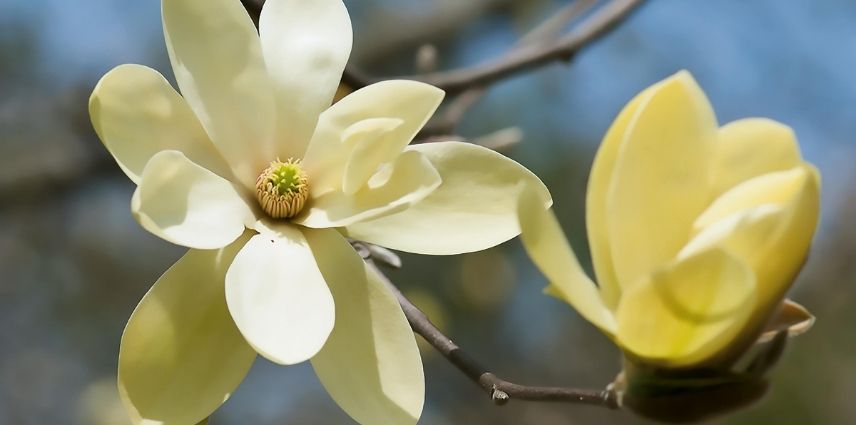
Magnolia kobus, or Kobushi Magnolia, is, as its name suggests, native to Japan (Kobe is a Japanese city near Kyoto, the former imperial capital). The species, with fairly rapid growth, usually develops as a large shrub, sometimes a small tree with a generally short trunk. In its early years, it adopts a more or less pyramidal habit or conical shape; then, as it ages, it rounds out, its silhouette spreading noticeably. It is fairly compact, reaching 8 to 12m in height at maturity, with a slightly smaller final spread. It often develops as a coppiced shrub, forming several trunks with dark grey-brown bark, which highlights the pale flowers beautifully. Appearing on the bare wood, well before the leaves, their whiteness, sometimes subtly tinged with pale pink, creates a lovely contrast with the dark bark. The six long petals form star-shaped corollas about ten centimetres in diameter. The coppery-brown stamens surrounding the green pistil stand out at the centre, further enhancing the purity of the tepals. The deciduous foliage then appears, shortly before full flowering finishes. The elliptical to slightly obovate leaves, borne on short petioles, measure 6 to 18cm in length and 3 to 12cm in width. The leaves are a beautiful light to medium green, paler on the underside. In autumn, they tend to yellow before falling, but this colouring varies depending on the individual plant, especially those grown from seed, and on soil or climate conditions. Very ornamental fruits follow the flowers, their pinkish colour making them clearly visible among the light green foliage. They eventually open and disintegrate to release the red seeds, which remain suspended by a thread before finally falling to the ground to ensure the plant's survival.
A fine, large shrub that should be given enough space to allow it to flourish at maturity, Magnolia kobus is one of the most adaptable species. It is capable of thriving in heavy, clayey and chalky soils, tolerating pH levels of around 8 and harsh winter cold. Its growth may be slightly affected compared to better growing conditions, but it will be no less ornamental. In such conditions, you can create a beautiful late-winter scene by planting it alongside a Cornus mas, the Cornelian Cherry, with even earlier yellow flowers from February, followed by highly decorative red fruits, and finishing the season with superb autumn colours. A few specimens of Rosa glauca, a botanical rose whose lovely bluish-purple foliage is enhanced by single pink flowers, will add a summer floral touch at their base.

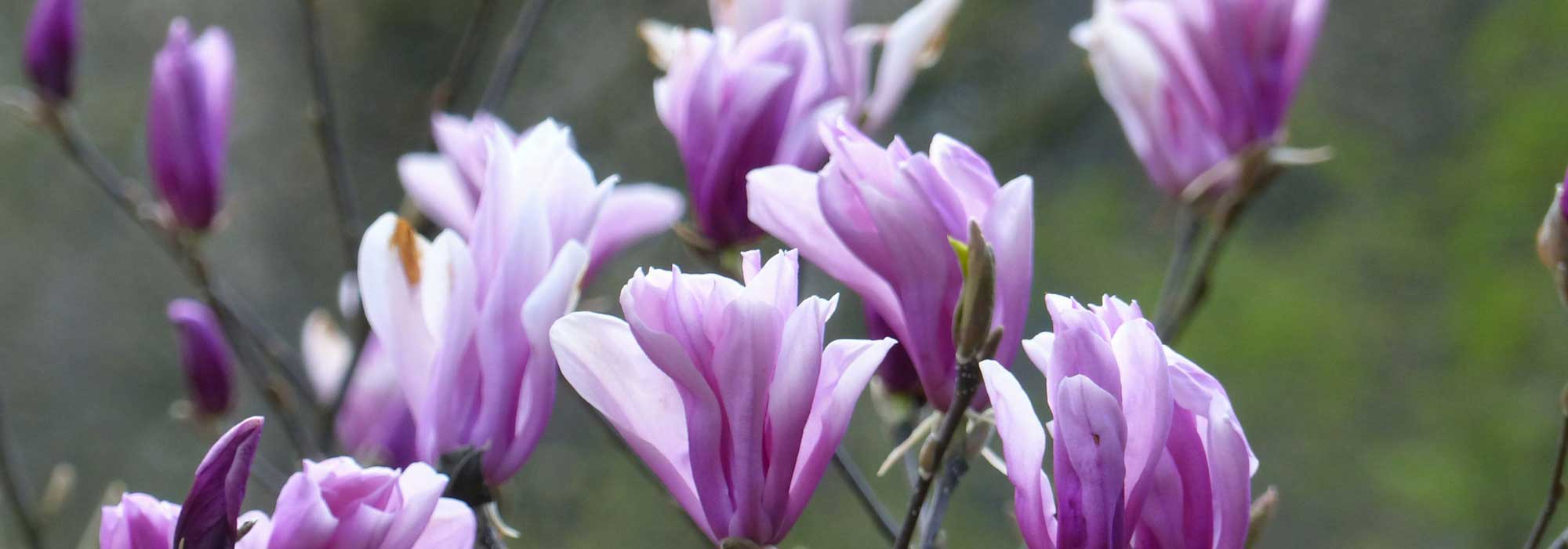
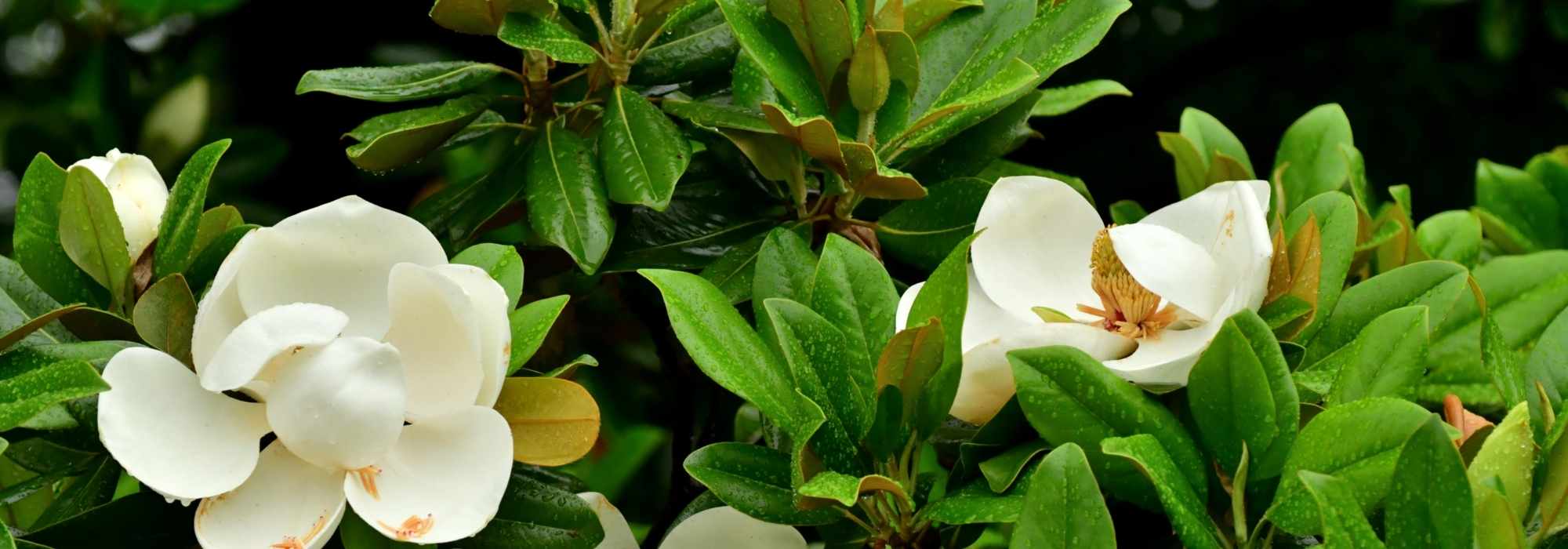
Magnolia kobus seeds in pictures
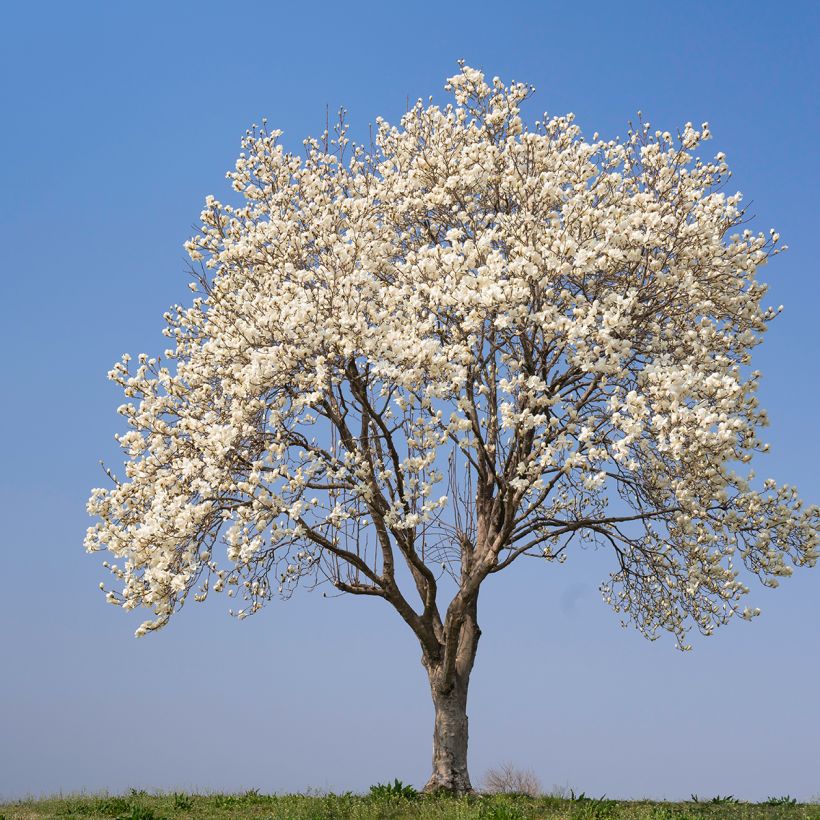
Flowering
Foliage
Plant habit
Botanical data
Magnolia
kobus
Magnoliaceae
Magnolia kobus var. kobus, Magnolia kobus var. borealis
East Asia
Planting and care
Propagating Magnolia kobus from seed requires patience, as they need a stratification period of 3 to 5 months before sowing, and germination typically takes 1 to 3 months. It is also worth knowing that this method of propagation can significantly increase the time before the first flowers appear.
Stratification: this is essential to break seed dormancy and requires cold (in order to mimic natural conditions). Simply mix the seeds with a moist blend of peat and sand in a plastic bag, then keep it at around 4°C in a refrigerator. Ideally, do this in early winter so the bag can be brought out in spring.
Sowing: prepare a seed tray or pan by filling it with slightly acidic seed compost, or a mix of peat and perlite. Press the seeds 1 to 2cm deep, spacing them 3 to 5cm apart. Keep the substrate moist but not waterlogged, and place the tray in a propagator to maintain a temperature of 18 to 22°C, which will encourage germination. This will take at least 4 weeks, but sometimes 3 to 4 months.
Allow the young plants to grow sufficiently and develop their first true leaves before potting them on into a small container (around 2 or 3 litres). You can plant them out into open ground the following year.
Note: it is also possible to sow directly into open ground later in spring once the soil has warmed up.
Sowing period
Intended location
Planting & care advice
-
-

-
-

-

-
-
-

This item has not been reviewed yet - be the first to leave a review about it.
Recently viewed products
Haven't found what you were looking for?
Hardiness is the lowest winter temperature a plant can endure without suffering serious damage or even dying. However, hardiness is affected by location (a sheltered area, such as a patio), protection (winter cover) and soil type (hardiness is improved by well-drained soil).

The flowering period indicated on our website applies to countries and regions located in USDA zone 8 (France, the United Kingdom, Ireland, the Netherlands, etc.)
It will vary according to where you live:- In zones 9 to 10 (Italy, Spain, Greece, etc.), flowering will occur about 2 to 4 weeks earlier.
- In zones 6 to 7 (Germany, Poland, Slovenia, and lower mountainous regions), flowering will be delayed by 2 to 3 weeks.
- In zone 5 (Central Europe, Scandinavia), blooming will be delayed by 3 to 5 weeks.
In temperate climates, pruning of spring-flowering shrubs (forsythia, spireas, etc.) should be done just after flowering.
Pruning of summer-flowering shrubs (Indian Lilac, Perovskia, etc.) can be done in winter or spring.
In cold regions as well as with frost-sensitive plants, avoid pruning too early when severe frosts may still occur.
The planting period indicated on our website applies to countries and regions located in USDA zone 8 (France, United Kingdom, Ireland, Netherlands).
It will vary according to where you live:
- In Mediterranean zones (Marseille, Madrid, Milan, etc.), autumn and winter are the best planting periods.
- In continental zones (Strasbourg, Munich, Vienna, etc.), delay planting by 2 to 3 weeks in spring and bring it forward by 2 to 4 weeks in autumn.
- In mountainous regions (the Alps, Pyrenees, Carpathians, etc.), it is best to plant in late spring (May-June) or late summer (August-September).
The harvesting period indicated on our website applies to countries and regions in USDA zone 8 (France, England, Ireland, the Netherlands).
In colder areas (Scandinavia, Poland, Austria...) fruit and vegetable harvests are likely to be delayed by 3-4 weeks.
In warmer areas (Italy, Spain, Greece, etc.), harvesting will probably take place earlier, depending on weather conditions.
The sowing periods indicated on our website apply to countries and regions within USDA Zone 8 (France, UK, Ireland, Netherlands).
In colder areas (Scandinavia, Poland, Austria...), delay any outdoor sowing by 3-4 weeks, or sow under glass.
In warmer climes (Italy, Spain, Greece, etc.), bring outdoor sowing forward by a few weeks.
Shipping country and language
Your country of residence may be:
Your country of residence is:
For a better user experience on our website, you can select:
Your shipping country:
-
 Austria
-
 Belgium
-
 Bosnia & Herzegovina
-
 Bulgaria
-
 Croatia
-
 Cyprus
-
 Czechia
-
 Denmark
-
 Estonia
-
 Finland
-
 France
-
 Germany
-
 Greece
-
 Hungary
-
 Iceland
-
 Ireland
-
 Italy
Italy
-
 Latvia
-
 Liechtenstein
-
 Lithuania
-
 Luxembourg
-
 Malta
Malta
-
 Netherlands
-
 Poland
-
 Portugal
-
 Romania
-
 Serbia
-
 Slovakia
-
 Slovenia
-
 Spain
Spain
-
 Sweden
-
 Switzerland
Language:
-
French
-
 English
-
Spanish
-
Italian
-
German
-
Portuguese
-
Dutch
-
Finnish
My Account
Hello
My wish lists
My cart
Log in / Register
Existing customer?
This form is protected by reCAPTCHA - the Google Privacy Policy and Terms of Service apply.
New customer?
Create an account to track your orders, access our customer service and, if you wish, make the most of our upcoming offers.